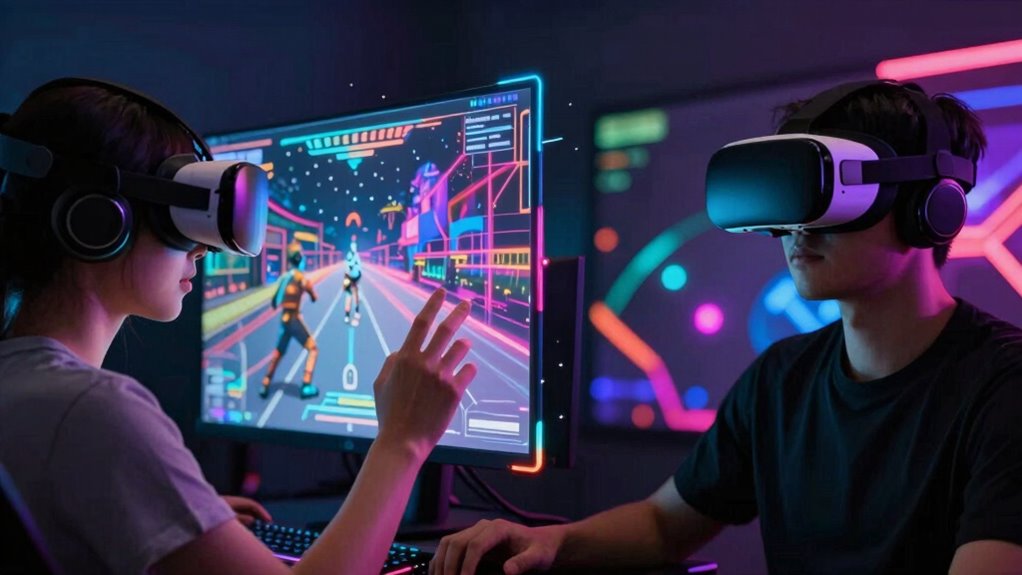

AR overlays digital images onto your real environment, adding interactive elements, while VR immerses you fully in a digital world by blocking out reality. If you seek natural interaction with your surroundings, AR’s the way to go. But if you crave complete immersion and escape, VR offers a fully virtual experience. Both are shaping gaming’s future, and exploring their potentials reveals which might matter more for your favorite games. Keep going to discover how each could transform your play.
Key Takeaways
- AR overlays digital content onto the real world, enhancing environment interaction, while VR immerses users in a fully digital environment.
- AR is more accessible via smartphones and smart glasses; VR typically requires specialized headsets and controllers.
- VR offers complete immersion, ideal for gaming experiences that demand full virtual environments; AR enhances real-world gameplay and exploration.
- Both technologies are evolving rapidly, but VR is currently more prominent in immersive gaming, with AR gaining traction through mobile apps.
- The choice depends on gaming preferences: AR suits casual, augmented experiences; VR provides deep, immersive worlds for dedicated gaming.
Top picks for "difference matter"
Open Amazon search results for this keyword.
As an affiliate, we earn on qualifying purchases.
Defining Augmented Reality and Virtual Reality
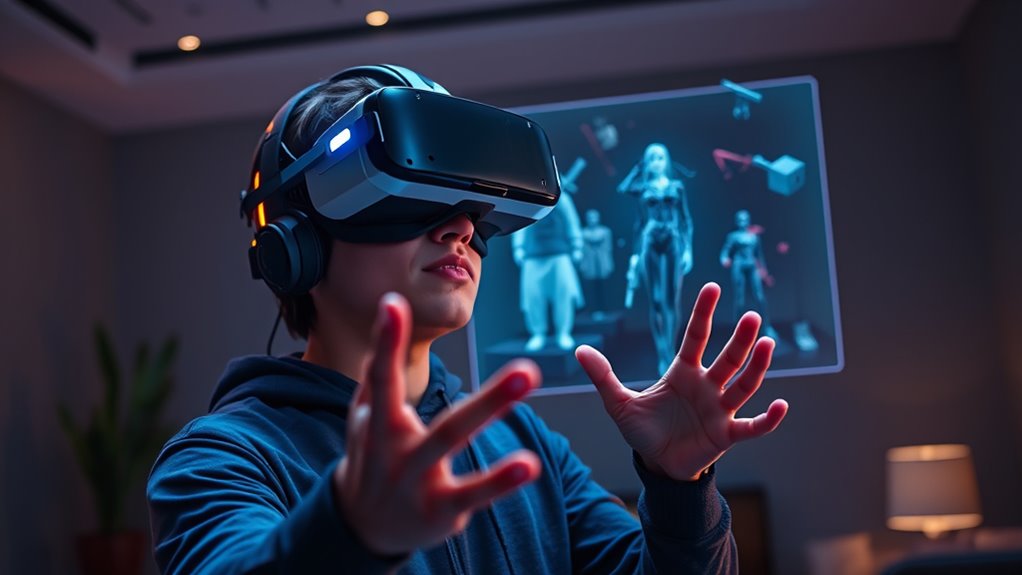
Augmented Reality (AR) and Virtual Reality (VR) are two cutting-edge technologies that transform how you experience digital content. AR integration overlays digital images onto your real-world view, enhancing your environment with interactive elements. Think of using your smartphone or AR glasses to see virtual objects blended seamlessly with reality. VR, on the other hand, immerses you completely in a virtual environment, often requiring VR headsets and VR motion controllers to navigate and interact. This technology blocks out your physical surroundings, creating a fully digital space. While AR enhances reality with additional information, VR transports you to entirely different worlds. Both technologies are rapidly advancing, shaping the future of gaming, education, and entertainment. Additionally, the development of energy-efficient cloud servers supports the infrastructure needed for these immersive experiences to become more accessible and sustainable. As these innovations grow, the spatial computing aspect of AR and VR will become increasingly vital in creating more natural and intuitive interactions, especially as wearable tech continues to evolve. Moreover, improvements in display technology are crucial for delivering more realistic and comfortable VR and AR experiences to users.
How AR and VR Create Immersive Experiences
Both AR and VR create immersive experiences by engaging your senses and making digital content feel real. Augmented Reality enhances your environment with overlays, improving AR guidance by guiding you through routes with digital arrows and signs that feel part of the real world. Virtual Reality, on the other hand, transports you to entirely different worlds, providing a sense of presence that’s perfect for VR therapy, where users can confront fears or practice skills in a controlled setting. These technologies stimulate your senses—sight, sound, and sometimes touch—immersing you deeply in digital content. Whether it’s steering through complex streets with AR or exploring calming virtual environments for therapy, both create powerful experiences that blur the line between digital and physical worlds, making interactions feel authentic and engaging. Understanding how these technologies work at a chemical level can help us appreciate their impact on sensory engagement and immersion. Additionally, the sensory stimulation involved in both AR and VR plays a crucial role in how convincing and impactful these experiences are, as it enhances the user experience by mimicking real-world interactions more closely.
Key Devices and Hardware for AR and VR Gaming
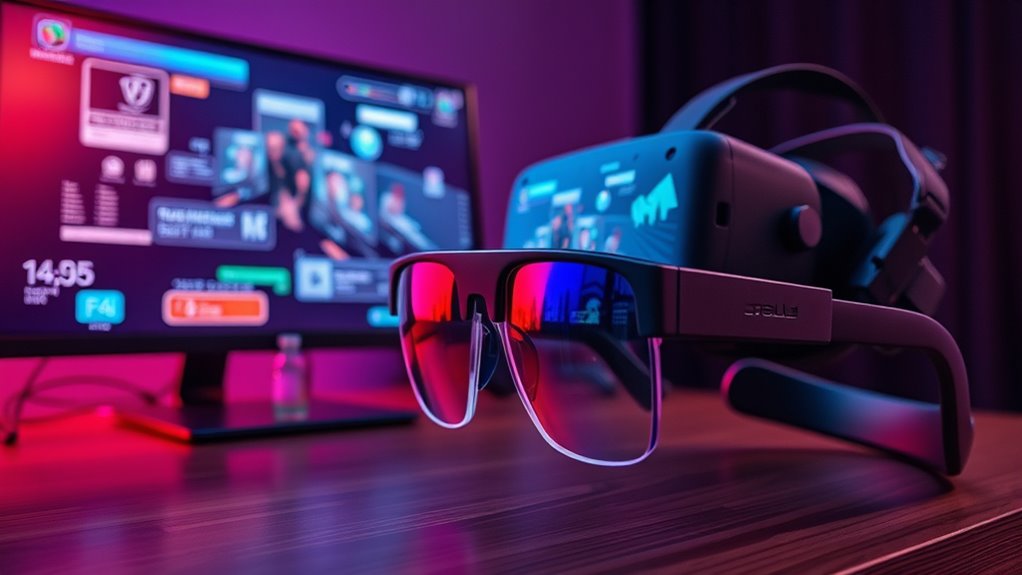
To fully enjoy AR and VR gaming, you need the right devices and hardware that deliver immersive experiences. AR hardware includes smart glasses, smartphones, and tablets that overlay digital content onto the real world. VR peripherals consist of headsets, motion controllers, and haptic gloves that track your movements and enhance realism. These devices are essential for creating seamless interactions and immersive gameplay. The following table highlights key devices: Essential for any classic arcade game collection. Additionally, ensuring compatibility between devices is crucial for a smooth gaming experience, which depends on understanding device interoperability and system requirements. Proper calibration and setup are also vital for maximizing the immersive experience and responsiveness during gameplay. Achieving optimal performance often relies on system requirements and ensuring that hardware specifications meet the demands of the latest AR and VR software. Moreover, staying aware of hardware updates can help gamers maintain optimal performance and compatibility over time.
Impact on Game Design and Player Engagement
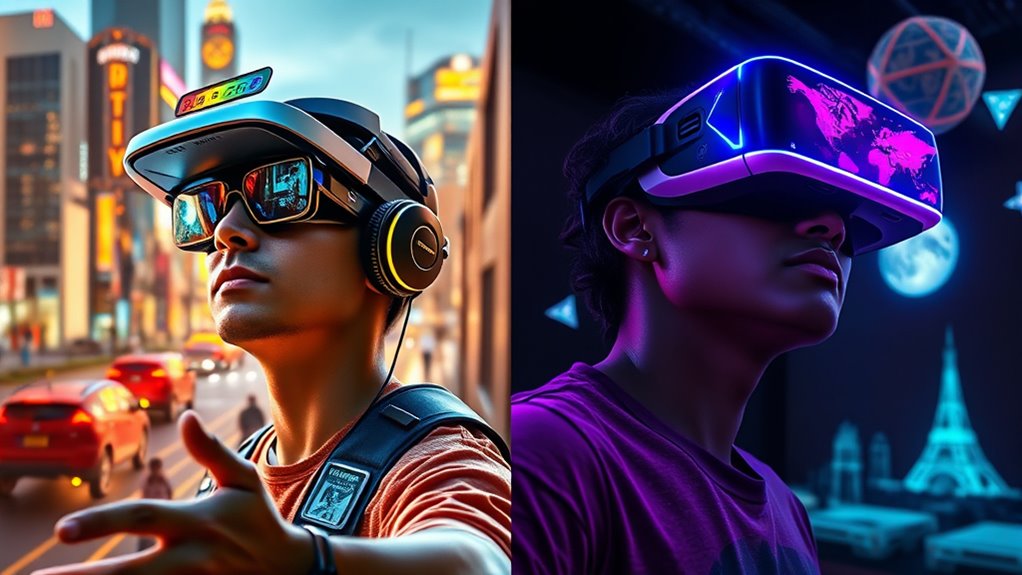
The integration of AR and VR technology has revolutionized game design by enabling more immersive and interactive experiences. You now experience game mechanics that adapt to your movements and choices, creating a sense of presence like never before. These technologies allow developers to craft more dynamic and engaging narratives, where your actions directly influence story development. With AR, you can blend game elements into your real environment, making gameplay feel seamlessly integrated into daily life. VR offers complete immersion, encouraging deeper emotional engagement and investment. This shift pushes designers to rethink traditional storytelling, focusing on spatial awareness and player agency. As a result, your engagement levels increase, making gaming more compelling, personalized, and memorable.
Future Trends and Potential of AR and VR in Gaming
As technology continues to advance, the future of AR and VR in gaming looks increasingly promising, with innovations set to transform how you play and experience games. Expect rapid technological advancements that make these immersive environments more realistic, accessible, and affordable. Industry adoption is likely to accelerate as developers explore new ways to integrate AR and VR into mainstream gaming, creating richer and more interactive experiences. Enhanced hardware, such as lightweight headsets and improved haptic feedback, will further elevate immersion levels. Additionally, we’ll see more cross-platform compatibility and content tailored for diverse audiences. Ultimately, AR and VR are poised to redefine gaming, offering personalized, engaging worlds that keep you captivated and connected like never before.
Frequently Asked Questions
How Do AR and VR Differ in User Interaction?
You interact with AR and VR differently through gesture controls and spatial awareness. In AR, you use gestures to manipulate digital objects overlaid on the real world, maintaining spatial awareness of your environment. With VR, you’re immersed in a fully virtual space, using gesture controls to navigate and interact within that environment. VR emphasizes complete immersion, while AR blends digital elements with your real surroundings, shaping distinct user interactions.
Which Technology Is More Affordable for Casual Gamers?
If you’re looking for affordability, AR tends to be more budget-friendly for casual gamers. The cost comparison shows AR devices like smartphone-based apps are generally cheaper and more accessible, with many free or low-cost options. VR headsets can be pricier and require more space and hardware. So, if you want easy accessibility options without a big investment, AR is the smarter choice for casual gaming.
What Are the Health Considerations for Prolonged Ar/Vr Use?
Prolonged AR and VR use can lead to health issues like motion sickness and eye strain, making you feel dizzy, disoriented, or fatigued. You might experience headaches or blurred vision from intense focus or extended sessions. To protect yourself, take regular breaks, stay hydrated, and adjust device settings. Prioritize your well-being by listening to your body and limiting continuous use, ensuring gaming remains enjoyable and safe.
How Does AR Enhance Real-World Environments During Gameplay?
Augmented reality enhances real-world environments during gameplay by overlaying digital images and information onto your actual surroundings. You can see virtual characters, objects, or data integrated seamlessly into your daily space, creating an immersive gameplay experience without losing touch with reality. This blending of real and digital worlds makes gameplay more engaging and interactive, allowing you to explore new scenarios while staying grounded in your environment.
Will AR or VR Replace Traditional Gaming Consoles?
AR and VR won’t fully replace traditional gaming consoles anytime soon. Console dominance remains strong because of their power, graphics, and dedicated gaming libraries. However, AR and VR boost gaming portability and immersion, offering new experiences. You’ll find these technologies complement consoles, giving you more options. While they’ll reshape how you play, consoles will still lead in high-quality, immersive gaming for the foreseeable future.
Conclusion
Ultimately, both AR and VR are shaping the future of gaming in their own ways. While AR brings the world into your game, VR transports you to entirely new domains. The choice depends on what excites you most—staying grounded or losing yourself in a different universe. Remember, in this rapidly evolving landscape, you’re riding a wave of innovation, and it’s up to you to seize the opportunity before the tide turns.