
To build a gaming PC on a budget without sacrificing performance, carefully balance your CPU and GPU choices, focusing on cost-effective options that complement each other. Choose reliable, affordable motherboards, sufficient RAM, and fast SSD storage to boost speeds without breaking the bank. Select a quality power supply and case that support future upgrades while keeping costs low. Stick to your plan, compare prices, and avoid unnecessary extras—if you keep these tips in mind, you’ll maximize value without compromise.
Key Takeaways
- Prioritize essential components like CPU and GPU to maximize gaming performance within your budget.
- Opt for reliable, mid-range parts and consider used or refurbished options to save costs.
- Balance component compatibility and future upgrade potential to avoid bottlenecks and extend system lifespan.
- Use price comparison tools, wait for deals, and avoid impulse buys to get the best value.
- Focus on good airflow, quality power supply, and necessary features without overspending on aesthetics or extras.
Top picks for "build budget without"
Open Amazon search results for this keyword.
As an affiliate, we earn on qualifying purchases.
Setting Your Budget and Priorities
Before you start choosing components, it’s crucial to determine your overall budget and identify your gaming priorities. Knowing how much you can spend helps narrow down your options and prevents overspending on unnecessary features. Consider what games you want to play and the settings you prefer; this will influence your hardware choices. When setting your budget, keep in mind hardware compatibility to avoid bottlenecks or parts that don’t work together. Brand considerations also matter—some brands offer better reliability and warranty support, which can save you headaches later. Prioritize the components that impact gaming performance most, like the GPU and CPU, and allocate funds accordingly. Being clear about your goals ensures you build a balanced, effective gaming PC that fits your financial limits. Additionally, understanding the importance of refresh rates and input lag can help you select components that optimize your gaming experience. Recognizing how hardware compatibility affects your build can prevent costly mistakes and ensure all parts work seamlessly together. It’s also helpful to research water resistance features in case you plan to use your PC in environments prone to spills or humidity.
Choosing the Right CPU and GPU Pairing
When choosing your CPU and GPU, you need to balance performance with your budget to get the best value. Make certain the components are compatible and avoid bottlenecks that can limit your gaming experience. Picking the right pairing ensures you get smooth gameplay without overspending. Additionally, considering Free Floating options can help maximize your investment by selecting versatile components suitable for various tasks. Understanding component compatibility is essential to prevent costly mistakes and ensure a seamless build process. Being aware of net worth factors can also influence your purchasing decisions by highlighting affordable yet high-quality options.
Balancing Performance and Cost
Choosing the right CPU and GPU pairing is essential to building a budget gaming PC that balances performance and cost. Focus on models with good overclocking potential to maximize performance without extra expenses. This not only allows you to push your components further but also helps in customizing your build’s appearance and aesthetics, making it more appealing visually. This allows you to push your components further, getting more out of your investment. Don’t forget aesthetic customization; selecting components with matching colors or RGB features can enhance your build’s look without increasing costs. Aim for a balance: a slightly lower-tier GPU paired with a capable CPU often delivers better value than overspending on high-end parts that won’t be fully utilized. Remember, the goal is to optimize performance while keeping within your budget, so prioritize components that offer the best performance-to-price ratio, and consider future upgrade paths. Additionally, considering component compatibility ensures smoother assembly and operation, preventing potential bottlenecks. Being aware of power supply requirements can also prevent issues related to insufficient or unstable power delivery. To further enhance your build, researching motherboard features can provide additional connectivity and expansion options suited to your needs. Paying attention to thermal management can also help maintain optimal performance and extend the lifespan of your components.
Compatibility and Bottlenecks
Selecting compatible CPU and GPU pairs is essential to prevent bottlenecks that can limit your gaming performance. If your hardware compatibility isn’t aligned, your system bottlenecks may cause lower frame rates and stuttered gameplay. To avoid this, consider these factors:
- The CPU’s core count and clock speed matching the GPU’s demands
- Ensuring your motherboard supports both components seamlessly
- Balancing the GPU’s power with the CPU’s processing ability
- Avoiding pairing a high-end GPU with a budget CPU, which creates bottlenecks
- Checking manufacturer recommendations for ideal pairings
Selecting Cost-Effective Motherboards and Memory
To build a budget gaming PC, you need to prioritize cost-effective motherboards and memory that deliver solid performance without breaking the bank. Focus on motherboard features that match your CPU and future upgrade plans, such as chipset support and expansion slots. Avoid overspending on extras you don’t need. When selecting RAM, ensure memory compatibility by checking the motherboard’s supported speeds and capacity limits. Opt for a reliable brand that offers good performance at a lower price. Dual-channel memory configurations provide better performance for gaming, so choose kits accordingly. While it’s tempting to go for the cheapest options, investing slightly more in quality RAM and a compatible motherboard can improve stability and longevity, giving you excellent gaming performance without unnecessary expenses.
Finding Affordable Storage Options
Finding affordable storage options is essential when building a budget gaming PC, as storage can quickly become a significant expense if you’re not careful. To maximize your budget, consider these options:
Affordable storage options are key to building a budget gaming PC without breaking the bank.
- External hard drives for inexpensive, portable storage that’s easy to expand later
- SSD upgrade options that offer faster load times without breaking the bank
- Used or refurbished drives for budget-friendly reliability
- Hybrid drives combining SSD speed with HDD capacity for a balanced solution
- M.2 SSDs that fit directly onto your motherboard, saving space and offering quick access
- Exploring the disappearances of the Tooth Fairy in folklore can reveal how stories adapt and evolve over time, much like how storage options have expanded to meet different needs. Additionally, understanding the types of SSDs available can help you choose the best upgrade for your system. An awareness of storage capacity requirements ensures you select the most suitable solution for your gaming and file storage needs. Considering cost-effective solutions can also help you maximize your budget without sacrificing performance.
These choices allow you to increase storage without sacrificing performance, helping you stick to your budget while still enjoying fast load times and ample space for games and files.
Picking a Power Supply and Case That Save Money
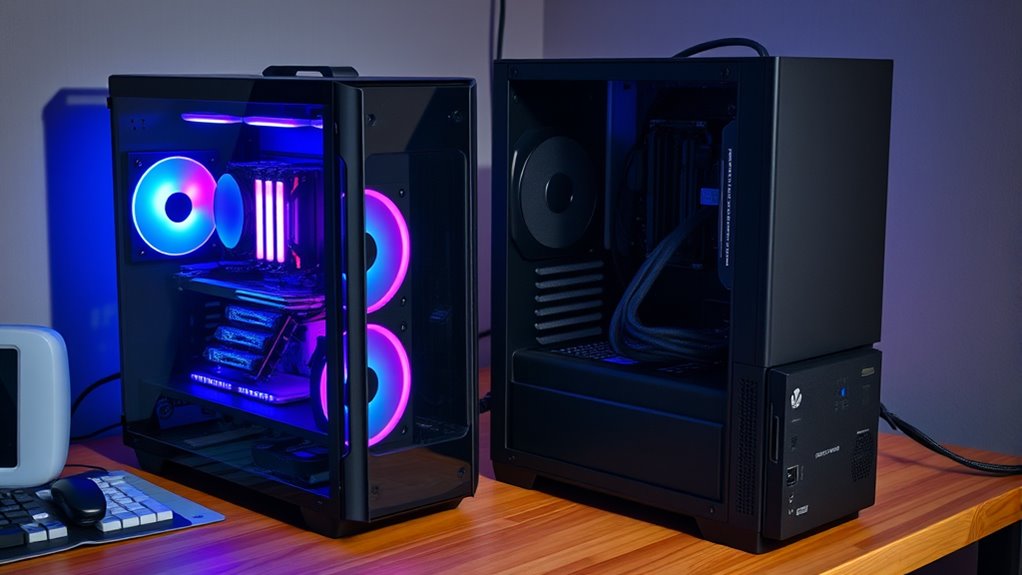
Choosing a budget-friendly power supply is essential to keep costs down without guaranteeing reliability. Look for options with enough wattage and good reviews to ensure your system runs smoothly. Additionally, selecting an affordable case that fits your components can save money while still offering decent airflow and expandability. Proper safe installation practices not only prevent immediate issues but also protect your components in the long run, extending their lifespan. Being mindful of power supply quality can make a significant difference in your system’s overall stability. Considering the importance of electric bike energy output, choosing a reliable power supply ensures your gaming setup remains stable under load. Incorporating knowledge about electrical safety can further safeguard your components during assembly and operation.
Budget-Friendly Power Supplies
Opting for a budget-friendly power supply and case is essential to building an affordable gaming PC without sacrificing performance or reliability. Choose a power supply with a good efficiency rating, like 80 Plus Bronze or higher, to save on energy and reduce heat. Look for models with a modular design, which makes cable management easier and keeps your build tidy. Prioritize brands known for reliability and quality, even at lower price points. Visualize a power supply with neatly sleeved cables, compact size, and quiet operation. A budget-friendly case should have:
- Adequate airflow vents
- Easy-to-open panels
- Space for future upgrades
- Sturdy construction
- A sleek, minimalist design
This combo keeps costs low while maintaining performance. Additionally, selecting components with modern design features can enhance both aesthetics and airflow efficiency without increasing costs. Ensuring the case supports proper body airflow will help keep your components cool and prolong their lifespan. Incorporating security measures in your build process, such as proper cable management and secure connections, can also prevent potential issues and improve overall stability. Incorporating brand reputation into your selection process can further ensure the quality and durability of your components.
Affordable Case Options
Selecting an affordable case is key to keeping your gaming build within budget without sacrificing functionality. Look for cases with features like tempered glass panels to showcase your components, adding style without a hefty price tag. Many budget-friendly cases now include RGB lighting, which enhances aesthetics without extra cost, giving your build a vibrant look. Choose a case that offers good airflow and enough space for your GPU and cooling solutions to prevent overheating. Avoid overly flashy or large cases if you want to save money; instead, opt for compact, well-ventilated designs. By balancing affordability with features like tempered glass and RGB lighting, you get a stylish, functional case that fits your budget and elevates your gaming setup.
Balancing Performance and Future Upgradability
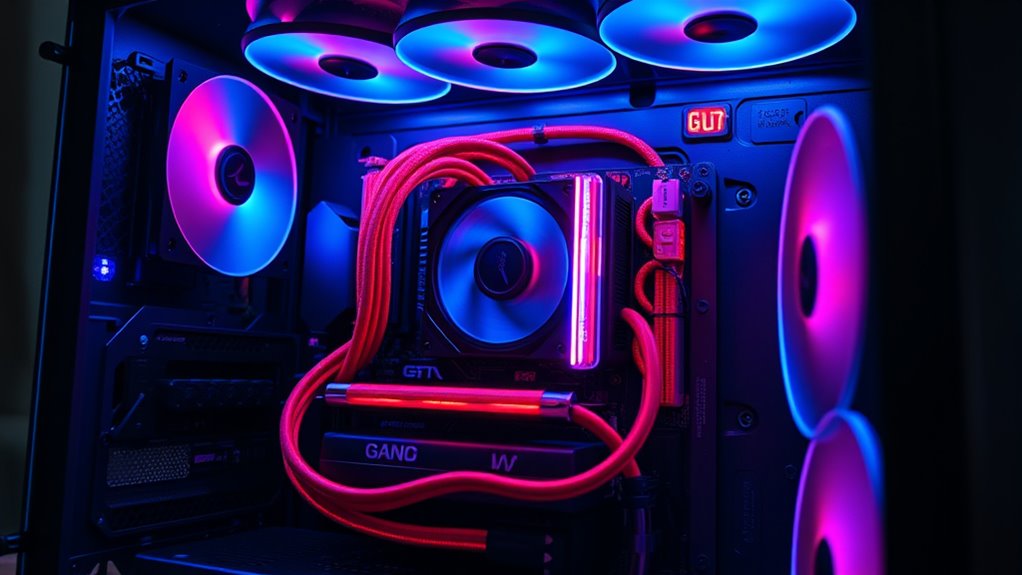
Balancing performance and future upgradability is essential when building a budget gaming PC because it guarantees your system remains capable and relevant without overspending. You want a setup that delivers good overclocking potential now and allows for smooth future component upgrades. To achieve this, focus on a motherboard with extra RAM slots, ample PCIe slots, and a solid power supply. Think about a CPU that offers room for overclocking and a case with good airflow for cooling potential. Here are key features to keep in mind:
- Support for upcoming GPU and CPU upgrades
- Overclocking-ready motherboard and CPU options
- Ample RAM capacity for multitasking and future needs
- Spacious case for better cooling and component expansion
- Reliable power supply with headroom for future upgrades
Tips for Saving Money and Avoiding Common Mistakes

Saving money on a budget gaming PC requires careful planning and avoiding common pitfalls that can quickly inflate costs. To save, focus on effective overclocking strategies—boost your CPU or GPU performance without buying new hardware. Consider investing in affordable custom cooling solutions to manage increased heat from overclocking, which can extend component lifespan and improve stability. Beware of impulse buys; sticking to a list prevents unnecessary expenses. Use price comparison tools and wait for deals on parts. Also, avoid sacrificing quality for cheap parts—select reliable brands to prevent costly replacements. Here’s a quick guide:
| Tip | Do | Don’t |
|---|---|---|
| Overclock smartly | Research safe overclocking | Overclock without cooling |
| Custom cooling | Budget-friendly options | Cheap, ineffective cooling |
| Price tracking | Wait for deals | Rush into purchases |
| Quality over cost | Prioritize reliability | Opt for the cheapest parts |
Frequently Asked Questions
How Can I Optimize Airflow Without Increasing Costs?
You can maximize airflow without increasing costs by improving airflow improvements with simple, cost-effective cooling solutions. Guarantee your case has good cable management to prevent airflow blockages, and position fans strategically for ideal intake and exhaust. Clean dust filters regularly, and consider adding inexpensive aftermarket fans for better circulation. These small tweaks boost airflow, keep temperatures down, and maintain performance without breaking your budget.
Are Used or Refurbished Parts a Good Budget Option?
It’s a bit like trusting the Trojan Horse—used or refurbished parts can be a viable budget option if you do your research. Refurbished components often come with warranties and are tested for quality, making them reliable choices. While some worry about longevity, many used parts work perfectly, offering great performance at a fraction of the cost. Just buy from reputable sellers to avoid potential pitfalls and confirm you’re getting good quality.
What Are the Best Websites for Affordable PC Components?
You should check out websites like Newegg, Amazon, and Micro Center for affordable PC components, especially during online deals. These sites often feature budget brands and discounts that help you save money without sacrificing quality. Sign up for their newsletters to get early access to sales, and compare prices across platforms to find the best deals on essential parts like GPUs, CPUs, and RAM.
How Do I Ensure Compatibility Between All Selected Parts?
Picture your components as puzzle pieces fitting perfectly together. To guarantee component compatibility, check the motherboard’s CPU socket, RAM type, and GPU size. Don’t forget power supply considerations—make sure your PSU can handle your GPU and CPU’s power needs. Use online compatibility tools or build guides to double-check every part, so your system runs smoothly without surprises, like a well-oiled gaming machine ready for action.
Can I Upgrade My PC Gradually Without Changing Major Components?
Yes, you can upgrade your PC gradually without changing major components. Focus on upgrade options like adding more RAM, swapping in a faster SSD, or upgrading your GPU and CPU over time. This approach extends component longevity and keeps your system current. Just guarantee your motherboard supports future upgrades and that your power supply can handle new components, making your build flexible and cost-effective in the long run.
Conclusion
Building a gaming PC on a budget lets you enjoy great performance without stretching your finances too thin. By carefully balancing your choices and prioritizing what truly matters, you’ll craft a system that feels premium without the hefty price tag. Remember, sometimes the most satisfying victories come from thoughtful compromises. With patience and smart decisions, you’ll create a gaming setup that’s both rewarding and reliable, all while keeping your budget gracefully in check.