Mobile esports is rapidly rising in popularity, attracting millions worldwide and gaining recognition as a serious competitive arena. Technological advances like improved hardware, cloud gaming, and accessories are boosting gameplay quality. While phones face challenges like hardware limitations and control precision, the industry is evolving fast to bridge gaps with traditional esports standards. Curious how these innovations are pushing mobile games toward true competitiveness? Keep exploring to discover how mobile esports is shaping the future of competitive gaming.
Key Takeaways
- Mobile esports is gaining global popularity, with professional standards and high-level competitions demonstrating its competitiveness.
- Advancements in hardware and technology, such as cloud gaming and specialized accessories, enhance gameplay precision and responsiveness.
- Increasing skill levels and cross-platform tournaments indicate that phone games are evolving into serious competitive arenas.
- Despite hardware and control limitations, ongoing innovations are bridging the gap between mobile and traditional esports competitiveness.
- Growing industry recognition and investment confirm that mobile phone games can be genuinely competitive in esports.
Top picks for "rise mobile esport"
Open Amazon search results for this keyword.
As an affiliate, we earn on qualifying purchases.
The Growing Popularity of Mobile Esports
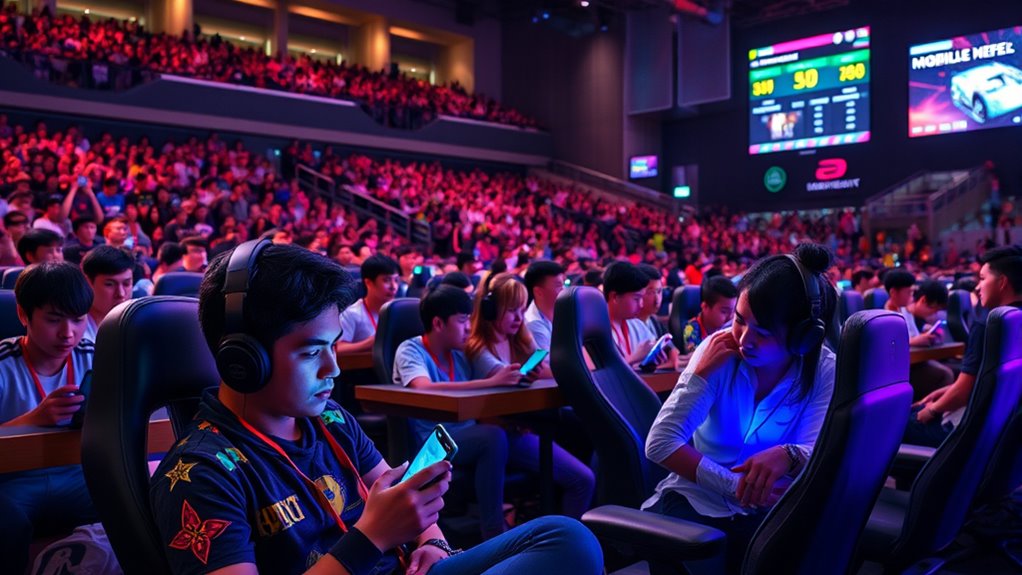
Mobile esports is experiencing rapid growth, driven by the widespread availability of smartphones and affordable internet access. As more people own smartphones, they can easily jump into competitive gaming using touchscreen controls, which make gameplay accessible and intuitive. However, battery limitations pose a challenge, as extended play sessions can drain devices quickly. This often forces players to pause or recharge, impacting their ability to stay in the game consistently. Despite these hurdles, the convenience of mobile gaming appeals to a broad audience, fueling its popularity. With improvements in hardware and gaming apps designed specifically for touchscreens, mobile esports continues to attract new players, transforming phone games into serious competitive platforms. Additionally, advancements in high-refresh-rate displays help deliver smoother gameplay, making mobile esports more competitive and engaging. The ongoing development of energy-efficient hardware also supports longer gaming sessions, helping to mitigate battery issues and enhance overall gaming performance.
Technological Advances Fueling Mobile Competition

Advancements in technology are propelling mobile esports to new heights, enabling smoother gameplay and more competitive experiences. Cloud gaming plays a key role by allowing you to stream high-quality games without relying solely on your device’s processing power, reducing lag and improving responsiveness. Meanwhile, hardware optimization ensures phones are better equipped to handle demanding titles, with improvements like faster processors, more RAM, and advanced cooling systems. These innovations help eliminate common performance issues, giving you a more consistent and fair gaming environment. Additionally, smart device integration with other home technology can enhance your gaming setup by providing seamless control and automation options. This integration leverages technological advances to create a more cohesive gaming experience. Moreover, ongoing hardware improvements are making it possible for even budget-friendly phones to deliver high-performance gaming, broadening access for more players. As a result, mobile esports is becoming more competitive and accessible across different levels of play. Together, cloud gaming and hardware enhancements make mobile esports more accessible and competitive, allowing you to compete at higher levels without needing expensive equipment. This technological progress is transforming your mobile gaming experience into a genuinely serious esports platform, with performance stability playing a crucial role in player success.
Challenges Unique to Phone-Based Gaming
Despite the technological improvements making mobile esports more competitive, phone-based gaming still faces unique challenges that can hinder your performance. One major hurdle is hardware limitations, which affect game speed, graphics, and responsiveness. Touch controls can also be problematic, offering less precision than traditional controllers and causing accidental inputs. Additionally, hardware constraints can limit the overall gaming experience and performance. Limited battery life reduces playtime during intense matches. Smaller screens make it harder to see vital details. Inconsistent network connections lead to lag and disconnections. Limited processing power restricts game complexity. Physical ergonomics can cause discomfort over long sessions. Reliable power sources are essential to prevent unexpected shutdowns and maintain performance during long gaming sessions. Furthermore, ergonomic design of mobile devices can significantly impact comfort and endurance during extended play. The incorporation of advanced cooling technology can also help prevent overheating during prolonged gameplay. Proper device maintenance is crucial for preserving optimal performance and longevity of your gaming hardware. These issues mean that, despite advancements, mobile gamers often contend with constraints that can impact their competitiveness and overall experience. Overcoming these challenges is key to leveling the playing field in mobile esports.
Comparing Mobile and Traditional Esports Standards

How do mobile esports standards compare to those of traditional esports? While traditional esports emphasize precise inputs with peripherals like keyboards and mice, mobile esports rely heavily on touchscreen precision. Hardware portability makes mobile gaming accessible anywhere but can limit control accuracy. To illustrate:
| Aspect | Traditional Esports | Mobile Esports | Key Difference |
|---|---|---|---|
| Input Devices | Keyboard, mouse | Touchscreen | Touchscreen limits precision |
| Hardware Portability | Stationary setups | Highly portable | Portability enhances accessibility |
| Response Time | Fast, customizable peripherals | Dependent on device performance | Device hardware impacts latency |
| Skill Requirement | Extensive training with peripherals | Adapted to touchscreen controls | Different skill sets |
| Competition Level | Established global tournaments | Growing, but still developing | Standardization varies |
Additionally, as technology advances, hardware capabilities continue to improve, reducing the gap between mobile and traditional esports. This ongoing development helps bridge the gap in precision controls, making mobile esports increasingly competitive at higher levels. Furthermore, user interface design is increasingly optimized to enhance player performance, ensuring smoother gameplay experiences.
Despite differences, both aim for competitive excellence, with mobile standards evolving rapidly.
The Future Outlook for Mobile Gaming Competitiveness
As mobile esports continue to grow, their competitive landscape is poised for significant evolution. Advances in touchscreen controls will enhance precision, making gameplay more competitive. However, device fragmentation remains a challenge, as different hardware specs can impact performance and fairness. To stay ahead, developers are working on standardized hardware and adaptive controls. Future trends include:
Mobile esports are evolving with better controls and standardized hardware to ensure fair, competitive gameplay across devices.
- Improved hardware optimization for consistent gameplay
- Enhanced training tools leveraging AI for skill development
- Cross-platform tournaments reducing device disparities
- Integration of cloud gaming to bypass hardware limitations
- More specialized accessories to boost precision and control
- Free Floating design elements in device ergonomics will further improve comfort during extended play sessions.
These innovations suggest a promising future where mobile gaming becomes increasingly competitive. As technology advances, you’ll find it easier to compete at higher levels, regardless of device differences, cementing mobile esports as a serious contender in the gaming world.
Frequently Asked Questions
How Do Mobile Esports Tournaments Differ From PC or Console Events?
Mobile esports tournaments differ from PC or console events mainly in player engagement and tournament logistics. You’ll notice mobile events often have broader participation due to easier access, but they also require simplified logistics like portable setups and quick matchmaking. As a player, you might find mobile tournaments more fast-paced and accessible, yet still competitive. The focus on convenience boosts engagement, making mobile esports a growing and exciting part of the gaming scene.
What Are the Most Popular Mobile Games for Competitive Play?
You’re probably familiar with popular mobile games like PUBG Mobile, Call of Duty: Mobile, and Garena Free Fire, which dominate competitive scenes. These games rely heavily on touchscreen controls, making quick reflexes vital. However, latency issues can impact gameplay, especially during intense moments, so maintaining a stable connection is essential for success. These titles continue to grow in popularity thanks to their accessibility and fast-paced action.
Can Mobile Hardware Limitations Impact Fair Play and Fairness?
Yes, mobile hardware constraints and latency challenges can impact fair play and fairness. When your device struggles with processing power or graphics, it may cause lag or input delays, giving some players an unfair advantage. Additionally, network latency can lead to inconsistent gameplay, making it harder to compete on an even footing. To guarantee fairness, developers continually optimize games and promote better hardware standards for competitive mobile gaming.
How Do Mobile Esports Communities Compare Globally to Traditional Esports?
You’ll notice mobile esports communities are more regional and culturally influenced compared to traditional esports. These communities thrive locally, driven by regional engagement and cultural pride, often translating into passionate participation. While traditional esports may have broader global reach, mobile communities feel more connected to their local identities, fostering unique styles of play and support. This regional focus shapes the growth and diversity in mobile esports, making it a dynamic, culturally rich scene worldwide.
What Advancements Are Expected to Further Enhance Mobile Gaming Competitiveness?
You’ll see mobile gaming become more competitive through advancements like cloud gaming, which lets you play high-quality games on lower-end devices, and augmented reality, adding immersive layers to gameplay. For example, imagine AR tournaments where you interact with virtual objects in real-world settings. These innovations will make mobile esports more accessible, engaging, and skill-based, pushing your competitive experience to new heights and closing the gap with traditional esports.
Conclusion
As you plunge into the world of mobile esports, remember that it’s a rising star, lighting up the gaming universe with its fiery potential. Though it faces hurdles, each technological leap is like fanning the flames of competition, making mobile games bolder and more fierce. So, keep your eyes on this evolving landscape—soon, phone games might just carve their name in the hall of esports history, shining brighter than ever before.