
If you’re choosing memory for a laptop, LPDDR5 is usually the better pick because it offers lower power consumption and better battery life, making it ideal for portable devices. DDR5 delivers higher performance and bandwidth but consumes more energy, which isn’t as suitable for laptops. Your decision depends on whether you prioritize efficiency or raw speed. If you want to understand which option suits your needs best, there’s more to explore.
Key Takeaways
- LPDDR5 is optimized for laptops with lower power consumption and longer battery life.
- DDR5 offers higher bandwidth and performance, suitable for high-performance desktop systems.
- LPDDR5 provides lower latency for faster responsiveness in mobile devices.
- DDR5 consumes more power, making it less ideal for portable, battery-dependent laptops.
- The choice depends on whether the priority is portability and efficiency (LPDDR5) or performance (DDR5).

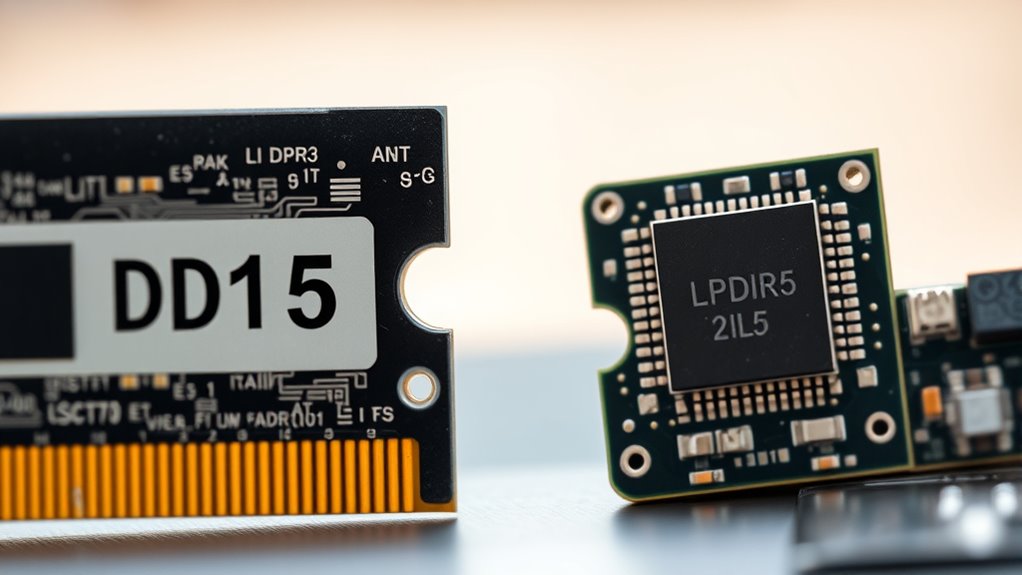
Are DDR5 and LPDDR5 really different, or just variations of the same technology? While they share some similarities, they’re designed for distinct purposes and come with notable differences that matter when choosing the right memory for your laptop. DDR5, or Double Data Rate 5, is primarily aimed at desktops and high-performance systems. It offers increased bandwidth and improved overall performance, but it tends to consume more power compared to its mobile counterpart. LPDDR5, or Low Power DDR5, is optimized for laptops and mobile devices, focusing heavily on power efficiency to extend battery life. This key distinction influences not just how they perform but also their suitability for different use cases.
DDR5 offers high performance and bandwidth for desktops, while LPDDR5 emphasizes power efficiency for laptops and mobile devices.
When it comes to power efficiency, LPDDR5 clearly takes the lead. Because laptops rely on battery power, minimizing energy consumption is essential. LPDDR5 uses lower voltage levels and more advanced power management techniques, which helps prolong your device’s battery life without sacrificing too much speed. DDR5, on the other hand, consumes more power, making it less ideal for portable devices but more suitable for desktops where power isn’t as limited. The power efficiency of LPDDR5 doesn’t just benefit battery longevity; it also helps reduce heat output, keeping your laptop cooler during intensive tasks.
Latency comparison is another significant factor. DDR5 generally offers higher bandwidth and faster data transfer rates, but it also introduces slightly higher latency. This means it might take a tiny bit longer for your system to access data stored in DDR5 memory, which can impact performance in latency-sensitive applications like gaming or real-time editing. LPDDR5 is designed to minimize latency, resulting in faster response times for mobile tasks and smoother multitasking on laptops. Its lower latency makes it a better fit for everyday use, where quick data access enhances your overall experience. Additionally, European cloud innovation is increasingly integrating advanced memory technologies like DDR5 and LPDDR5 to enhance performance and sustainability in cloud infrastructure.
Frequently Asked Questions
How Does DDR5 Impact Gaming Performance on Laptops?
DDR5 can boost your gaming performance on laptops by reducing gaming latency and improving graphics rendering. With faster data transfer speeds, you’ll notice smoother gameplay and quicker load times, especially in demanding titles. This memory type helps your system handle graphics-intensive tasks more efficiently, giving you an edge in competitive gaming. Overall, upgrading to DDR5 enhances your gaming experience by making visuals sharper and gameplay more responsive.
Are There Compatibility Issues Between DDR5 and Older Laptops?
Think of upgrading your laptop’s memory like fitting a new piece into an intricate puzzle. DDR5 isn’t always compatible with older laptops due to legacy support issues and motherboard compatibility. Many legacy systems lack the slots or circuitry needed for DDR5, making an upgrade impossible without replacing major components. Before shopping, check your laptop’s specifications and motherboard support to avoid frustration and guarantee your upgrade fits seamlessly.
What Is the Cost Difference Between DDR5 and LPDDR5 Modules?
You’ll find that DDR5 modules generally cost more than LPDDR5 due to higher manufacturing costs and increased complexity. The pricing differences can be significant, with DDR5 often priced at a premium, especially for high-capacity modules. Conversely, LPDDR5 is more affordable, mainly because it’s designed for mobile devices with optimized manufacturing processes. If you’re on a budget, LPDDR5 might be the better choice, but DDR5 offers higher performance potential.
Which Memory Type Offers Better Battery Life for Portable Devices?
You’ll find that LPDDR5 offers better battery life for portable devices because it has lower power consumption compared to DDR5. Its optimized power efficiency extends battery longevity, making it ideal for laptops and smartphones where conserving energy is vital. By choosing LPDDR5, you help guarantee your device runs longer between charges, enabling you to stay productive or entertained without constantly seeking a power outlet.
Can DDR5 Be Used Effectively in Ultrabooks and Thin Laptops?
Using DDR5 in ultrabooks and thin laptops is like fitting a sports car engine into a compact car; it can work with the right setup. Thanks to advancements in thermal management and form factor flexibility, DDR5 modules are now smaller and more efficient, making them suitable for slim designs. With proper cooling solutions, DDR5 can deliver high performance without sacrificing the sleekness and portability you expect from your ultrabook.
Conclusion
Ultimately, whether you choose DDR5 or LPDDR5, the key is knowing your needs. Examine the details, decide what delivers the best balance of bandwidth, battery life, and budget, and don’t forget to take into account your device’s demands. Remember, making the right memory move maximizes your laptop’s performance and longevity. So, weigh your options wisely, and watch your work or play flourish with the perfect memory match. Your ideal choice awaits!