
The most important label on a USB‑C cable tells you if it meets safety, performance, and compatibility standards. Look for certification symbols like USB-IF, USB Power Delivery, or speed indicators such as USB 3.1 or Thunderbolt 3. These labels guarantee the cable is safe, reliable, and suited for your device needs. Ignoring such labels can lead to safety risks or device damage. Keep an eye on these details to make smarter choices—the secrets behind this label can help you find the best cable.
Key Takeaways
- Look for certification logos like USB-IF to confirm industry compliance and safety standards.
- Check for specific data transfer rates (e.g., USB 3.1, Thunderbolt 3) on the label.
- Verify power ratings (e.g., 60W, 100W) to ensure compatibility with your device’s charging needs.
- Ensure the cable has safety certifications to reduce risks of overheating, short circuits, or fire hazards.
- Clear, detailed labels help confirm the cable’s capabilities and prevent using incompatible or unsafe products.
Top picks for "cabl label really"
Open Amazon search results for this keyword.
As an affiliate, we earn on qualifying purchases.
Understanding the Significance of Certification Labels
Certification labels on USB‑C cables are essential indicators of quality and safety. They help you quickly assess a cable’s reliability based on its brand reputation and manufacturing origin. Reputable brands often include certification marks to demonstrate compliance with industry standards, ensuring the cable can handle the data transfer speeds and power requirements you need. Knowing the manufacturing origin can also give you insights into the quality control practices behind the product. Certified cables are less likely to cause damage to your devices or pose safety risks. Additionally, certification labels can provide information about the industry standards that the cable meets, giving you added confidence in its performance. Recognizing vetted cables that meet these standards can save you time and prevent potential issues. By paying attention to these labels, you protect your devices and yourself. Understanding the Significance of Certification Labels Ensuring the cable meets recognized quality assurance benchmarks helps prevent compatibility issues and enhances device longevity. Being aware of certification marks can also assist you in making informed purchasing decisions, especially with the increasing variety of options available. Ultimately, certification labels serve as a trusted guide, helping you choose USB‑C cables that meet safety, performance, and durability expectations.
Key Standards and Certifications to Look For
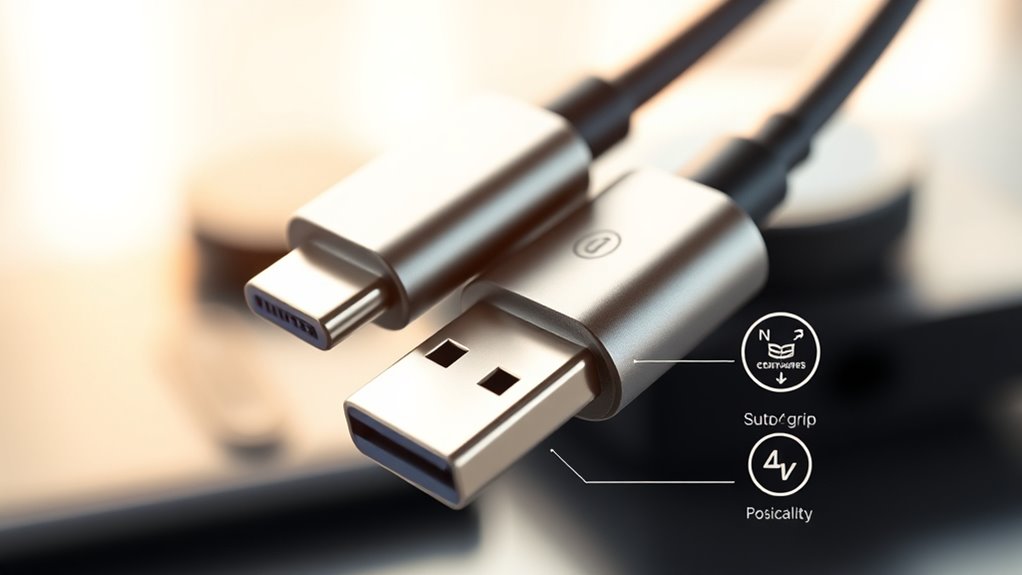
Knowing which standards and certifications a USB‑C cable has can help you confirm it meets safety and performance expectations. Look for certifications like USB-IF, which ensure the cable adheres to industry standards for power delivery and data transfer. A certified cable supports fast charging capabilities and reliable data transfer speeds, reducing risks of damage or failure. Standards such as USB 3.1 or USB 3.2 indicate high data transfer rates, while certifications like USB Power Delivery (USB PD) guarantee safe, efficient power delivery. Avoid uncertified cables, as they may not meet these standards and could pose safety hazards or performance issues. Prioritizing certified cables ensures you get a product that’s safe, reliable, and performs as advertised. European cloud innovation standards contribute to overall product quality and sustainability, aligning with safer and more reliable technology options. Additionally, choosing cables with recognized industry certifications can provide peace of mind regarding compatibility and long-term durability.
How to Decode the Label Information

Have you ever looked closely at a USB-C cable’s label and wondered what all those symbols and numbers mean? That’s where label decoding comes in. Understanding these markings helps you verify the cable’s capabilities and compliance. Look for symbols indicating certification importance, such as the USB-IF logo, which confirms the cable meets industry standards. Numbers often specify data transfer speeds, power ratings, or compatibility levels. Recognizing these details prevents you from buying subpar or incompatible cables. Certifications ensure safety and performance, so don’t overlook them. By decoding the label, you gain insight into what the cable can do and trust its reliability. This knowledge empowers you to make smarter choices and avoid potential issues with low-quality or uncertified cables. Certification symbols help you quickly identify cables that meet industry standards and ensure safe usage. Additionally, understanding the power ratings can help you select cables suitable for fast charging and higher power devices, which is especially important for high-performance gadgets. Knowing how to interpret label information can also guide you in choosing cables that are compatible with your specific devices and usage needs.
Common Misconceptions About USB‑C Labels

Many people assume that all USB‑C labels are straightforward and accurately reflect a cable’s capabilities. However, label branding can be misleading, as marketing claims often exaggerate or oversimplify a cable’s features. Manufacturers may highlight certain qualities, like fast charging or high data transfer, without clarifying the specific standards or limits involved. This can lead you to believe a cable supports more than it actually does, risking device compatibility or performance issues. Remember, not all labels are created equal, and some may prioritize appealing marketing claims over technical accuracy. To avoid misconceptions, always verify the specifications behind a label and don’t rely solely on branding or marketing language. Additionally, understanding the Free Floating standards and certifications can help you make more informed choices. Knowing how technical standards are established and verified ensures you select a cable that truly meets your needs. Being aware of the standardization process can further assist in evaluating a cable’s reliability and compliance. Recognizing the importance of proper certification can help prevent purchasing unreliable or non-compliant cables. Clear, honest information guarantees you choose the right cable for your needs.
The Risks of Ignoring the Label

Ignoring the label on a USB-C cable can lead to compatibility issues, causing devices to malfunction or not work at all. It also increases safety risks, such as overheating or damaging your equipment. Paying attention to labels helps you avoid these problems and guarantees safe, reliable connections. Additionally, understanding the outdoor tech behind your devices ensures you choose the right cables for your needs. Being aware of the thermal behavior of different cables can help prevent overheating and extend the lifespan of your gear. Recognizing the importance of specifications on the label can further optimize your device performance and safety. Moreover, understanding electrical standards can help you select cables that support your device’s power requirements safely. Being familiar with bank SWIFT/BIC codes can also assist in secure financial transactions when needed.
Compatibility Concerns Arise
Using a USB-C cable that isn’t compatible with your device can lead to serious issues, from slow data transfer to potential damage. When labels aren’t accurate, you risk connecting incompatible cables that don’t meet your device’s requirements. This mislabeling undermines label accuracy, making it difficult to trust product descriptions. If you ignore compatibility labels, you might experience frustration, lost time, or even hardware failures. Manufacturers rely on correct labeling to build consumer trust, ensuring users can confidently select the right cable for their needs. Without clear and truthful labels, trust diminishes, and you may end up with a cable that doesn’t perform as expected or worse, harms your device. Proper labeling standards are essential to ensure that cables meet the necessary specifications for safe and efficient use. Additionally, industry regulations help maintain consistency and safety across different brands and products.
Safety Hazards Increase
When you disregard the labels on USB-C cables, you increase the risk of safety hazards that can harm both your device and yourself. Using an incompatible or uncertified cable can compromise electrical safety, leading to short circuits or electrical shocks. Poor-quality cables may overheat or malfunction, elevating fire hazards that threaten your home or workplace. Ignoring proper labeling might mean missing essential safety standards, making you vulnerable to dangerous situations. Always check the label to confirm the cable meets safety certifications and is designed for your device’s power requirements. Doing so helps prevent electrical accidents and reduces fire risks, protecting both your safety and your equipment’s longevity. Never underestimate the significance of proper labeling for safe, reliable USB-C connections.
Tips for Choosing the Right USB‑C Cable Based on Its Label
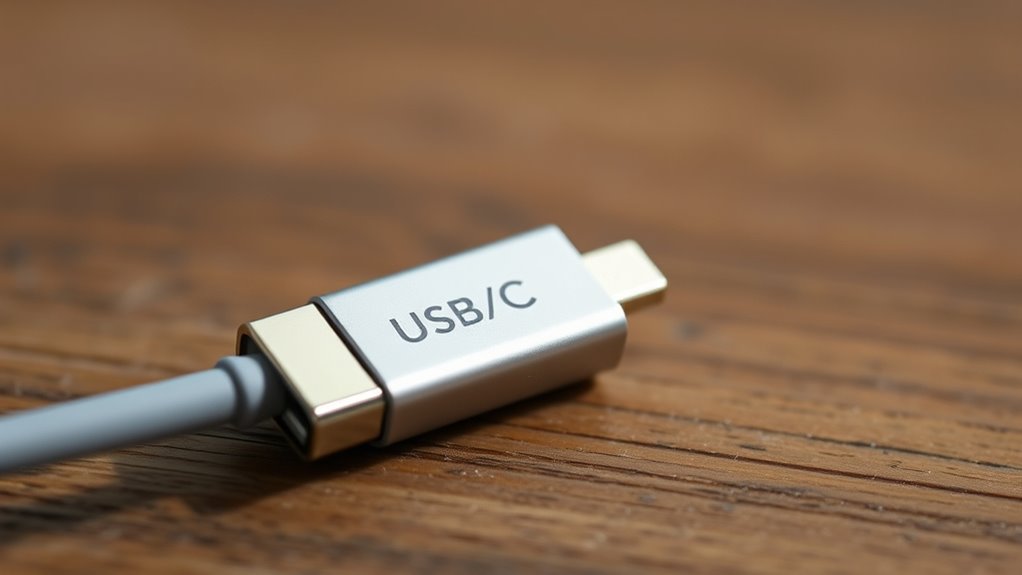
To choose the right USB‑C cable, start by paying attention to its label, as it provides key information about the cable’s capabilities. Look for labels that specify charging speed, such as 60W or 100W, to make sure it meets your device’s power needs. For data transfer, check for labels indicating high-speed transfer rates like USB 3.1 or Thunderbolt 3, which enable faster file transfers. Avoid cables without clear labels or those that only specify compatibility without detailed specs. A well-labeled cable helps you match the cable’s performance to your usage—whether fast charging or quick data transfer—saving you time and avoiding potential damage. Always verify that the label aligns with your device’s requirements for maximum performance.
Frequently Asked Questions
Can a Certified Usb‑C Cable Still Be Incompatible With My Device?
Yes, a certified USB‑C cable can still be incompatible with your device. Certification guarantees the cable meets safety and performance standards, but it doesn’t guarantee perfect compatibility. You should consider the cable’s durability and the manufacturer’s reputation, as higher quality cables tend to work better and last longer. Always verify if the cable supports your device’s specific features like fast charging or data transfer speeds before purchasing.
Do All High-Quality Cables Display Certification Labels Prominently?
Not all high-quality cables display certification labels prominently. You might find some well-made cables with discreet or small certification labels, so don’t judge solely by label visibility. Instead, focus on certification prominence—look for clear, visible labels that indicate compliance. A cable’s quality isn’t just about the label; check reviews and specifications to ensure it meets your device’s standards and offers reliable performance.
Are There Counterfeit Certification Labels on Cheap Usb‑C Cables?
A picture’s worth a thousand words, and the same applies to certification labels. You’ll find counterfeit labels on cheap USB-C cables, making certification fraud easy to spot if you look closely. These fake labels deceive consumers, risking damage or data loss. Always verify labels from trusted sources, because relying on counterfeit certification fraud can turn your device into a costly mistake. Stay vigilant and protect your tech investments.
How Often Are Certification Standards Updated for Usb‑C Cables?
Certification standards for USB-C cables are typically updated every few years, with a standard update frequency of about 2 to 3 years. You should stay aware of certification renewal notices from manufacturers or official sources, as this helps guarantee your cable meets the latest safety and performance requirements. Regular updates mean that newer cables are more reliable, so checking for current certification labels can save you from potential issues.
Is the Presence of a Label a Guarantee of Cable Performance?
A label isn’t a magic wand guaranteeing cable performance, so don’t be fooled into thinking it is. While a label can indicate adherence to manufacturing standards and label accuracy, it’s no foolproof promise of top quality. You should still check specifications and reviews, because manufacturers can slap on labels that look legit but hide subpar standards. So, trust a label, but verify — your devices deserve real performance, not just shiny stickers.
Conclusion
Remember, the label on a USB-C cable is your trusty compass in a sea of options—guiding you to safe, reliable charging and data transfer. Ignoring it is like sailing blind; risks of damage or slow performance loom large. So, read those labels carefully and choose wisely. After all, isn’t it better to trust a proven signpost than to gamble with your device’s future? Your cable’s label is the key—don’t leave home without it.