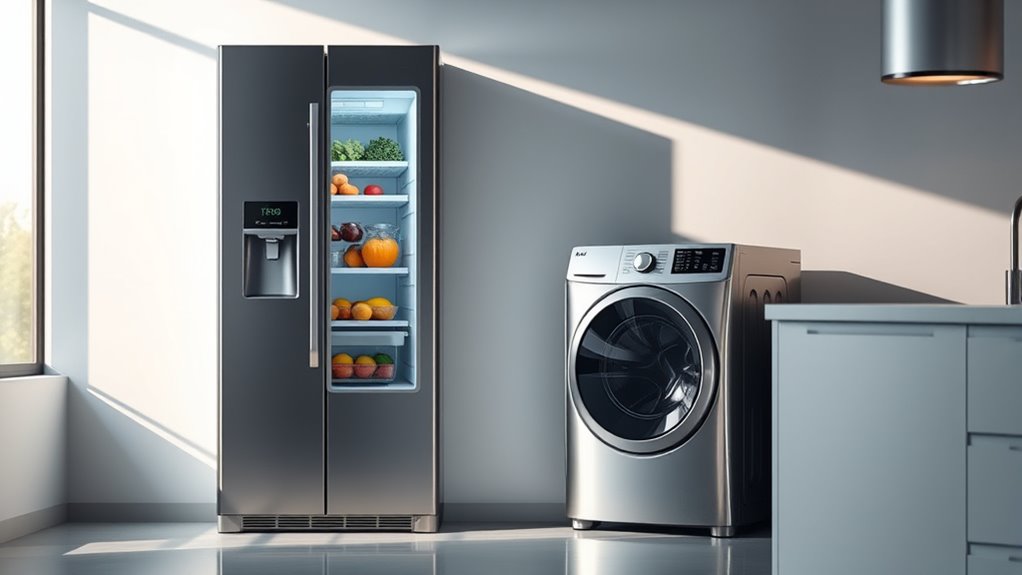

Smart washers and fridges can be a worthwhile investment if you value convenience, energy savings, and better home management. They let you control appliances remotely, get alerts for maintenance or supplies, and automatically adjust settings to save on utilities. While they often cost more upfront, their long-term benefits—like reducing bills and making chores easier—make them worth considering. If you’re curious about how these features can improve your daily life, explore further.
Key Takeaways
- Smart appliances improve convenience with remote control, scheduling, and real-time alerts, saving time and effort.
- They optimize energy use by detecting load sizes and adjusting temperatures, leading to long-term utility savings.
- Integration with smart home systems enhances overall household management and device coordination.
- Higher upfront costs may be justified by ongoing convenience, energy savings, and maintenance alerts.
- The added features support a more efficient, connected lifestyle, making home management simpler and more environmentally friendly.

Connected appliances are transforming the way you manage your home by allowing devices to communicate and work together seamlessly. When you have a smart washer or fridge, you’re not just buying a piece of equipment—you’re investing in a system that simplifies your daily routines. These appliances can be controlled remotely, send alerts, and adapt to your habits, offering a level of user convenience that traditional appliances can’t match. Imagine starting your laundry from your phone while still at work or receiving an alert when your refrigerator runs low on essentials. These features make your life easier, but they also bring benefits like energy savings that can add up over time.
Connected appliances simplify daily routines with remote control, alerts, and energy savings, making home management effortless.
With connected appliances, you gain the ability to monitor and optimize energy use. Smart washers, for example, can detect load sizes and choose the most efficient cycle, reducing water and electricity consumption. Refrigerators can track their internal temperature and suggest adjustments or automatically adjust cooling settings to save energy during off-peak hours. Over time, these small efficiencies can lead to noticeable savings on your utility bills. Plus, because these appliances often learn your habits and preferences, they can fine-tune their operation, making them more energy-efficient without sacrificing performance. This combination of convenience and efficiency makes smart appliances an attractive choice for homeowners focused on reducing their environmental footprint and saving money.
User convenience is arguably the biggest selling point of connected appliances. Instead of manually checking or adjusting your fridge or washer, you can do it from your smartphone or even set schedules that match your routine. Want to start the laundry while you’re still in bed? No problem. Need to check if you’re running low on milk? Just open the app. These features eliminate trips to the appliance and give you more control, making everyday chores less of a hassle. Additionally, many smart appliances come with features like automatic detergent dispensing or alerts for maintenance issues, which further streamline your household management. It’s about making your home smarter so you can focus on the things that matter most.
Of course, there’s a cost to contemplate. Smart appliances tend to be more expensive upfront, but many owners find that the convenience and savings they offer justify the investment. They’re also designed to be compatible within a smart home ecosystem, meaning you can integrate them with other devices for a more unified experience. Whether it’s remote operation, energy-efficient cycles, or real-time notifications, these appliances are built to enhance your lifestyle. In the context of home technology, the integration of smart appliances with other connected devices maximizes efficiency and user control. In the end, if you value convenience, energy savings, and a more connected home, investing in a smart washer or fridge could be well worth it.
Top picks for "connect applianc smart"
Open Amazon search results for this keyword.
As an affiliate, we earn on qualifying purchases.
Frequently Asked Questions
How Secure Are Connected Appliances Against Hacking?
Connected appliances are somewhat vulnerable to hacking, but you can improve their security. Appliance vulnerabilities often stem from weak passwords or outdated software. To prevent hacking, always update your device firmware promptly, use strong, unique passwords, and enable two-factor authentication if available. Staying vigilant and practicing good hacking prevention habits helps protect your smart appliances from potential threats, making them safer to use in your home.
Do Smart Appliances Actually Save Energy or Costs?
Smart appliances do save energy and costs, much like a wise investment that keeps paying off. They optimize usage by adjusting settings based on your habits, leading to energy savings. Over time, their efficiency boosts cost effectiveness, reducing utility bills and prolonging appliance life. While initial costs might be higher, the long-term savings make smart appliances a smart choice for your home and wallet.
Are Connected Appliances Compatible With Existing Smart Home Systems?
Yes, connected appliances are generally compatible with existing smart home systems, making smart home integration seamless. You’ll want to check appliance compatibility beforehand, as some devices work better with specific platforms like Alexa, Google Assistant, or Apple HomeKit. When you choose appliances that support your current system, you can easily control and automate them through your smart home hub, enhancing convenience and functionality in your daily routines.
What Is the Typical Lifespan of a Smart Appliance?
A smart appliance typically lasts about 8 to 12 years, depending on usage and maintenance. You should consider appliance durability when evaluating smart tech, as advanced features may lead to higher replacement costs if repairs become frequent. While they offer convenience, keep in mind that the technology can become outdated faster, so weigh the benefits against potential replacement costs over their lifespan to decide if it’s worth the investment.
How Easy Is It to Troubleshoot Issues With Connected Devices?
Troubleshooting connected devices is fairly straightforward because of remote diagnostics and user-friendly interfaces. You can often identify issues through the app, which guides you step-by-step. If needed, remote diagnostics let support teams assess problems without visiting your home, saving time. While some tech-savvy users find it easy, beginners might need to consult manuals or customer support. Overall, these features make troubleshooting more accessible and less frustrating.
Conclusion
Imagine your appliances as tiny, diligent workers in a busy factory. When they’re connected, they’re like a well-coordinated team, communicating seamlessly to keep everything running smoothly. But if one worker gets distracted, the whole process slows down. So, before investing in a smart washer or fridge, ask yourself: are you ready to manage this bustling team? Sometimes, the simplest tools work best—leaving the factory running just fine without the extra fuss.