Yes, solar panels can power all your gadgets off-grid if you size and install your system properly. You’ll need to calculate your daily energy needs, choose durable panels, and include a battery system to store power for cloudy days. Environmental factors like shading and weather also impact performance. With a well-planned setup and proper maintenance, you can enjoy reliable, independent energy. Keep exploring to discover how to optimize your off-grid solar system effectively.
Key Takeaways
- Proper system sizing, including panels and batteries, is essential to power all gadgets off-grid reliably.
- Energy-efficient appliances reduce total power demand, making off-grid solar more feasible for home use.
- Accurate calculations of daily energy needs help determine the required solar panel capacity and storage.
- Shading, weather, and environmental factors can impact solar efficiency and overall power availability.
- Regular maintenance and monitoring ensure the system operates optimally to support all home gadgets year-round.
Top picks for "solar home panel"
Open Amazon search results for this keyword.
As an affiliate, we earn on qualifying purchases.
Understanding Off-Grid Solar Systems
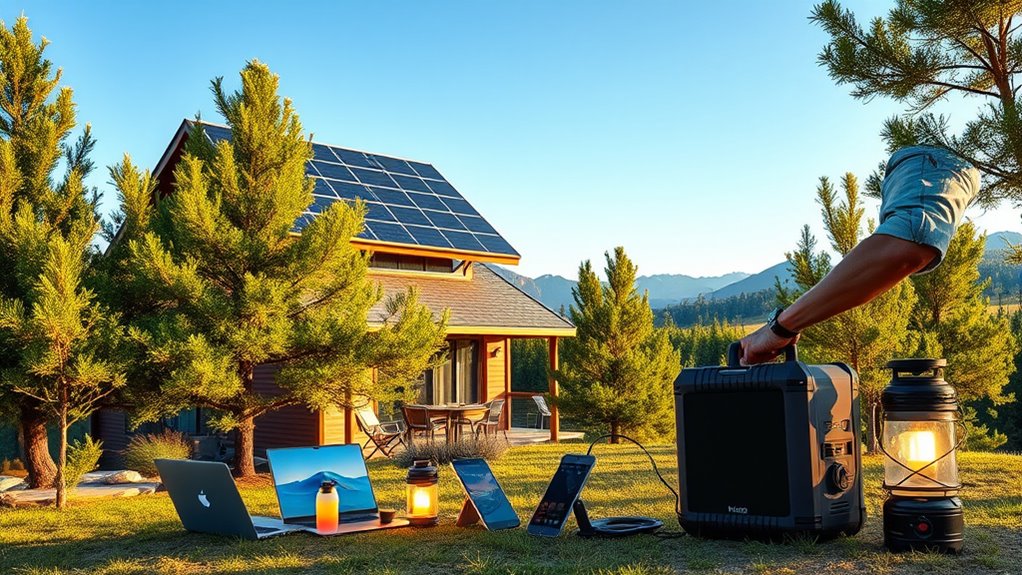
Off-grid solar systems operate independently from the utility grid, making them ideal for remote locations or properties wanting energy independence. When choosing these systems, you’ll notice that solar panel durability is vital; high-quality panels withstand weather and environmental stress, guaranteeing long-term performance. While off-grid system costs can initially seem higher, they often offset expenses associated with extending traditional power lines. Durability affects both the longevity and efficiency of your setup, so investing in resilient panels pays off over time. Keep in mind that the total costs include not just panels but batteries, inverters, and installation. Additionally, selecting the right reliable backup power solutions can ensure consistent performance during periods of low sunlight or unexpected outages. Proper system maintenance also plays a crucial role in sustaining optimal operation and extending the lifespan of your solar setup. Understanding solar panel durability and other key factors can help you make informed decisions and guarantee your off-grid solar system provides reliable, sustainable power tailored to your needs. Regular inspections and cleaning can further enhance performance and longevity, making system upkeep an essential part of your maintenance routine. For optimal results, consider the importance of proper installation procedures to maximize efficiency and safety.
Components of a Home Solar Setup

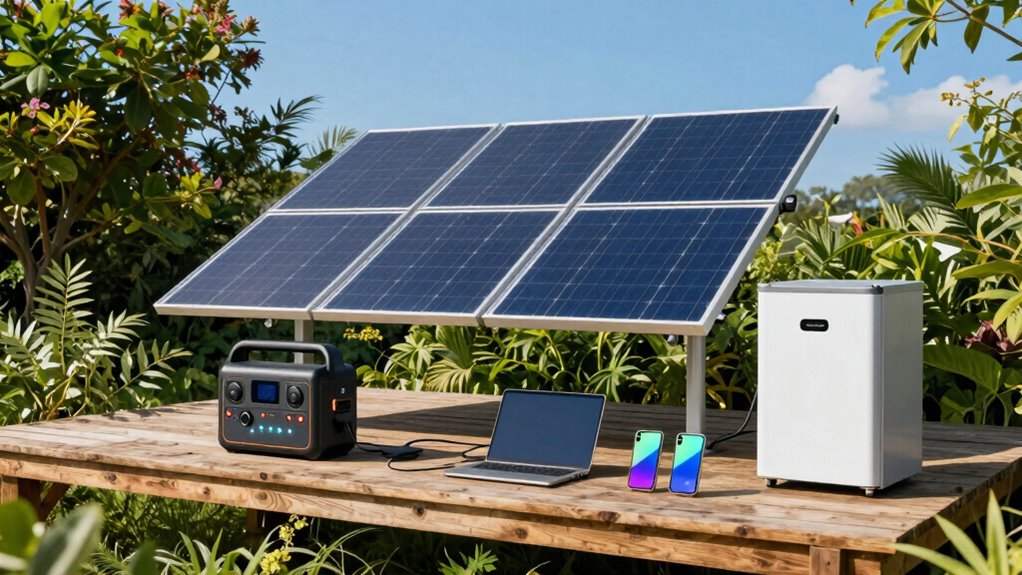
A home solar setup consists of several key components that work together to generate, convert, and store solar energy. First, solar panels capture sunlight; you can choose from various solar panel types, like monocrystalline or polycrystalline. Next, the inverter options convert the direct current (DC) produced by the panels into usable alternating current (AC). You’ll also need a charge controller to regulate battery charging and batteries for energy storage. Additional components include mounting hardware to secure panels and a monitoring system to track performance. Properly selecting and maintaining these components ensures efficiency and longevity of your solar system. Additionally, understanding the importance of system compatibility helps ensure all components work seamlessly together, maximizing performance and durability. Regular maintenance and component quality are crucial for optimal operation and long-term reliability. To optimize your system’s performance, it’s essential to consider environmental factors like shading and weather patterns. Here’s a quick overview: Vetted – these components ensure your solar system operates efficiently and reliably.
Calculating Your Energy Needs
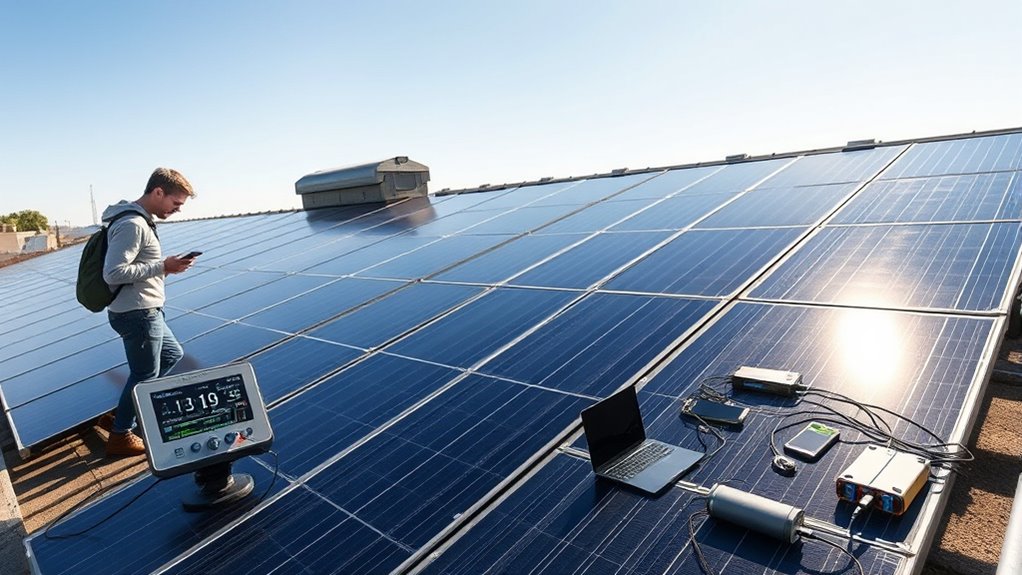
How do you determine the amount of energy your home needs from a solar system? First, list all your gadgets and appliances, then note their wattage and daily usage hours. Add these up to find your total daily energy consumption in watt-hours. To size your solar panels accurately, consider ideal solar panel angles, which maximize sun exposure throughout the year. Also, account for shading considerations, as nearby trees or structures can reduce efficiency. Use this information to estimate the number of panels required, ensuring they can produce enough power during low sunlight periods. Keep in mind that accurate calculations help avoid under or overestimating your system size, making your off-grid setup more reliable and efficient. Additionally, understanding zodiac traits can provide insight into your personal energy needs and how you might optimize your system for your lifestyle. Proper solar panel orientation is crucial for maximizing energy production and ensuring your system meets your needs effectively. Incorporating system monitoring tools can also help you track and optimize your solar energy usage over time. Recognizing the importance of accurate calculations can prevent costly mistakes and improve system performance.
Factors Affecting Solar Power Generation

Several factors can influence how much solar power your system generates, making it essential to understand these elements to optimize your setup. Shadowing effects from trees, buildings, or other obstructions can substantially reduce panel efficiency. Weather variability also plays a vital role; cloudy days, rain, or snow diminish solar input. Additionally, the angle and orientation of your panels affect how much sunlight they receive. Seasonal changes alter the sun’s position, impacting energy production throughout the year. Dust, dirt, and debris on panels can block sunlight, decreasing output. Environmental factors such as wind and temperature can also influence panel performance, sometimes causing efficiency drops during extreme conditions. For example, electric dirt bikes demonstrate the importance of understanding horsepower and performance capabilities, which can be impacted by environmental conditions. Furthermore, solar panel maintenance is crucial for sustaining optimal performance over time, as neglecting cleaning and inspections can lead to efficiency losses. Regular cleaning and system monitoring help detect potential issues early and ensure consistent power output. Finally, shading and weather conditions combined can cause inconsistent power generation, so monitoring these factors helps you maximize your solar system’s performance.
Battery Storage and Energy Management
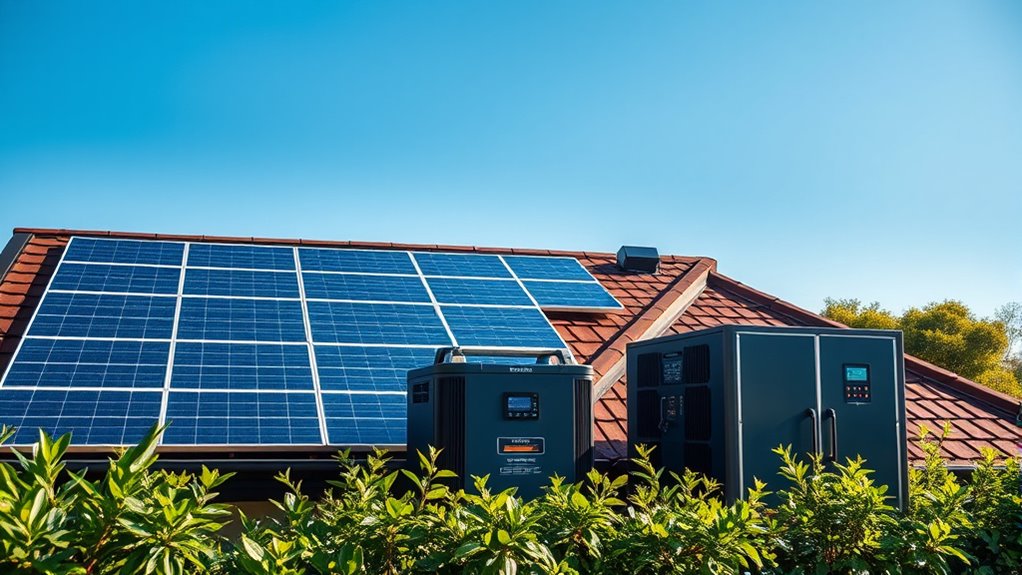
Maximizing your battery capacity guarantees you store enough energy to power your home during cloudy days or outages. Smart energy control systems help you manage when and how you use stored power for maximum efficiency. Together, these tools keep your solar system reliable and cost-effective. Incorporating energy-efficient options can further reduce your overall energy consumption and extend your battery life. Additionally, understanding advanced energy management techniques enables you to optimize your system’s performance and longevity. Embracing battery chemistry advancements can also significantly enhance energy storage capabilities and durability.
Battery Capacity Optimization
Improving battery capacity is essential for ensuring your solar energy system works efficiently. Properly sizing your batteries guarantees you have enough energy storage to power your gadgets during cloudy days or at night. Focus on matching your battery capacity to your energy consumption patterns to avoid shortages or wasted capacity. Consider these key points:
- Assess your daily energy needs accurately
- Choose batteries with ideal depth of discharge
- Balance battery capacity with solar panel output
- Prioritize high-quality energy storage units
- Regularly monitor and maintain your system
- Be aware of warranty considerations, as reconditioning batteries may impact warranty coverage and influence your long-term investment. Additionally, integrating smart energy management systems can help optimize overall battery performance and lifespan. Understanding battery chemistry can also help you select the most durable and efficient storage options for your setup. Utilizing connected monitoring devices can provide real-time data to better manage your energy assets.
Smart Energy Control
Have you considered how smart energy control can enhance your solar system’s efficiency? By using battery storage and energy management, you can optimize your energy consumption habits and reduce reliance on external power. Smart controllers monitor your energy flow, ensuring your batteries are charged efficiently and used effectively when sunlight isn’t available. Regular solar panel maintenance keeps your system operating at peak performance, maximizing stored energy. To better understand this, consider the table below:
| Aspect | Benefit |
|---|---|
| Battery Management | Prevents overcharging and prolongs battery life |
| Energy Monitoring | Identifies high-consumption devices and reduces waste |
| Load Shifting | Uses stored energy during peak rates or low sunlight |
| System Integration | Seamlessly manages all components for maximum efficiency |
Smart energy control makes your off-grid setup smarter, more reliable, and energy-efficient.
Challenges of Off-Grid Solar Power
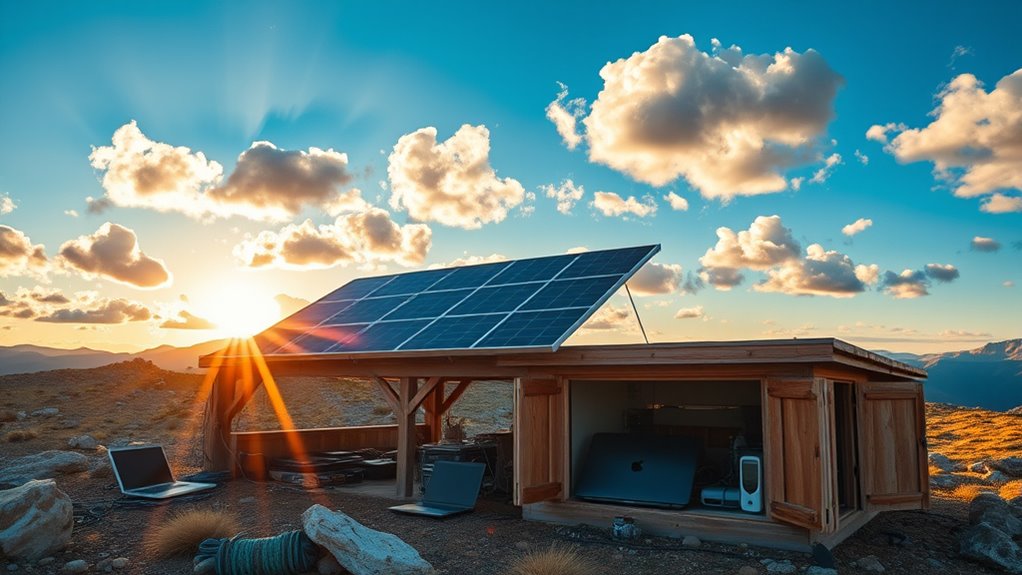
Off-grid solar power faces significant challenges that can hinder its effectiveness and reliability. One major hurdle is maintaining solar panel durability, especially in harsh weather conditions, which affects long-term performance. Additionally, achieving true grid independence requires a robust system that can store enough energy for cloudy days or extended periods without sunlight. You also face the difficulty of balancing energy demand with limited storage capacity, risking power shortages. Variability in sunlight exposure impacts consistency, making system planning essential. Lastly, initial setup costs and ongoing maintenance can be substantial, requiring careful investment. To succeed off-grid, you must address these challenges by selecting durable panels, optimizing storage, and planning for seasonal fluctuations—all critical for reliable, independent solar power.
Tips for Maximizing Solar Efficiency

To get the most out of your solar panels, it’s essential to position them correctly and keep them clean. Regular solar panel maintenance, like removing dirt, leaves, and snow, guarantees ideal performance. Check for shading considerations daily, as even small shadows from trees or nearby structures can considerably reduce efficiency. Trim any overhanging branches and avoid placing panels in areas prone to frequent shading. Keep your panels angled toward the sun, especially during peak sunlight hours, to maximize exposure. Use monitoring tools to track energy output and identify issues early. Proper maintenance and awareness of shading considerations help ensure your solar system operates at peak efficiency, providing reliable power for your off-grid needs.
Is Off-Grid Solar Right for Your Home?
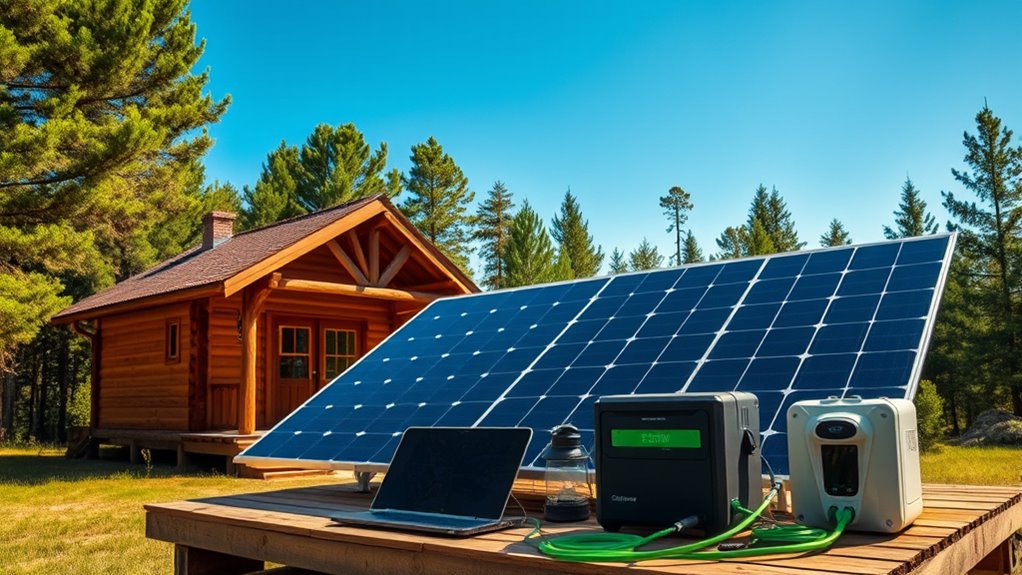
Deciding whether off-grid solar is right for your home depends on your energy needs, location, and lifestyle. It’s a big commitment that involves solar panel installation and managing off grid system costs. Consider these factors:
Choosing off-grid solar depends on your energy needs, location, lifestyle, and willingness to manage costs and storage.
- Your ability to generate enough power year-round
- The amount of sunlight your location receives
- Your budget for initial setup and maintenance
- How reliable your local grid is or if you’re completely off-grid
- Your capacity to handle energy storage with batteries
If you want independence from utility companies and can afford the upfront costs, off-grid solar might be perfect. However, if your energy needs are high or you live in a cloudy area, you’ll want to carefully evaluate whether this system suits your lifestyle.
Frequently Asked Questions
How Long Do Solar Panels Typically Last in an Off-Grid System?
Solar panels typically last 25 to 30 years in an off-grid system. Their durability depends on quality and maintenance, but most panels withstand weather and environmental factors well. You’ll want to contemplate replacement costs after this period, as efficiency drops over time. Regular cleaning and inspections can extend their lifespan, ensuring you get the most out of your investment and keep your off-grid power reliable for years to come.
Can I Use Solar Power to Charge Electric Vehicles Off-Grid?
Think of your solar setup as a modern chariot—yes, you can use it as a solar vehicle to charge your electric car off-grid. With the right solar panels and a robust off-grid charging system, you’ll generate enough power to keep your EV running without relying on the grid. Just make sure your system’s capacity matches your vehicle’s needs, and you’ll be off on your adventure with clean, solar-powered energy.
What Maintenance Is Required for Off-Grid Solar Systems?
You need to regularly check your inverter for proper operation and clean your solar panels to maximize efficiency. Battery maintenance is vital; keep terminals clean, verify proper charge levels, and monitor for any signs of wear or corrosion. You should also verify connections and inspect for damage. Performing these routine tasks helps your off-grid solar system run smoothly, guaranteeing reliable power for your gadgets and extending the system’s lifespan.
How Does Weather Affect Off-Grid Solar Energy Production?
You might notice your solar energy production dips during cloudy days or seasonal changes. Solar cloud cover reduces sunlight reaching your panels, cutting efficiency, while winter’s shorter days mean less overall sun. These weather factors cause seasonal variations in power output, so you’ll need to plan for occasional shortages. Keep an eye on weather forecasts and consider battery storage to guarantee your off-grid system stays reliable, rain or shine.
Are There Government Incentives for Installing Off-Grid Solar Solutions?
Yes, you can benefit from government incentives like grants and tax credits when installing off-grid solar solutions. These programs aim to make renewable energy more affordable and accessible. You should check local, state, or federal resources, as eligibility varies. Taking advantage of government grants or tax credits can markedly reduce your upfront costs, making it easier to power your gadgets off-grid with clean solar energy.
Conclusion
Deciding to go off-grid with solar power is like stepping into the sunlight—you’re embracing independence and sustainability. While challenges exist, understanding your energy needs and maximizing efficiency can turn your home into a self-sufficient oasis. Remember, with the right setup, you can harness the sun’s power to keep all your gadgets running smoothly. So, are you ready to turn your home into a shining example of energy freedom? The sun’s waiting—what’s stopping you?