To lock down your home Wi-Fi, start by creating a separate guest network to keep visitors away from your main devices. Keep your router’s firmware updated regularly to patch security flaws. Use a strong, unique password with WPA3 encryption if available, and disable WPS to prevent vulnerabilities. Position your router centrally and monitor connected devices to spot any unauthorized access. Implementing these steps will markedly improve your network security—discover more tips to protect your Wi-Fi environment.
Key Takeaways
- Enable a guest network with a strong, unique password to isolate visitors from your main devices.
- Regularly update your router’s firmware to patch security vulnerabilities and enhance performance.
- Use strong, unique Wi-Fi passwords with WPA3 encryption; disable WPS to prevent hacking attempts.
- Position your router centrally and limit connected devices to reduce signal leakage and security risks.
- Monitor connected devices and disable unnecessary features to maintain a secure and reliable network.
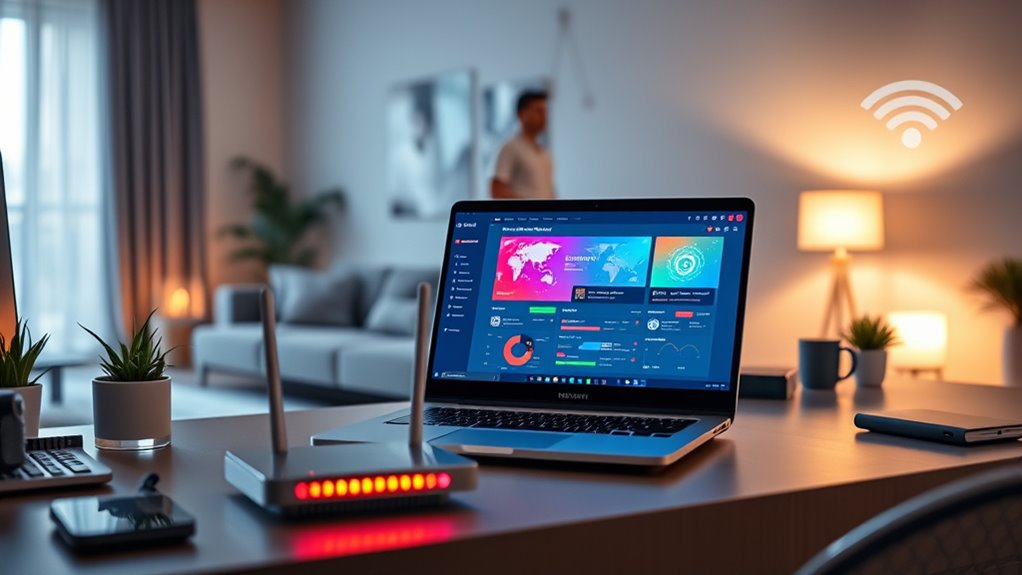
Your home Wi-Fi network is the gateway to your digital life, but without proper security measures, it can become vulnerable to hackers and unauthorized access. One of the first steps you should take is setting up a guest network. This creates a separate Wi-Fi connection specifically for visitors, guaranteeing they can access the internet without gaining access to your main devices and personal data. By isolating guests on their own network, you minimize the risk of malware spreading or someone intentionally trying to explore your private files. Many modern routers support guest networks, and setting one up typically involves logging into your router’s admin interface and enabling the feature. You can then assign a unique password different from your main Wi-Fi, adding an extra layer of security. Remember, a guest network isn’t just about convenience; it’s a vital security measure.
Set up a guest Wi-Fi network to protect your main devices and personal data from visitors.
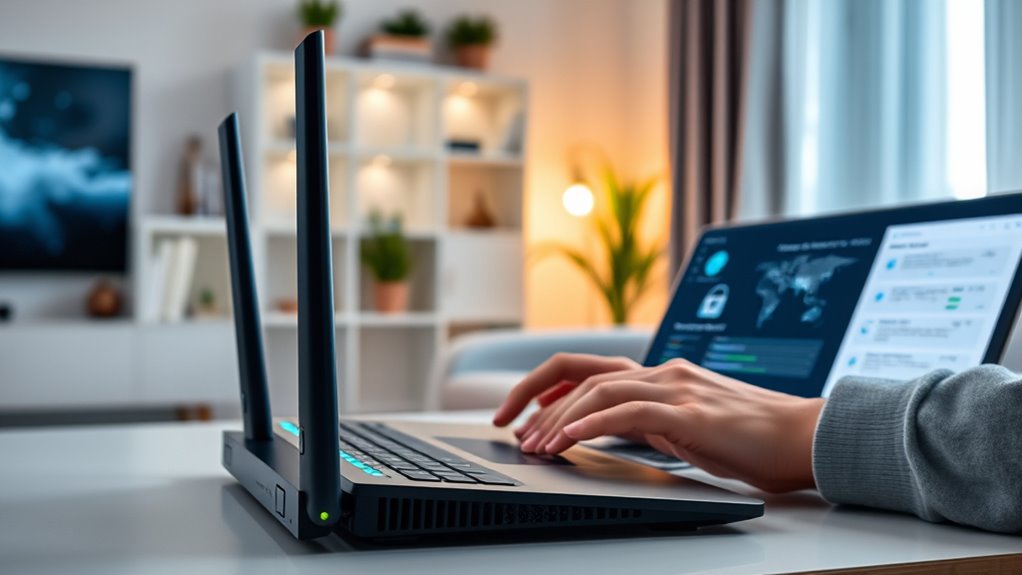
Another key aspect of securing your Wi-Fi involves keeping your router firmware up to date. Router manufacturers regularly release firmware updates that patch vulnerabilities, improve performance, and add new features. If you ignore these updates, your network remains exposed to known security flaws that hackers often exploit. Check your router’s admin settings regularly or enable automatic updates if available. Updating firmware isn’t complicated, but it’s essential; it guarantees that your device’s security protocols are current and effective. Failing to update can leave your network open to attacks, such as unauthorized access or data interception. Support Breakfast can help you understand the importance of strong security practices.
In addition to setting up a guest network and updating firmware, make sure your Wi-Fi password is strong and unique. Avoid common phrases or easily guessable combinations. Use a mix of uppercase and lowercase letters, numbers, and symbols, and change your password periodically. Your Wi-Fi encryption should be set to WPA3 if your router supports it; if not, WPA2 is the minimum standard. This encryption encrypts your wireless communication, making it much harder for outsiders to eavesdrop or hijack your connection. Disable WPS (Wi-Fi Protected Setup), as it’s known for security vulnerabilities that can be exploited by attackers.
Finally, consider the placement of your router. Position it in a central location away from windows and exterior walls to minimize signal leakage outside your home. Limit the number of devices connected to your network and monitor connected devices regularly through your router’s admin interface. These small steps, combined with a guest network and updated firmware, substantially bolster your Wi-Fi security. By taking proactive measures, you protect your personal information, prevent unauthorized access, and enjoy a safer, more reliable internet experience in your home.

TP-Link AC1900 Smart WiFi Router (Archer A8) -High Speed MU-MIMO Wireless Router, Dual Band Router for Wireless Internet, Gigabit, Supports Guest WiFi
Wave 2 Wireless Internet Router: Achieve up to 600 Mbps on the 2.4GHz band and up to 1300…
As an affiliate, we earn on qualifying purchases.
As an affiliate, we earn on qualifying purchases.
Frequently Asked Questions
How Often Should I Change My Wi-Fi Password?
You should change your Wi-Fi password every three to six months to maintain strong security. Regular password management helps prevent unauthorized access, especially if you’ve shared your password or suspect a breach. Your connectivity habits, like connecting to new devices or public networks, also impact how often you should update your password. Consistently updating your password keeps your network protected and reduces the risk of hackers exploiting outdated credentials.
What Is the Best Encryption Method for Wi-Fi Security?
You should use WPA3 for wireless encryption, as it’s the most secure option available now. It provides stronger protection against hacking attempts. Also, verify your password strength is high—combine uppercase, lowercase, numbers, and symbols. This makes it harder for attackers to crack your wireless encryption. Regularly update your password and keep your firmware current to maintain the best Wi-Fi security.
Can I Hide My Wi-Fi Network From Others?
Yes, you can hide your Wi-Fi network by disabling your network’s visibility, also known as hiding the SSID. This makes your network less detectable to others scanning for Wi-Fi signals. Keep in mind, though, that a hidden SSID isn’t foolproof; determined attackers can still find your network. To enhance security, combine hiding your network with strong encryption and a unique password.
How Can I Detect if My Wi-Fi Has Been Hacked?
If you suspect your Wi-Fi has been hacked, trust your gut—something’s fishy. Check for unauthorized devices connected to your network and look for unusual network activity, like data spikes or slow speeds. Log into your router’s admin panel to see connected devices. If you spot unfamiliar gadgets or strange activity, reset your Wi-Fi and change your passwords immediately to lock out intruders and secure your network.
Are Public Wi-Fi Hotspots Safe to Use?
Public Wi-Fi hotspots can be risky because hotspot risks include data theft and hacking. You shouldn’t assume they’re safe, especially for sensitive activities like online banking or shopping. To stay protected, use a VPN, avoid transmitting private info, and connect only to secured networks with strong passwords. Always be cautious with public Wi-Fi, as it’s easier for hackers to intercept your data on these unsecured networks.

TP-Link AXE5400 Tri-Band WiFi 6E Router (Archer AXE75), 2025 PCMag Editors' Choice, Gigabit Internet for Gaming & Streaming, New 6GHz Band, 160MHz, OneMesh, Quad-Core CPU, VPN & WPA3 Security
Tri-Band WiFi 6E Router – Up to 5400 Mbps WiFi for faster browsing, streaming, gaming and downloading, all…
As an affiliate, we earn on qualifying purchases.
As an affiliate, we earn on qualifying purchases.
Conclusion
Now that you’ve secured your Wi-Fi, you might feel confident, but remember—security isn’t a one-time fix. Just like a lock keeps intruders out but can be picked if weak, your network needs constant vigilance. Protecting your digital life is ongoing, balancing convenience with caution. So, while locking down your Wi-Fi is essential, stay alert and update your defenses regularly—because in today’s connected world, complacency can be your biggest vulnerability.
TEENO Wood Router, 6.5Amp 1.25HP Wood Routers for Woodworking, 800W Hand Wood Router Tool, 31000R/MIN Compact Edge Trimmer with 15 1/4" Router Bit Set
Powerful Router Tool: 800W palm router motor provides ample power for a variety of routing and edging applications….
As an affiliate, we earn on qualifying purchases.
As an affiliate, we earn on qualifying purchases.

Dual Antennas for Wi-Fi Enhanced AI Human Detected 2K 3.0MP Wireless Security Camera System, Surveillance DVR Kits with 2TB Hard Drive, 4Pcs Outdoor WiFi Security Cameras, with Audio, Night Vision
{Dual Antennas to Enhance WiFi} The wireless signal is very important for this system. If the wireless signal…
As an affiliate, we earn on qualifying purchases.
As an affiliate, we earn on qualifying purchases.