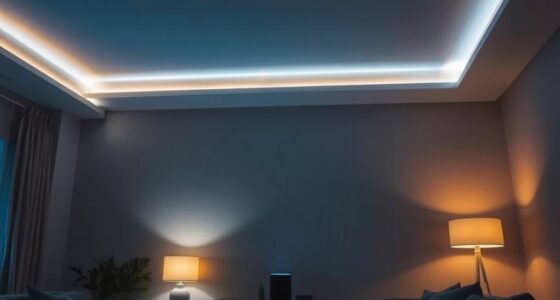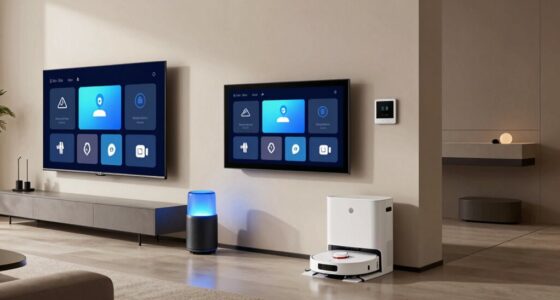
Choosing between smart bulbs and smart plugs depends on your needs. Smart bulbs are great if you want color options, brightness control, and seamless integration within lighting fixtures. Smart plugs offer quick setup and can control any device plugged into them, making them versatile. Both improve automation and energy savings, but your choice hinges on your preference for customization and compatibility. Keep exploring further to see which option fits your lifestyle best.
Key Takeaways
- Smart bulbs replace existing fixtures for customizable lighting, while smart plugs control any lamp or device plugged into the outlet.
- Smart bulbs offer extensive color, brightness, and dynamic effects, whereas smart plugs provide simple on/off automation.
- Smart bulbs typically require installation into fixtures, potentially facing compatibility issues; smart plugs are easy to set up and highly compatible.
- Smart bulbs tend to be more energy-efficient and long-lasting, offering better long-term savings compared to smart plugs.
- The choice depends on desired lighting features and installation convenience, with smart bulbs ideal for ambiance and smart plugs for device automation.
Differences in Functionality and Control
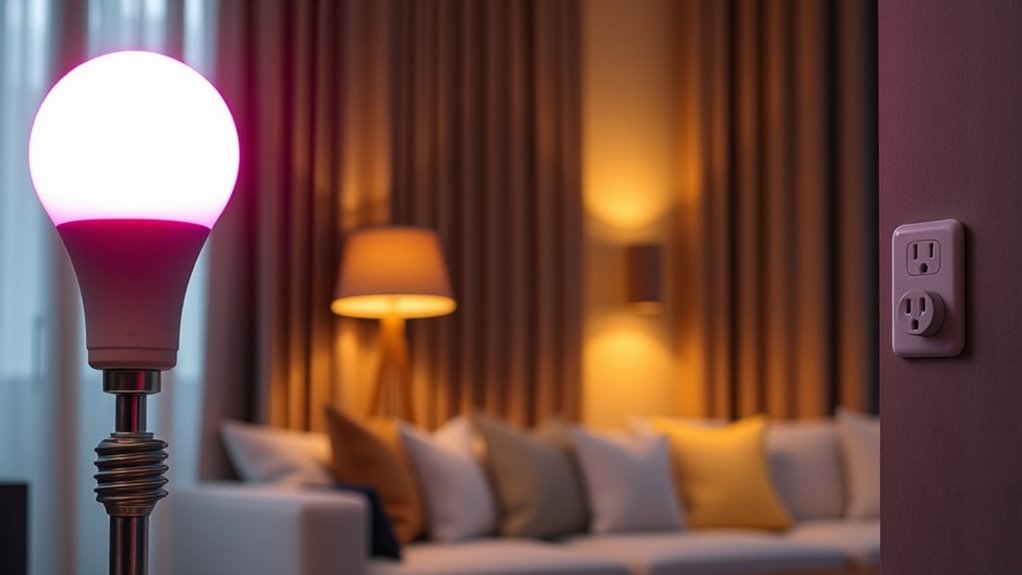
Smart bulbs and smart plugs differ markedly in how they function and how you control them. Smart bulbs connect directly to your Wi-Fi or Zigbee network and replace traditional bulbs, giving you control over individual lighting fixtures. They often include dimming capabilities, allowing you to adjust brightness levels for different moods or tasks. You can control smart bulbs using remote control options via smartphone apps, voice commands, or automation routines. In contrast, smart plugs work by plugging into existing outlets, turning any device or lamp into a smart device. While they don’t offer dimming capabilities, they provide convenient remote control options to turn devices on or off remotely. This makes smart plugs ideal for managing non-smart appliances without replacing your existing light fixtures. Additionally, European cloud servers support these smart home devices by providing secure and energy-efficient connectivity, ensuring your automation remains sustainable and protected. Moreover, using cloud-based services enhances the reliability and scalability of your smart home setup. Incorporating standardized communication protocols can further improve compatibility between different smart devices and platforms. For example, integrating interoperability standards can help unify diverse systems for smoother operation. Furthermore, selecting devices with robust security features can help prevent unauthorized access and protect your smart home network.
Compatibility With Smart Home Ecosystems
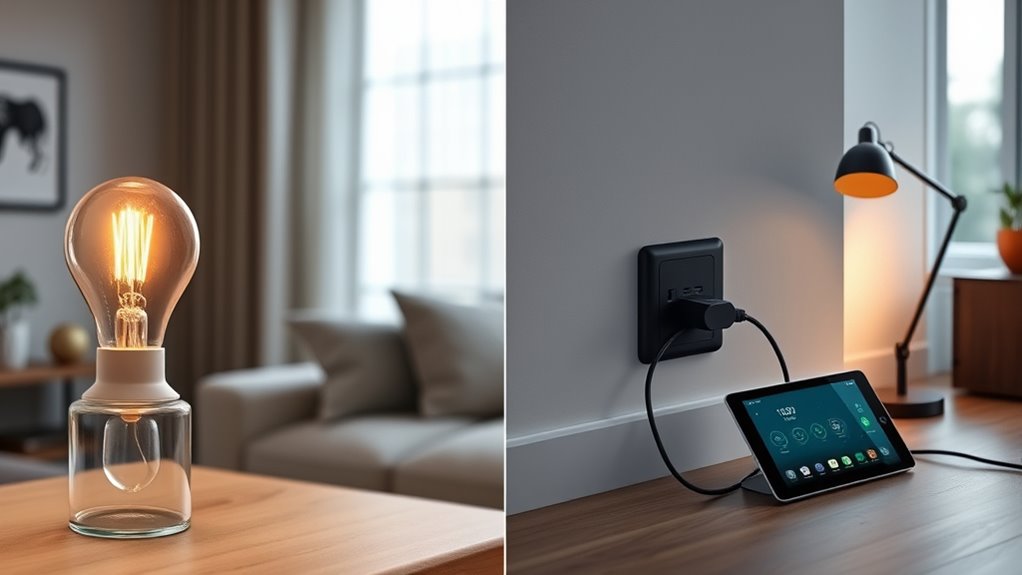
Your choice of smart bulbs or plugs depends on how well they work with your existing smart home ecosystem. Consider their integration capabilities, device compatibility, and whether they support your preferred platform’s updates. Ensuring these aspects align will make managing your devices smoother and more reliable. Additionally, understanding net worth and fame of personalities involved, such as how figures like Kate from Breaking Amish have built their personal brand, can inspire smarter technology choices tailored to your lifestyle. It is also beneficial to look into the compatibility with different smart home platforms to ensure seamless operation across your devices. Moreover, assessing the software update policies of these devices can help prevent obsolescence and maintain security over time. Staying informed about device security features can further protect your smart home from potential vulnerabilities.
Ecosystem Integration Capabilities
When evaluating ecosystem integration capabilities, it’s important to contemplate how well smart bulbs and smart plugs work within your existing smart home setup. You’ll want to consider voice command integration, ensuring you can control your devices effortlessly with voice assistants like Alexa, Google Assistant, or Siri. Smart bulbs often integrate seamlessly with lighting-specific platforms and ecosystems, offering more direct voice control options. Smart plugs, on the other hand, typically connect to broader smart home systems, providing control over any device plugged into them. Both devices support manual operation methods, like app control or physical switches, but their ecosystem compatibility determines how smoothly they work alongside your other smart devices. Additionally, understanding compatibility considerations can help ensure your chosen devices work harmoniously with your existing smart technology. Evaluating ecosystem compatibility can also help prevent issues with device integration and improve overall user experience. Choosing the right option depends on how well they fit into your current or planned smart home ecosystem.
Device Compatibility Range
Device compatibility range determines how well smart bulbs and smart plugs integrate with various smart home ecosystems. If you want seamless control, consider the device variety each option supports. Smart bulbs often work with popular ecosystems like Zigbee, Z-Wave, or Wi-Fi, but compatibility varies by brand. Some brands are more versatile, offering broad compatibility, while others may be limited to specific platforms. Smart plugs generally have wider compatibility because they connect via Wi-Fi and work with most voice assistants and smart hubs. When choosing between them, check if the device supports your preferred ecosystem or voice assistant. This ensures you can control your lighting easily through your existing smart home setup, avoiding extra hubs or complicated integrations. Additionally, understanding vetted communication protocols like Wi-Fi, Zigbee, or Z-Wave can help you select devices that are more reliable and compatible across different systems. A thorough knowledge of protocol standards can further improve your device selection process.
Platform Support and Updates
Platform support and updates play a crucial role in guaranteeing your smart bulbs or plugs stay compatible and functional over time. Regular software updates improve device performance, fix bugs, and enhance security, so you get the most out of your investment. When choosing between smart bulbs and plugs, consider their compatibility with your existing smart home ecosystem, like Alexa, Google Assistant, or Apple HomeKit. Some devices offer better third-party support, making it easier to integrate with various platforms. Keep in mind that manufacturers that actively provide updates tend to support new features and improve stability over time. This ongoing support helps prevent obsolescence and ensures your smart lighting setup remains reliable and easy to control, no matter which ecosystem you prefer.
Installation and Setup Process
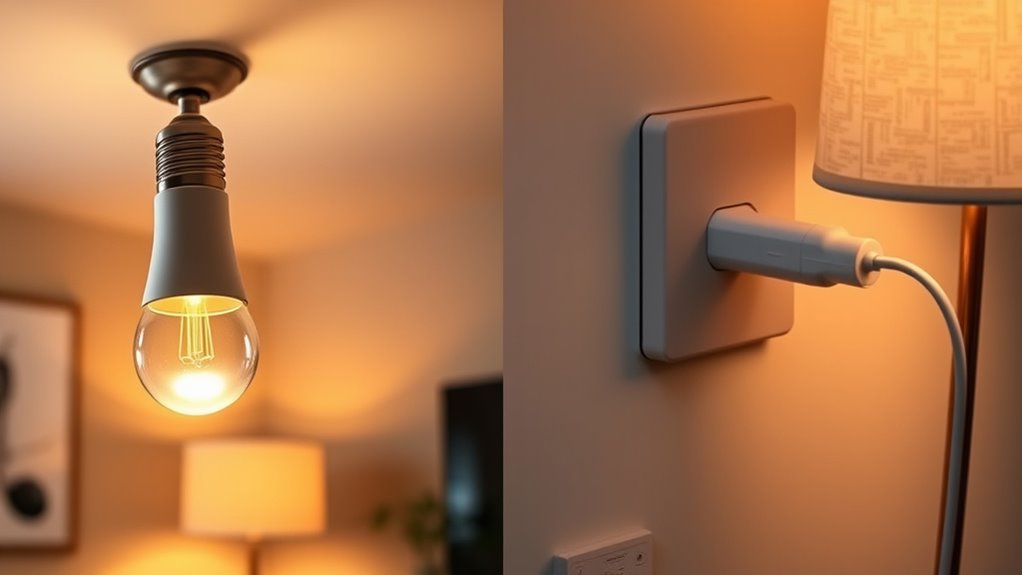
Getting your smart bulbs or smart plugs up and running is straightforward, but the setup process varies slightly between the two. With smart bulbs, you typically install them into your existing fixtures, then connect them to your Wi-Fi network through a dedicated app. This process can present installation challenges if your bulb socket isn’t standard or if your Wi-Fi signal is weak. Smart plugs, on the other hand, usually require plugging into an outlet and connecting to Wi-Fi via a simple app. User onboarding for plugs is often quicker, with fewer steps involved. Overall, smart plugs tend to have a smoother setup due to fewer installation challenges. Both devices guide you through initial setup, but your experience depends on your existing setup and familiarity with smart home technology. Additionally, network compatibility can impact the ease of connection and device performance during setup, especially since Wi-Fi signal strength plays a crucial role in successful device integration. To ensure a seamless setup, it’s also important to consider your home Wi-Fi network and its coverage.
Customization and Feature Options
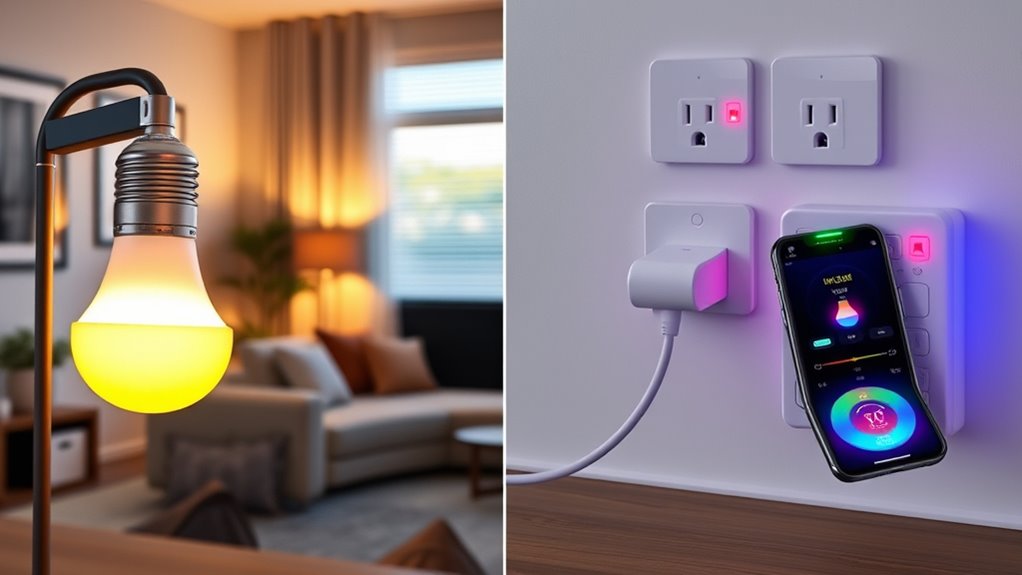
When it comes to customization and feature options, smart bulbs generally offer more flexibility in controlling light color, brightness, and sometimes even color-changing effects, giving you more creative control over your lighting ambiance. You can easily adjust the lighting to match your mood or setting. With smart bulbs, you benefit from:
- A wide range of color options to personalize your space
- Advanced scheduling features that automate lighting routines
- Brightness control for perfect illumination
- Dynamic effects like fades and color shifts for added visual interest
Smart bulbs let you fine-tune your environment precisely, making them ideal for those who want more control over their lighting experience. In contrast, smart plugs mainly offer on/off control without extensive customization options.
Energy Efficiency and Cost Savings
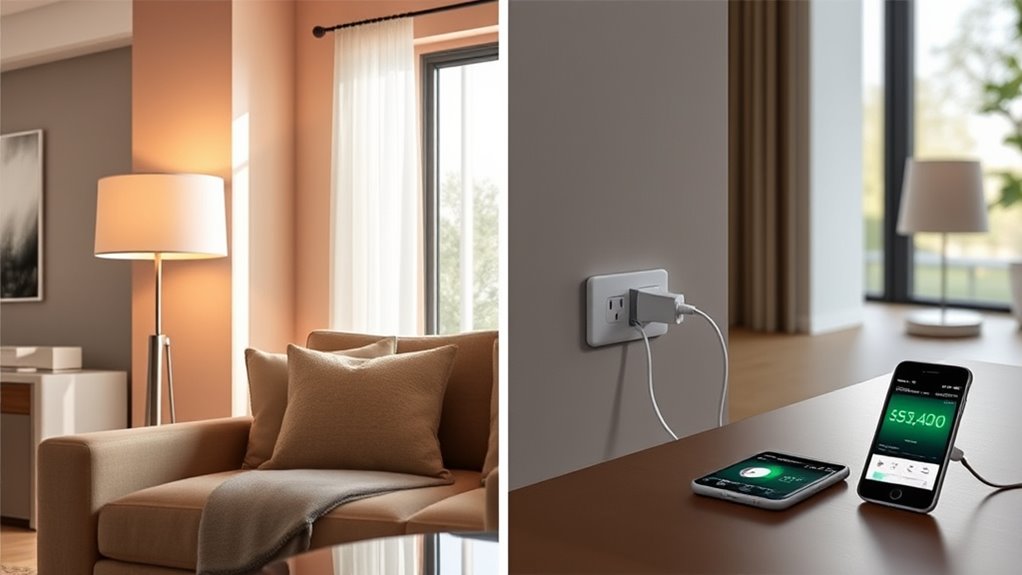
Smart bulbs and smart plugs both help you save energy, but they do so in different ways. Smart bulbs consume less power because they use energy-efficient LEDs and can automatically turn off when not needed. This leads to significant energy savings over time. In contrast, smart plugs control the power supply to existing lamps, preventing unnecessary energy use from devices left on or in standby mode. The cost impact of choosing either device depends on your usage habits; smart bulbs might have a higher upfront cost but offer better long-term savings through reduced energy consumption. Smart plugs are usually more affordable initially but may save less energy overall. Both options can lower your electricity bills if used consistently and efficiently. Additionally, selecting energy-efficient devices can further optimize your energy savings and reduce your environmental footprint. Incorporating smart home automation strategies can maximize these savings by scheduling or remotely controlling your lighting. Moreover, understanding feature Buddies can help you make more informed decisions about integrating various smart devices into your home system. Utilizing smart device compatibility ensures seamless integration and optimal performance of your automation setup. For example, choosing devices compatible with popular platforms like Alexa or Google Assistant can enhance your overall smart home experience.
Design and Aesthetic Appeal

While both smart bulbs and smart plugs serve functional purposes, their design and aesthetic appeal can considerably influence your choice. Smart bulbs often feature sleek, modern designs that seamlessly blend with your decor, emphasizing their aesthetic design. They can come in various shapes and sizes, offering a clean look when installed. Smart plugs are usually compact and unobtrusive, designed to fit behind furniture or within outlets without drawing attention. Consider these points:
Smart bulbs offer sleek, customizable design, while smart plugs blend discreetly into your decor.
- Smart bulbs enhance the visual appeal with customizable colors and brightness.
- Smart plugs are discreet, maintaining the room’s overall aesthetic.
- Shape and size matter for fitting into existing fixtures.
- The finish and build quality reflect their aesthetic design and durability.
- Thoughtful integration of these devices can contribute to a designer look that elevates your space.
Flexibility and Usage Scenarios
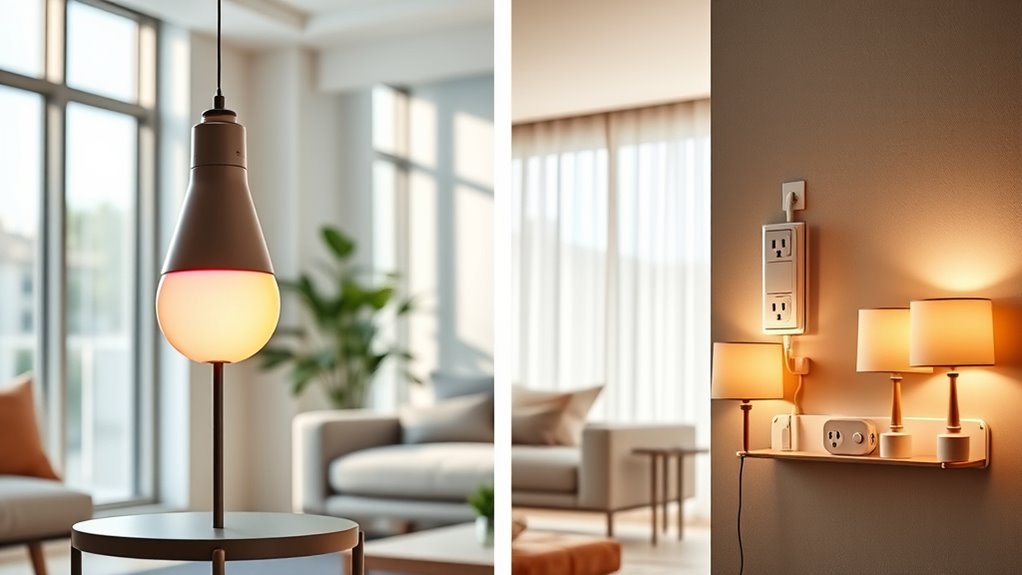
Flexibility and usage scenarios vary markedly between smart bulbs and smart plugs, influencing how you integrate them into your home. Smart bulbs offer timing flexibility in adjusting brightness and color, allowing you to customize lighting scenes for different moods or activities easily. They are versatile for ceiling fixtures or lamps with built-in sockets, providing direct control over light quality. On the other hand, smart plugs excel in device versatility, letting you automate any plugged-in device, such as lamps, without changing the fixture. They’re ideal for controlling non-smart lamps or appliances. While smart bulbs streamline lighting automation with integrated features, smart plugs give you broader control over various devices. Your choice depends on whether you prioritize lighting customization or expanding automation to multiple devices. Additionally, considering ventilation considerations can help ensure safe and efficient operation when integrating smart lighting solutions. Incorporating installation flexibility can further optimize how these devices fit into your existing home setup. Furthermore, understanding power management can help you select devices that are energy-efficient and safe for long-term use. For example, evaluating energy efficiency can help reduce electricity consumption and save on utility bills, and choosing devices with smart scheduling features can enhance convenience and energy savings.
Pricing and Long-Term Investment
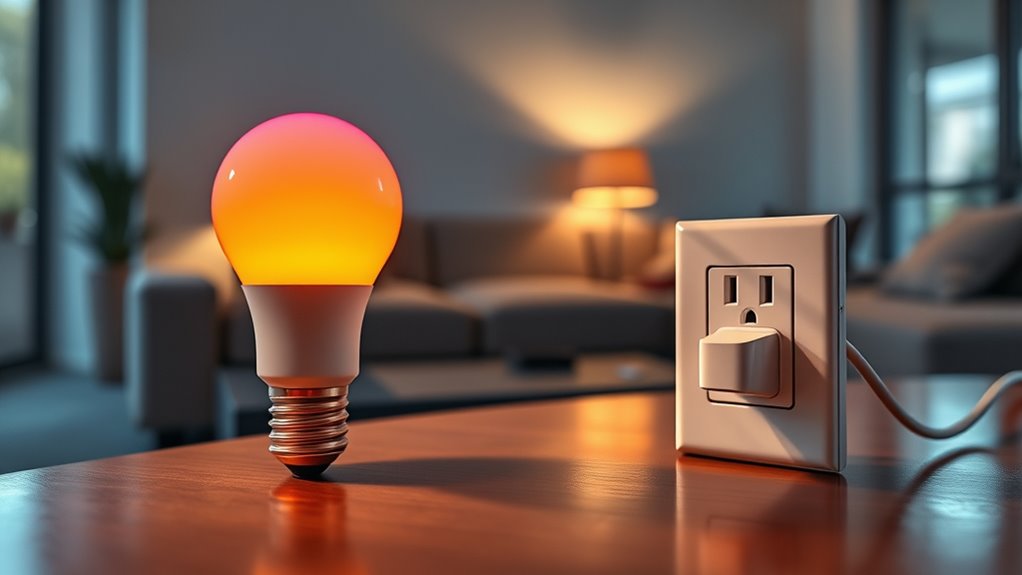
Pricing for smart bulbs and smart plugs varies considerably, affecting your overall investment. Your choice depends on your budget and long-term savings goals. Different pricing strategies can influence total costs over time. Consider these points:
- Initial Cost: Smart bulbs often cost more upfront but last longer.
- Energy Efficiency: Both options can save energy, but bulbs may offer better long-term savings.
- Compatibility: Some devices require additional hubs, adding to expenses.
- Durability and Maintenance: Bulbs tend to last longer, reducing replacement costs.
Making the Right Choice for Your Home
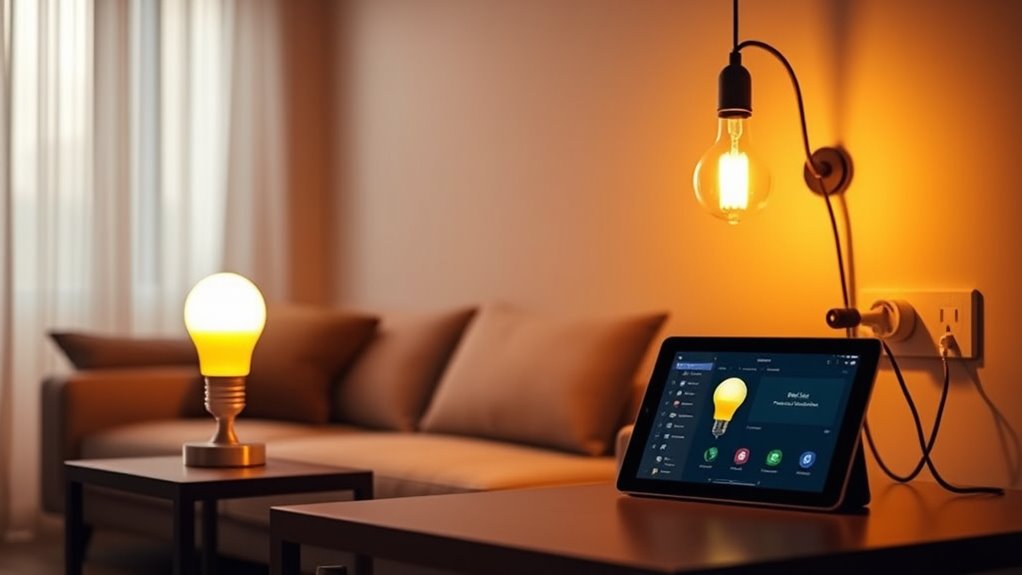
Choosing between smart bulbs and smart plugs depends on your specific needs and how you want to enhance your home’s automation. If you prefer manual control directly at the light fixture, smart bulbs are ideal—they let you adjust brightness and color, offering more customization. On the other hand, if you want a quick, affordable way to control existing lamps, smart plugs are convenient and easy to set up. Consider aesthetic design as well; smart bulbs blend seamlessly into your fixtures, maintaining a clean look, while smart plugs can be hidden behind furniture. Your choice should align with your lifestyle, whether you prioritize ease of use, visual appeal, or specific control features. Ultimately, understanding your preferences will help you select the best option for your home.
Frequently Asked Questions
Can Smart Bulbs and Plugs Be Used Together in the Same Setup?
Yes, you can use smart bulbs and smart plugs together in the same setup. They both support smart home integration, making it easy to control multiple devices through a single app or voice command. Just confirm device compatibility, as some smart bulbs and plugs work better with specific platforms like Alexa or Google Home. Combining them allows you to customize your lighting and device automation for a more seamless smart home experience.
Do Smart Bulbs Require a Neutral Wire for Installation?
Smart bulbs generally don’t require a neutral wire for installation, making them easier to set up in most homes. However, check your specific bulb’s installation requirements because some models might need a neutral wire, especially in older wiring setups. If your fixture lacks a neutral wire, opt for smart plugs instead. Always verify the installation instructions to confirm compatibility and safe setup.
Are Smart Plugs Suitable for Outdoor Lighting?
Imagine your outdoor lights caught in a rainstorm—yep, that’s where smart plugs shine. They’re generally suitable for outdoor lighting, especially if they’re weatherproofed. Just check the outdoor weatherproofing and verify the power source compatibility before plugging in. With the right smart plug, you keep your garden bright and tech-savvy, even in the rain. Just don’t forget to choose one rated for outdoor use—your lights will thank you.
How Do Updates and Firmware Upgrades Affect Device Functionality?
Updates and firmware upgrades considerably impact device functionality by improving firmware stability and fixing bugs. You should check update frequency regularly because frequent updates guarantee your smart device stays secure and performs ideally. When you install firmware upgrades, you may notice enhanced features, better compatibility, or increased reliability. Always follow manufacturer instructions to avoid disruptions, and keep your devices current to enjoy smooth operation and maximize your smart home’s efficiency.
Can Smart Bulbs and Plugs Be Integrated With Voice Assistants Simultaneously?
You can definitely integrate smart bulbs and plugs with voice assistants simultaneously, enhancing your automation. Studies suggest that combining both can improve energy efficiency and offer a flexible cost comparison. By syncing them with voice commands, you control lighting effortlessly, regardless of the device type. This setup provides a seamless experience, allowing you to customize your environment while optimizing power usage and making informed decisions about your smart home investments.
Conclusion
Choosing between smart bulbs and smart plugs depends on your needs. Smart bulbs offer color control and ambiance, while smart plugs provide versatile device automation. Did you know that smart plugs can reduce energy use by up to 12%? Consider your preferences, setup, and budget to make the best choice. Either way, automating your lamps can make your home more convenient, efficient, and smarter—so pick what fits your lifestyle best.