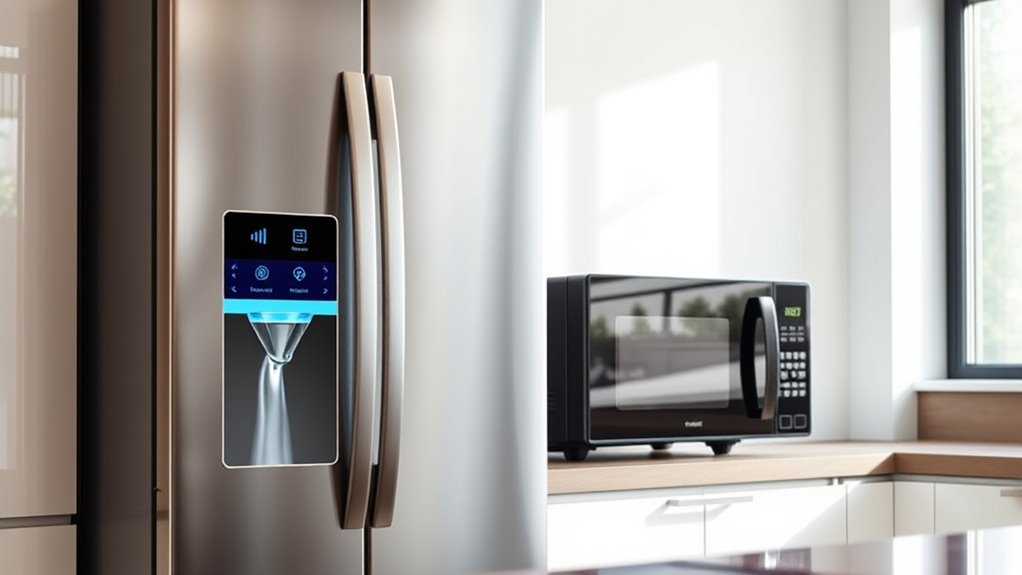

Smart fridges and talking microwaves offer impressive features like voice control, inventory tracking, and remote operation that can boost convenience in your kitchen. However, they often consume more energy, raise privacy concerns, and can be vulnerable to hacking if security isn’t properly managed. While these gadgets bring futuristic benefits, it’s important to weigh their practical value against potential security and privacy risks. To find out how to choose wisely, keep exploring these smart kitchen innovations.
Key Takeaways
- Smart fridges and microwaves offer convenience through voice control, inventory management, and personalized cooking settings.
- They can improve energy efficiency but may increase overall power consumption due to continuous connectivity.
- Data collection from these devices raises privacy concerns about habits, routines, and personal preferences.
- Security risks exist if devices are not properly protected with updates and secure passwords.
- The value depends on user needs; for some, features enhance convenience; for others, they may be unnecessary or gimmicky.

Smart fridges and talking microwaves are transforming everyday kitchens into connected, intelligent spaces. These appliances promise to make your life more convenient by offering features like voice control, inventory management, and customized cooking settings. However, as you embrace this new tech, it’s vital to weigh the implications for energy consumption and user privacy. While these devices can optimize energy use by adjusting settings based on your habits, they also tend to draw more power than traditional appliances. Continuous connectivity, voice recognition, and data processing require constant energy, which might lead to increased electricity bills. If you’re mindful of energy consumption, you’ll want to look for models with energy-efficient ratings and smart features that can be turned off when not in use. Additionally, the integration of these devices often involves data collection, raising concerns about how your information is stored and shared. User privacy is another fundamental factor when integrating smart appliances into your kitchen. These devices often collect data about your habits, preferences, and daily routines to deliver personalized experiences. For instance, a talking microwave might log your typical cooking times or voice commands, while a smart fridge tracks what food you have and when it expires. While this data can enhance convenience, it also raises concerns about who has access to your information and how securely it’s stored. Manufacturers often emphasize security protocols, but no system is completely immune to breaches. You should carefully review privacy policies and settings, ensuring you have control over what data is shared and stored. Moreover, these appliances are usually connected to the internet through your home Wi-Fi, making them vulnerable to hacking or unauthorized access if not properly secured. Simple steps like changing default passwords, keeping firmware updated, and enabling encryption can help protect your privacy. Ultimately, the decision to adopt smart appliances hinges on balancing convenience with security. You might find that the benefits of real-time alerts, remote control, and energy management outweigh the potential risks if you take proactive steps to safeguard your personal information.
Top picks for "smart fridg talk"
Open Amazon search results for this keyword.
As an affiliate, we earn on qualifying purchases.
Frequently Asked Questions
How Secure Are Smart Kitchen Devices Against Hacking?
Smart kitchen devices can be vulnerable to hacking, so their security isn’t foolproof. You should be aware of privacy concerns and guarantee these gadgets use strong encryption standards to protect your data. Regularly update firmware, use unique passwords, and disable features you don’t need. Staying vigilant helps reduce risks, but remember, no device is entirely hacking-proof, so always weigh the convenience against potential security vulnerabilities.
Do Smart Appliances Significantly Increase Energy Consumption?
Imagine your smart appliances as tiny energy ninjas, stealthily sneaking around your home. They don’t considerably boost energy consumption if you maintain good usage habits. Smart devices are designed for energy efficiency, often adapting to your routines to save power. By managing settings wisely, you can enjoy the convenience without worry, ensuring your tech-savvy home stays eco-friendly and cost-effective, just like a well-orchestrated symphony.
Are Talking Microwaves Suitable for Visually Impaired Users?
Talking microwaves are quite suitable for visually impaired users because they offer voice command functionality and accessibility features that make operation easier. You can simply speak your commands, avoiding the need to see buttons or displays. These appliances enhance independence and convenience, ensuring that visually impaired individuals can confidently operate their microwave without frustration. Overall, talking microwaves are a practical, inclusive technology that caters to diverse needs.
What Is the Average Lifespan of Smart Kitchen Appliances?
Smart kitchen appliances usually last around 8 to 12 years, but their durability depends on diligent maintenance and daily use. You should expect them to eventually face tech obsolescence, making updates or replacements necessary. While innovation drives longevity, rapid technological changes can shorten their lifespan, so staying savvy about updates helps maximize your appliances’ lifespan. Overall, with proper care, you can enjoy smart tech for many years before replacing it.
Can These Devices Be Easily Repaired or Upgraded?
You might find that these devices aren’t always easy to repair or upgrade because appliance compatibility can be limited, making repairs challenging. Repair accessibility varies, often requiring specialized skills or parts, which aren’t always readily available. Upgrading features may also be restricted by proprietary technology, so you may need to replace the entire appliance rather than perform simple upgrades, ultimately impacting the longevity and usability of your smart kitchen gadgets.
Conclusion
So, are these smart appliances a game-changer or just fancy gadgets that talk too much? It’s like adding a splash of innovation to your kitchen, but sometimes, it feels more like chasing shadows. If you love tech and convenience, they might be worth a shot. But if you prefer simplicity, they could be more hassle than help. In the end, it’s your call—are you ready to embrace the future or stick with what works?