
Smart gardening leverages tech gadgets like soil moisture sensors and automated irrigation systems to keep your plants healthy and hydrated. Smart plant monitors provide real-time updates on plant health, while weather stations help you plan your garden activities. Indoor gardening tech, solar-powered lights, and robotic mowers make maintenance easier. If you’re curious about how these innovations can transform your garden, stay tuned for more tips on turning your green space into a thriving oasis.
Key Takeaways
- Soil moisture sensors provide real-time watering data, preventing over or under-watering and optimizing plant health.
- Smart plant monitors track moisture, temperature, and light, alerting you to watering, pruning, or pest issues.
- Automated irrigation systems schedule watering based on plant needs, rain sensors, and soil conditions, reducing manual effort.
- Indoor gardening tech like smart grow lights and climate control devices enable year-round plant growth indoors.
- Plant identification apps and odor sensors help detect plant issues early, promoting sustainable and eco-friendly gardening practices.
Soil Moisture Sensors for Precise Watering
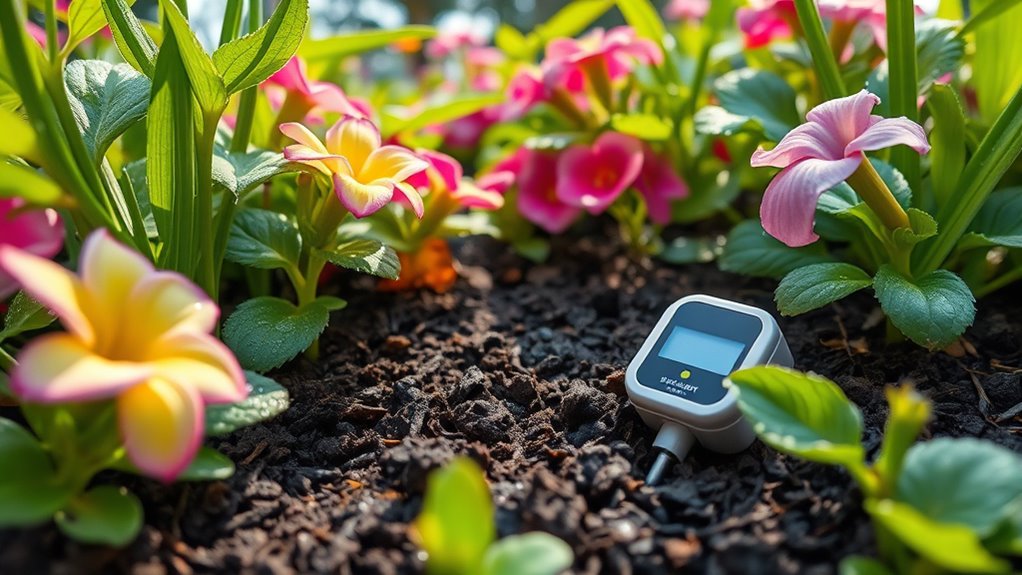
Soil moisture sensors are essential tools in smart gardening because they provide real-time data on your garden’s water needs. But they also help you monitor soil nutrient levels and pH balance, ensuring ideal plant health. When the sensor detects low moisture, it signals you to water, preventing over- or under-watering that can disturb nutrient absorption. Maintaining proper soil nutrient levels and pH balance is vital for plant growth, and moisture sensors give you insight into how watering impacts these factors. Advanced data management systems can support the data management needed for smart gardening, ensuring reliable connectivity and security. By keeping tabs on moisture, you can adjust watering schedules to support nutrient uptake and maintain the perfect pH, creating a balanced environment for your plants. This precision allows you to maximize growth conditions without guesswork, saving water and promoting healthier, more productive plants. Incorporating soil health monitoring emphasizes the importance of maintaining optimal soil conditions for long-term plant vitality, as contrast ratios in projectors also play a role in visual clarity, much like balanced soil conditions are vital for plant health.
Automated Irrigation Systems for Effortless Garden Care

Automated irrigation systems make garden maintenance effortless by scheduling watering based on your plants’ needs. With features like drip irrigation and rain sensors, you can optimize watering while conserving water. Imagine a system that adjusts itself, delivering water directly to roots just when needed. Here’s a snapshot of how these systems work:
| Time of Day | Weather Condition | Watering Method |
|---|---|---|
| Morning | Sunny | Drip irrigation |
| Afternoon | Rain detected | No watering |
| Evening | Clear skies | Scheduled drip |
| Night | Humid | Paused |
This setup ensures your garden stays healthy without manual effort, reducing waste and promoting efficient water use. Rain sensors prevent overwatering during rain, making your garden truly smart. Incorporating auditory feedback therapy techniques can also help in educating garden users about optimal watering times and patterns, fostering better engagement with your smart irrigation system. Additionally, understanding the water chemistry involved in maintaining healthy plants can further enhance your garden’s vitality.
Furthermore, monitoring pump activity can help detect early signs of system malfunction, ensuring consistent watering performance.
Smart Plant Monitors for Real-Time Health Tracking

Smart plant monitors have revolutionized garden care by providing real-time insights into your plants’ health. With these devices, you can easily track moisture levels, temperature, and light, helping you determine when to prune or address pest issues promptly. They alert you when plants need plant pruning to promote healthy growth or when pests are present, enabling quick action to prevent damage. These monitors also help you maximize watering schedules, reducing overwatering or underwatering. By keeping a close eye on your plants’ conditions, you can maintain a thriving garden with less guesswork. Additionally, integrating Free Floating systems allows for more natural and sustainable gardening practices. Understanding the plant health monitoring process ensures you can interpret the data effectively and respond appropriately. Regularly reviewing sensor data can help you identify patterns and optimize your care routine. Incorporating knowledge of halal dietary practices can also ensure that your gardening methods align with ethical guidelines, especially if you grow edible plants. Knowing the importance of crop diversity in gardening can also lead to healthier, more resilient plants. Overall, smart plant monitors empower you to care for your plants more effectively, ensuring they stay healthy, pest-free, and well-pruned for ideal growth.
Weather Stations to Optimize Gardening Schedules
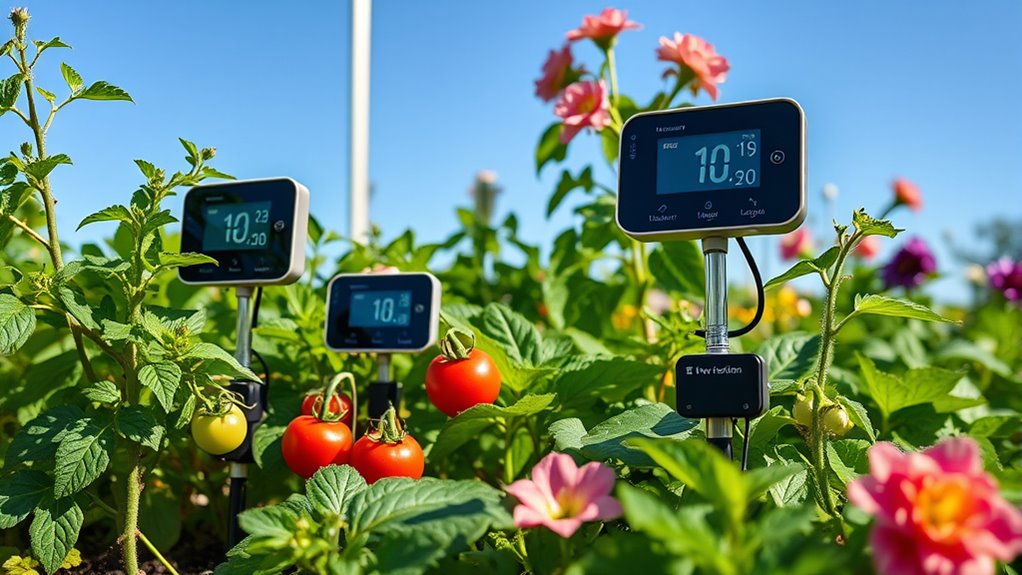
Weather stations have become essential tools for gardeners seeking to optimize their planting and maintenance schedules. By providing real-time data on temperature, humidity, rainfall, and wind, they help you make informed decisions about watering, fertilizing, and protecting your plants. This information also guides your composting techniques, ensuring you maintain the right moisture and temperature levels for efficient compost breakdown. Additionally, weather data influences your garden layout planning, allowing you to position plants based on microclimates and weather patterns. With this knowledge, you can better schedule planting, pruning, and harvesting, reducing the risk of damage from unexpected weather changes. Incorporating weather data can further enhance your understanding of your garden’s unique environment, helping you monitor plant health and environmental conditions through audio cues. A local climate understanding allows for more precise gardening practices, tailored to your specific region. Ultimately, a weather station helps you tailor your gardening practices, making your garden more productive and resilient throughout the seasons. Understanding microclimates within your garden can also optimize plant placement for better growth and protection. By leveraging environmental monitoring, you can fine-tune your gardening strategies and improve overall crop success.
Plant Identification and Care Apps

With the wealth of data provided by weather stations, you can fine-tune your gardening routines, but identifying and caring for plants often requires more specific insights. Plant identification and care apps make this easy by helping you determine plant species instantly. Simply snap a photo, and the app analyzes leaf shapes, colors, and patterns to identify your plants accurately. These apps also offer tailored care advice, guiding you on watering, fertilizing, and pruning based on your garden design and the specific needs of each plant. Whether you’re designing a new garden or maintaining your existing one, these tools help guarantee proper plant care. Additionally, some apps incorporate sustainable gardening practices to promote eco-friendly cultivation. Understanding plant-specific odor can also help you identify potential issues early, such as infections or pests, ensuring healthier plants. Using this technology can also support plant health monitoring, leading to healthier and more vibrant gardens. Incorporating precision horticulture features, these apps enable precise resource management, reducing waste and enhancing plant vitality. By using this technology, you can improve plant health, enhance your garden’s aesthetic, and learn more about the unique requirements of each species.
Solar-Powered Garden Lights and Decor
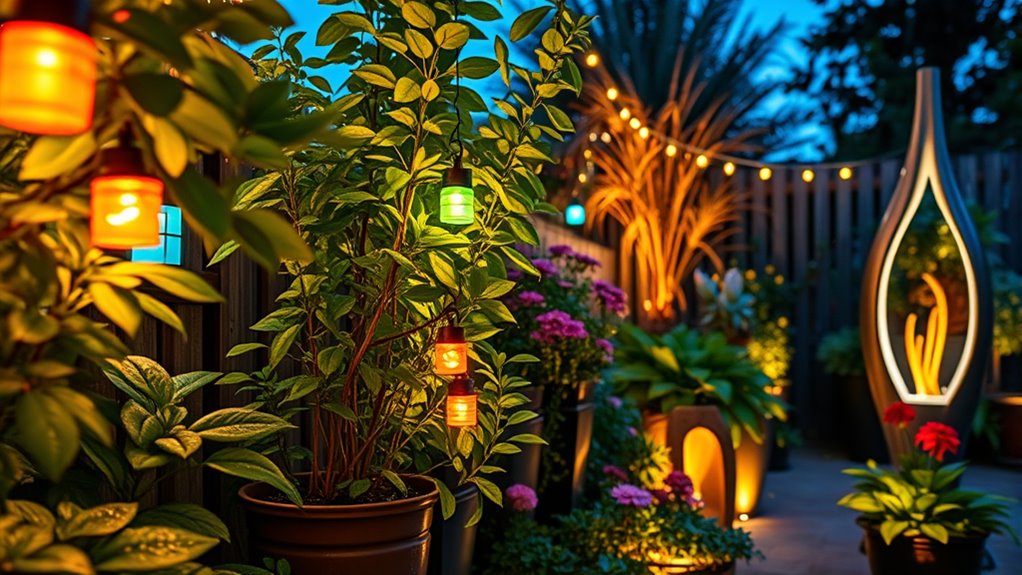
Have you considered how solar-powered garden lights and decor can transform your outdoor space? These eco-friendly options add ambiance and charm without increasing your energy bill. With solar powered garden lights, you can highlight pathways, emphasize focal points, or create cozy corners. Here are three ways to enhance your garden decor:
Discover eco-friendly solar garden lights that brighten your outdoor space effortlessly.
- Install string lights along fences or trees for a magical glow.
- Place solar lanterns on tables or walkways for inviting illumination.
- Use decorative solar statues or ornaments to add personality and style.
- Opt for solar-powered lighting controls to customize brightness and timing, making your garden both beautiful and energy-efficient. Incorporating solar technology can further optimize their performance and longevity. Additionally, understanding solar panel placement can maximize sunlight absorption and improve overall efficiency. Proper solar panel positioning is essential for achieving optimal energy collection and extending the lifespan of your outdoor solar decor. Considering energy-saving features can also help you get the most out of your solar lighting investment.
Robotic Lawn and Garden Mowers
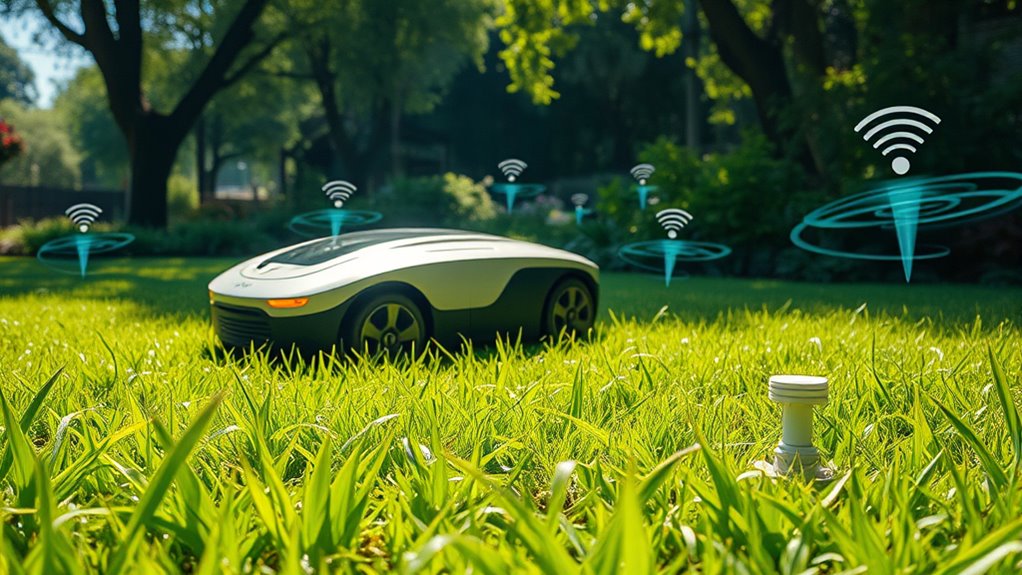
Enhancing your garden’s ambiance with solar-powered lights is just one way to elevate outdoor spaces. Robotic lawn and garden mowers make lawn maintenance effortless by automating the mowing process. These smart devices navigate your yard, cutting grass evenly without your intervention. They’re perfect for busy schedules or those who want a pristine lawn without manual effort. Garden automation with robotic mowers ensures your yard stays tidy and healthy, using sensors to avoid obstacles and adapt to changing grass heights. Incorporating lawn care techniques can further improve your garden’s overall appearance and health.
Indoor Gardening Tech for Year-Round Growth
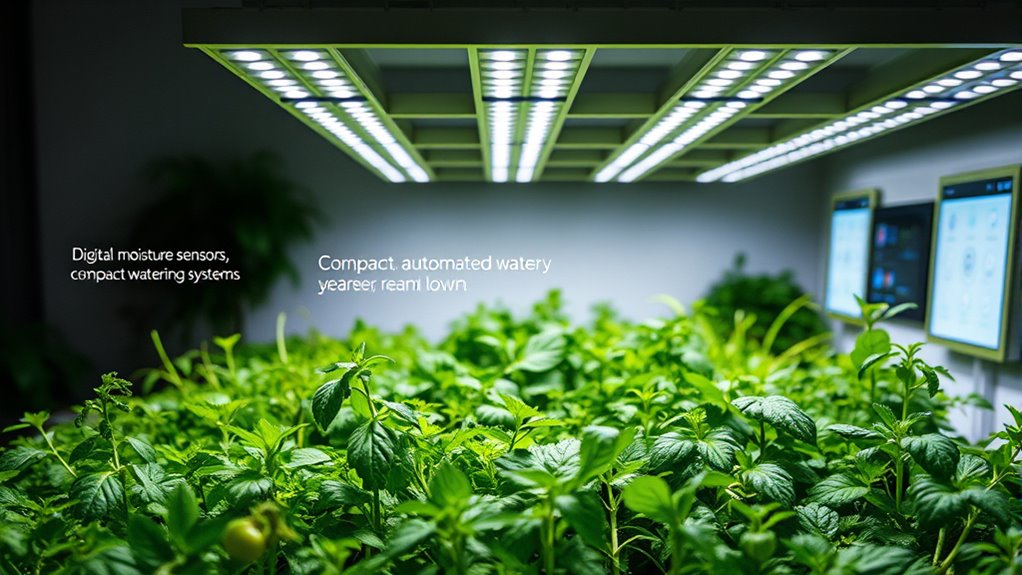
Indoor gardening technology allows you to grow fresh herbs, vegetables, and flowers year-round, regardless of the season outside. With smart grow lights, automated watering systems, and climate control devices, you can optimize conditions for healthy plants. These tools support plant propagation by providing consistent light and humidity, making it easier to start new plants indoors. Additionally, integrated pest control techniques, like UV sterilizers or organic sprays, keep pests at bay without chemicals. Consider these essentials:
- Smart LED grow lights that adjust to plant needs
- Automated watering systems for consistent moisture
- Pest control gadgets that prevent infestations early
Frequently Asked Questions
How Do I Choose the Right Smart Gadget for My Specific Plants?
To select the appropriate smart device, first consider your plants’ compatibility—some gadgets are better suited for specific types like succulents or herbs. Next, look at gadget features such as soil moisture sensors, automatic watering, or light control, and match them to your plant’s needs. This way, you guarantee your plants get tailored care, making it easier to keep them healthy and thriving with the right smart technology.
Are These Garden Tech Devices Suitable for Small or Large Gardens?
If you have a small garden, a compact smart irrigation system like the Rachio 3 works well, but for larger gardens, you need device scalability. For example, a homeowner expanded from a small backyard to a sprawling vegetable patch, upgrading to a more robust system to manage the increased garden size. These devices are designed to adapt, ensuring your smart tech suits any garden size efficiently.
What Is the Typical Maintenance Required for These Smart Gardening Tools?
You’ll find that smart gardening tools require minimal maintenance. You’ll need to regularly check and adjust the watering schedule to guarantee your plants get the right amount of water, especially during dry spells. Additionally, monitor for pests and use integrated pest control features if available. Keep sensors clean and batteries charged for peak performance. With just a little upkeep, these gadgets help your garden thrive effortlessly.
Can These Systems Be Integrated With Existing Smart Home Setups?
Think of your smart garden as a musical instrument; it can harmonize beautifully with your smart home. Yes, these systems often support garden automation and can seamlessly integrate with your existing smart home setup. You can control watering, lighting, and sensors through your central hub or voice commands. This integration makes caring for your plants effortless and connected, turning your home into a lush, automated oasis.
How Secure Is My Data When Using Garden Monitoring Apps?
Your data privacy depends on the app’s security measures. Reputable garden monitoring apps use strong encryption standards to protect your information from unauthorized access. Always review the app’s privacy policy and adjust settings to limit data sharing. Be cautious with permissions and keep your app updated, as developers often enhance security features. Ultimately, choosing trusted apps ensures your garden data stays secure while you enjoy a thriving, tech-supported garden.
Conclusion
With these smart gadgets, your garden transforms into a symphony of thriving life, each device acting as a gentle conductor guiding your plants to flourish. Embrace the tech, and watch your green space bloom with effortless grace, turning your yard into a lush oasis that whispers stories of growth and vigor. Let innovation be the sunlight that nurtures your garden’s soul, and enjoy the lush masterpiece you create with just a touch of smart magic.