Many believe smart homes are too complicated, insecure, or unnecessary, but these are misconceptions. Modern systems are designed for easy setup and secure with regular updates and encryption. Not all smart devices work seamlessly together, and they often aren’t quickly outdated thanks to ongoing support. If you want to learn how to separate fact from myth and see the real potential of smart home technology, there’s more to uncover.
Key Takeaways
- Modern smart homes are designed for easy setup with user-friendly apps and device compatibility, reducing installation complexity.
- Security risks depend on device configuration; regular updates and strong passwords protect against hacking.
- Many smart devices are overhyped; traditional routines often match their convenience at a lower cost.
- Compatibility varies across brands and protocols, so not all devices are fully interoperable.
- Devices supporting common standards and regular updates help ensure long-term relevance and prevent quick obsolescence.
Smart Homes Are Too Complicated to Set Up
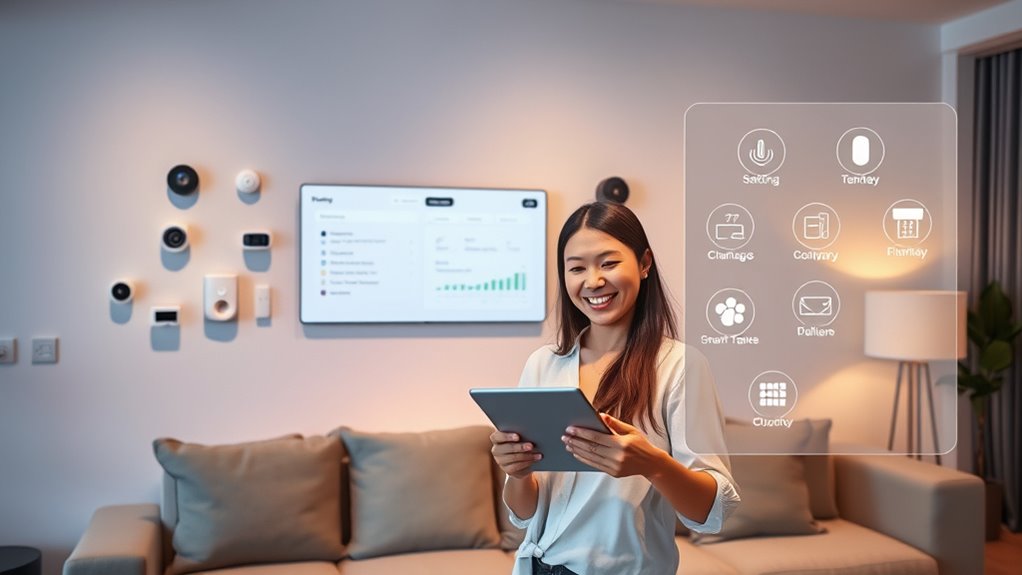
Many people assume that setting up a smart home is a complicated process that requires technical expertise, but in reality, most modern systems are designed to be user-friendly. You don’t need to be a tech expert to get started. Manufacturers focus on intuitive apps and straightforward installation, making setup accessible to everyone. When choosing devices, consider device compatibility to ensure everything works seamlessly together. Concerns about user privacy often surface, but reputable brands prioritize security features to protect your data. Many systems allow you to customize privacy settings, giving you control over what information is shared. Additionally, local automation options enable you to manage your smart devices without relying solely on cloud services, which can be a security concern for some users. This approach enhances both privacy and reliability. Moreover, understanding easy setup processes can help you avoid unnecessary frustration during installation. A comprehensive guide can further simplify the process and boost your confidence. Overall, setting up your smart home is simpler than you think, and with a little guidance, you can enjoy the convenience without hassle or worry.
They Are Inherently Insecure and Vulnerable to Hacking
While some worry that smart home devices are inherently insecure, the reality is that most vulnerabilities come down to how they’re configured and maintained. Proper security measures, like strong encryption protocols, substantially reduce risks. Network segmentation isolates your smart devices from critical systems, limiting potential damage if a breach occurs. Additionally, regularly updating device firmware and utilizing robust authentication methods can further enhance security. Implementing security best practices is essential for protecting your smart home environment. For example, understanding common vulnerability points can help you better defend against potential threats. Recognizing that user awareness plays a significant role in security can empower you to respond effectively to emerging risks. Here’s why security isn’t an inherent flaw: Color accuracy impacts the overall image quality and can be managed through calibration and technology choices to enhance your viewing experience.
Smart Devices Are Unnecessary and Overhyped

Smart devices often seem like essential upgrades, but in reality, they can be overhyped and unnecessary for everyday living. While they promise convenience benefits, many users find that basic routines can be managed without them. The cost savings from smart gadgets are often minimal when you consider the initial investment and ongoing maintenance. You might think these devices will save time or energy, but in many cases, traditional methods work just as well. In fact, some users report that technology reliance can lead to increased frustration when devices malfunction or require updates, which can disrupt daily routines. Additionally, frequent updates and troubleshooting can introduce technical complications that diminish overall convenience. In some instances, the added complexity and reliance on technology can outweigh any perceived benefits. Before jumping on the smart home bandwagon, evaluate whether these devices truly improve your daily life or if they’re just a flashy trend. Sometimes, modern kitchen technology emphasizes sleek design over practical function, leading to unnecessary expense. Moreover, the market for smart devices is heavily influenced by Gold IRA Markets and other investment trends, which can skew perceptions of their value. Ultimately, simplicity remains the best choice for practicality and budget.
All Smart Devices Are the Same and Interoperable

Not all smart devices are created equal, and assuming they are can lead to frustration. Device compatibility varies widely, and not all gadgets work seamlessly together. Many devices rely on different standardization protocols, which can hinder interoperability. Before purchasing, check if your devices support common protocols like Zigbee, Z-Wave, or Wi-Fi. Ensuring your devices use standardization protocols can make integration smoother and more reliable. Additionally, understanding protocol compatibility can help you choose devices that are more likely to work harmoniously. Cross-platform integration isn’t guaranteed across brands. Reading product specs helps ensure your devices will work together. Recognizing interoperability barriers can save you time and money in the long run. Being aware of compatibility issues can help you make smarter choices and avoid future headaches. Understanding these factors helps you avoid disappointment and creates a more cohesive smart home setup. Don’t assume all devices are interchangeable—verify their compatibility first.
Smart Home Technology Will Quickly Become Obsolete
Many people worry that investing in smart home technology will quickly become outdated, but this isn’t necessarily the case. While tech obsolescence is a valid concern, manufacturers now focus more on future proofing your devices. Many smart systems are designed to be compatible with updates and new standards, helping you avoid rapid obsolescence. Choosing devices that support common protocols and open platforms can extend their lifespan and ensure you won’t need to replace everything as technology advances. Regular software updates and modular hardware improve longevity, making your investment more sustainable. Remember, smart home tech is evolving, but with some planning, you can enjoy a system that adapts over time rather than becoming obsolete overnight. Additionally, prioritizing device compatibility can ensure your smart home remains functional and relevant for years to come. An awareness of future-proofing features can help you select devices that are designed to evolve alongside technological advancements. Being aware of industry standards can also help you make more informed choices about the longevity of your smart home system. Staying informed about interoperability is essential to ensure your devices work seamlessly together over time. Furthermore, selecting products with modular components can facilitate easier upgrades and repairs, extending the system’s overall lifespan.
Frequently Asked Questions
Can Smart Homes Save Me Money on Utility Bills?
Yes, smart homes can save you money on utility bills by promoting energy savings and reducing unnecessary costs. With smart thermostats, you can optimize heating and cooling, ensuring energy isn’t wasted. Automated lighting adjusts based on usage, and connected appliances run more efficiently. These features help lower your overall energy consumption, leading to significant cost reduction over time. Embracing smart technology makes your home more efficient and saves you money.
Are There Privacy Concerns With Smart Home Devices?
Sure, smart home devices keep your life convenient, but they also bring privacy concerns. Data privacy often feels like a small price to pay for comfort, until hacking risks turn that convenience into a nightmare. You might think your home is secure, but hackers can exploit vulnerabilities, risking your personal information. Always stay vigilant, update firmware regularly, and use strong passwords to protect your privacy in this connected world.
How Do I Choose Compatible Smart Home Products?
To select compatible smart home products, you need to verify device compatibility first. Look for devices that support the same protocols, like Zigbee or Z-Wave, to guarantee seamless integration. Avoid potential integration challenges by researching whether the products work with your existing hub or ecosystem. Reading reviews and manufacturer specifications can help you pick devices that will work smoothly together, saving you time and frustration later on.
What Are the Real Benefits of Smart Home Automation?
Smart home automation transforms your daily life, making it feel like you’ve stepped into the future. You get smarter security, so your home’s protected 24/7, and energy efficiency that saves you money faster than you can say “bill reduction.” Automation simplifies routines—lighting, temperature control, and security all work seamlessly. Truly, it’s a game-changer that boosts comfort, safety, and savings, turning your house into a truly intelligent home.
Do Smart Home Systems Require Professional Installation?
You don’t always need professional setup for smart home systems; many offer DIY installation options, making it easy for you to establish devices on your own. However, for more complex systems or if you want to guarantee everything works seamlessly, opting for professional setup can be beneficial. This way, you avoid potential issues and enjoy a hassle-free experience, tailored to your specific needs.
Conclusion
Many believe smart homes are complicated or insecure, but that’s not always true. In fact, over 60% of users find smart devices easy to set up and secure when properly protected. Don’t let myths hold you back—smart home tech can simplify your life and boost security. With the right knowledge, you can enjoy the convenience without fear of obsolescence or incompatibility. Embrace smart technology, and see how it transforms your daily routine.