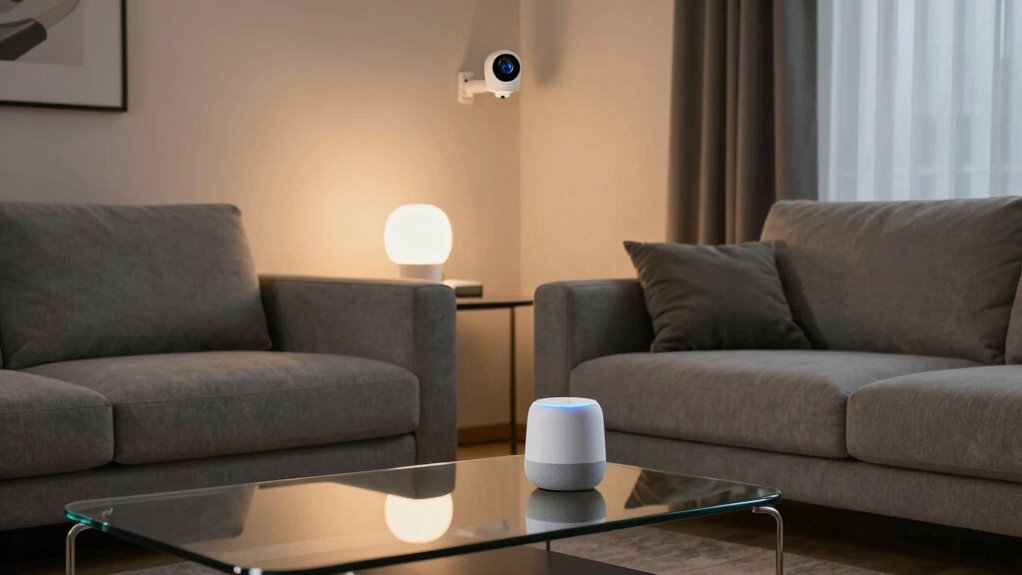

If you have smart devices like cameras or speakers in your home, it’s best to inform your guests about the recordings. Transparency helps build trust and respect their privacy, especially in shared or sensitive areas. Use signage, verbal explanations, or welcome packets to communicate your setup clearly. Disclosing devices when visible or in common spaces is courteous and avoids uncomfortable surprises. To learn ways to balance tech and guest comfort, keep exploring these smart home etiquette tips.
Key Takeaways
- Disclose recording devices in shared or private areas to respect guest privacy and maintain trust.
- Use signage or verbal explanations to inform guests about recordings, ensuring transparency.
- Obtain guest consent before activating recordings or capturing sensitive conversations.
- Place devices discreetly to balance security with comfort, avoiding intrusive setups.
- Follow local laws and regulations to ensure ethical and legal recording practices.
Understanding the Types of Smart Home Devices and Their Recordings
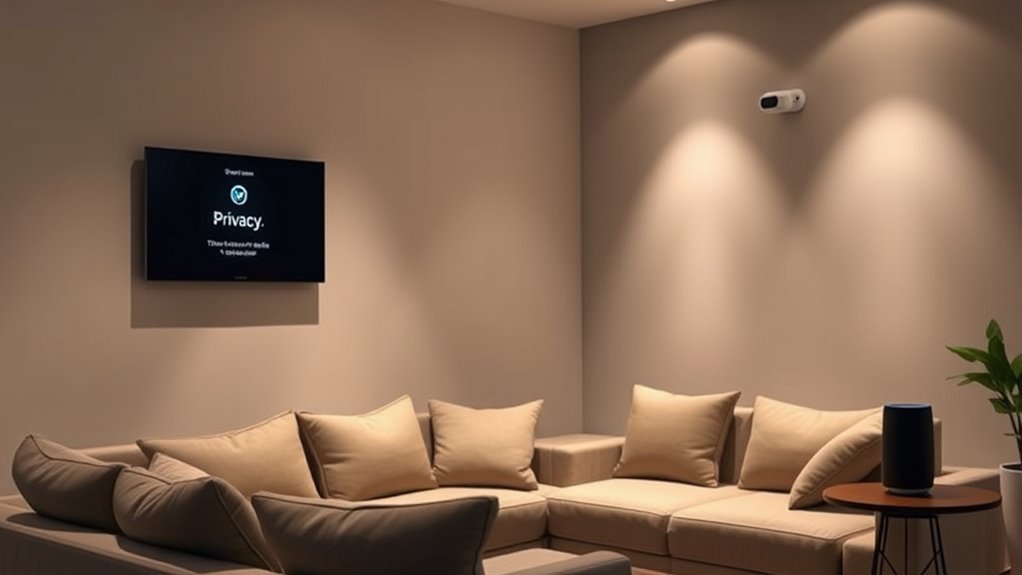
Smart home devices come in various types, each designed to enhance convenience and security, but they also generate recordings that can impact your privacy. Different device types, such as smart speakers, security cameras, and doorbells, store recordings in various formats and locations. Some devices save recordings locally on a hub or internal memory, while others upload data to cloud storage. Understanding recording storage is key to managing your privacy. For example, voice assistants may record conversations and store them on servers, making it essential to review privacy settings. Security cameras may record footage continuously or on motion detection, with recordings stored on a device or in the cloud. Knowing how your devices handle recordings helps you make informed decisions about your smart home privacy. Additionally, recording management features enable you to review, delete, or restrict data collection, further safeguarding your privacy. Familiarity with privacy settings allows you to customize your device behavior and protect sensitive information. Being aware of data encryption practices can also enhance the security of stored recordings and prevent unauthorized access. Implementing regular updates is vital to ensure your devices stay protected against security vulnerabilities. Moreover, understanding the storage location of recordings can help you determine the level of control you have over your data.
The Ethical Dilemma: Privacy vs. Security
Balancing privacy and security in smart home environments often presents an ethical dilemma. You want to protect your data through encryption and ensure device maintenance, but doing so might compromise guest privacy. On one hand, rigorous data encryption keeps your recordings safe from hackers, maintaining security. Additionally, data encryption protocols help safeguard sensitive information from unauthorized access. Implementing regular device updates can also reduce vulnerabilities that might lead to privacy breaches. On the other, constant device maintenance could lead to more intrusive monitoring, risking privacy breaches. Consider this table:
| Privacy Priority | Security Priority | Potential Impact |
|---|---|---|
| Limit data sharing | Use strong encryption | Protects data from outsiders |
| Notify guests | Maintain devices regularly | Ensures device reliability |
| Disable recording | Minimize surveillance | Preserves guest privacy |
| Use secure networks | Update firmware | Prevents hacking |
| Be transparent | Balance security measures | Eases guest concerns |
You must weigh protecting your home against respecting your guests’ privacy. Incorporating European cloud innovation can offer additional safeguards for your data, balancing privacy and security concerns more effectively.
Legal Considerations When Recording in a Private Space
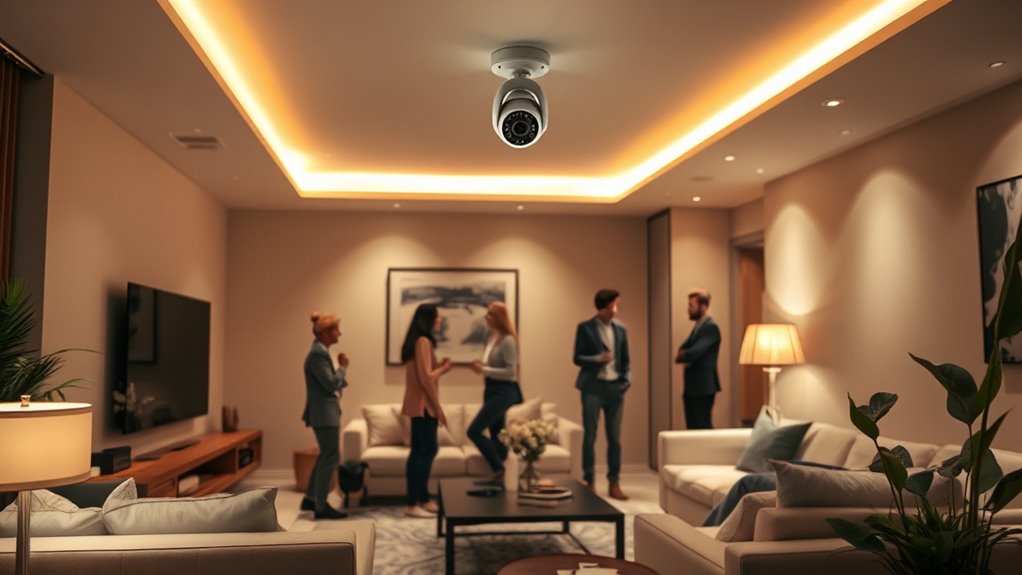
Recording in private spaces raises important legal questions you need to understand before installing or using smart home devices. Ensuring legal compliance is *essential* to avoid lawsuits or penalties. Laws vary by jurisdiction, but many require that you follow clear consent procedures when recording conversations or activities. In some areas, recording without consent may be illegal, even if only one person is aware of the recording. Before setting up cameras or microphones, check local laws and regulations to understand your obligations. Implement strict consent procedures, such as informing all household members and visitors about recordings. Being transparent and following legal guidelines not only protects you from legal trouble but also helps maintain trust with your guests and household members. Additionally, understanding privacy laws can help you determine the appropriate scope and limitations for recording in your home. Being aware of privacy expectations in your jurisdiction is crucial to ensure respectful and lawful recording practices.
How to Inform Guests About Home Recordings Effectively
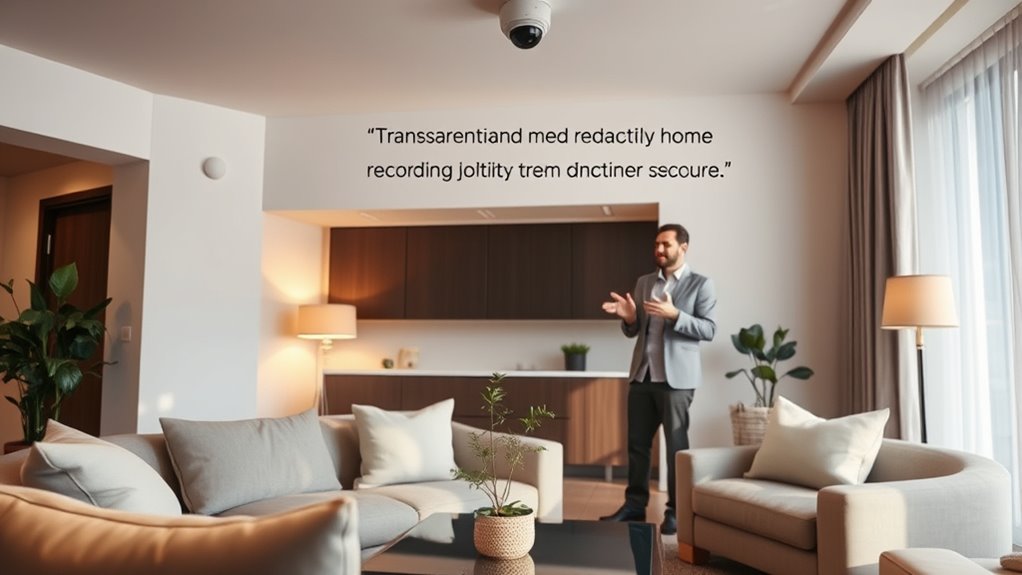
Informing guests about home recordings is a key step in maintaining transparency and building trust. Be clear and direct about your recording practices, emphasizing guest consent and data security. Use straightforward language to explain why recordings are necessary and how you protect their privacy. Provide written notices or verbal explanations before recording begins, ensuring guests understand their rights. To visualize ideas, consider this table:
| Method | Message Focus | Privacy Assurance |
|---|---|---|
| Signage at entrance | Recording purpose & consent | Data security measures |
| Verbal explanation | Transparency & guest rights | Secure storage practices |
| Welcome packet | Clear policies & opt-out info | Confidentiality commitments |
Additionally, explaining the content of recordings can help guests feel more comfortable and informed. For example, clarifying whether recordings are used solely for security, device troubleshooting, or other purposes can foster trust and alleviate concerns about privacy invasions. It is also beneficial to mention any privacy policies or regulations that govern your recording practices to reassure your guests. Clearly communicating the benefits of recording, such as enhanced security or troubleshooting, can further improve guest understanding and acceptance. Incorporating transparency about your recording practices demonstrates respect for guest privacy and encourages open communication.
Signs and Visual Cues: Subtle Ways to Notify Visitors

While subtle signs and visual cues might seem minor, they play a crucial role in quietly notifying visitors about your recording practices. Decorative cues, like tasteful signs or framed messages, serve as gentle visual indicators that your home is monitored. You can place small, unobtrusive stickers near entry points or on doors, signaling the presence of cameras or recording devices. Using clear, simple symbols or icons helps communicate this without overwhelming your space. These visual indicators create an environment of transparency, allowing guests to be aware without feeling uncomfortable. The goal is to balance subtlety with clarity, ensuring visitors recognize that recording occurs while maintaining a welcoming atmosphere. Thoughtfully chosen cues can effectively inform without disrupting your home’s aesthetic, especially when privacy considerations are thoughtfully addressed. Incorporating home security signage further enhances clarity and reassures guests about your recording policies. Additionally, understanding how to status can help you manage these signals effectively, ensuring your intentions are clearly communicated. A basic understanding of recording laws can also guide you in establishing appropriate signage and notifications, ensuring compliance with local regulations. For added peace of mind, providing privacy notices can further clarify your recording practices upfront.
Balancing Transparency and Comfort for Your Guests
Finding the right balance between transparency and comfort is essential to guarantee your guests feel welcomed and trusted in your home. You want them to feel at ease without feeling surveilled. Thoughtful device placement plays a key role here—hide cameras discreetly so they’re not intrusive, yet still serve their purpose. Clear signage or subtle cues can help communicate the presence of recording devices without making guests uncomfortable. Prioritize guest comfort by avoiding overly obvious or disruptive setup, and consider their privacy preferences. Open communication about your smart home devices can foster trust, but it’s equally important to respect their feelings and avoid making them feel watched. Understanding camera placement best practices can help you achieve this balance effectively. Proper cable management can also reduce visual clutter, making your home feel more inviting and less like a surveillance zone. Staying informed about privacy laws and regulations ensures you remain compliant and considerate of your guests’ rights. Being aware of cookie categories and how they influence data collection can further help you maintain transparency with your guests about any recording or monitoring. Striking this balance ensures your home remains both secure and welcoming.
When Is It Necessary to Disclose Recording Devices?

Disclosing recording devices becomes necessary when their presence could impact your guests’ comfort or privacy. If the devices are in common areas where conversations happen, transparency guarantees you respect recording ethics and maintain trust. You should disclose recording devices when:
- You’re hosting sensitive discussions or private conversations.
- Devices are clearly visible or easily noticeable.
- You want to uphold guest comfort and avoid feelings of being monitored.
- Additionally, understanding home and small-shop power safety and regulations can help ensure that recording devices are installed and used appropriately, avoiding potential electrical hazards or legal issues. This knowledge also assists in complying with local privacy laws that govern recording practices.
- Being aware of water safety measures can prevent accidents related to electrical equipment near water sources, ensuring a safe environment for everyone.
Being upfront about recordings helps your guests feel at ease and shows you respect their privacy. It also aligns with recording ethics, ensuring everyone is aware of the technology in use. When in doubt, err on the side of transparency to foster a welcoming environment and maintain good relationships.
Best Practices for Maintaining Trust and Respect
Building trust and showing respect in a smart home setting require honest communication and considerate behavior. Always seek guest consent before activating recording devices or sharing information about them. Clearly explain your privacy boundaries, including what is recorded and how the data is used. Respect guests’ comfort levels by giving them options to opt out or adjust device settings if possible. Maintain transparency about your smart home’s capabilities, and avoid surprises that could breach their privacy. Respecting privacy boundaries fosters trust and demonstrates you value their comfort. Remember, establishing open dialogue about recordings and privacy shows respect and helps guests feel secure. Prioritizing guest consent and privacy boundaries creates a respectful environment where everyone can feel at ease.
The Impact of Recording on Guest Behavior and Comfort

When guests know they’re being recorded, it can considerably influence their comfort and behavior in your smart home. They might feel less at ease or become more reserved, affecting overall guest comfort and interaction. Recording awareness can lead to:
- Guests adjusting their speech or actions to avoid being recorded
- Feeling self-conscious or anxious about their privacy
- Potential reluctance to share personal or sensitive information
These reactions can make your home feel less welcoming, impacting the natural flow of conversations. It’s essential to recognize that recording awareness shapes how guests behave and how comfortable they feel during their visit. Being transparent about recordings helps foster trust and ensures everyone feels respected and at ease in your smart home environment.
Developing a Personal Policy for Smart Home Recordings
To create a smart home recording policy, you need to clearly define your privacy expectations. Be transparent with your guests about when and where recordings happen, and ask for permission before capturing their images or conversations. Managing these permissions helps guarantee everyone feels respected and comfortable in your space.
Privacy Expectations Clarification
Establishing clear privacy expectations for your smart home recordings is essential to protect your personal space and build trust with everyone in your household. Start by defining your policies around guest privacy and consent awareness. Communicate openly about what’s recorded and why, so guests understand their rights and boundaries. Consider these points:
- Clearly inform guests if recordings are active and how their data is used
- Respect guest privacy by offering options to disable recordings if desired
- Keep transparent records of your recording policies and updates
Transparency With Guests
Creating a transparent environment around your smart home recordings helps foster trust and guarantees everyone feels comfortable. To do this, you should prioritize guest consent and recording awareness. Clearly inform visitors if your devices are recording, explaining the purpose and scope. This transparency shows respect for your guests’ privacy and helps them feel at ease. Make your policy easy to understand and accessible, whether through signs or direct communication. Always give guests the opportunity to ask questions or voice concerns about recordings. By establishing these clear boundaries upfront, you create an atmosphere of openness. Remember, being upfront about recording practices not only builds trust but also ensures everyone understands and respects your smart home’s privacy approach.
Managing Recording Permissions
Developing a personal policy for managing your smart home recordings is vital to guarantee consistent privacy practices. You need to contemplate factors like device compatibility, guaranteeing all your devices follow the same standards for recording and permissions. Establish clear rules on when recordings are enabled or disabled, especially when guests are present. Use data encryption to protect your recordings from unauthorized access and ensure your privacy stays intact. To make this easier, you might:
- Create a simple sign or notification system indicating when recording is active
- Set specific permissions for different devices to control access
- Regularly review and update your privacy settings and policies
Frequently Asked Questions
Can Smart Home Recordings Be Accessed Remotely by Others?
Yes, smart home recordings can be accessed remotely by others if security measures aren’t strong. This raises privacy concerns, so you should guarantee your devices have proper encryption and secure passwords. It’s also important to be aware of consent requirements; inform guests if your home is recording, and regularly review who has access. Protecting your data helps prevent unauthorized remote access and maintains everyone’s privacy.
How Long Are Recordings Typically Stored by Smart Devices?
Recordings on smart devices are typically stored for a period ranging from a few days to several months, depending on the device and settings. You should be aware of privacy concerns related to data retention, as longer storage increases potential risks. Check your device’s policies to understand how long your data is kept and whether you can delete recordings manually to protect your privacy and manage data retention effectively.
What Are the Potential Security Risks of Smart Home Recordings?
Think of your smart home recordings as a treasure chest that burglars might try to open. Privacy concerns arise if hackers access sensitive data, risking identity theft or unauthorized surveillance. If your devices lack strong data encryption, your personal moments become vulnerable. Always update your firmware, change default passwords, and enable encryption to protect your recordings. Being proactive keeps your home secure and preserves your privacy from potential cyber threats.
Are There Specific Laws Regarding Recording in Private Residences?
You should know that laws about recording in private residences vary depending on your location. Many regions have privacy concerns and legal considerations, requiring you to inform guests if you’re recording audio or video. In some places, covert recordings might be illegal, especially if they violate reasonable expectations of privacy. To stay compliant and avoid issues, always check local laws and be transparent with your guests about smart home recordings.
How Do Recordings Impact the Guest-Host Relationship Long-Term?
Ever wondered if recordings could subtly strain your relationships? They do, as privacy concerns and trust implications grow when guests realize they’re being recorded without knowing. Over time, this can erode comfort and openness, making guests hesitant to share freely. To maintain a strong host-guest bond, it’s best to be transparent about recordings. Doing so fosters trust, shows respect, and keeps your relationship healthy, even with smart home technology in play.
Conclusion
Remember, almost 60% of guests say they’d feel uncomfortable knowing a home is recording without their knowledge. Being transparent about your smart devices shows respect and builds trust. Clearly informing visitors helps maintain a welcoming environment while respecting privacy. By openly communicating your recording policies, you create a comfortable space where everyone feels safe. Ultimately, honesty fosters better relationships and guarantees everyone’s privacy is protected.