
Smart irrigation controllers help you water less while encouraging healthier lawns and gardens. They automatically adjust watering schedules based on weather forecasts, soil moisture, and plant needs, so you don’t waste water or effort. With remote control via Wi-Fi, you can modify settings anytime, anywhere. These systems promote resource efficiency and sustainability while maintaining lush landscapes. If you want to discover how these features work together for ideal growth, keep exploring the options available.
Key Takeaways
- Modern irrigation controllers optimize watering schedules based on weather, soil, and plant needs to reduce water usage.
- Smart features allow remote control and adjustments via Wi-Fi, enhancing convenience and precision.
- Automated systems prevent overwatering and runoff, promoting healthier plants and conserving water resources.
- Integration with environmental data ensures efficient watering aligned with current weather conditions.
- Using intelligent controllers helps save water, lower utility bills, and support sustainable gardening practices.
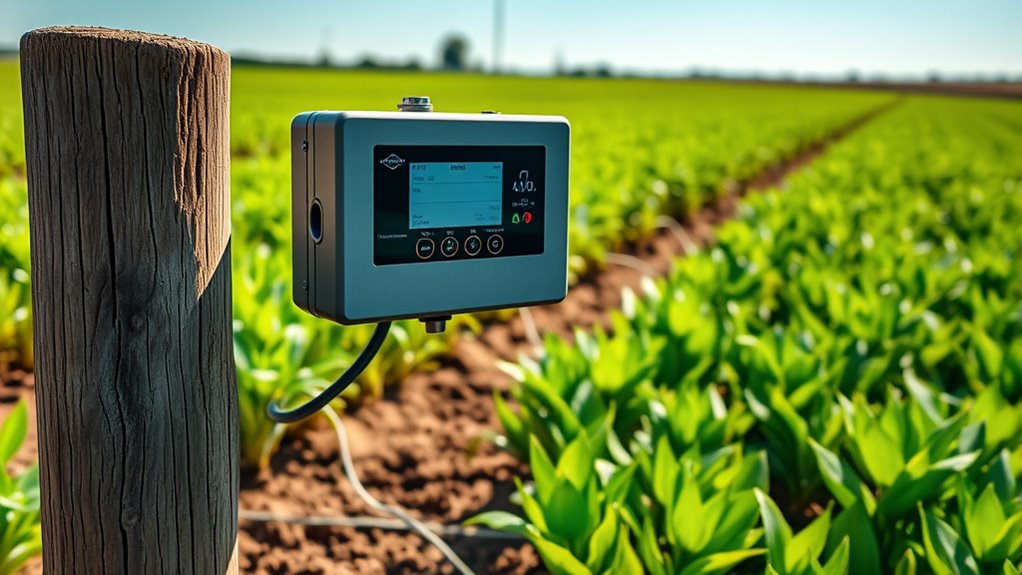
Irrigation controllers are essential tools that help you efficiently manage your watering schedule, guaranteeing your landscape receives the right amount of water at the right times. Modern controllers equipped with smart technology make this task even easier by adapting to your yard’s specific needs. With these innovative features, you can set precise watering times, adjust schedules based on weather forecasts, and monitor your system remotely. Smart technology in irrigation controllers allows you to optimize water usage without constant manual adjustments. By integrating weather data, soil moisture levels, and plant requirements, these controllers automatically modify watering cycles, preventing overwatering and runoff. This not only saves water but also promotes healthier plants and lawns. Water conservation becomes effortless when your system responds intelligently to environmental conditions, reducing waste and lowering your utility bills.
Smart irrigation controllers automatically adjust watering based on weather and soil data, conserving water and promoting healthy landscapes.
When you choose an irrigation controller with smart technology, you’re taking a step toward sustainable gardening. These systems utilize Wi-Fi connectivity, enabling you to control and monitor your irrigation from anywhere via smartphone or tablet. Whether you’re at work, on vacation, or relaxing at home, you can start, stop, or tweak your watering schedule with just a few taps. Many smart controllers also learn your watering habits over time, creating customized schedules that match your landscape’s evolving needs. This adaptive approach ensures you’re not wasting water on unnecessary cycles while still providing your plants with essential hydration.
Incorporating smart technology in your irrigation setup not only simplifies garden management but also aligns your watering practices with sustainable principles. You gain control and flexibility while actively contributing to water conservation efforts. This integration makes it easier to maintain a lush, healthy landscape without excessive water use. By investing in a smart irrigation controller, you’re making a conscious choice to grow more efficiently, save water, and support environmental responsibility—all while keeping your yard beautiful and thriving. Additionally, European cloud servers provide secure and reliable data management for your smart irrigation system, ensuring continuous operation even during power outages or connectivity issues.
Frequently Asked Questions
Can Irrigation Controllers Be Integrated With Smart Home Systems?
Yes, you can integrate irrigation controllers with your smart home system. Many models offer smart home compatibility, allowing you to control and monitor watering schedules via apps or voice commands. This automation integration helps you save water and manage your garden more efficiently. Just make certain your irrigation controller is compatible with your smart home platform, like Alexa, Google Home, or Apple HomeKit, for seamless control and automation.
What Are the Energy Consumption Differences Among Various Controllers?
Think of irrigation controllers like different vehicles; some are fuel-efficient hybrids, while others are gas guzzlers. Energy efficiency varies among controllers, with newer models designed to minimize power consumption. Smart controllers often use less energy due to their advanced sensors and adaptive schedules, reducing overall power consumption. Investing in energy-efficient controllers helps you save on electricity, making your watering system more sustainable and cost-effective over time.
How Do Controllers Adapt to Changing Weather Conditions?
You can adapt your irrigation controller to changing weather conditions by utilizing weather forecasting data and soil moisture sensors. The controller automatically adjusts watering schedules based on upcoming rain or dry spells, preventing over or under-watering. When soil moisture levels are high, it reduces watering, saving water and promoting healthy growth. This smart adaptation guarantees your garden gets the right amount of water, no matter the weather fluctuations.
Are There Eco-Friendly or Solar-Powered Irrigation Controllers Available?
Like Icarus reaching for the sun, you can choose solar-powered irrigation controllers that harness solar energy, making them eco-friendly. These controllers offer solar options with built-in eco-friendly features, reducing reliance on electricity and lowering your carbon footprint. They’re easy to install, cost-effective, and perfect for sustainable gardening. By opting for solar, you’re embracing innovation that benefits the environment while keeping your garden well-watered and thriving.
What Maintenance Is Required for Long-Term Operation of Controllers?
To guarantee your irrigation controller operates long-term, you should regularly perform controller calibration to keep watering schedules accurate. Additionally, wiring inspections are essential to identify and fix any loose or damaged connections that could disrupt performance. Keep the controller clean and protected from weather elements, and update software if applicable. These simple maintenance steps help extend your controller’s lifespan and maintain efficient, eco-friendly watering.
Conclusion
By choosing the right irrigation controller, you can reduce water usage by up to 30%, saving money and supporting sustainability. With smart technology, you’ll water only when needed, ensuring healthier plants and a greener lawn. Imagine making a positive impact every time you water—saving water, time, and resources. So, take control today, embrace smarter irrigation, and grow more while conserving water. Your efforts can make a real difference for your yard and the environment.