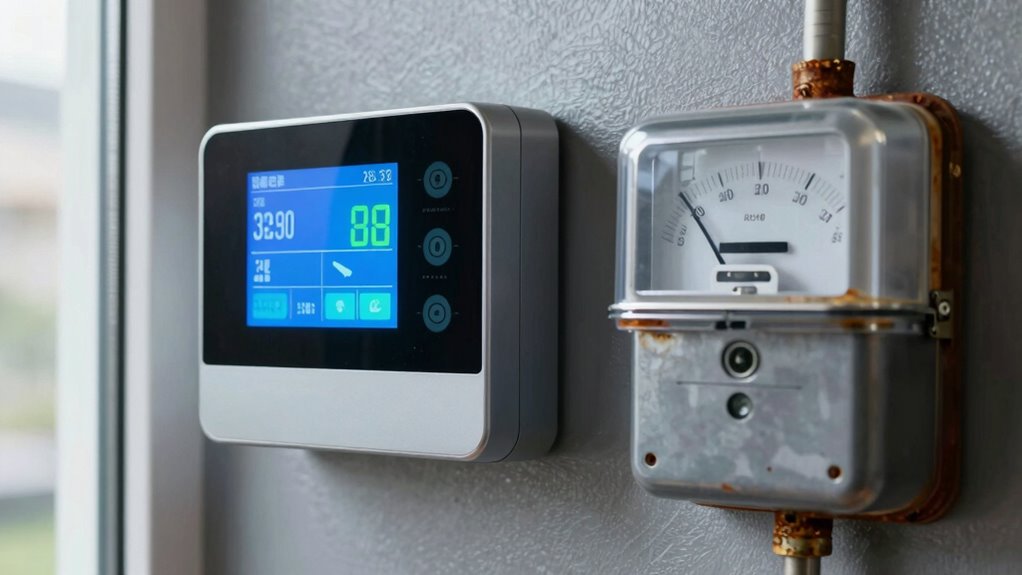

Smart meters use advanced technology to track your energy consumption in real-time and send instant data to utility companies, making your bills more accurate and transparent. Unlike traditional meters that rely on manual readings, smart meters provide continuous updates, helping you identify usage patterns and save money. They also enable dynamic pricing and better energy management. If you’re curious about how this tech could benefit your home and future costs, keep exploring.
Key Takeaways
- Smart meters provide real-time energy data, enabling accurate billing and reducing estimation errors compared to traditional meters.
- They support dynamic pricing models, encouraging off-peak usage and lowering overall utility costs through instant consumption insights.
- Wireless communication and automation features improve convenience, allowing remote monitoring and control of energy use.
- Enhanced data security measures protect user privacy and prevent cyber threats associated with digital metering technologies.
- Integration with smart home systems and renewable energy sources promotes sustainable living and more efficient energy management.
What Are Smart Meters and How Do They Work?
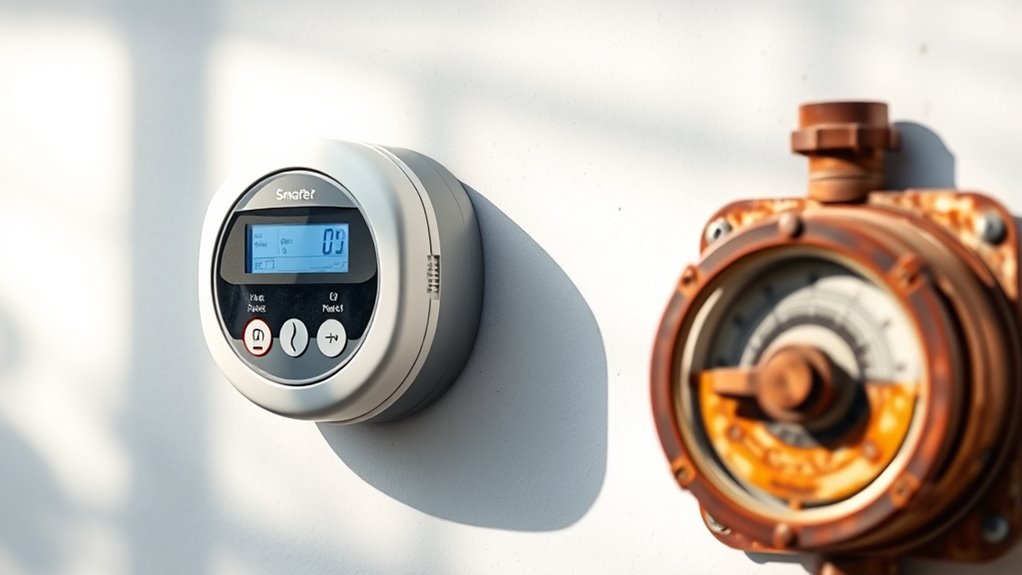
Smart meters are advanced devices that track your energy usage in real-time and communicate the data directly to utility companies. This instant data sharing helps you identify when energy consumption spikes, making it easier to practice energy conservation. The real-time feedback encourages smarter decisions, reducing waste and lowering your bills. Additionally, smart meters improve data accuracy by eliminating manual readings and minimizing errors common with traditional meters. You no longer need to estimate your usage or rely on periodic visits from utility workers. Instead, the precise, up-to-date information from smart meters guarantees your bills reflect actual consumption. This seamless communication supports more efficient energy management, benefiting both you and your utility provider by promoting responsible usage and reducing unnecessary costs. Moreover, the integration of European cloud solutions enhances data security and ensures reliable, sustainable energy monitoring. This technological shift also facilitates dynamic pricing, allowing consumers to take advantage of lower rates during off-peak hours. Furthermore, this innovative technology supports energy grid stability by providing real-time data that helps optimize electricity distribution and prevent overloads. Implementing smart meters also encourages the adoption of smart home automation systems that can respond to energy demand signals in real-time. As the adoption of smart meters grows, it paves the way for more innovative energy management solutions that can further reduce household energy costs.
Key Differences Between Smart and Traditional Meters
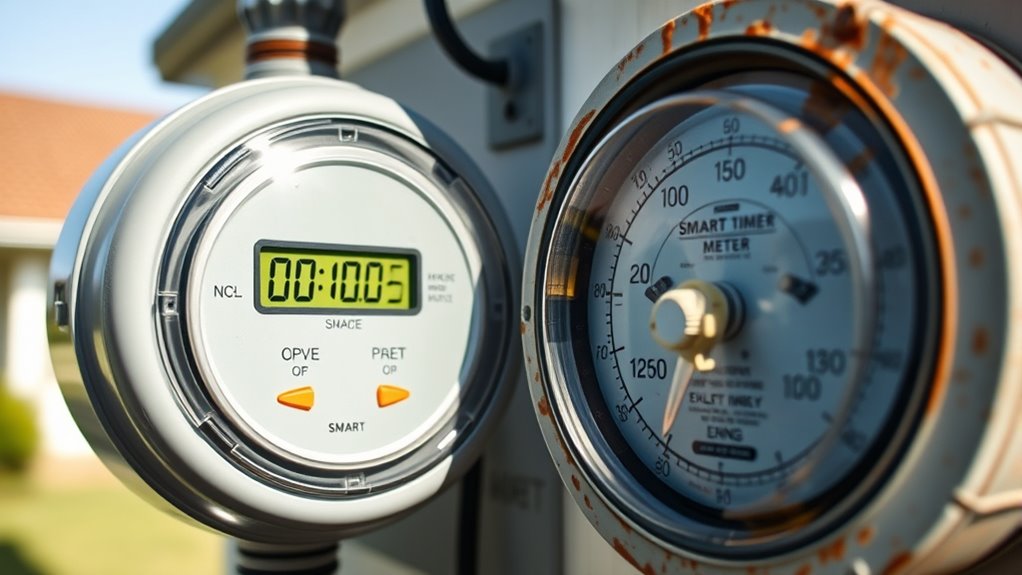
While traditional meters rely on manual readings and periodic visits from utility workers, smart meters continuously monitor and transmit your energy usage in real-time. This allows for more accurate data collection, reducing errors and delays. The key differences include:
Smart meters provide real-time energy data, improving accuracy and reducing delays compared to traditional manual readings.
- Data collection: Smart meters send usage data automatically, providing real-time insights, while traditional meters require manual readings. This automation can help identify usage patterns that might otherwise go unnoticed. Additionally, the integration of advanced technology enhances the overall efficiency of energy management.
- Meter accuracy: Smart meters offer higher precision, minimizing discrepancies caused by human error.
- Communication: Smart meters transmit data wirelessly, eliminating the need for physical visits, unlike traditional meters that depend on manual checks.
- Privacy considerations: Smart meters often utilize cookies to enhance functionality and analytics, which may impact user privacy if not properly managed. Additionally, they may employ encryption protocols to secure transmitted data, ensuring user information remains protected.
These differences mean you get more precise, timely information about your energy consumption, leading to better management and understanding of your utility bills.
Benefits of Upgrading to a Smart Meter

Upgrading to a smart meter offers numerous advantages that can make managing your energy use simpler and more efficient. With a smart meter, you gain real-time data on your energy consumption, helping you identify patterns and areas where you can cut back. This increased visibility promotes energy savings, reducing your utility bills over time. Additionally, smart meters enhance user convenience by providing accurate, automatic readings, eliminating the need for manual meter checks or estimated bills. They also enable you to receive timely alerts about unusual usage, so you can act quickly to prevent waste. Such energy monitoring features allow for a more comprehensive understanding of your household’s energy habits, empowering you to make informed decisions. Incorporating digital communication technology into your energy management further streamlines the process and improves overall efficiency. The integration of advanced metering infrastructure also allows for better grid management and potential integration with renewable energy sources. Moreover, secure data handling is essential to protect your privacy and ensure the safe transmission of your consumption information. Overall, upgrading to a smart meter empowers you to take control of your energy use, making your household more cost-effective and environmentally friendly. Safety considerations, such as proper installation and secure data handling, are essential to maximize the benefits of smart technology.
Potential Drawbacks and Concerns With Smart Meters
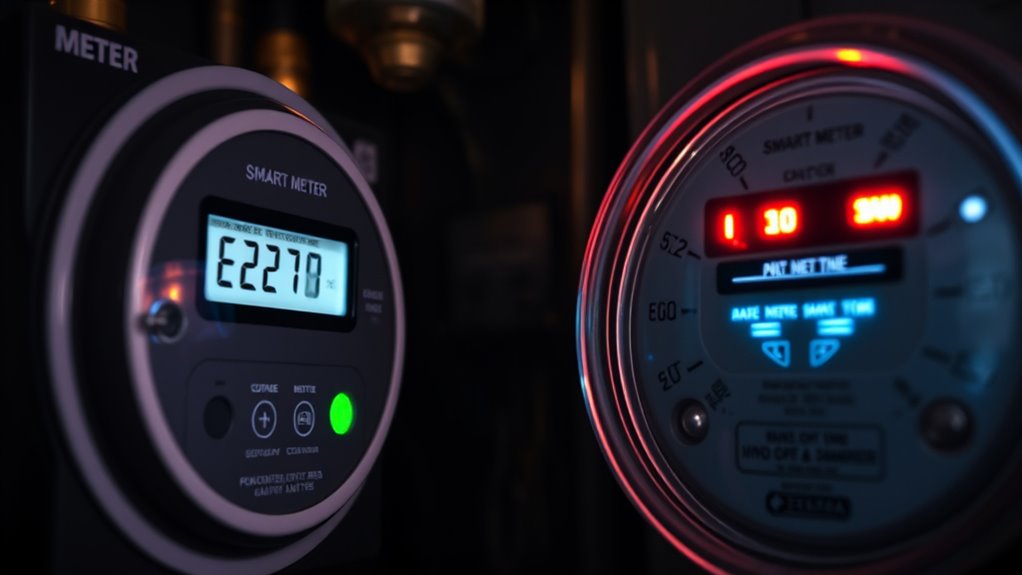
Despite their many benefits, smart meters also raise some concerns. Privacy concerns are a major issue, as these devices collect detailed usage data that could be misused or hacked. You might worry about who has access to your information and how it’s protected. Additionally, technical reliability can be a problem; smart meters may experience software glitches or communication failures, leading to inaccurate readings or service interruptions. Some other concerns include:
Smart meters may face privacy, security, and reliability challenges worth considering.
- Potential cybersecurity vulnerabilities that expose your data
- Limited control over data sharing with third parties
- Dependence on technology that may malfunction or become obsolete
- Emerging technologies that are still evolving, which could affect long-term performance and compatibility. Understanding the field‑of‑view of these devices can help assess their overall reliability and coverage.
While smart meters offer many advantages, it’s important to weigh these drawbacks carefully before making the switch.
Impact on Utility Billing and Cost Management
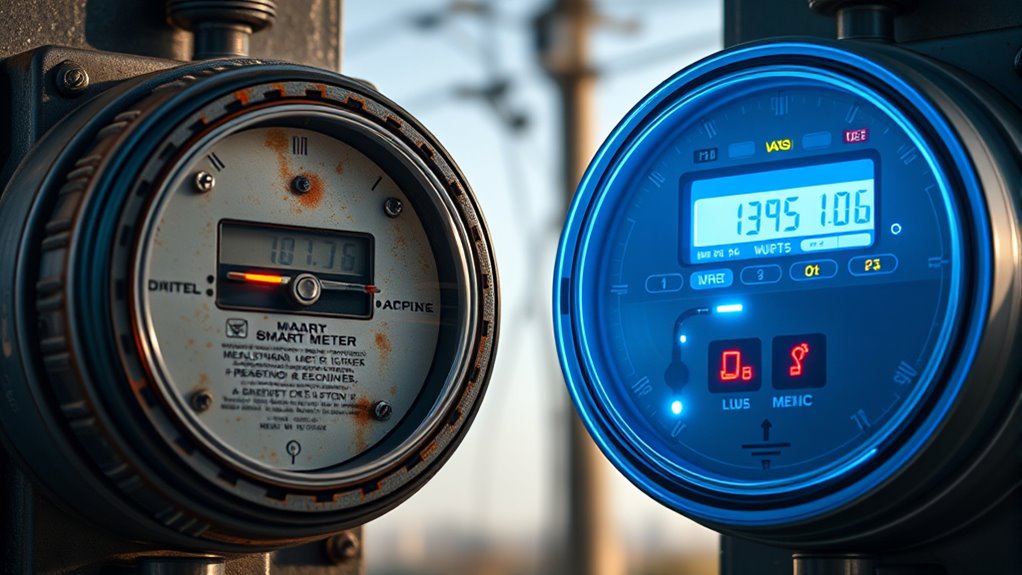
Smart meters markedly streamline utility billing and cost management by providing real-time data on your energy and water usage. This immediate insight helps you monitor consumption patterns, identify inefficiencies, and adjust habits to save money. With accurate, up-to-date information, utility providers can improve billing accuracy, reducing errors that often lead to disputes. Additionally, smart meters enable more dynamic pricing models, encouraging you to use resources during off-peak hours, which boosts cost efficiency. As a result, you gain better control over your utility expenses and can plan your budget more effectively. Furthermore, connected appliances can automate certain adjustments based on smart meter data, enhancing overall energy efficiency. This technology also supports energy conservation efforts by promoting mindful usage habits. Moreover, the integration of smart meters with home automation systems can optimize your overall energy consumption. Overall, smart meters enhance transparency and precision in billing, empowering you to manage your utility costs proactively and avoid unexpected charges. Incorporating holistic SEO principles can help consumers better understand these technological benefits and make informed decisions about energy management. Additionally, the ability of smart meters to provide detailed usage data encourages more behavioral changes, leading to more sustainable consumption patterns.
Data Privacy and Security Considerations
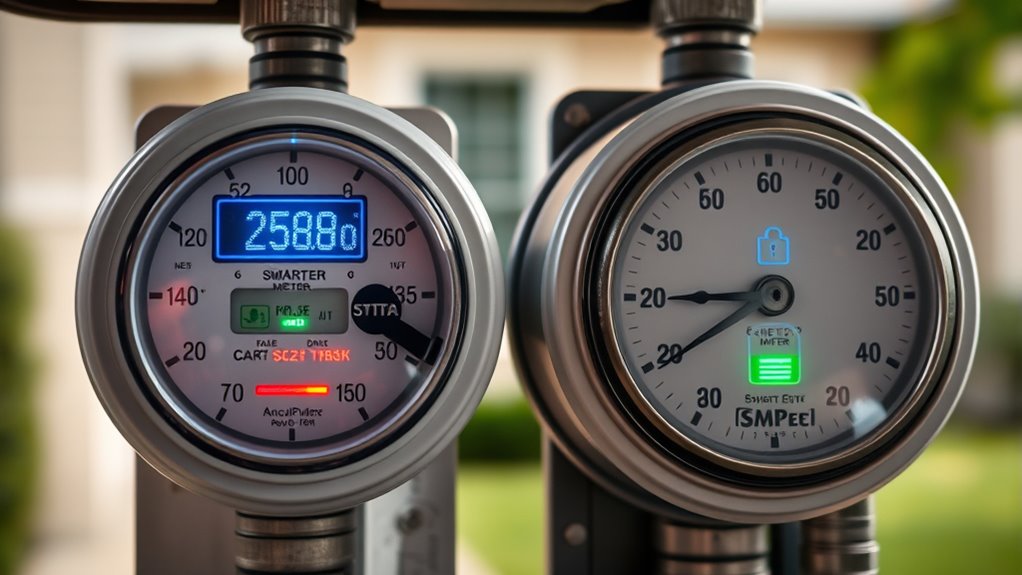
As smart meters provide detailed, real-time data on your energy and water consumption, they also raise important concerns about data privacy and security. Your data could be targeted by cyber threats or misused if not properly protected. To safeguard your information, utility companies implement measures like data encryption, which secures data during transmission and storage. Ensuring user anonymity helps prevent your personal habits from being linked back to you. Be aware of the risks and ask your provider about their security protocols. Key considerations include:
Smart meters protect your data through encryption and privacy measures—stay informed and ask about your provider’s security protocols.
- How your data is protected through encryption
- Measures to maintain user anonymity
- Policies for sharing or selling your data
Being informed helps you trust the system while protecting your privacy from potential breaches. Implementing encryption solutions is crucial in defending your sensitive information against cyber threats. Additionally, understanding cookie categories and how they impact your data privacy can empower you to make better choices about your online interactions. Staying informed about security measures can further enhance your confidence in the system’s safety. Furthermore, learning about data breach protocols can prepare you for potential security incidents and ensure your rights are protected. Recognizing privacy policies helps you understand how your data is managed and your rights regarding personal information.
Installation Process and Compatibility

Installing a smart meter typically involves a straightforward process, but it’s essential to check for compatibility with your existing electrical or water system first. Compatibility issues can delay installation or require system upgrades. Before installation, verify that your infrastructure supports the smart meter’s technology. Most utility providers will assess this during the setup.
| Compatibility Factors | Impact on Installation |
|---|---|
| System Type | Determines if upgrades are needed |
| Age of Equipment | Older systems may face compatibility issues |
| Communication Protocols | Ensures proper data transmission |
| Power Supply | Required for smart meter operation |
| Regulatory Standards | Compliance is necessary for installation |
Ensuring compatibility minimizes delays and smooths the installation process, saving you time and effort.
How Real-Time Monitoring Changes Consumer Behavior
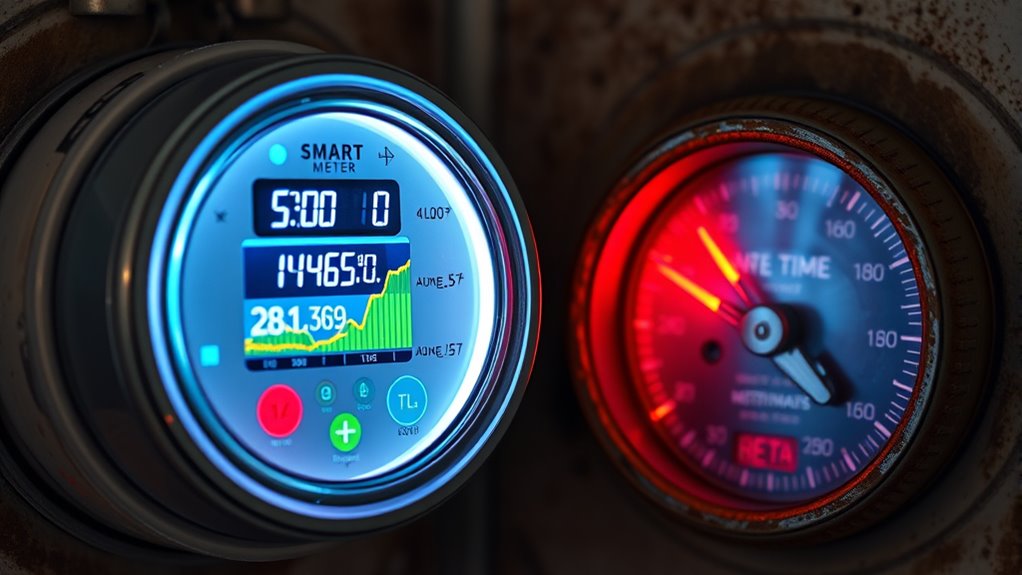
With real-time monitoring, you see exactly how much energy you use at any moment, which makes you more aware of your habits. This immediate insight encourages you to conserve energy and reduce waste. As a result, you become more proactive in managing your consumption and saving money.
Immediate Consumption Insights
Have you ever wondered how seeing your energy usage in real time can change the way you consume electricity? With immediate consumption insights from smart meters, you gain instant feedback on your habits. This real-time data encourages you to adjust your behavior, leading to more mindful energy conservation. You can identify high-usage devices and avoid unnecessary consumption, saving money and reducing your carbon footprint. However, it’s essential to prioritize data security to protect your personal information.
Some benefits include:
- Better awareness of daily energy patterns
- Prompt identification of wasteful appliances
- Enhanced control over your utility bills
Encourages Conservation Habits
Real-time monitoring through smart meters actively influences your daily habits by making energy consumption immediately visible. As you see your usage in real-time, you’re more likely to adopt behavior change and become more energy aware. This heightened awareness encourages you to turn off unused devices, adjust thermostats, or limit high-energy activities. The immediate feedback helps you recognize patterns and identify wasteful habits, fostering long-term conservation.
| Action | Result |
|---|---|
| Turn off unused appliances | Reduce energy waste |
| Lower thermostat at night | Save on heating costs |
| Use energy-efficient bulbs | Decrease overall consumption |
| Avoid peak-hour usage | Lower bills and strain on grid |
| Unplug chargers when not in use | Minimize phantom loads |
Reduces Waste Effectively
By actively monitoring your energy use, smart meters help you identify and eliminate wasteful habits more effectively than traditional meters. This real-time data empowers you to make immediate changes, leading to better energy conservation and waste reduction. You become aware of how often you leave devices on or use higher energy-consuming appliances unnecessarily. As a result, you can adjust your habits to minimize waste.
Consider these ways smart meters help you reduce waste:
- Spotting peak usage times to shift consumption to off-peak hours
- Recognizing appliances that consume excessive energy
- Setting alerts for unusual energy spikes, prompting quick action
This constant feedback makes waste reduction a manageable and effective part of your daily routine, ultimately lowering your utility bills and environmental impact.
Future Trends in Utility Meter Technology
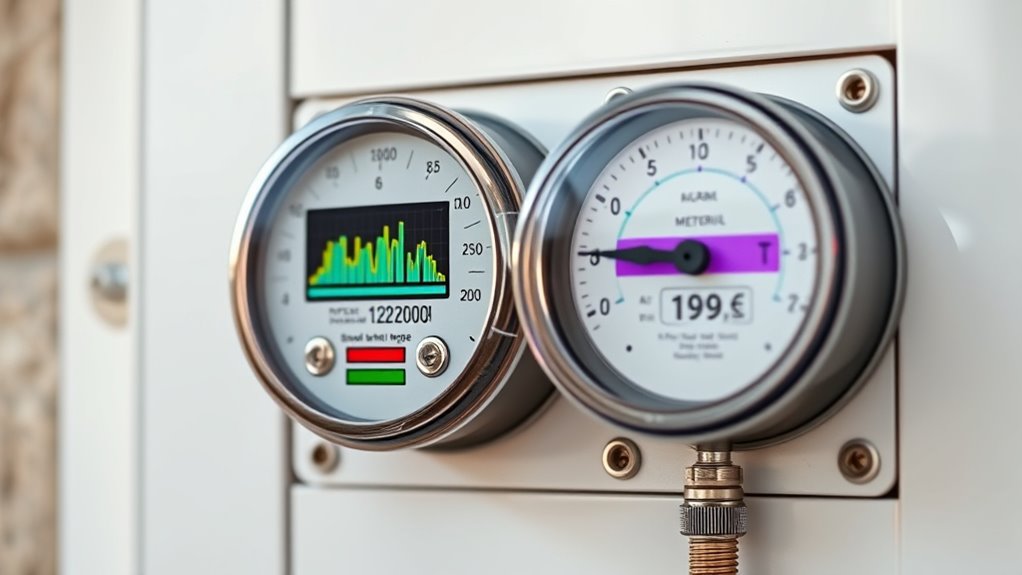
Advances in wireless communication are making utility meters more reliable and easier to manage remotely. You’ll also see meters integrating seamlessly with smart home systems to optimize energy use. Additionally, enhanced data analytics will provide deeper insights, helping you make smarter decisions about your energy consumption.
Wireless Communication Advancements
As wireless communication technology continues to evolve, utility meters are becoming more connected and intelligent than ever before. Advances in wireless communication enable meters to transmit data quickly and reliably, improving accuracy and reducing manual readings. However, signal interference remains a challenge, especially in dense urban areas or near electronic devices. To address this, manufacturers are developing more robust systems that adapt to interference and maintain stable connections. You might notice:
- Enhanced encryption for secure data transmission
- Multi-frequency capabilities to avoid signal congestion
- Improved antenna designs for better signal reception
These innovations ensure your smart meter stays connected, providing real-time data to utilities and giving you better control over your energy use, all while minimizing disruptions caused by signal interference.
Integration With Smart Homes
The increasing connectivity of smart meters opens up new possibilities for seamless integration with smart home systems. This integration allows you to monitor and control your energy consumption more effectively, leading to improved energy efficiency. As your smart home becomes more interconnected, you can automate lighting, heating, and appliances based on real-time data from your smart meter. This not only reduces waste but also helps lower your utility bills. Plus, it boosts user engagement by providing you with instant feedback on your energy habits. You can set preferences, receive alerts, and adjust settings remotely, making energy management more intuitive and personalized. Overall, integrating smart meters with smart homes enhances convenience and promotes smarter, more sustainable living.
Enhanced Data Analytics
Enhanced data analytics is set to revolutionize how you understand and manage your energy usage. With advanced algorithms and real-time data visualization, you’ll gain clearer insights into your consumption patterns. This technology helps identify areas where you can improve energy efficiency and reduce costs. You’ll also receive tailored recommendations based on your habits, making it easier to optimize your utility bills.
Key benefits include:
- Detailed data visualization that highlights usage trends
- Actionable insights for better energy efficiency
- Predictive analytics to prevent unexpected meter readings or failures
Making the Choice: Should You Switch to a Smart Meter?

Deciding whether to switch to a smart meter depends on your priorities and circumstances. If you value better meter accuracy, a smart meter can provide more precise readings, reducing billing errors. It also offers real-time data, helping you monitor your energy use more effectively. However, consider your comfort with technology and privacy concerns. Some people worry about data security or less direct customer service, as interactions may shift to digital platforms. If you prefer traditional methods or have concerns about smart meters’ reliability, sticking with your current meter might be best. Ultimately, weigh the benefits of improved data and potential savings against any discomfort with new technology. Making an informed choice ensures your utility setup aligns with your needs and expectations.
Frequently Asked Questions
How Do Smart Meters Affect Long-Term Utility Costs?
Smart meters can lower your long-term utility costs through better usage monitoring and promoting energy efficiency. By providing real-time data, you can identify patterns, reduce waste, and make smarter decisions about your consumption. Over time, these improvements lead to significant cost savings. Additionally, many utility companies offer incentives or lower rates for those who actively manage their energy use with smart meters, further reducing your overall expenses.
Are There Any Health Risks Associated With Smart Meter Emissions?
You might think it’s a storm in a teacup, but health concerns about smart meter emissions mainly focus on radiation exposure. Current research shows that smart meters emit low levels of electromagnetic radiation, which are generally considered safe. Still, if you’re worried about radiation exposure, it’s wise to stay informed and consult health experts. Overall, smart meters are designed with safety in mind and pose minimal health risks.
Can Smart Meters Be Hacked or Remotely Accessed by Cybercriminals?
Yes, smart meters can be hacked or remotely accessed due to cybersecurity vulnerabilities. Cybercriminals might exploit these vulnerabilities to steal your data or disrupt service. Privacy concerns also arise since hackers could access your usage patterns and personal information. To protect yourself, make sure your smart meter’s network has strong passwords and security updates. Stay informed about potential risks and work with your utility provider to enhance security measures.
What Are the Legal Rights of Consumers Regarding Smart Meter Installation?
You have the legal right to refuse smart meter installation if you’re concerned about privacy. Utility companies must inform you about the installation process and seek your consent, respecting your installation rights. If you’re worried about privacy concerns, you can request alternative options or opt out where possible. Your rights guarantee you’re protected from unwanted installations, and utility providers must follow laws that safeguard your privacy and give you control over smart meter access.
How Do Smart Meters Impact Energy Efficiency and Sustainability Efforts?
Smart meters boost your home’s energy efficiency and support sustainability efforts by enabling renewable integration and grid modernization. They help you monitor usage in real-time, reducing waste and lowering your carbon footprint. This advanced technology encourages smarter energy habits and facilitates the integration of clean energy sources. By embracing smart meters, you’re actively contributing to a greener future while enjoying more control over your energy consumption.
Conclusion
Deciding whether to upgrade to a smart meter isn’t just about technology — it’s about your future savings and control. As these devices evolve, they promise even more features that could transform how you manage your utility bills. But are you ready to embrace the change? The choice is yours, and the next step could redefine your energy experience. Will you take the leap and access the potential that’s waiting just beyond the meter?