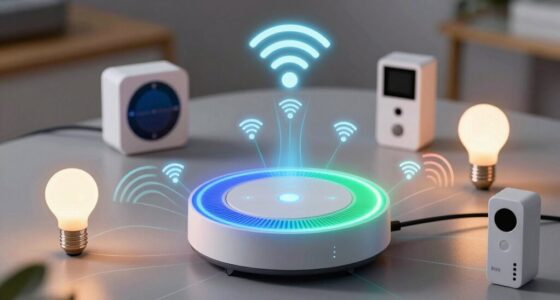

By 2025, smart homes will become more intuitive with AI-driven automation that anticipates your needs, while energy efficiency improves through renewable sources and smart management systems. Seamless IoT device integration will let you control everything from a single interface, and personalized settings will adapt to your habits for maximum comfort. Plus, enhanced security features like biometric access and encryption will keep your home safer. Keep exploring to discover the full potential of these exciting advancements.
Key Takeaways
- AI-powered voice assistants will become central hubs, anticipating needs and managing home systems seamlessly.
- Enhanced IoT device integration will enable cross-brand compatibility and local automation resilience.
- Sustainable energy solutions like solar, smart grids, and energy storage will optimize efficiency and reduce carbon footprints.
- Personalized environments will adapt dynamically through data insights, improving comfort and efficiency.
- Advanced security features, including biometric authentication and encryption, will ensure privacy and safeguard smart home data.
AI-Powered Home Automation Reaches New Heights

As AI technology continues to evolve rapidly, home automation systems are reaching new heights of sophistication. You’ll notice smarter voice assistants that seamlessly understand your commands and anticipate your needs, making daily tasks effortless. Robotic cleaners now operate more efficiently, steering your home with advanced sensors and adapting to different surfaces. These AI-powered devices work together to create a more comfortable, convenient living environment. Voice assistants become your central control hub, managing lighting, climate, and security with simple voice commands. Robotic cleaners handle chores autonomously, freeing up your time. The integration of these AI technologies means your home is not only smarter but also more responsive to your habits and preferences, enhancing overall comfort and efficiency. Additionally, the European cloud infrastructure supporting these devices ensures your data remains secure and private, fostering trust in smart home technology.
Enhanced Sustainability and Energy Efficiency
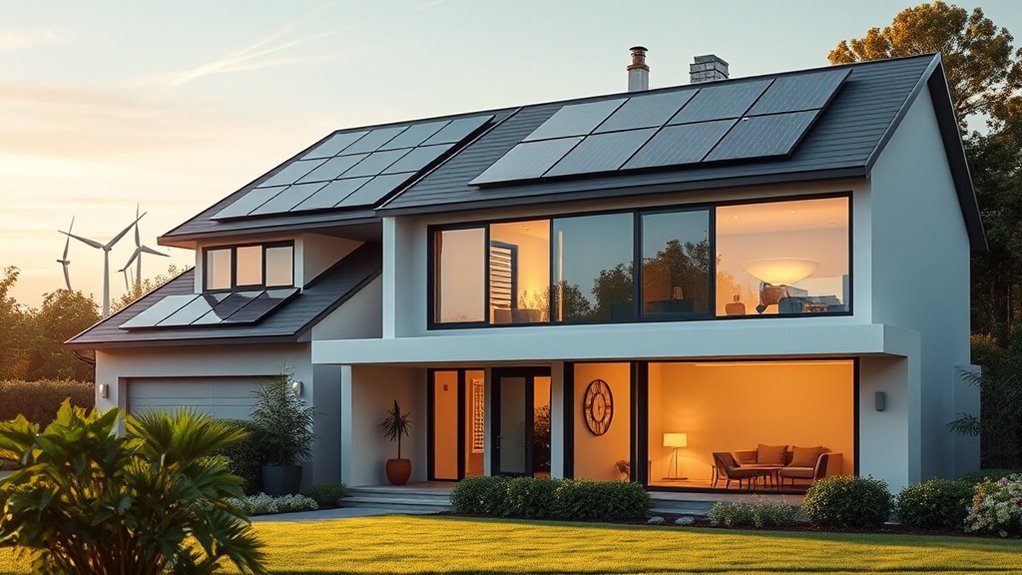
Building on the advancements in AI-powered automation, smart homes are now prioritizing sustainability and energy efficiency more than ever. You’ll see increased use of renewable energy sources like solar and wind, reducing reliance on traditional power grids. Eco-friendly materials, such as recycled insulation and sustainable flooring, are integrated into home designs to lower environmental impact. Smart energy management systems optimize consumption, adjusting lighting and climate control based on occupancy and weather patterns. Here’s a quick overview:
| Feature | Benefit | Example |
|---|---|---|
| Renewable energy sources | Lower carbon footprint | Solar panels, wind turbines |
| Eco-friendly building materials | Sustainable construction practices | Recycled glass, bamboo |
| Smart energy management | Reduced energy waste | Automated HVAC, lighting |
| Energy storage solutions | Backup power and efficiency | Home batteries |
| Green certifications | Validates eco efforts | LEED, BREEAM |
Additionally, integrating energy-efficient appliances further enhances overall sustainability efforts by reducing unnecessary power consumption across household systems. Incorporating advanced energy monitoring systems helps homeowners identify areas for improvement and optimize their energy use in real-time. Furthermore, the rise of smart home technology allows for more precise control and monitoring of energy usage, fostering a more sustainable living environment.
Seamless Integration of IoT Devices
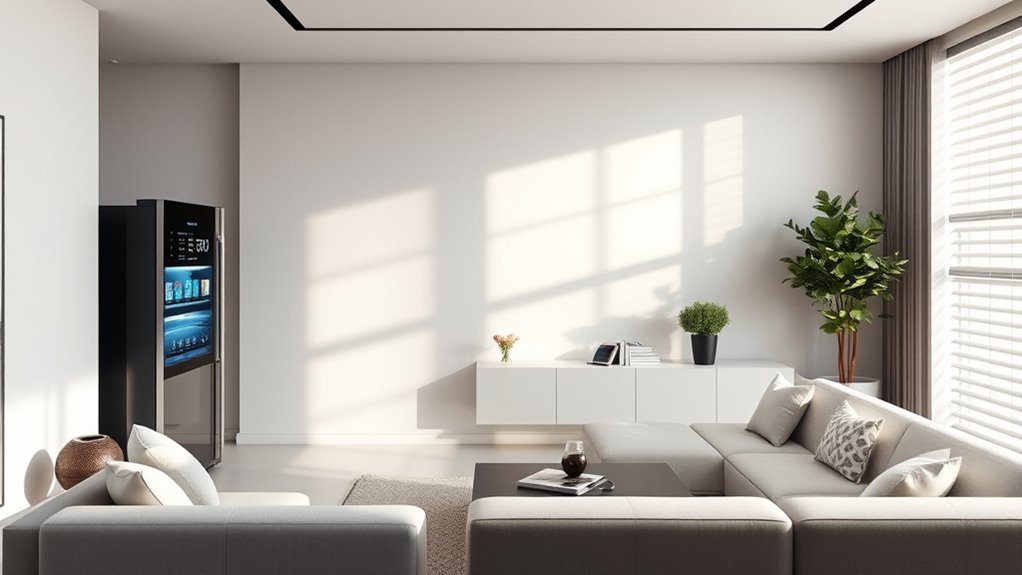
The seamless integration of IoT devices is transforming smart homes into highly connected ecosystems, where every gadget communicates effortlessly to enhance convenience and efficiency. You’ll notice that voice control becomes increasingly intuitive, allowing you to manage multiple devices with simple commands. Device interoperability is key here, as different brands and systems work together seamlessly, eliminating compatibility issues. This integration means you won’t have to toggle between apps or interfaces; instead, your smart home responds as a cohesive unit. Expect your lights, thermostats, security cameras, and appliances to coordinate smoothly, creating a truly smart environment. With ongoing advancements, this interconnected setup simplifies daily routines and provides a more streamlined, responsive living experience. Additionally, Free Floating concepts are increasingly being integrated to optimize space and functionality within these interconnected systems. Furthermore, the development of local automation ensures that critical processes remain functional even during internet outages, enhancing reliability and security. As these systems evolve, interoperability standards are expected to become more robust, further supporting seamless device communication.
Personalized Smart Environments Through Data Insights
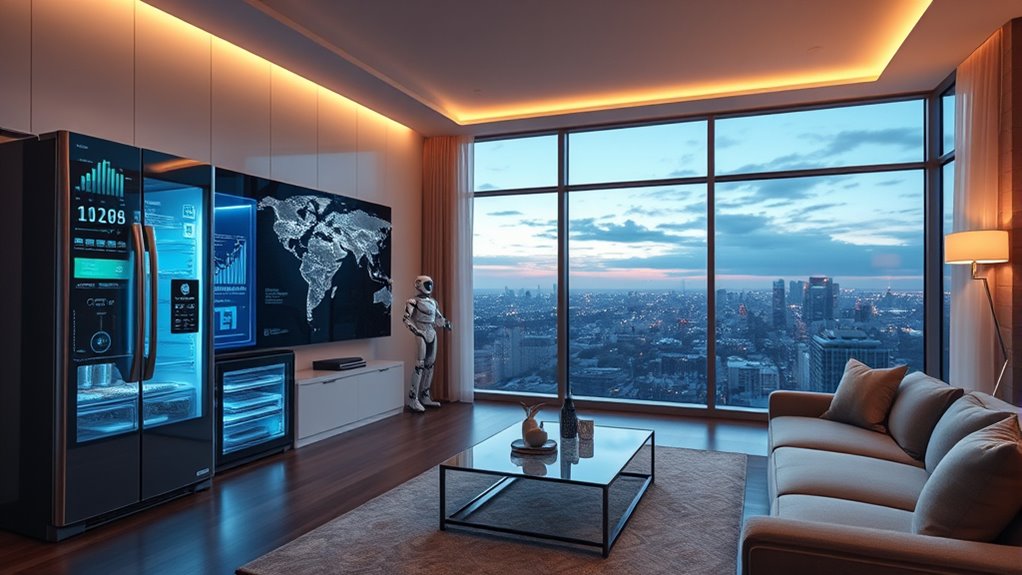
By analyzing data from your smart devices, future homes will create highly personalized environments that adapt to your habits and preferences. You’ll experience features like adaptive lighting that adjusts based on your activity or time of day, enhancing comfort and energy efficiency. Personalized climate control will fine-tune temperature and humidity levels to match your routines, ensuring ideal comfort at all times. The integration of connected appliances will further streamline your daily routines, making your smart home more intuitive and efficient. Additionally, power tools and heavy-duty equipment will be incorporated into smart home systems to assist with maintenance tasks, DIY projects, and outdoor work, further enhancing convenience and safety. Leveraging smart home automation can optimize how your devices work together to create a truly personalized environment, transforming your living space into a seamless, intelligent sanctuary. As seen in the success stories of individuals like Kate from Breaking Amish, leveraging personal branding and social media can transform personal and professional lives, inspiring smarter and more connected living environments. Recognizing the importance of home automation in creating efficient and adaptive living spaces will be central to future smart home innovations.
Security and Privacy Innovations in Connected Homes

As smart homes become more connected, safeguarding your privacy and security has never been more critical. Innovations like voice recognition help verify only authorized users access certain features, reducing the risk of breaches. Biometric authentication adds an extra layer of protection, enabling you to use fingerprint or facial scans instead of traditional passwords. These technologies make it easier to secure your devices without sacrificing convenience. Additionally, advanced encryption protocols and real-time monitoring keep your data safe from cyber threats. Developers are also focusing on transparent privacy policies, so you understand how your information is used. The use of necessary cookies ensures essential functionalities operate securely and smoothly. Incorporating privacy management tools allows homeowners to customize their security settings and monitor access to sensitive data. Regular updates and security patches are crucial in addressing new vulnerabilities, ensuring your connected home remains protected. Employing data encryption techniques further fortifies your system against unauthorized access. Furthermore, adopting performance cookies can help optimize your system’s efficiency without compromising security. By integrating these security and privacy innovations, you can enjoy the benefits of a connected home while maintaining control over your personal data.
Frequently Asked Questions
How Will Smart Homes Impact Urban vs. Rural Living Environments?
Smart homes will reshape urban and rural living differently. In urban areas, you’ll benefit from seamless urban integration, making daily tasks more efficient and connected. For rural settings, improved rural connectivity guarantees you stay linked to essential services and information, overcoming traditional isolation. Overall, smart home tech enhances your lifestyle by tailoring experiences to your environment, whether you’re in the city or countryside, fostering smarter, more connected communities.
What Are the Cost Implications of Adopting Advanced Smart Home Technologies?
Adopting advanced smart home technologies requires a significant financial investment, but a thorough cost analysis shows potential savings over time. You might face higher upfront costs for devices and installation, yet these can lead to reduced energy bills and improved efficiency. While initial expenses are notable, the long-term benefits often outweigh them, making smart home upgrades a wise financial decision if you weigh the costs carefully and plan your investment wisely.
How Accessible Will Smart Home Innovations Be for Differently-Abled Individuals?
Smart home innovations will become more accessible for differently-abled individuals as assistive tech advances and companies prioritize inclusive design. You’ll find devices that help bypass accessibility barriers, such as voice-controlled systems and adaptive interfaces, more widely available and affordable. As technology evolves, expect greater integration of assistive tech into mainstream smart homes, making independence easier for everyone, regardless of physical abilities.
Will There Be Standardization Across Smart Home Devices and Platforms?
You’ll likely see more standardization across smart home devices and platforms, reducing issues like device interoperability and platform fragmentation. Manufacturers are working toward common protocols, making it easier for you to connect and control multiple devices seamlessly. This progress aims to create a more unified ecosystem, so you won’t have to worry about incompatible gadgets or complex setups, making your smart home experience smoother and more reliable.
How Will Smart Homes Adapt to Future Technological Disruptions?
You’ll see smart homes adapt to future disruptions by leveraging AI integration to enhance automation and responsiveness. As technology evolves, prioritize data privacy, ensuring your personal information stays protected despite increased connectivity. Expect updates that improve device interoperability, making your home smarter and more secure. Stay proactive by monitoring new standards and security measures, so you can enjoy the benefits of technological advancements while safeguarding your privacy.
Conclusion
As we step into 2025, the smart home landscape is like a symphony, where each innovation plays in harmony to create a more intuitive, secure, and sustainable living space. Embrace these trends, and you’ll find your home transforming into a personalized haven that adapts effortlessly to your needs. The future is bright, and with these advancements, your smart home will become a trusted partner, guiding you smoothly through everyday life.