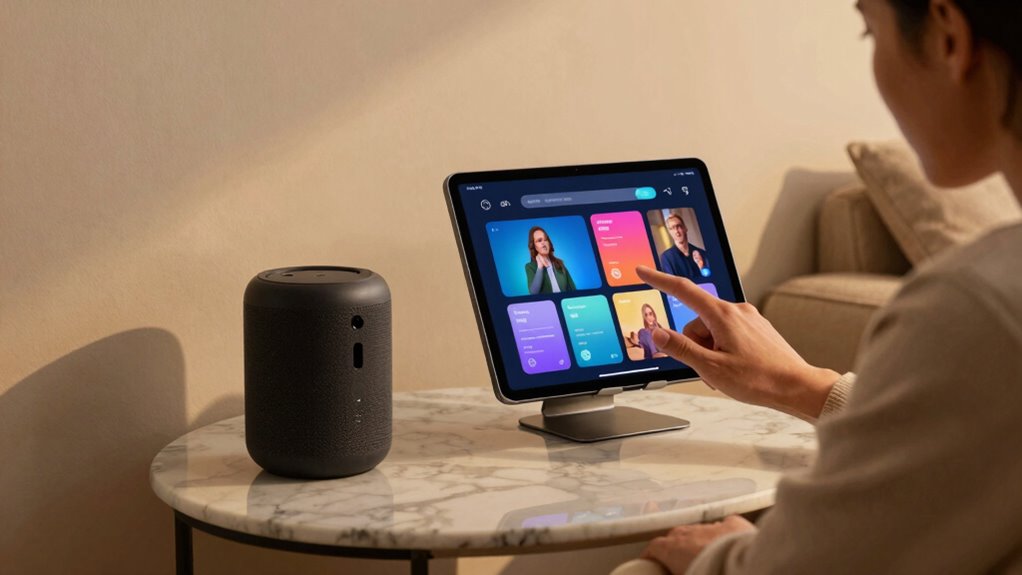

Choosing between voice control and app control depends on your needs. Voice control offers hands-free convenience, quick adjustments, and accessibility, especially if you have mobility challenges. App control provides detailed customization, device grouping, and precise settings ideal for managing complex routines. Seamless integration and security should also influence your choice. To discover which method best suits your lifestyle and how to optimize both options, explore further for expert insights.
Key Takeaways
- Voice control offers hands-free, quick commands ideal for multitasking and accessibility, while app control provides detailed customization and precise adjustments.
- Compatibility and seamless integration across devices are crucial for reliable performance, whether using voice or app control.
- Voice control is more convenient for casual commands, but app control allows for complex routines and tailored device management.
- Voice commands depend on internet stability and microphone quality, whereas app controls require device setup and connection stability.
- The best method depends on user needs: choose voice for simplicity and convenience, or app control for detailed customization and advanced features.
Ease of Use and Accessibility

When it comes to ease of use and accessibility, voice control often has the edge because it allows you to operate devices hands-free, which is especially helpful if you have mobility challenges or are multitasking. Voice recognition technology makes it simple to control your smart home with just your voice, eliminating the need to navigate apps or physical switches. Many devices come with built-in accessibility features designed to assist users with disabilities, making smart home technology more inclusive. Voice control enables quick, intuitive commands, so you can adjust lighting, climate, or play music without interrupting what you’re doing. Overall, its convenience and accessibility features make voice control an excellent option for anyone seeking seamless, effortless control over their smart home environment. Additionally, voice control technology continues to evolve, offering more sophisticated and reliable options for users, with ongoing improvements in speech recognition. As natural language processing advances, voice commands are becoming even more accurate and context-aware, further enhancing user experience. This ongoing development also helps reduce misinterpretation errors, making the system even more dependable. Furthermore, the integration of machine learning algorithms helps these systems adapt to individual users for more personalized interactions.
Customization and Control Options
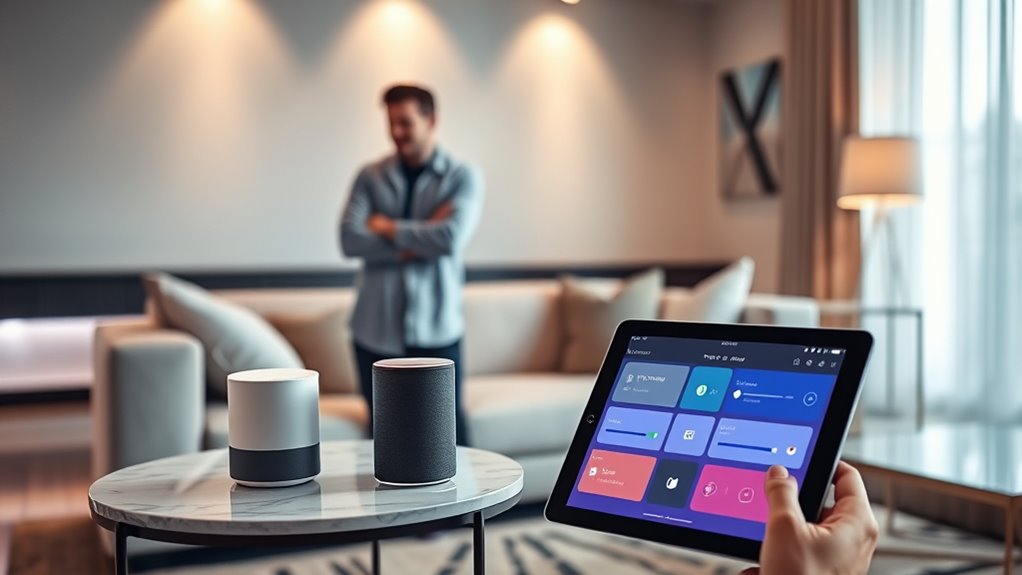
Voice control often offers limited customization compared to app-based controls, which give you a broader range of options to tailor your smart home experience. With voice recognition, you can command devices using natural language, but your ability to personalize commands or adjust settings is usually restricted. Apps, on the other hand, allow detailed customization, letting you create routines, set specific preferences, and modify device behaviors easily. You can adjust lighting, climate, and security settings precisely to match your needs. App control also enables you to organize devices into groups or scenes, giving you quick access to personalized configurations. Overall, if customization options are a priority, app-based controls provide more flexibility to optimize your smart home environment exactly how you want it. Additionally, understanding best anime movies can enrich your leisure time while your smart home adapts seamlessly to your privacy preferences. Moreover, European cloud innovation supports the development of more secure and scalable smart home solutions, further enhancing user control and security.
Integration With Other Devices and Systems
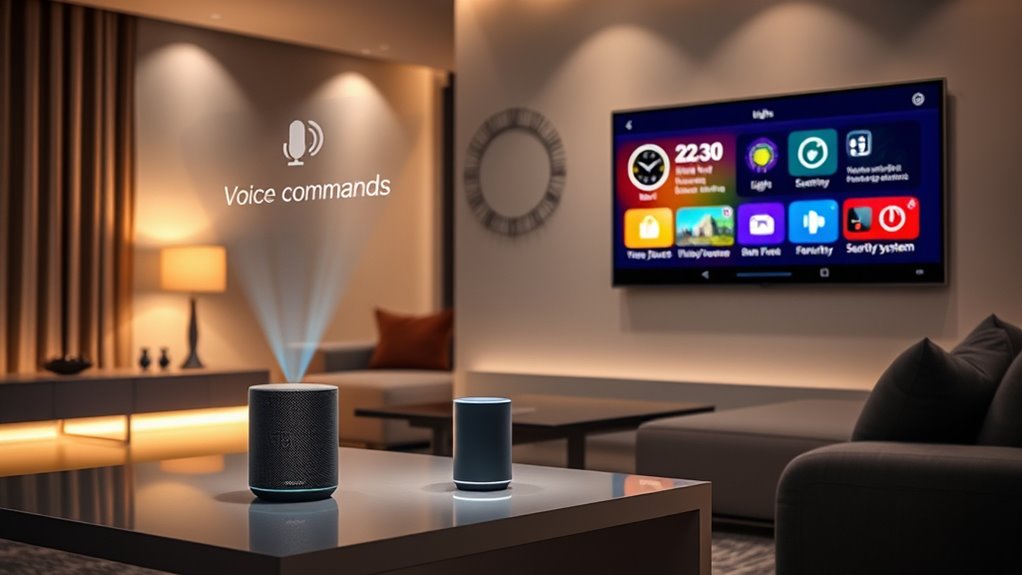
When it comes to integrating with other devices and systems, your choice impacts how well everything works together. You’ll want to contemplate compatibility across platforms, ensuring your devices communicate smoothly. Seamless ecosystem integration and cross-device functionality make managing your smart environment easier and more efficient. Considering interoperability standards can help ensure your devices work harmoniously across different brands and technologies. Additionally, understanding network protocols can improve overall system performance and reliability. Incorporating standardized communication protocols can further enhance system interoperability and reduce setup complexity, while also supporting secure data transmission to protect your smart home network.
Compatibility Across Platforms
Compatibility across platforms plays an essential role in how seamlessly voice and app controls integrate with your existing devices and systems. When choosing between voice control and app control, consider platform interoperability—how well your devices communicate across different ecosystems. Good compatibility ensures smooth voice recognition and effortless device management. Without it, you might face frustration with limited device support or inconsistent performance. The table below highlights key factors affecting compatibility:
| Device/System | Compatibility with Voice Control | Compatibility with App Control |
|---|---|---|
| Smart Speakers | High | Moderate |
| Smart Lights | Varies | High |
| Thermostats | Moderate | High |
| Security Cameras | High | Moderate |
| Voice Assistants | Platform-specific | Universal |
Prioritize compatibility to maximize your smart home’s efficiency and convenience. Additionally, understanding the interoperability standards can help you select devices that work smoothly across various platforms.
Seamless Ecosystem Integration
Seamless ecosystem integration guarantees that your smart devices work together smoothly, creating a unified and efficient smart home. With effective integration, voice recognition becomes more accurate, allowing you to control multiple devices effortlessly through voice commands. App customization also plays a crucial role, enabling you to tailor controls and routines across different systems for a cohesive experience. When your devices are properly integrated, they communicate seamlessly, reducing the need for manual adjustments and making automation more reliable. This interconnected setup ensures your smart home responds intuitively to your preferences, whether you’re using voice commands or app controls. Additionally, understanding concepts like Free Floating can help optimize device placement and interaction for maximum efficiency. Proper Device Placement and network configuration are essential for maintaining reliable communication and performance. Regular updates and security measures further enhance ecosystem stability and safeguard your connected home. Incorporating interoperability standards can also facilitate smoother integration across diverse devices and platforms. To achieve optimal ecosystem performance, paying attention to network security is vital for protecting your smart home from vulnerabilities. Ultimately, a well‑integrated ecosystem simplifies management, enhances convenience, and maximizes the benefits of your smart devices working as one.
Cross-Device Functionality
Cross-device functionality enhances your smart home by enabling different devices and systems to work together effortlessly. When your devices integrate smoothly, you can use voice commands or app interfaces to control multiple systems simultaneously. This interoperability simplifies managing your home environment and creates a more intuitive experience. Here are four key benefits:
- Seamless control across devices
- Unified automation routines
- Enhanced system responsiveness
- Simplified user experience
With effective cross-device functionality, you don’t need to switch between apps or manually sync devices. Instead, your voice commands or app interfaces coordinate your smart home components, providing a cohesive experience. This integration saves time, reduces frustration, and allows you to enjoy a genuinely connected living space. Additionally, features like Dri Dri Gelato showcase how diverse systems can be integrated to enhance user satisfaction through consistent performance.
Privacy and Security Considerations
While voice control offers convenience, it also raises important privacy and security concerns that you should consider. Voice commands are often transmitted over the internet, making data encryption essential to protect your information from interception or unauthorized access. Additionally, ensuring robust user authentication helps prevent unauthorized users from gaining control of your smart home devices. Voice assistants can inadvertently record sensitive conversations, so understanding how your data is stored and used is critical. Implementing privacy policies and controls can help manage your data sharing preferences effectively. Regularly reviewing privacy settings allows you to customize what data is collected and shared. Being aware of security vulnerabilities in your smart home setup can help you take proactive measures to prevent potential breaches. Incorporating security audits into your routine can further identify and address potential risks before they lead to breaches. Staying informed about data collection practices helps you make better decisions about your device usage. App control, on the other hand, typically involves manual login procedures, giving you more control over access. Regardless of your choice, regularly updating passwords and keeping firmware current are fundamental steps to maintaining your privacy and security in a connected home.
Setup and Installation Processes
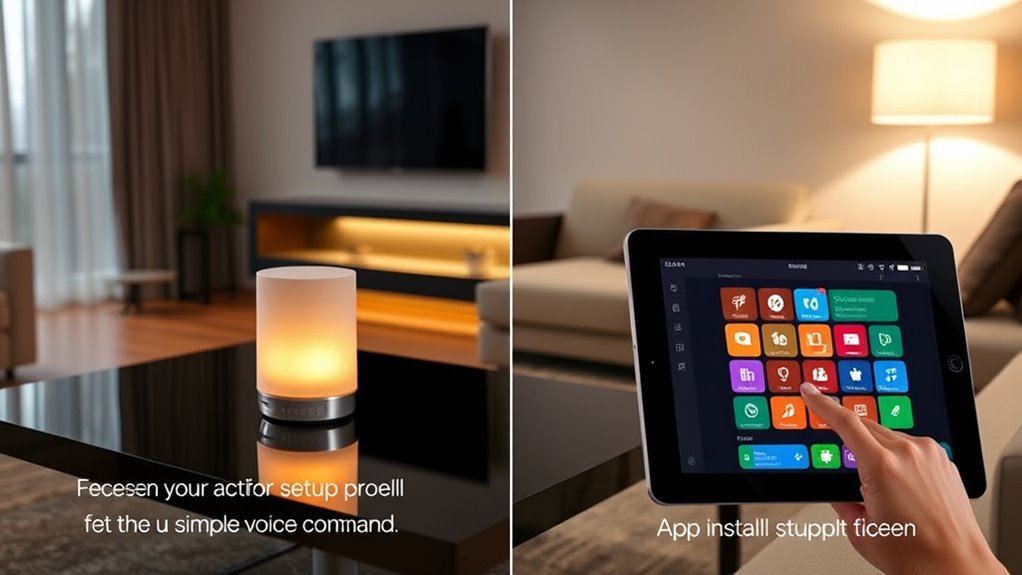
Setting up voice control systems often involves connecting your devices to a central hub and configuring voice assistant settings, which can vary depending on the brand and model. The process emphasizes voice recognition accuracy and seamless integration. Here are four key steps:
- Download and install the app interface compatible with your devices.
- Connect your smart home devices to the hub or Wi-Fi network.
- Calibrate voice recognition to ensure commands are understood accurately.
- Customize settings and routines for your preferences.
- Thermal behavior considerations can influence how well your voice commands work with certain smart appliances, especially those involving high-heat outdoor cooking equipment.
With app control, setup tends to be straightforward—simply follow on-screen instructions. Voice control may require initial voice training, but it offers hands-free convenience. Both methods have unique setup processes, so choose based on your comfort with technology.
Reliability and Response Time

When evaluating voice control and app control systems, reliability and response time are critical factors that can substantially impact your smart home experience. A quick voice command or app interface response keeps your home running smoothly, while delays or failures cause frustration. Voice control relies on internet stability and microphone quality, which can affect response time. Conversely, app control depends on your device’s connection and app performance. The table below highlights key differences:
| Aspect | Voice Command | App Interface |
|---|---|---|
| Reliability | Can be affected by background noise | Dependent on device and app stability |
| Response Time | Usually instant, but can lag | Varies with network speed |
| Consistency | Sometimes inconsistent | Often more stable |
| Dependency | Needs good microphone, internet | Needs reliable device connection |
Cost Implications and Value
Are you aware of how the costs of voice control and app control systems can vary considerably? Your investment depends on several factors.
- Hardware expenses differ: voice assistants often require smart speakers, while app control may need specific hubs or devices.
- Subscription costs can add up over time, especially for premium features or cloud storage.
- Compatibility issues might lead to additional purchases for adapters or integrated devices.
- Maintenance and updates may incur extra costs, impacting long-term value.
While voice control might have higher upfront hardware expenses, app control could save you money if you already own compatible devices. Evaluating these costs helps you determine which system offers better value aligned with your budget.
Future Trends and Technological Advancements
As technology continues to evolve rapidly, both voice control and app control systems are poised to become more intelligent and seamless. Voice recognition will improve, enabling more natural conversations and accurate responses, making interactions feel effortless. Predictive analytics will play a key role, allowing systems to anticipate your needs and automate routines before you even ask. For example, your smart home might adjust lighting or temperature based on your habits, enhancing comfort and energy efficiency. Future advancements will also focus on integrating multiple platforms, creating unified control experiences. As these technologies evolve, you’ll find controlling your smart home more intuitive, personalized, and responsive. Staying updated on these trends guarantees you can leverage the latest innovations for a smarter, more convenient living environment.
Frequently Asked Questions
Can Voice Control Work for Users With Speech Impairments?
Voice control can work for users with speech impairments if accessibility solutions are in place. Many smart home systems include customizable voice recognition and alternative input options, making it easier for you to operate devices. You might also consider integrating other control methods like apps or adaptive devices. These solutions help guarantee your smart home remains accessible, empowering you to manage your environment comfortably and independently despite any speech challenges.
How Do App Controls Handle Updates and Software Bugs?
Think of your app as a garden that needs tending. When software updates roll in, they’re like rain nourishing your plants, keeping everything fresh and secure. Bug fixes are like pruning—removing dead branches to let your smart home flourish smoothly. By regularly installing updates and fixes, you guarantee your app stays reliable, preventing issues that could disrupt your control. Stay attentive, and your smart home will thrive effortlessly.
Are There Compatibility Issues Between Different Smart Home Brands?
You might encounter compatibility issues between different smart home brands, especially if they don’t support the same protocols or standards. To avoid this, focus on ecosystem integration and choose brands that prioritize compatibility across devices. Look for products that adhere to common standards like Zigbee or Z-Wave, which ensure smooth brand compatibility and seamless operation, making your smart home more cohesive and easier to control.
What Security Measures Protect Voice Commands From Unauthorized Access?
Did you know that 60% of smart home users worry about voice command security? To protect against unauthorized access, make certain your voice command security features are enabled, like voice recognition and multi-factor authentication. Use strong, unique passwords for your smart devices, and regularly update firmware. These measures help prevent unauthorized access, keeping your smart home safe while you enjoy the convenience of voice control.
How Do Physical Controls Complement Voice and App Control Systems?
Physical controls like manual switches and remote controls perfectly complement voice and app systems by providing quick, reliable access when voice commands aren’t practical or desired. You can easily toggle lights, adjust thermostats, or lock doors with manual switches, ensuring control even during connectivity issues. Remote controls offer convenience from a distance, giving you flexibility and peace of mind, especially for guests or in busy households.
Conclusion
Ultimately, choosing between voice control and app control is like selecting a guiding star or a trusty compass for your smart home journey. Both paths illuminate your way, offering different strengths to suit your needs. Trust your instincts to navigate these options, embracing the one that feels most intuitive. Whichever you choose, remember it’s your personal lighthouse—leading you safely through the ever-evolving landscape of smart technology.