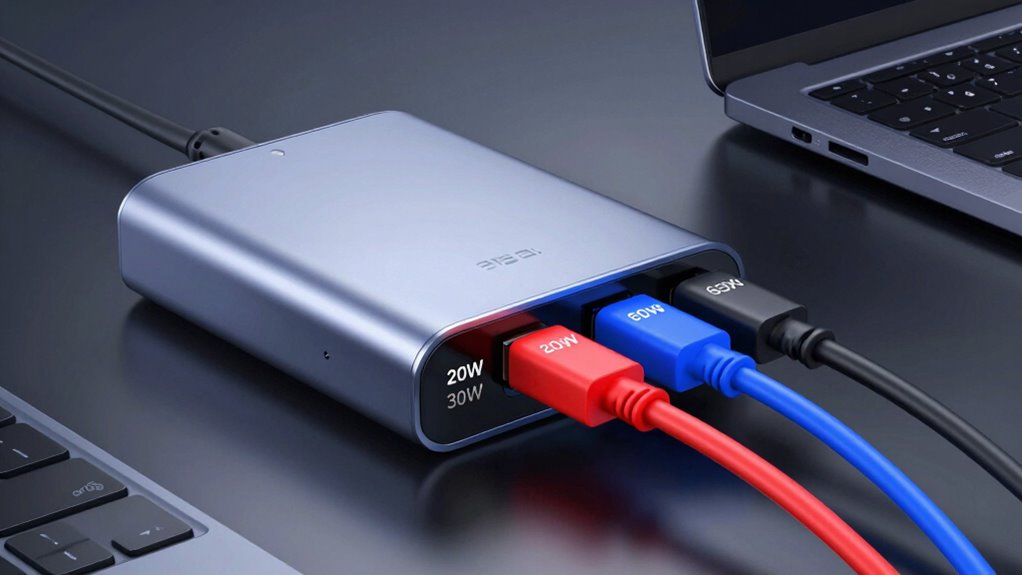

Wattage labels like 20W, 30W, or 65W on chargers show their maximum power output, which influences how quickly your device charges. Higher wattage chargers can deliver more power safely if your device supports fast charging protocols, resulting in faster recharges. However, using a charger with a higher wattage than your device needs won’t necessarily speed things up and might cause harm. Keep exploring to understand how these numbers align with your device’s capabilities and guarantee safe, efficient charging.
Key Takeaways
- Wattage (e.g., 20W, 30W, 65W) indicates the maximum power a charger can deliver, affecting potential charging speed.
- Higher wattage chargers can charge compatible devices faster, but only if the device supports fast charging protocols.
- Fast charging relies on standards like USB Power Delivery or Quick Charge to safely manage higher power levels.
- Using a charger with higher wattage than your device supports won’t necessarily speed up charging or harm the device.
- Proper compatibility and adherence to protocols ensure safe, efficient charging without damaging your device or battery health.

Anker iPhone 17/16 Charger, 2-Pack 20W Fast USB C Charger Block, for iPhone 16/16 Pro Max/15 Series/iPad Pro and More (Black, 2 Pack & 2 Cable)
20W High-Speed Charging: Enjoy fast charging with 20W max output for your iPhone, Samsung phones, and other devices.
As an affiliate, we earn on qualifying purchases.
As an affiliate, we earn on qualifying purchases.
Understanding Wattage and Power in Charging
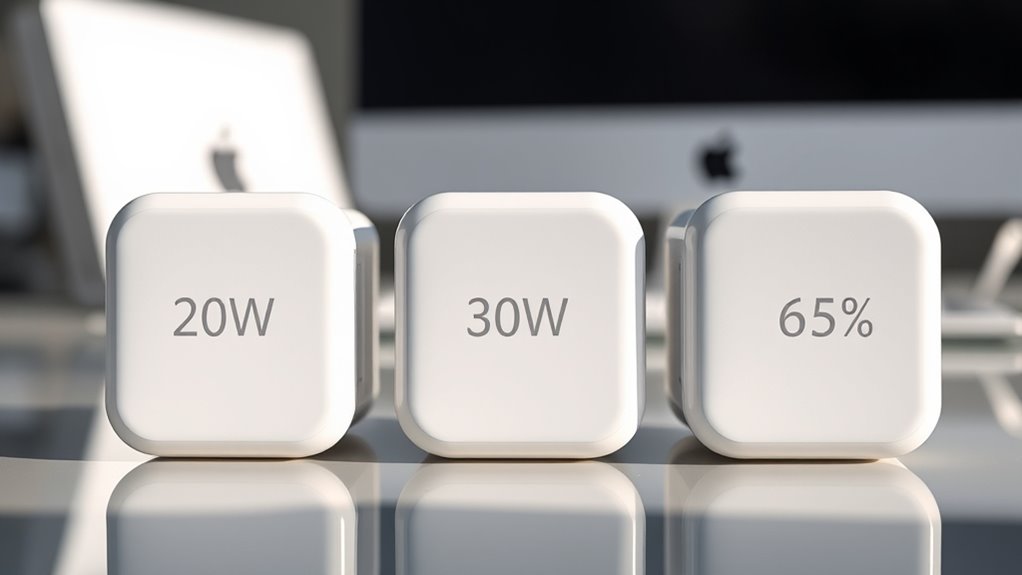
Wattage and power are key to understanding how fast your device can charge. Higher wattage means more power flows into your battery in less time, reducing charging time. Your device’s battery capacity, measured in milliamp-hours (mAh), determines how much energy it can hold, but charging speed depends on the wattage supplied. Keep in mind, each charging cycle—one full charge and discharge—affects your battery’s longevity. Fast chargers deliver higher wattage, allowing quicker top-ups, but repeatedly using high wattage may impact the number of charging cycles your battery can sustain over its lifespan. Understanding power transfer and wattage helps you choose chargers that balance fast charging with your battery’s health, optimizing both convenience and longevity. Additionally, knowing how wattage ratings relate to your device’s compatibility ensures safe and efficient charging. Recognizing the importance of charging standards can further assist in selecting compatible chargers for optimal performance. Being aware of fast charging technologies can also help maximize your device’s charging efficiency without compromising battery health.

Belker 65w 45w Universal Laptop Charger AC Adapter Power Supply Cord Compatible with Dell Hp Asus Lenovo IBM Acer Toshiba Samsung Sony Compaq Fujitsu LG JBL Notebook Chromebook Ultrabook
This universal laptop charger can replace many 65W 45W laptop AC adapters, perfectly works with many brand notebooks,…
As an affiliate, we earn on qualifying purchases.
As an affiliate, we earn on qualifying purchases.
How Fast Charging Works in Modern Devices
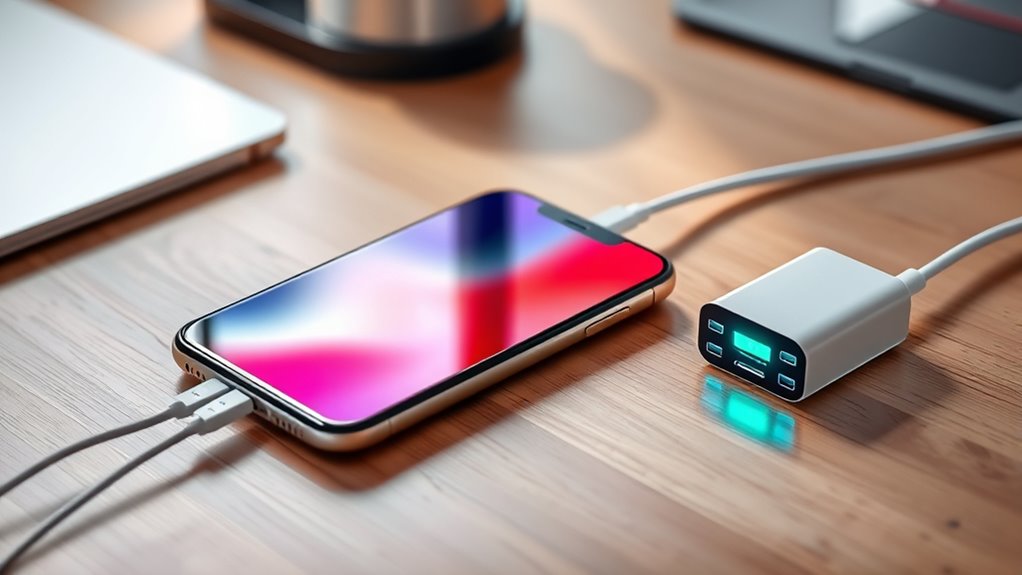
Modern devices use sophisticated fast charging technologies that dynamically manage power delivery to maximize speed without damaging the battery. These systems monitor battery capacity and adjust charging rates in real-time, ensuring safe and efficient charging. By controlling voltage and current, fast chargers deliver higher power levels while protecting the battery’s health over multiple charging cycles. This approach prevents overheating and overvoltage, which can reduce the battery’s lifespan. Additionally, European cloud innovation advances are influencing the development of more secure and energy-efficient charging infrastructure. As a result, your device can reach full charge quickly while maintaining long-term battery performance. The technology balances rapid charging with the need to preserve battery capacity, ensuring you get fast power-ups without sacrificing longevity. This intelligent management allows modern devices to charge faster and stay reliable over countless charging cycles.

UGREEN 3-Port 30W USB C Charger, GaN II Compact iPhone Charger Fast Charging, Type C Power Adapter for iPhone 17/16/15 Series, Galaxy S26/S25/24, iPad, MacBook Neo/Air, Matt Black
Faster & Cooler Choice: This UGREEN USB C Charger Block supports a max power transmission of 30W. Within…
As an affiliate, we earn on qualifying purchases.
As an affiliate, we earn on qualifying purchases.
The Relationship Between Wattage and Charging Speed

Have you ever wondered how increasing the power output of a charger can speed up your device’s charging time? The key lies in wattage, which directly influences how quickly your device refills its battery capacity. A higher wattage charger delivers more power, reducing the time you wait for a full charge. Additionally, charging technology advancements have enabled faster power transfer without compromising safety. However, your device’s battery capacity and charging cycles also play a role. Larger batteries take longer to charge, even with high wattage, but faster charging can help preserve battery health by minimizing total charging time. Keep in mind, repeatedly charging at high wattage can impact the longevity of your battery over many charging cycles. So, while higher wattage chargers can boost speed, it’s essential to balance power with your device’s battery health. Understanding wattage is crucial for optimizing your charging experience and maintaining your device’s longevity.
USB Power Delivery fast charger
As an affiliate, we earn on qualifying purchases.
As an affiliate, we earn on qualifying purchases.
Compatibility and Safety Considerations for Higher Wattage Chargers
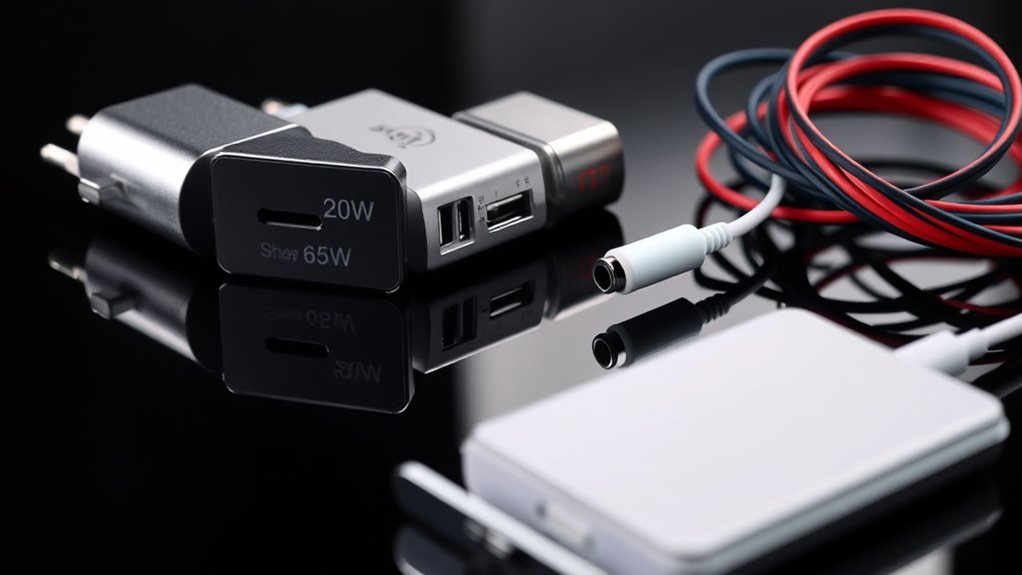
Choosing a higher wattage charger isn’t just about faster charging; you also need to consider whether your device can handle the increased power safely. Using a charger with incompatible wattage can compromise charger safety and damage your device. Always verify device compatibility before plugging in a higher wattage charger. Some devices may support fast charging protocols, but others might not handle the extra power well. To help you decide, here’s a quick compatibility guide:
| Device Type | Compatible Wattage | Safety Tips |
|---|---|---|
| Smartphones | Up to 30W | Use manufacturer-approved chargers |
| Tablets | Up to 65W | Check device specifications |
| Laptops | 30W to 100W | Use dedicated laptop chargers |
| Wearables | Up to 10W | Usually compatible with low wattage |
| Power Banks | Varies | Follow device instructions |
Regularly consulting device specifications can help prevent potential issues and ensure your device’s safety and longevity. It’s also important to consider charging protocols that support safe and efficient power delivery. Additionally, understanding power delivery standards can help you select the most compatible and safe chargers. Stay cautious to ensure charger safety and device longevity.
The Role of Charging Protocols and Standards
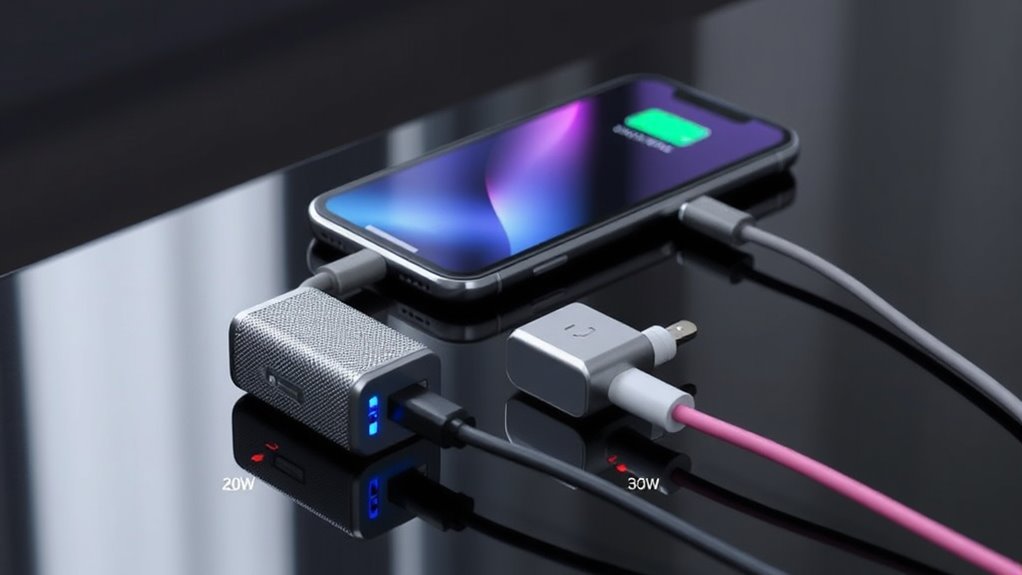
Charging protocols and standards play a crucial role in ensuring that your device charges safely and efficiently. They define how chargers communicate with devices, regulating power transfer to prevent damage and optimize speed. As the standards evolution progresses, more advanced protocols like USB Power Delivery (USB PD) and Quick Charge have emerged, enabling higher wattages and smarter power management. These protocols set universal rules that manufacturers follow, ensuring compatibility across different brands and devices. Without standardized charging protocols, you risk slower charging, device overheating, or even hardware failure. By adhering to evolving standards, chargers can deliver faster charging while maintaining safety, giving you peace of mind. Understanding these protocols helps you choose chargers that align with your device’s capabilities and future-proof your charging experience. For example, Youngster Choice exemplifies how embracing new standards can facilitate reliable and efficient power delivery, especially for devices with high wattage requirements.
Which Wattage Is Right for Your Device?

Selecting the appropriate wattage for your device depends on its power requirements and intended usage. If your device has a large battery capacity, like a tablet or laptop, a higher wattage charger, such as 65W, can charge it faster, minimizing downtime. For smartphones with smaller batteries, a 20W or 30W charger usually suffices, offering quick yet safe charging. Make sure your charging cable is compatible with the wattage to prevent overheating or damage. Using a higher-wattage charger with an incompatible cable could harm your device or reduce lifespan. Always check your device’s specifications to determine the recommended wattage. Choosing the right wattage ensures efficient charging without risking safety or performance, helping you get the most out of your device and charger. Additionally, understanding power delivery can help optimize charging speed and safety.
Myths and Misconceptions About Fast Charging
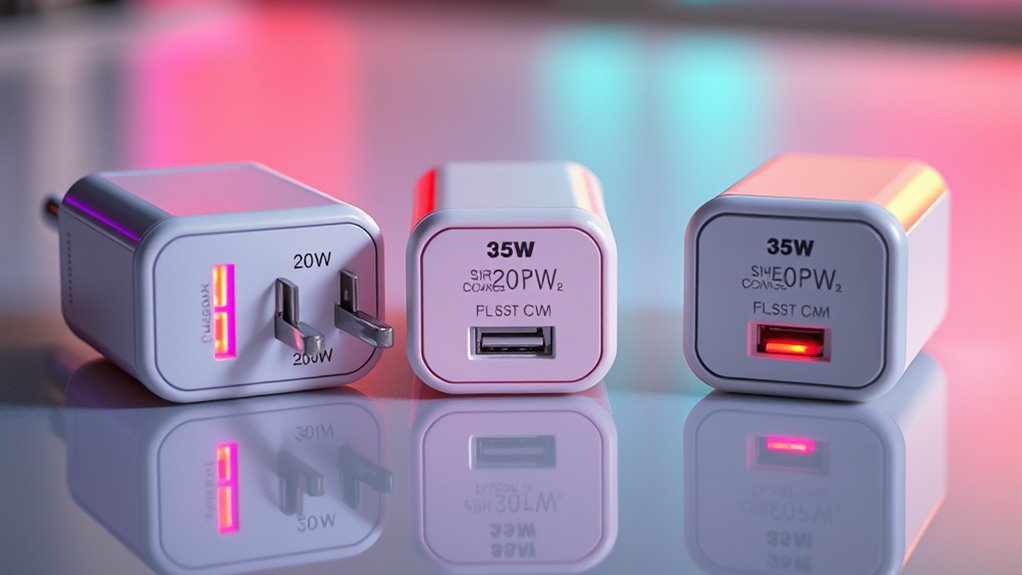
Many believe that faster charging always means better, but speed isn’t the only factor to consider. Compatibility between your device and charger is vital for safe and effective fast charging. Don’t assume that higher wattage automatically equals a better experience—understanding these myths helps you make smarter choices. Additionally, charger compatibility is essential to ensure your device can safely handle the power output without damage.
Speed Doesn’t Always Matter
While faster charging speeds are often marketed as the ultimate goal, it’s a common misconception that higher wattage always means better or more efficient charging. In reality, faster charging can sometimes harm your battery’s longevity, leading to quicker wear and tear over time. Plus, pushing devices to charge at extremely high speeds may increase environmental impact, as batteries degrade faster and need more frequent replacements. Speed isn’t always the most important factor; a slower, more controlled charge can be gentler on your device and better for the environment. Remember, manufacturers optimize charging protocols for safety and longevity, not just raw wattage. So, don’t assume that the highest wattage charger is always the best choice for your device’s health or sustainability.
Compatibility Is Key
Compatibility is vital for fast charging to work safely and effectively. Using the wrong charger or cable can harm your device’s battery longevity over time. Not all chargers are compatible with every device, so check if your phone supports specific fast-charging standards like USB Power Delivery or Qualcomm Quick Charge. Cable compatibility is equally important; using an incompatible cable may prevent fast charging or cause damage. Even if a charger has a high wattage, it won’t deliver maximum speed unless your device and cable support it. Avoid assumptions—using the right charger and cable ensures safe, efficient charging while protecting your device’s battery health. Understanding the basics of power delivery standards can help you better grasp the importance of using compatible components in your tech devices as well. Always verify device compatibility before purchasing a fast charger to ensure optimal performance and safety. Additionally, understanding battery management can help prolong your device’s overall lifespan. Being aware of charging protocols can also help you optimize your charging practices for better efficiency and device longevity.
Tips for Optimizing Your Charging Experience
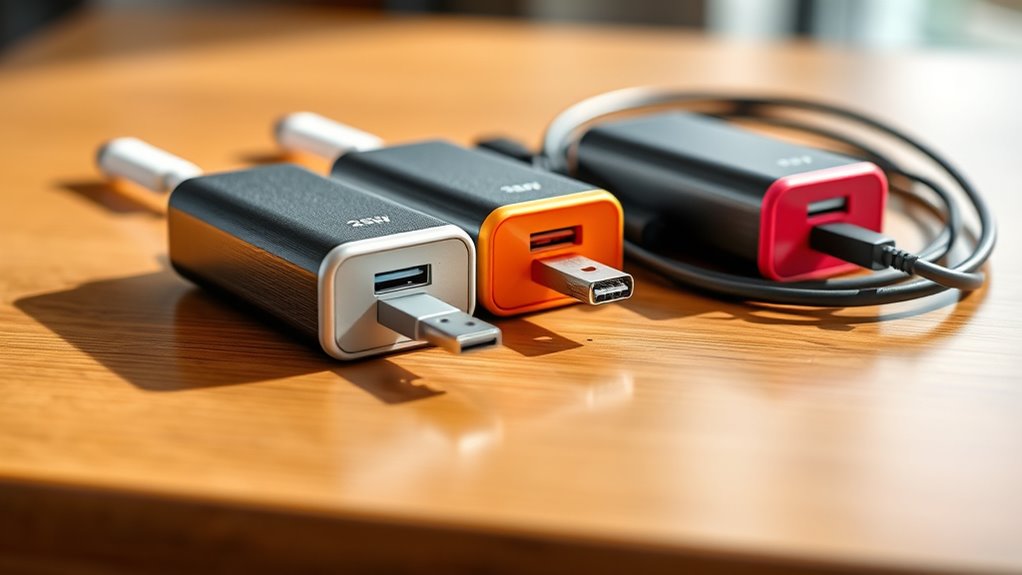
To get the most out of fast charging, you should follow a few simple tips that optimize both speed and battery health. Good charging habits help extend your battery’s lifespan while keeping charging times efficient. First, avoid letting your battery completely drain before recharging, as this can strain the battery over time. Second, use chargers compatible with your device to prevent unnecessary stress on the battery cells. Lastly, try not to leave your device plugged in at 100% for extended periods, as this can degrade battery health. Incorporating proper charging practices can further support your device’s longevity. Additionally, understanding charger wattage can help you choose the right charger for your needs. For example, selecting a charger with appropriate power output ensures efficient charging without damaging your battery. Charge in shorter sessions rather than overnight. Keep your device in a cool, ventilated area during charging. Regularly update your device’s software for ideal power management, which can also impact fast charging efficiency. Being aware of battery management features can help you optimize your overall charging routine.
Frequently Asked Questions
Can Higher Wattage Chargers Damage My Device’s Battery?
Higher wattage chargers can potentially cause battery degradation if used improperly or frequently, but most modern devices are designed to handle fast charging safely. When you use a higher wattage charger, it may speed up charging time, but it can also increase stress on your battery over multiple charging cycles. To protect your battery’s health, avoid constant high-wattage charging and use the charger recommended by your device manufacturer.
Is Faster Charging Always Better for Battery Longevity?
Faster charging isn’t always friendly for your battery health. It can accelerate wear, reduce your device’s lifespan, and cut through charging cycles more quickly. You might enjoy quick power boosts, but it risks degrading your battery over time. To preserve your device’s longevity, balance speed with gentle charging, and avoid constantly relying on rapid chargers. Slow, steady charging preserves batteries, prolongs performance, and keeps your device in prime condition longer.
Do All Devices Support the Same Fast Charging Standards?
Not all devices support the same fast charging standards, so you need to check your device’s battery capacity and compatible charging protocols. Some phones or tablets may only support certain wattages or standards, affecting charging speed and the number of charging cycles your battery can handle. Using incompatible chargers can lead to slower charging or potential battery wear, so always verify your device’s specifications before fast charging.
How Does Temperature Affect Fast Charging Efficiency?
Temperature critically influences fast charging efficiency. When your device overheats, thermal management systems kick in, slowing down charging to prevent damage. This prolongs charging cycles and reduces overall speed. To keep charging fast, avoid using your device heavily during charging and charge in a cool environment. Proper thermal management ensures your device stays safe and maintains ideal charging performance, especially during repeated charging cycles.
Are There Differences Between Wired and Wireless Fast Charging Speeds?
Imagine your phone’s charging speed is a rollercoaster—wired fast charging often feels like a lightning-fast ride, while wireless power can seem slower and more relaxed. Wired charging delivers rapid, consistent power, making it perfect when you’re in a rush. Wireless charging offers unmatched convenience but may take longer. So, if you crave quick power or charging convenience, understand that wired usually outpaces wireless in speed, but both have their perks.
Conclusion
Ultimately, understanding wattage helps you choose the right charger, but don’t forget that your device’s capabilities matter most. Sometimes, a higher wattage charger might surprise you with faster charging, yet other times, it’s just a coincidence — your device might not fully utilize it. So, while tech advances seem to align perfectly, it’s the subtle interplay of standards, safety, and compatibility that truly shapes your charging experience, making every connection a small yet meaningful coincidence.