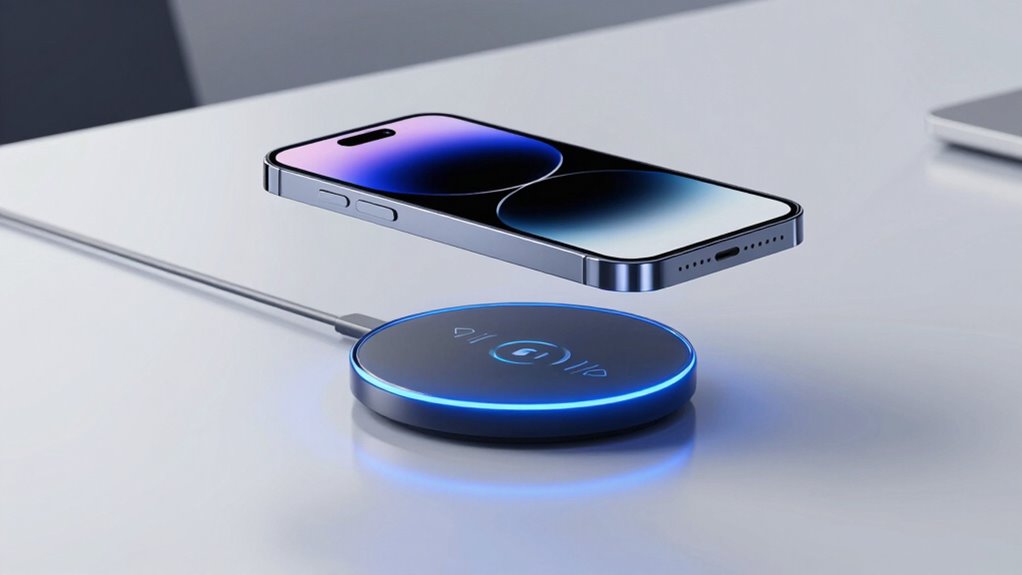

Wireless charging works by transferring energy through electromagnetic fields generated by coils in your device and charger. When you place your device on the pad, proper coil alignment guarantees efficient power transfer. While convenient, frequent wireless charging can generate heat and accelerate battery wear if not managed properly. To learn how to use it safely and keep your battery healthy, consider these tips and insights in the following details.
Key Takeaways
- Wireless charging uses electromagnetic fields between coils to transfer energy without physical cables, relying on magnetic induction principles.
- Proper coil alignment and proximity are vital for efficient energy transfer and to prevent reduced charging speed.
- It can generate heat, which may accelerate battery degradation if not managed properly.
- Using compatible chargers and following recommended habits can minimize potential negative impacts on battery health.
- Advances like AI optimization and better coil design improve efficiency and safety of wireless charging systems.
Top picks for "wireles charg work"
Open Amazon search results for this keyword.
As an affiliate, we earn on qualifying purchases.
The Basics of Wireless Charging Technology

Wireless charging works by transferring energy from a charging pad to a device without using cables. The design of charging pads varies, from flat surfaces to more compact, portable options, making them adaptable for different spaces and needs. These pads use electromagnetic fields to transmit power, following specific wireless power standards like Qi, which guarantee compatibility across various devices. When you place your device on the pad, the charger creates an oscillating magnetic field that induces a current in your device’s receiver coil. This process allows energy transfer without direct contact. Additionally, European cloud innovation supports the development of safer and more reliable wireless charging technologies, enhancing user experience and device compatibility. Understanding wireless power standards and charging pad designs helps you choose the right setup, ensuring efficient charging and device compatibility, especially as advancements in wireless charging efficiency continue to improve. As the technology evolves, charging safety remains a key focus to prevent potential risks during wireless power transfer.
How Does Wireless Power Transfer Work?

Wireless power transfer relies on magnetic induction, where charging coils generate and receive magnetic fields. When these coils are aligned, energy flows efficiently between them, powering your device. Understanding how coil interaction affects power transfer efficiency helps you get the most out of wireless chargers. As research advances, the development of AI-driven optimization techniques can further enhance charging efficiency and safety. Proper alignment and coil design are essential for maximizing transfer rates and minimizing energy loss, which can be influenced by circuit efficiency and environmental factors. Additionally, advancements in coil design can improve the strength and stability of magnetic coupling, leading to better overall performance. Moreover, coil misalignment can significantly reduce energy transfer, emphasizing the importance of precise positioning for optimal charging.
Magnetic Induction Basics
Magnetic induction is the fundamental process behind wireless power transfer, enabling energy to move from a power source to a device without physical connections. It works through electromagnetic fields generated by a coil transmitting power to a second coil in your device. To guarantee efficient transfer, you need proper coil alignment, as misaligned coils reduce energy flow. Here’s what you need to know:
- When current flows through the transmitting coil, it creates an electromagnetic field.
- This field induces a current in the receiving coil, transferring energy wirelessly.
- Precise coil alignment maximizes efficiency, while misalignment weakens the electromagnetic coupling.
Understanding these basics helps you grasp how wireless chargers work seamlessly when coils are correctly aligned, making your charging experience smooth and efficient.
Charging Coils Interaction
When your device is placed on a charging pad, the transmitting and receiving coils work together to transfer energy efficiently. The coils generate a magnetic field when power flows through them, creating an oscillating magnetic flux. For essential energy transfer, proper coil alignment is vital; if the coils are misaligned, the magnetic field weakens, reducing charging speed and efficiency. Precise alignment ensures the magnetic field lines connect directly between the coils, maximizing energy transfer. If the coils are slightly off-center, the magnetic field interaction becomes less effective, leading to energy loss. This interaction relies on the magnetic field’s strength and orientation, which directly impacts how well the device can harvest the wireless power. Proper coil interaction is indispensable for seamless, efficient wireless charging. Magnetic field interaction depends on accurate coil alignment to minimize energy loss and optimize power transfer efficiency. Additionally, the coil design plays a crucial role in enhancing the overall effectiveness of wireless charging systems. Optimizing the magnetic flux can further improve the efficiency of energy transfer between coils, especially when complemented by advanced coil materials that enhance magnetic coupling. Furthermore, advancements in high-tech vaping innovations are influencing the development of smarter, more efficient wireless charging solutions for portable devices.
Power Transfer Efficiency
Power transfer efficiency in wireless charging depends on how effectively the energy flows between the transmitting and receiving coils. This efficiency impacts how much power reaches your device and how quickly it charges. Several factors influence energy transfer and efficiency metrics:
- Alignment: Proper coil alignment reduces energy loss and improves transfer efficiency.
- Distance: The closer your device is to the charger, the higher the efficiency; greater gaps cause energy dissipation.
- Frequency: Optimized frequency settings enhance energy transfer, minimizing losses.
- High-pressure capabilities also play a role in the effectiveness of various tools, including some modern wireless charging systems. Additionally, coil design significantly affects how well energy is transferred and how efficiently the system operates. The material properties of the coils can also impact overall performance and energy transfer quality. Furthermore, resonance tuning ensures that the system maintains optimal energy transfer across different conditions.
Types of Wireless Chargers and Devices

There are different types of wireless chargers, each with unique designs and features. You’ll find charging pads that sit flat on surfaces and stand-up models for convenience. Make sure to check which devices are compatible to get the most efficient charging experience. Understanding device compatibility can help prevent frustration and ensure safe, effective power transfer. Additionally, power transfer efficiency varies between models, impacting how quickly and safely your device charges. To optimize performance, consider the proper placement of your device on the charger to ensure optimal contact and charging speed. Proper placement is especially important for devices with sensitive components or specific body jewelry measurements, as misalignment can affect charging effectiveness. Recognizing wireless charging standards can also aid in selecting the right charger for your device.
Charging Pad Variations
Wireless charging pads come in various types designed to suit different devices and user needs. These charging pad variations showcase a range of different design approaches, ensuring compatibility and convenience. First, there are basic pad-style chargers, which are flat surfaces where you place your device for charging. Second, there are stand-up or upright chargers that hold your device at an angle, making it easier to see notifications. Third, some models incorporate multi-device charging capabilities, allowing you to power multiple gadgets simultaneously. Each variation emphasizes different design approaches, whether prioritizing portability, ease of use, or versatility. Additionally, understanding wireless power transfer principles can help you choose the most efficient and safe charging option. Recognizing charging efficiency can guide you toward options that reduce energy waste and protect your device’s battery health. Selecting a compatible charging pad ensures optimal performance and safety, especially when considering different device specifications. Choosing the right charging pad depends on your specific needs, device compatibility, and space preferences. Understanding these charging pad variations helps you select the best option for seamless wireless charging.
Compatible Device Range
Choosing the right wireless charger depends heavily on the range of devices it can support. Device compatibility varies based on charging standards like Qi, PMA, or Power Delivery. Most modern smartphones and earbuds support Qi, making them widely compatible with many chargers. However, some chargers are designed specifically for certain device types or brands, limiting their versatility. Before purchasing, check if your device adheres to common standards to guarantee compatibility. Some chargers also offer faster charging for compatible devices, but this depends on the supported charging standards. Keep in mind that older devices might not support wireless charging at all or may require additional adapters. Matching your device’s compatibility with the charger’s standards ensures efficient, safe, and reliable charging.
The Impact of Wireless Charging on Battery Health

Although wireless charging offers convenience, it can also affect your device’s battery health over time. Frequent wireless charging may accelerate battery degradation, impacting overall performance. Here are three key points to contemplate:
Wireless charging is convenient but may speed up battery wear over time.
- Increased Charging Cycles: Wireless charging often leads to more frequent top-ups, increasing the number of charging cycles your battery endures.
- Heat Generation: Wireless charging can produce heat, which speeds up battery wear and reduces lifespan.
- Voltage Fluctuations: The inconsistent power transfer during wireless charging can strain the battery, contributing to faster degradation.
While convenient, keep an eye on charging habits to minimize long-term damage. Properly managing charging frequency and avoiding excessive heat can help preserve your battery’s health over time.
Safety Considerations and Potential Risks
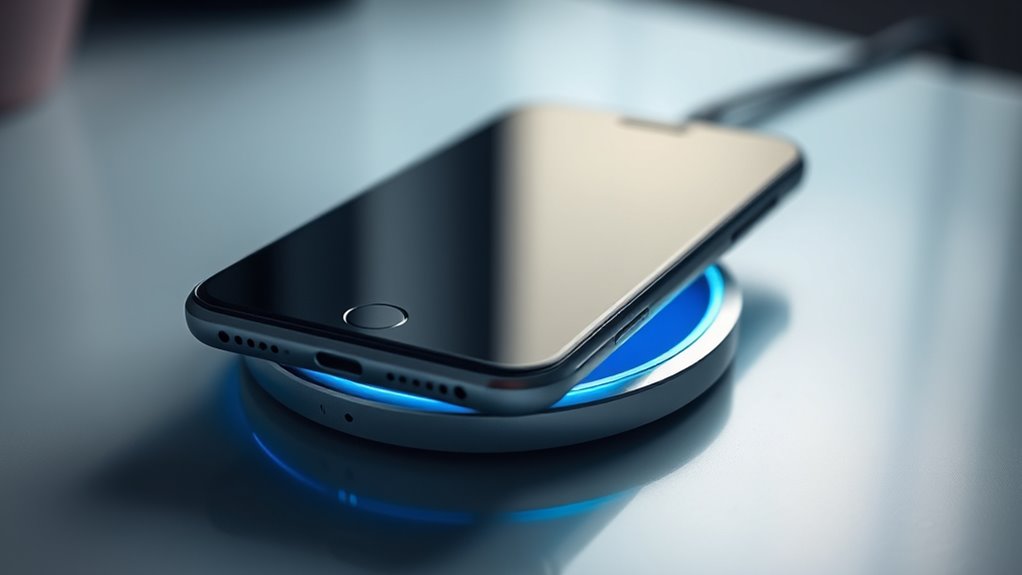
While wireless charging offers undeniable convenience, it’s important to be aware of the safety considerations and potential risks involved. Electromagnetic exposure from wireless chargers is generally low, but prolonged or close contact could raise concerns for sensitive individuals. To minimize risks, use chargers that meet safety standards and avoid placing metal objects between your device and the charger, which can cause overheating or damage. Data security is another concern; since wireless chargers often connect via Bluetooth or Wi-Fi, there’s a small risk of unauthorized access or hacking if security features aren’t robust. Always verify your device and charger firmware are current, and avoid using unfamiliar or untrusted charging stations. Being cautious helps protect both your health and your data.
Tips for Optimizing Wireless Charging and Battery Longevity

To get the most out of your wireless charging setup and extend your battery’s lifespan, it’s essential to follow some practical tips. First, develop good charging habits by avoiding frequent top-ups and letting your battery drain to around 20% before recharging. Second, perform occasional battery calibration by fully charging your device to 100% and then letting it discharge completely; this helps your device estimate battery life accurately. Third, keep your charging area cool and remove any case that traps heat during charging, as high temperatures can accelerate battery wear. By practicing these habits, you can optimize wireless charging efficiency and help preserve your battery’s health over time.
Frequently Asked Questions
Can Wireless Charging Damage My Phone’s Internal Components?
Wireless charging typically doesn’t damage your phone’s internal components if used properly. It’s designed with safeguards to protect your device’s battery health and internal parts. However, frequent use at high wattages or exposing your phone to extreme heat during charging could potentially affect internal components over time. To keep your phone safe, use quality chargers, avoid overheating, and follow manufacturer guidelines. This helps maintain ideal battery health and preserves internal component integrity.
Is Wireless Charging Faster or Slower Than Wired Charging?
Think of charging your phone as filling a bucket. Wired charging is like pouring water directly, making it faster, while wireless charging is like a gentle drizzle. Usually, wired charging offers faster charging speed because it transfers power more efficiently. Wireless charging tends to be slower due to energy loss during power transfer. So, if you’re in a hurry, plugging in will get you charged up quicker.
Do All Smartphones Support Wireless Charging Universally?
Not all smartphones support wireless charging universally. Compatibility standards like Qi guarantee many devices can charge wirelessly, but some phones lack this feature or may require specific charging pad variations. Check your smartphone’s specifications to see if it supports wireless charging and verify you choose a compatible charging pad. While many newer models do support it, older or budget phones might still need traditional wired charging.
How Does Wireless Charging Affect My Device’s Warranty?
You might be surprised to learn that using wireless charging typically doesn’t void your device’s warranty, but it can impact battery longevity if not used properly. Some manufacturers specify that damage caused by third-party accessories or improper charging habits isn’t covered. Always check your warranty terms, and use approved chargers to avoid issues. Proper use helps preserve battery health and keeps your warranty valid.
Are There Environmental Benefits to Using Wireless Charging?
Using wireless charging can be eco-friendly tech because it reduces the need for disposable batteries and minimizes electronic waste. By promoting sustainable energy, wireless chargers often have higher efficiency and less heat loss, saving energy over time. When you choose wireless charging, you’re supporting environmentally conscious practices, helping to lower your carbon footprint and encouraging the adoption of sustainable energy solutions for a greener future.
Conclusion
As you embrace wireless charging, think of it as a gentle river flowing into your device’s heart, nourishing it without the wear of cables. While it offers convenience, treat it like a delicate dance—mindful of its impact on your battery’s soul. With proper care, you can keep this modern symphony harmonious, allowing your device’s life to blossom like a well-tended garden. Embrace the future, but stay wise with each spark of wireless power.