If you want the best protection, silicone and plastic cases usually offer superior impact resistance thanks to their flexibility and shock-absorbing qualities. Silicone provides excellent grip and cushioning, while plastic cases are sturdy and durable against drops. Leather offers style and durability but less impact protection and may wear over time. To find out which material suits your needs and how they compare in durability, wear, and style, keep exploring the details ahead.
Key Takeaways
- Plastic cases generally offer the best impact resistance due to high flexibility and seamless construction from injection molding.
- Silicone provides excellent shock absorption thanks to its flexibility and ability to dissipate energy during drops.
- Leather offers durability but less impact protection, as it primarily resists wear rather than absorbing shocks.
- Environmental factors like UV exposure and moisture can degrade leather and silicone over time, reducing protective effectiveness.
- Proper material choice and maintenance extend the protective lifespan; plastics and silicone typically withstand wear and tear better than leather.
Durability and Impact Resistance
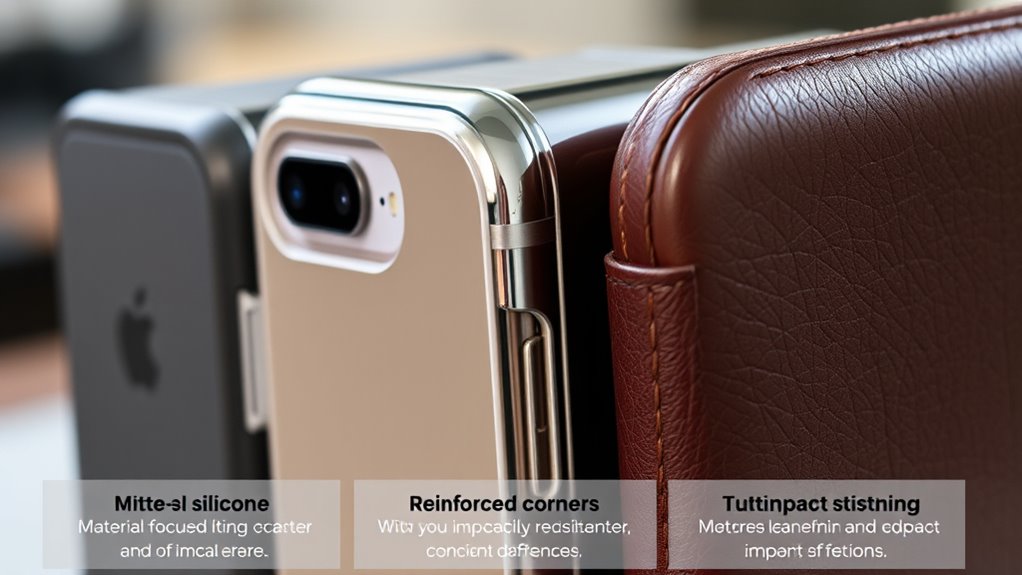
Have you ever dropped your phone and worried about it surviving the fall? That’s where durability and impact resistance come into play. The material flexibility of a phone case determines how well it absorbs shocks—more flexible materials bend and flex, dissipating energy better during impacts. Manufacturing processes also influence durability; for example, injection molding creates seamless, sturdy cases that withstand everyday drops. Plastic cases, with their high material flexibility, often excel here, absorbing shocks effectively. Leather, while durable, offers less impact resistance but ages well over time. Silicone cases provide a good balance, combining flexibility with shock absorption. Overall, choosing a case built with quality manufacturing processes and flexible materials ensures better protection when accidents happen.
Grip and Handling

The material you choose for your phone case not only affects its protection but also impacts how comfortably you can hold and handle your device. A good phone grip is essential to prevent slips and accidental drops, especially if you tend to handle your phone with wet or sweaty hands. Silicone cases offer a soft, rubbery texture that enhances handling comfort and provides a secure grip. Plastic cases, while often slicker, can feel smooth and less secure unless they have textured surfaces. Leather cases typically feel premium and comfortable to hold, offering a natural grip that improves handling. Additionally, material durability plays a crucial role in how long your case will maintain its grip and comfort over time. Choosing a material that feels good in your hand ensures you maintain control, reducing the risk of accidents and making everyday use more comfortable. Proper grip also depends on how well the material resists wear and tear, ensuring consistent handling quality even with frequent use.
Aesthetic Appeal and Style

Ever wondered how your phone case can reflect your personal style? The material you choose plays a big role in that. Silicone cases often come in vibrant color options and smooth finishes, giving you a playful or casual look. Plastic cases offer a wide pattern variety, from sleek solid colors to intricate designs, making it easy to match your mood or outfit. Leather cases tend to have a classic, sophisticated appeal, often available in earthy tones and subtle textures. Your choice of material allows you to express yourself, whether you prefer bold, eye-catching hues or understated elegance. Additionally, selecting a durable material that fits your lifestyle can help ensure your phone case remains both stylish and reliable over time, making it a functional accessory as well as a fashion statement. When choosing a case, considering the performance metrics of different materials can help you find the best balance between protection and aesthetics. With so many options, selecting a case that complements your style becomes simple, letting your phone be an extension of your personality.
Resistance to Scratches and Wear

While style helps your phone case stand out, durability also matters when it comes to resisting scratches and wear. Different materials handle wear differently: silicone may show scratch visibility sooner, while leather develops a patina that can hide minor imperfections. Plastic cases often resist scratches better but can fade or discolor. To keep your case looking new longer, consider these factors:
- Resistance to scratch visibility
- How well the color holds up over time
- Material’s tendency to fade or discolor
- Overall durability against daily wear and tear
- The maintenance required to preserve the case’s appearance and longevity
In addition, understanding the material’s properties can help you select a case that balances protection with longevity. For example, wear resistance varies significantly between materials, influencing how well a case can withstand frequent use over time. Choosing the right material ensures your case stays stylish and protective, even after frequent use. Recognizing the impact of daily use can guide you in selecting a case that maintains its appearance and protective qualities longer, especially when considering factors like material durability and how it responds to regular handling.
Environmental Factors and Longevity
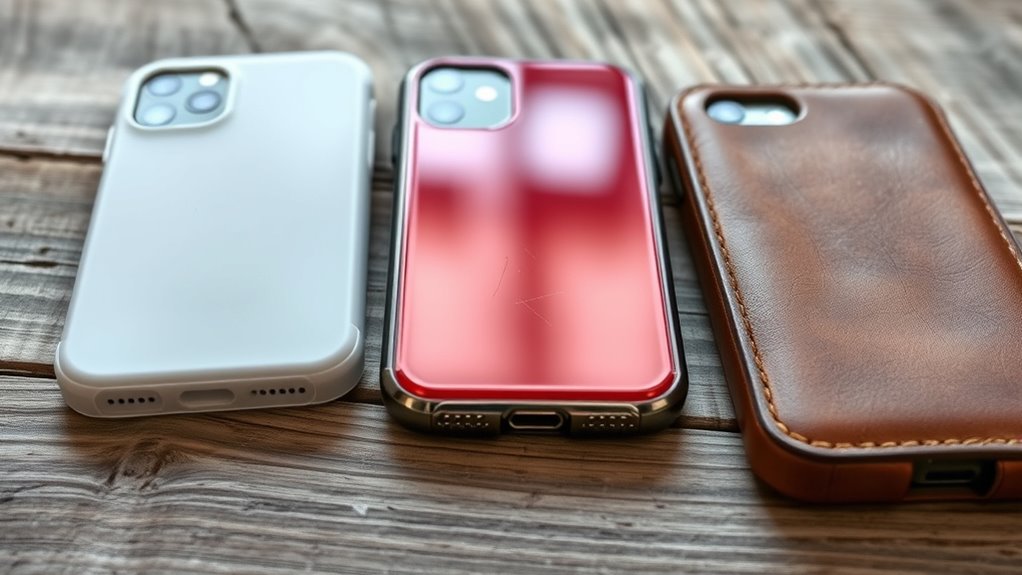
Environmental factors like water, UV rays, and temperature fluctuations can considerably affect your phone case’s durability. Different materials respond uniquely to these elements, impacting how long they last and how they wear over time. Understanding wear and tear patterns helps you choose a case that stays protective longer in various conditions. Additionally, material resilience plays a crucial role in determining how well a phone case withstands these environmental challenges over time. For example, some material properties can help resist cracking or fading, extending the lifespan of your case even in harsh conditions. Moreover, market reviews of different materials can provide insights into their real-world performance and longevity. Recognizing how environmental stressors impact different materials can guide you toward more durable choices that suit your lifestyle and environment. Being aware of material performance in different climates can further inform your decision-making process for selecting a long-lasting phone case.
Material Resistance to Elements
The ability of a phone case material to withstand environmental factors directly impacts its longevity. Materials with high resistance to water and chemicals last longer and protect your device better. Silicone tends to be water-resistant and flexible, but may degrade over time with exposure to certain chemicals. Plastic offers good chemical durability, but can become brittle or crack if exposed to harsh conditions. Leather, while stylish, is less resistant to water and chemicals, which can cause deterioration. To maximize your case’s lifespan, consider how it handles these elements. For example, environmental resistance testing can provide insight into how well a material endures daily exposure. Additionally, the material composition plays a crucial role in overall durability and resistance to environmental damage. Understanding the testing standards for different materials can help you choose a case that offers superior protection against environmental wear and tear. Regularly assessing your case’s resistance properties can ensure you select the most durable option for long-term use. Incorporating environmental durability assessments into your selection process can further enhance your case’s longevity.
UV and Temperature Effects
Exposure to UV rays and temperature fluctuations can considerably impact the durability of your phone case. UV degradation weakens materials over time, causing discoloration, cracking, or brittleness. Leather cases are especially vulnerable to prolonged sun exposure, which accelerates aging. Plastic cases may become brittle or warped when exposed to high temperatures, reducing their protective ability. Silicone cases typically handle temperature swings better but can still suffer from UV damage, leading to fading or loss of flexibility. Extreme heat or prolonged sunlight exposure increases your case’s temperature sensitivity, shortening its lifespan. To maximize your case’s longevity, keep it out of direct sunlight and avoid exposing it to extreme heat. Proper environmental care helps maintain both appearance and protective qualities over time. Additionally, some materials are more resistant to environmental stressors, making material selection an important factor in durability. Ensuring your case features UV-resistant coatings can significantly prolong its lifespan against environmental damage. Being aware of environmental factors such as temperature fluctuations can further help in selecting the most resilient material for your needs. Considering the environmental resistance of your chosen material can also help you make a more durable and long-lasting choice.
Wear and Tear Patterns
Over time, everyday use and external conditions cause your phone case to show signs of wear that can compromise its protective function and appearance. Exposure to elements like sunlight, moisture, and friction accelerates deterioration, especially in cases with limited color options or lower brand reputation. Leather cases may develop scratches and patinas, while silicone and plastic cases can crack or fade. Heat and cold can cause material warping or discoloration, reducing longevity. Additionally, understanding dream symbolism can help you recognize signs of emotional stress related to your belongings. Keep an eye on these wear patterns to evaluate when a replacement is needed. Selecting cases made from durable materials often means better resistance to wear and tear, maintaining both protection and style longer. Regularly inspecting your case helps ensure it continues to serve its protective purpose effectively.
Cost and Overall Value

When evaluating phone case materials, cost and overall value play a essential role in your purchasing decision. Pricing differences can be significant, with leather cases often costing more but offering a premium feel, while plastic options tend to be more budget-friendly. Silicone cases usually fall in the middle, balancing affordability and protection. Consider brand reputation, as reputable brands often guarantee better quality and durability, which enhances long-term value. Cheaper cases might save you money upfront but could require replacement sooner, reducing overall value. Conversely, investing in a higher-quality case could offer better protection and longevity, making it more cost-effective over time. Ultimately, weighing these factors helps you choose a material that fits your budget without compromising protection or style.
Frequently Asked Questions
Which Material Is Most Eco-Friendly for Phone Cases?
You’ll find that leather is the most eco-friendly option due to its biodegradability comparison with silicone and plastic. Leather naturally breaks down faster, reducing environmental impact. Additionally, it offers recyclability benefits, especially if sourced sustainably. Silicone and plastic often take centuries to decompose and pose recycling challenges. Choosing a leather case supports eco-conscious decisions, helping you minimize waste and environmental harm while still protecting your phone.
Can Silicone Cases Cause Overheating of My Phone?
Silicone cases can cause your phone to overheat if they hinder thermal management and lack material breathability. Because silicone traps heat more than some other materials, it can prevent proper dissipation of warmth during intensive use or charging. To avoid overheating, choose cases with good airflow or those designed for better thermal management, especially if you use your phone for extended periods or resource-heavy tasks.
Are Leather Cases More Luxurious Than Plastic or Silicone?
Yes, leather cases often have a luxury appeal that plastic or silicone can’t match. They feel more sophisticated and stylish, making them a popular choice for those seeking elegance. Plus, leather generally offers good material durability, protecting your phone while aging well over time. However, it’s important to remember that leather can be more expensive and may require more maintenance compared to plastic or silicone options.
How Do Phone Cases Affect Wireless Charging Efficiency?
Wireless charging can be like a stubborn mule, refusing to budge if your case isn’t just right. Thicker cases increase wireless charging interference, making it harder for your phone to draw power efficiently. The case’s impact on wireless charging efficiency depends on its thickness; a slim case minimizes interference, while a bulky one can block signals. Choose a lightweight case to guarantee smooth, hassle-free wireless charging every time.
Which Material Offers the Best Antimicrobial Properties?
You’ll find that silicone cases generally offer the best antimicrobial properties thanks to their ability to hold antimicrobial coatings effectively. These coatings help inhibit bacteria growth on the surface. Additionally, silicone’s material sterilization is easier, making it more hygienic. Plastic and leather cases may not retain antimicrobial coatings as well, so they’re less effective in preventing bacteria buildup. Regular cleaning enhances protection regardless of the material you choose.
Conclusion
Choosing the right phone case isn’t just about looks; it’s about how well it shields your device through life’s little bumps. Whether you prefer the snug softness of silicone, the sleekness of plastic, or the timeless charm of leather, each material whispers its own story of protection. Think about what matters most—durability, style, or eco-friendliness—and let your choice subtly reflect your lifestyle. After all, your phone deserves a companion that’s as thoughtful as you are.