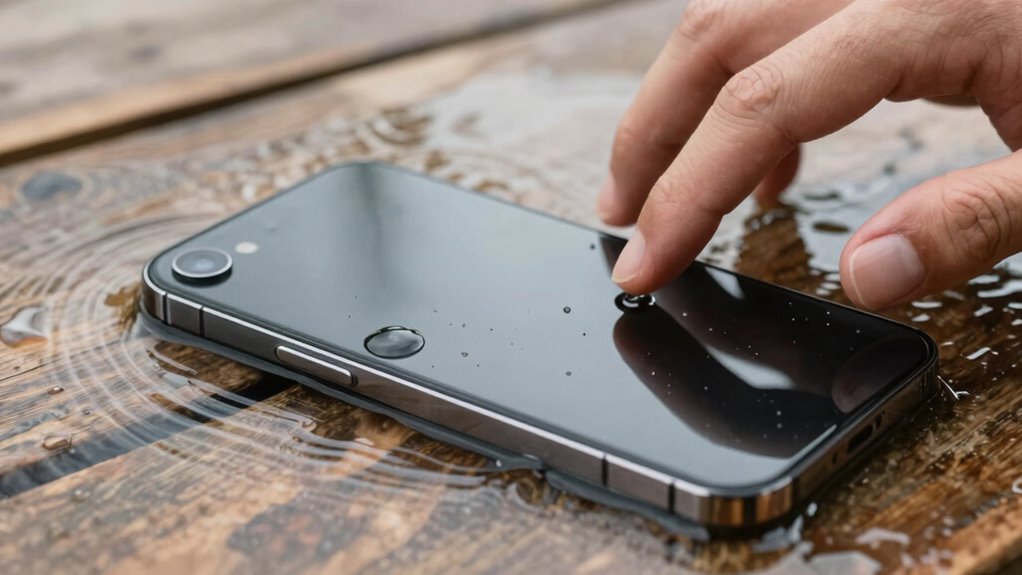

If you drop your phone in water, immediately turn it off to prevent short circuits. Remove all external accessories like cases, headphones, and chargers quickly, but don’t press any buttons or turn the device on. Gently dry the exterior with a soft cloth, avoiding heat sources like hairdryers. If possible, remove internal components or batteries. For the best chance of recovery, it’s vital to dry thoroughly—continue on to learn more effective drying tips.
Key Takeaways
- Immediately power off the phone to prevent short circuits and internal damage.
- Remove external accessories and SIM/memory cards without pressing buttons.
- Dry surface moisture with a soft cloth and avoid heat sources like hairdryers.
- Place the device in a dry, well-ventilated area with desiccants to absorb residual moisture.
- Seek professional repair promptly to assess internal damage and ensure thorough cleaning.

Hiearcool Waterproof Phone Pouch, IPX8 Waterproof Phone Case for iPhone 17/16/15/14 Pro Max, Cell Phone Dry Bag for Beach & Cruise Essentials, Touch Screen, Lanyard Included, 2 Pack (Fits Up to 8.9”)
Cruise-Ready IPX8 Waterproof Protection: Fully sealed IPX8 waterproof pouch protects your phone from splashes, rain, pool water and…
As an affiliate, we earn on qualifying purchases.
As an affiliate, we earn on qualifying purchases.
Act Quickly and Power Down
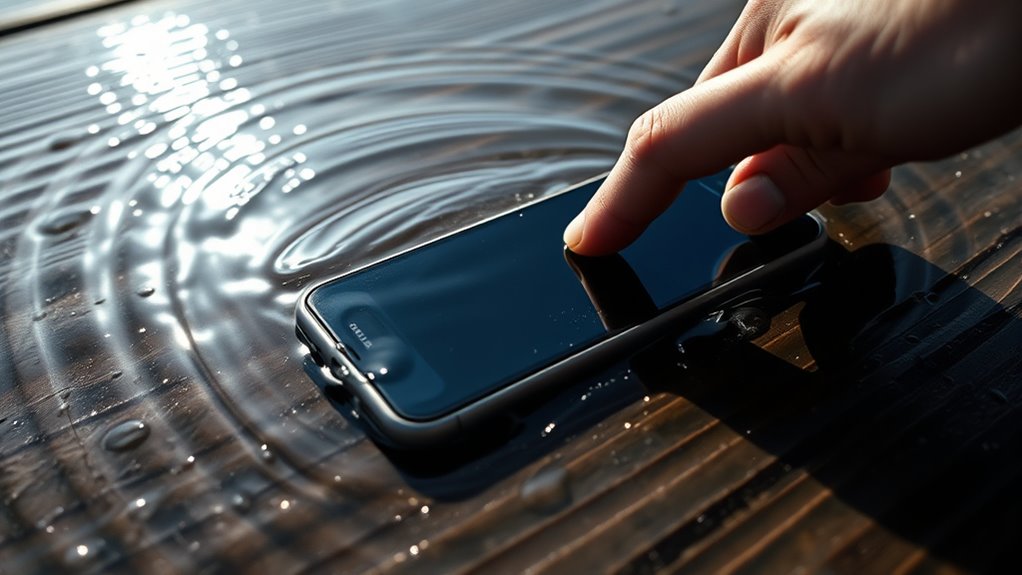
When your phone falls into water, acting quickly can make all the difference. First, power it down immediately to protect the battery preservation and prevent short circuits. Even if your device has water-resistant features, don’t rely solely on them; water can seep in through ports or cracks. Turning off your phone stops electrical activity, reducing the risk of damage. Remove any external accessories quickly, but avoid pressing buttons or trying to turn it on again. The goal is to limit water exposure and protect internal components. The faster you power down, the better your chances are of salvaging your device. Remember, quick action is key to minimizing water damage and preserving your phone’s functionality. Being aware of water damage psychology can help you stay calm and methodical during the emergency. Additionally, understanding water absorption can guide you on the best drying techniques to prevent further harm. Knowing the drying methods can help you choose the most effective way to dry your device without causing additional damage. Applying proper maintenance techniques can also help prevent future water-related issues. Moreover, learning about preventive measures can prepare you to handle similar accidents more effectively in the future.

15 Pcs 20 Gram Silica Gel Packs, Transparent Desiccant, Desiccant Packets for Storage, Moisture Packs for Spices Jewelry Shoes Boxes Electronics Storage
GOOD ADSORPTION CAPACITY: Silica gel desiccant is a highly active adsorption material, has good thermal properties and chemical…
As an affiliate, we earn on qualifying purchases.
As an affiliate, we earn on qualifying purchases.
Remove Accessories and External Items
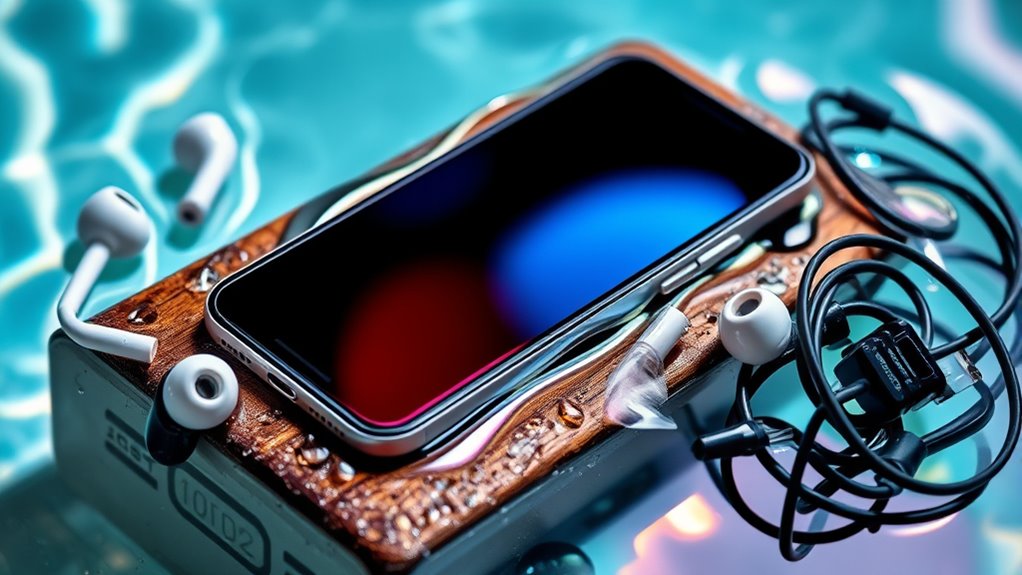
To give your phone the best chance of recovery, remove all external accessories immediately. Take off protective cases, as they can trap moisture and make drying more difficult. Removing screen protectors is also important—they might peel away or trap water underneath, which can cause additional damage. Check for any other accessories like headphones, chargers, or external lenses, and detach them promptly. Doing this helps prevent water from seeping into ports and openings, reducing the risk of internal damage. Keep all removed items in a safe, dry place so you don’t accidentally reintroduce moisture or debris. Additionally, understanding the field‑of‑view of your device can help assess which areas might be more vulnerable to water exposure. Properly assessing water damage can guide your next steps in recovery. Be aware that water-resistant features vary between models and may influence your response to water exposure. Recognizing the device’s design can also help determine the best drying method and potential repair needs. By clearing away external barriers quickly, you improve the chances of your phone drying properly and functioning again. Also, understanding the water exposure extent can help determine whether professional repair is necessary.

T7000 Black Glue for Cell Phones Mobile Repair Tools kit with Precision Tip, 4Pcs 15ml 50ml 110ml Waterproof Glue Speaker Earphone Electronics Computer Tablets LCD Screen Super Adhesive T-7000 Sealant
【Precision Glue】4 Pieces/pack T7000 black glue adhesive (2Pcs 15ml, 1pcs 50ml, 1pcs 110ml and repair tools kit(screwdriver,tweezers,clamp clips,rubber…
As an affiliate, we earn on qualifying purchases.
As an affiliate, we earn on qualifying purchases.
Dry the Exterior Surface Thoroughly
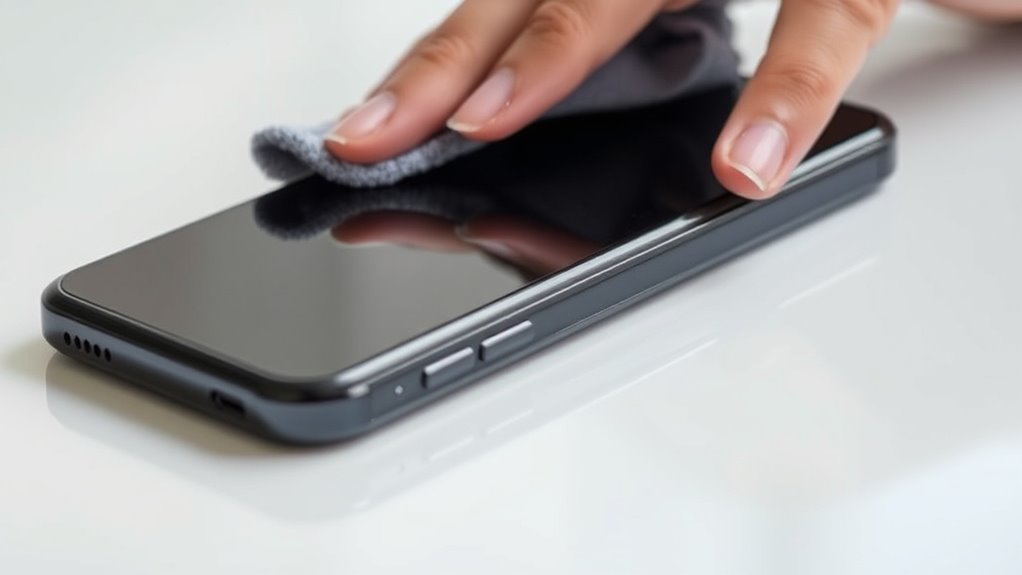
Start by wiping your phone’s exterior with a clean cloth to remove surface moisture. Then, use absorbent materials like paper towels or cotton to soak up remaining water. Be careful to avoid adding any more moisture during this process. Additionally, removing any cases or accessories can help facilitate drying and prevent further damage improves drying efficiency. To prevent internal corrosion, consider placing your phone in a dry, warm environment to aid evaporation and water damage mitigation techniques. Employing advanced cleaning techniques can further support the restoration process. Ensuring proper water removal procedures can significantly reduce the risk of long-term damage.
Wipe With a Cloth
After removing your phone from the water, it’s essential to wipe the exterior surface thoroughly with a clean, dry cloth. Focus on screen cleaning to remove any water droplets or moisture that may have settled. When selecting a cloth, choose a soft, lint-free material like microfiber to prevent scratches. Gently wipe the screen, edges, and ports, ensuring no water remains in crevices. Pay special attention to the display, as moisture here can cause further damage if not removed properly. Avoid using rough fabrics or paper towels, which can scratch delicate surfaces. The goal is to dry the exterior completely, reducing the risk of internal corrosion. Taking your time with careful wiping helps set the stage for effective drying and recovery. Proper moisture removal is crucial to prevent internal damage and ensure your device’s safety. Using air drying techniques can also help evaporate residual moisture from hard-to-reach areas. Additionally, consider elevating your device and placing it in a dry, well-ventilated space to facilitate natural evaporation, which is an effective method supported by air purifier principles to promote thorough drying.
Use Absorbent Materials
Wondering how to effectively dry your phone after water exposure? Start by using absorbent materials like desiccant packs, which are more efficient than rice substitution. Place your phone on a dry, clean surface and gently pat it with a soft cloth to remove excess water. Next, surround your device with desiccant packs or other moisture-absorbing materials to draw out remaining moisture from the exterior. These packs are designed to absorb humidity more effectively than rice, helping to reduce the risk of corrosion. Avoid using heat or hairdryers, as they can damage internal components. Focus on thoroughly drying the outside first, ensuring no water remains on the surface or in ports. Proper use of absorbent materials can considerably improve your chances of saving your phone. Additionally, understanding the odor of water-damaged electronics can help you identify hidden moisture that might still be present. Recognizing the importance of consistent drying can further prevent long-term damage and corrosion. Incorporating connected tech such as moisture sensors can offer real-time alerts to prevent water damage in the future. Ensuring your device is completely dry before attempting to turn it on is also crucial to avoid short circuits that could cause further damage. Regularly monitoring for signs of internal corrosion can help catch issues early and prolong your device’s lifespan.
Avoid Additional Moisture
To prevent further water from seeping into your device, it is essential to thoroughly dry the exterior surface. Removing surface moisture helps maintain the integrity of the moisture barrier and prevents corrosion. Use a soft, lint-free cloth to wipe off all visible water, paying attention to ports and seams. Here are three key steps:
- Gently dry all openings and crevices to eliminate trapped moisture.
- Avoid using heat sources like hairdryers, which can damage internal components.
- Keep your phone in a dry, well-ventilated area to allow residual moisture to evaporate naturally.
- Be aware that evidence-informed guidance can help you make safe and effective decisions during water damage incidents. Additionally, understanding the importance of moisture barriers can assist in preventing internal damage.
- Recognizing zodiac traits may also help in understanding how individuals react under stressful situations like water damage.
hula+ Magnet Phone Holder Reusable Stand, Portable Mount for Shower Mirror Kitchen Window & Bathroom Compatible with All Phones, Ideal for Content, TikTok, Instagram, Movies & Music
surface cell tablet iphone cradle selfie shelf adhesive fence nano universal restroom grip screw bracket grippy magsafe holders…
As an affiliate, we earn on qualifying purchases.
As an affiliate, we earn on qualifying purchases.
Avoid Using Heat Sources for Drying
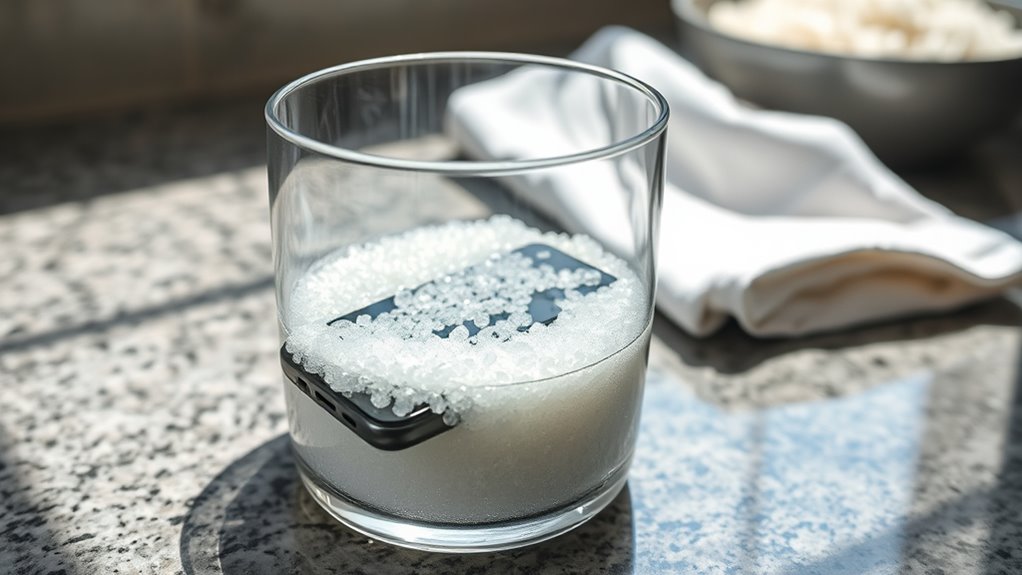
Using heat sources like a hairdryer, oven, or microwave to dry your waterlogged phone can cause more harm than good. Applying heat can lead to heat damage, warping internal components, and damaging delicate circuits. It also increases the risk of a fire hazard if the device overheats or if moisture sparks a short circuit. These methods may seem quick, but they can worsen the problem, making your phone irreparable. Instead, turn off the device immediately and let it air dry in a cool, dry place. Patience is key—using heat sources only accelerates damage and jeopardizes your phone’s functionality. Avoid rushing the drying process with any heat-based method, and focus on safer, natural drying techniques to protect your device.
Remove Internal Components if Possible

If you’re comfortable and have the necessary tools, removing internal components like the SIM card, memory card, and battery (if removable) can help prevent further water damage. Internal component removal is a key step in water damage prevention, reducing the risk of short circuits or corrosion. To do this effectively:
- Power off your device immediately before opening.
- Carefully remove the SIM card and memory card to prevent damage.
- If the battery is removable, detach it to stop power flow.
Seek Professional Repair Services
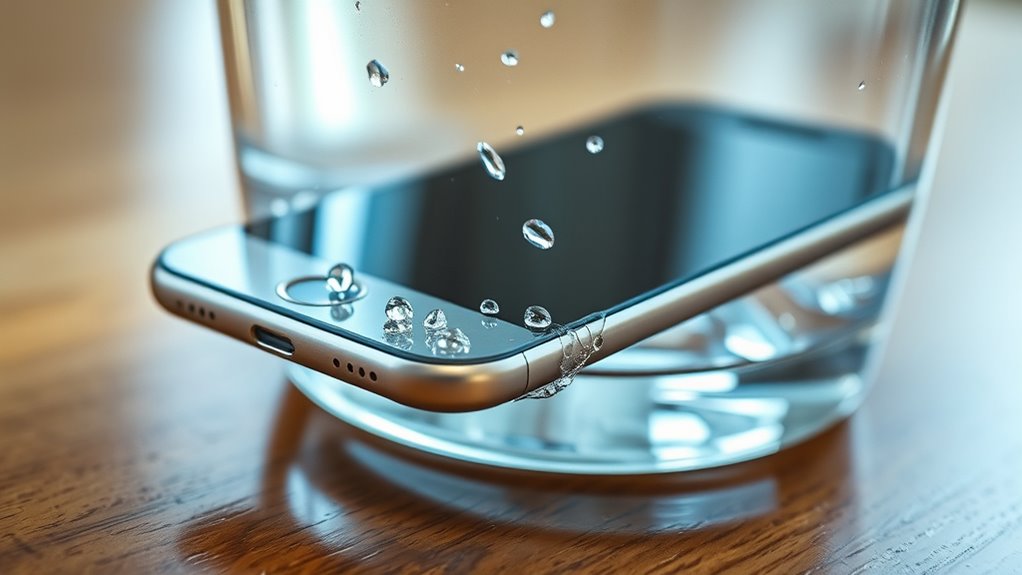
When your phone has been submerged in water, consulting a professional repair service is often the best course of action. Water damage can be tricky, and DIY fixes may not fully address the underlying issues. A trained technician can assess the extent of damage and recommend appropriate repair options, such as replacing damaged components or cleaning internal parts. Rushing to turn on your phone or attempting repair yourself could worsen the problem. Professional repair services have the tools and expertise to safely handle water-damaged devices, increasing the chances of restoring your phone’s functionality. Remember, timely professional intervention can prevent further damage and save you money in the long run. If your device isn’t responding, don’t delay—seek expert help immediately.
Frequently Asked Questions
Can I Still Use My Phone After Dropping It in Water?
You might still be able to use your phone after water damage, but don’t assume it’s safe. Water damage myths often lead you to try ineffective phone drying techniques like shaking or using rice. Instead, power off your device immediately, remove any accessories, and gently dry it. Seek professional repair, as water can cause hidden damage. Acting quickly increases your chances of saving your phone and avoiding long-term issues.
How Long Should I Wait Before Turning My Phone Back On?
You should wait at least 24 to 48 hours before turning your phone back on. Did you know that 60% of water-damaged phones are recoverable if dried properly? Use effective drying techniques like placing your device in rice or silica gel, and avoid rushing the recovery timeline. Patience is key—breaking this waiting period increases the risk of short circuits and permanent damage. Be cautious and give your phone time to dry thoroughly.
What Are the Signs My Phone Has Water Damage?
You’ll notice water damage symptoms if your phone shows signs like a distorted display, strange noises, or unresponsive buttons. Watch for phone water indicators, such as discoloration or a pinkish hue near the SIM slot or charging port. If these water damage symptoms appear, your device likely has water damage. Act quickly by turning it off and drying it thoroughly to prevent further harm.
Is It Safe to Shake or Blow Air Into My Phone?
No, it’s not safe to shake or blow air into your phone. These air drying techniques can push water further into your device and cause additional damage. Instead, gently dry the exterior and use desiccant effectiveness by placing your phone in silica gel packets or rice. This helps absorb moisture without risking further harm. Patience is key—avoid rushing the process to maximize your phone’s chances of recovery.
Will My Warranty Cover Water Damage Repairs?
Your warranty policies usually don’t cover water damage, meaning you’ll likely pay repair costs out of pocket. Check your warranty details carefully, as some manufacturers offer limited coverage or optional water damage protection. If your phone sustains water damage, expect to face higher repair costs without warranty assistance. To avoid unexpected expenses, consider investing in a waterproof case or insurance that covers water-related issues.
Conclusion
Remember, a water-damaged phone is like a wounded bird—fragile and in need of gentle care. Act swiftly, and don’t let panic drown your chances of revival. With patience and the right steps, you can breathe new life into your device, turning a soggy mishap into a story of resilience. Sometimes, all it takes is a steady hand and a little hope to restore what seemed lost beneath the surface.