
To take stunning photos with your phone like a pro, start by mastering your camera’s settings and exploring different modes based on your environment. Focus on composition by using the rule of thirds, experimenting with angles, and including interesting perspectives. Play with natural and artificial lighting to add mood and depth. Finally, enhance your images with editing apps to perfect brightness, contrast, and filters. Keep practicing, and you’ll discover even more tricks to elevate your shots every time.
Key Takeaways
- Master your phone’s camera settings, including modes and exposure, for optimal image quality in various environments.
- Focus on composition, framing, and unique perspectives like high or low angles to create visually compelling photos.
- Use natural light during golden hour or diffuse harsh midday sun to enhance photo warmth and detail.
- Incorporate props and visual storytelling techniques to add depth and narrative to your images.
- Practice editing with apps to adjust brightness, contrast, and filters, refining your photos for a professional look.
Master Your Phone’s Camera Settings
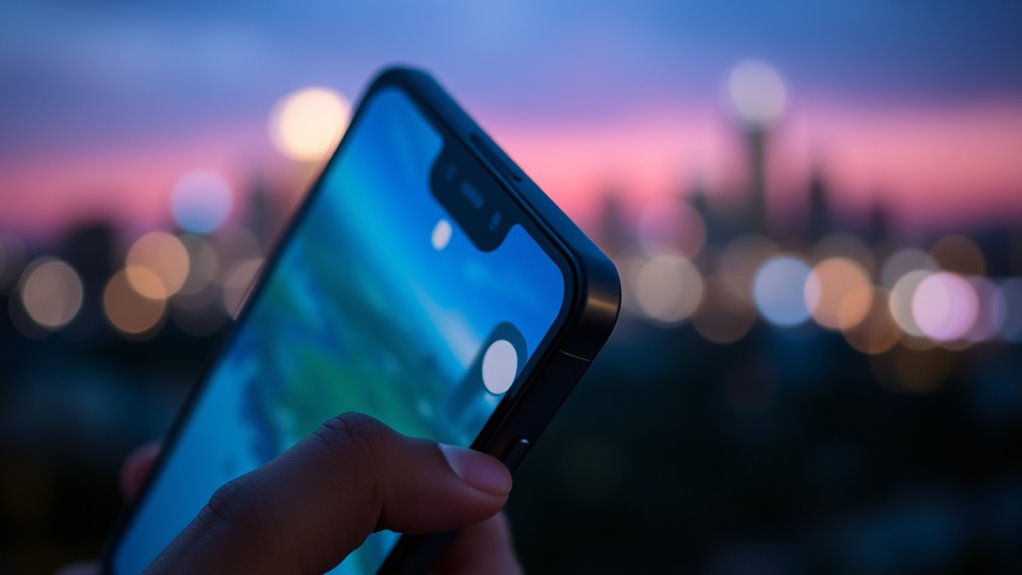
To take stunning photos with your phone, you need to understand its camera settings. Start by exploring different camera modes, such as portrait, landscape, or night mode, to match your shot’s environment. Each mode optimizes settings automatically, helping you capture better images without manual adjustments. Additionally, managing storage is vital; high-resolution photos can quickly fill your device. Regularly review and delete unnecessary pictures or transfer them to cloud storage to free up space. This guarantees your camera performs smoothly and you don’t miss out on spontaneous shots. Familiarize yourself with your phone’s camera settings to make quick adjustments when needed. Mastering these basics sets a solid foundation for capturing clear, vibrant photos that truly stand out. Understanding camera technology can further enhance your ability to optimize settings for different scenarios. For example, knowing how sensor quality influences image clarity can help you choose the best settings for sharp, detailed photographs. Additionally, learning about lens quality can aid in capturing sharper images with better focus and less distortion. Being aware of light conditions and how they affect your camera’s performance is also crucial for capturing well-exposed images in various environments.
Focus on Composition and Framing
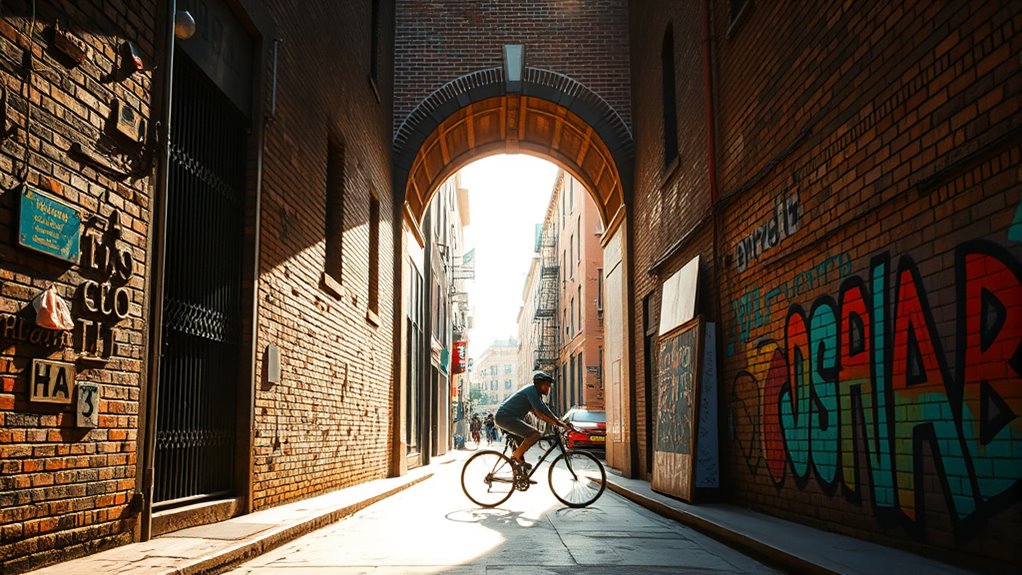
Good composition and framing are essential for turning a good shot into a great one. They guide your viewer’s eye and create visual interest. Use color theory to select harmonious or contrasting colors that evoke emotion and highlight your subject. Consider depth of field to control what’s sharp and blurry, adding layers and focus. When framing your shot, keep these points in mind:
Great composition and framing guide the eye, evoke emotion, and transform good shots into stunning visuals.
- Use the rule of thirds to position key elements.
- Incorporate leading lines to draw attention.
- Experiment with angles to add dynamism.
- Balance elements to avoid clutter and create harmony.
Visual storytelling is also a powerful technique that can enhance your photos by conveying emotion and narrative beyond just composition. Understanding rendering lard techniques can inspire creative texture contrasts and add a rustic charm to your imagery. Additionally, exploring AI-powered tools can help you analyze and improve your composition choices more effectively. Keeping an eye on natural lighting conditions can greatly influence the mood and quality of your photos. Incorporating cybersecurity principles such as data protection can also inspire innovative ways to safeguard your digital assets while editing or sharing images online.
Use Lighting to Your Advantage

Lighting can dramatically transform your photos, highlighting your subject and creating mood. Using natural light is often ideal—shoot during golden hour or near windows for soft, warm tones. Avoid harsh midday sun, which can produce unflattering shadows, by diffusing light with clouds or shade. When natural light isn’t enough, artificial lighting becomes your ally. Use lamps, string lights, or even your phone’s flashlight to add emphasis or fill shadows. Position your light sources to enhance texture and depth, avoiding direct glare. Experiment with different angles and intensities to evoke the desired atmosphere. Proper lighting can turn a simple shot into a stunning image, so always be mindful of your light sources and how they influence your scene. Incorporating energy-efficient lighting can also help you achieve optimal results while being environmentally conscious. Additionally, understanding lighting techniques can elevate your photography skills and help you capture more professional-looking images. Being aware of lighting setups can further optimize your shots for different scenarios. Moreover, utilizing smart home lighting systems allows for precise control over illumination, enabling you to experiment with various settings easily. Remember that adjusting your lighting conditions can make a significant difference in capturing the perfect photo.
Experiment With Perspectives and Angles

Try changing your perspective to make your photos stand out. Use a bird’s-eye view to showcase landscapes or crowds, and get low to create dramatic angles. Playing with these different viewpoints helps you capture unique and eye-catching images. Additionally, experiment with auditory feedback therapy tools to improve the clarity and impact of your writing. Incorporating creative storytelling techniques can further elevate your photos by giving them a compelling narrative that resonates with viewers. Embracing visual composition principles allows you to craft more balanced and engaging images that draw in your audience. Paying attention to lighting and shadow can also dramatically enhance your shots and add depth to your images.
Try Bird’s-Eye View
A bird’s-eye view offers a fresh perspective that can transform your phone photos from ordinary to extraordinary. By capturing shots from above, you mimic aerial photography and reveal details unseen from ground level. To master this, try these approaches:
- Find elevated spots, like rooftops or hills, to get a clear shot.
- Use a stable surface or tripod to prevent blurriness.
- Experiment with different heights for unique compositions.
- Think about symmetry and patterns that become more apparent from above.
- Incorporate camera stabilization techniques to keep your images sharp from high angles.
- Understanding aerial photography principles can help you compose more compelling shots and leverage natural lighting from above.
- Exploring composition techniques specific to aerial shots can further enhance your images and create striking visuals.
- Additionally, understanding electric dirt bike specifications can inspire creative shots, such as capturing the bike’s design from a top-down perspective. This perspective emphasizes shapes, contrasts, and relationships within your scene.
- Incorporating lighting considerations can dramatically improve the quality of aerial shots by highlighting textures and creating depth.
Embracing the bird’s-eye view allows you to see the world differently, adding depth and interest to your photography. It’s a simple yet powerful way to elevate your phone shots to pro-level aerial photography.
Use Low Angles
By changing your angle and getting low to the ground, you can create dynamic and engaging photos that stand out. Low angles offer a fresh perspective, allowing you to experiment with creative angles that add depth and interest. This approach enhances your visual storytelling by highlighting subjects in a way that feels more immersive and dramatic. Crouch down or lie flat to capture subjects from a unique viewpoint, making ordinary scenes appear more striking. Using low angles emphasizes details and creates a sense of scale, making your photos more compelling. Don’t be afraid to play with these perspectives—sometimes, the simplest shift in angle can transform a good shot into a stunning one that truly captures attention.
Capture Unique Perspectives
Have you ever considered how experimenting with different perspectives and angles can transform your photos? Changing your viewpoint can turn an ordinary shot into something extraordinary. Use creative props or capture candid moments from unexpected angles to add depth and interest. For example, lying on the ground or shooting from above can reveal new details and create a fresh perspective.
Consider these approaches:
- Incorporate creative props to tell a story
- Capture candid moments that reveal genuine emotion
- Experiment with high or low angles for drama
- Play with reflections and shadows for added intrigue
Enhance Your Photos With Editing Apps
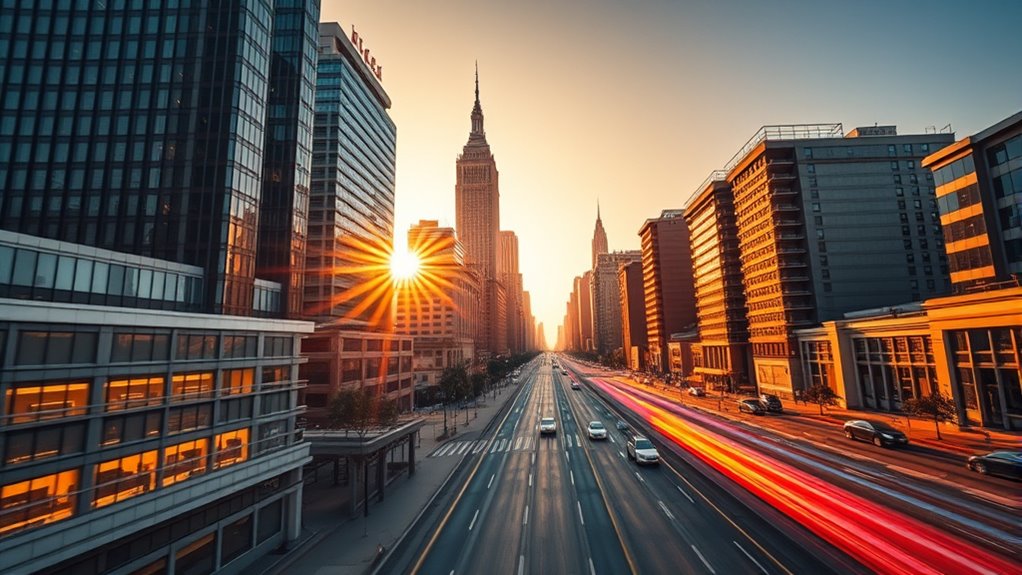
To make your photos truly stand out, pick the right editing apps that suit your style. You can easily tweak brightness and contrast to enhance details or add filter effects for a creative touch. With a few simple adjustments, your photos will look polished and professional.
Choose the Right Apps
Choosing the right editing apps can make a big difference in transforming your photos from good to stunning. With so many options, it’s vital to pick apps that suit your style and needs. Look for apps that offer thorough photo editing features, intuitive interfaces, and reliable performance. App recommendations include popular choices like Adobe Lightroom, Snapseed, VSCO, and Afterlight. These tools help you fine-tune colors, crop images, and add filters effectively. Remember, the goal isn’t just to edit but to enhance your photo’s natural beauty. Focus on apps that allow you to make precise adjustments without overwhelming you. Picking the right tools ensures your photo editing process is smooth, empowering you to create striking images every time.
Adjust Brightness & Contrast
Adjusting brightness and contrast is one of the most effective ways to make your photos pop. With simple photo editing, you can enhance details and improve overall visual impact. Many editing apps offer easy sliders to fine-tune these settings, allowing you to brighten shadows or tone down highlights. Using the right camera accessories, like a tripod or external lens, can help you capture better initial shots, but editing lets you perfect the image afterward. Adjusting brightness ensures your photo isn’t too dark or washed out, while contrast adds depth by emphasizing the difference between light and dark areas. These tweaks can transform an ordinary shot into a stunning one, giving your photos a professional touch without complicated equipment or advanced skills.
Apply Filter Effects
Applying filter effects is a quick way to give your photos a cohesive and polished look. Using artistic filters and vintage effects can transform ordinary shots into mesmerizing art. These filters add mood, depth, and personality, making your images stand out. When selecting filters, consider the story you want to tell:
- Enhance emotions with subtle artistic filters
- Create nostalgic vibes using vintage effects
- Unify color tones for a consistent aesthetic
- Highlight specific details or textures
Experimenting with different effects helps you discover your style and adds a professional touch to your photos. Remember, less is often more; use filters to complement, not overpower, your original shot. With a few taps, you can elevate your images from simple snapshots to stunning visuals.
Practice Consistently and Analyze Your Shots
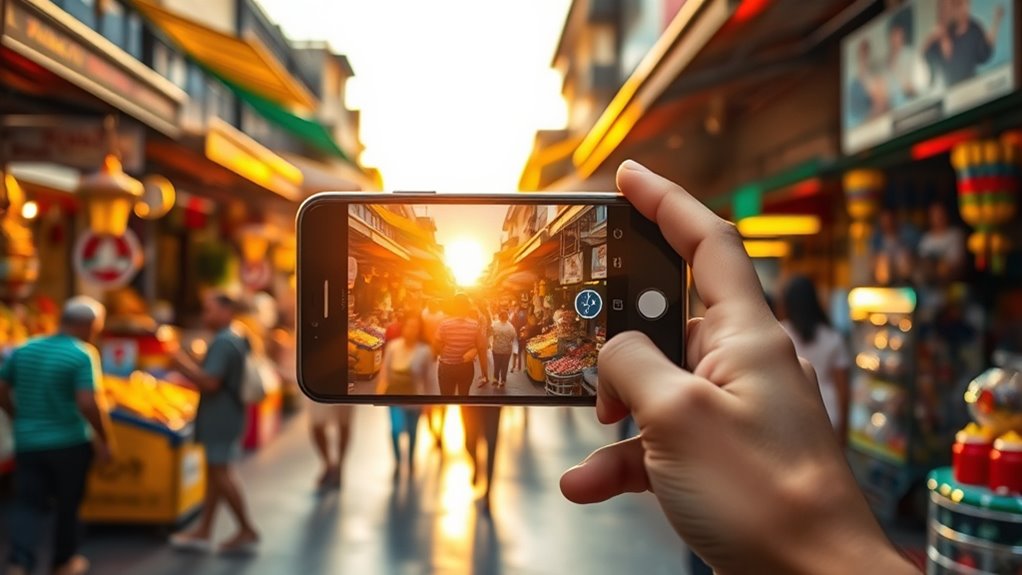
To improve your phone photography skills, you need to practice regularly and review your photos thoughtfully. Consistent practice helps you recognize what works and what doesn’t, sharpening your eye for good composition and lighting. After each shoot, review your progress by analyzing your shots critically—note your successes and identify areas for improvement. Don’t hesitate to seek constructive feedback from friends, online communities, or fellow photographers; fresh perspectives can reveal insights you might miss. Keep a habit of comparing your early photos to recent ones to see how much you’ve improved. Over time, this disciplined approach boosts your confidence, refines your technique, and helps you develop your unique style. Remember, steady practice and honest analysis are key to mastering phone photography.
Frequently Asked Questions
What Are the Best Accessories to Improve Phone Photography?
You can boost your phone photography with the right accessories like tripod accessories to stabilize your shots and prevent blur, especially in low light. Lens attachments, such as wide-angle or macro lenses, expand your creative options and help capture more detailed images. Combining these accessories makes your photos sharper and more professional-looking, giving you better control and flexibility to experiment and elevate your photography skills.
How Do I Shoot in Low-Light Conditions Without a Tripod?
Imagine you’re Indiana Jones without his trusty whip—don’t worry, you can still shoot great low-light photos without a tripod. Use tripod alternatives like leaning against a wall or placing your phone on a stable surface. Adjust your low light camera settings, such as increasing exposure or ISO, and hold your phone steady. These tricks help you capture sharp, vibrant shots even in dim conditions, no fancy gear needed.
Can I Take Professional-Quality Photos With a Basic Phone?
Yes, you can take professional-quality photos with a basic phone. Focus on your smartphone sensors and leverage good photo composition techniques, like framing and lighting, to enhance your shots. Keep your lens clean, use natural light whenever possible, and avoid digital zoom. Even with a basic phone, paying attention to these details helps produce stunning images that look professional. Practice regularly to improve your skills and discover your phone’s strengths.
How Do I Avoid Common Editing Mistakes?
You might think editing always improves your photos, but avoiding common mistakes like overdoing photo cropping or color correction is key. Start by making subtle adjustments, ensuring your image remains natural. Investigate whether cropping enhances your composition or cuts out important details. When adjusting colors, aim for accuracy rather than dramatic effects. Keep your edits simple, and your photos will look professional without falling into common pitfalls that can ruin a good shot.
What Are the Top Apps for Advanced Photo Editing?
You should check out apps like Adobe Lightroom, Snapseed, and VSCO for advanced photo editing. These apps let you apply powerful photo filters and fine-tune color grading to enhance your images. With features like selective adjustments and professional tools, you can easily create stunning, pro-quality photos right from your phone. Experiment with different filters and color settings to achieve the perfect look for each shot.
Conclusion
Now that you know these pro tips, your phone photos will leave everyone speechless—like capturing lightning in a bottle! Keep practicing and experimenting with settings, angles, and lighting. Don’t be afraid to get creative and push your limits; even the simplest shot can turn into a masterpiece. With dedication, you’ll soon be creating stunning images that stand out in a sea of ordinary. So grab your phone and start shooting—your photography game is about to skyrocket!