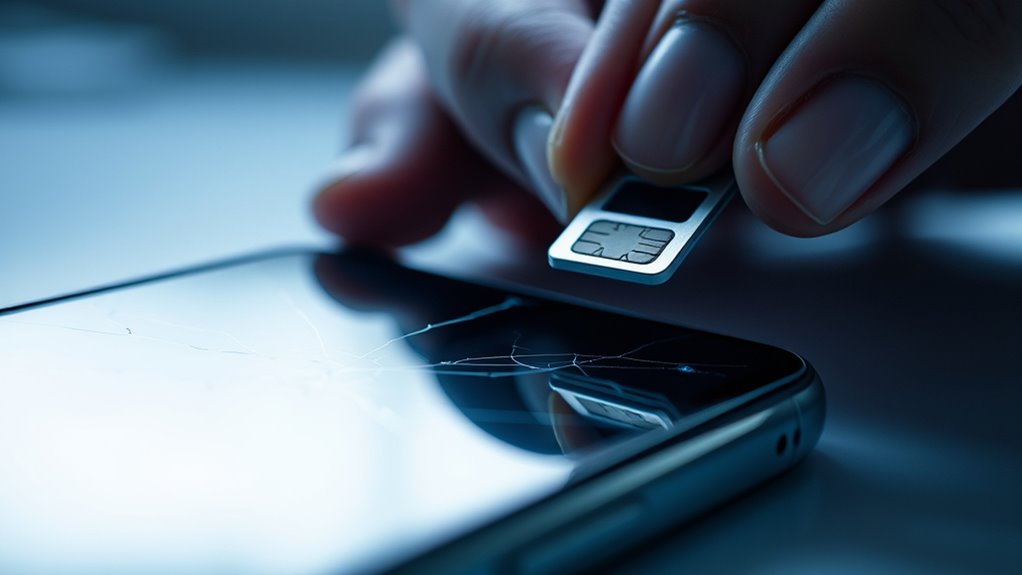

Thieves pull off SIM swap scams by gathering your personal info and convincing your mobile provider to transfer your number to a new SIM. Once they control your phone number, they can reset your account passwords, access your accounts, and steal your identity. To stop them, set up strong security measures like PINs or passwords with your carrier, monitor your accounts closely, and be cautious with your info. Keep going to learn the best ways to protect yourself.
Key Takeaways
- Thieves gather personal info via social engineering or data breaches to impersonate victims.
- They contact mobile carriers pretending to be the victim to request a new SIM.
- Weak verification processes at carriers can allow scammers to activate a malicious SIM swap.
- Once they control the number, scammers reset passwords and access accounts with two-factor codes.
- To stop them, enable strong authentication, set PINs with your provider, and monitor account activity regularly.

Sim swap scams have become a common method for hackers to hijack your mobile accounts and access your personal information. These scams target your phone number, which is often linked to sensitive accounts like banking, email, and social media. Once scammers succeed in swapping your SIM card, they can control your phone number, making it easier to commit identity theft and steal your money or data. Protecting your phone security is essential, especially because losing control of your number can lead to severe consequences. You might wake up to find your accounts compromised or notice suspicious activity that’s hard to trace back to the scammer.
Sim swap scams hijack your mobile accounts, risking your personal info and financial security. Stay vigilant.
The first step to stopping these scams is understanding how they happen. Typically, scammers gather personal information about you—such as your name, date of birth, or the last four digits of your SSN—through social engineering, phishing, or data breaches. Then, they contact your carrier pretending to be you and request a new SIM card linked to your phone number. If your carrier’s verification process isn’t strict enough, the scammer can succeed in transferring your number to their device. Once they control your SIM, they can reset passwords, access two-factor authentication codes, and bypass security measures that rely on your phone. This is why phone security should be a top priority.
Implementing additional security measures like vetted authentication methods with your mobile provider can significantly reduce the risk of SIM swap scams. To protect yourself, set up additional security layers with your mobile provider, like PINs or passwords that only you know. Never share personal details or account information with anyone, especially over the phone or email. Consider enabling account alerts for changes to your phone number or account activity. Using strong, unique passwords for your accounts adds an extra layer of defense, making it harder for scammers to access your information even if they do get control of your number. You should also be cautious with phishing attempts—avoid clicking on suspicious links or providing your details on untrusted websites.
Monitoring your accounts regularly helps you spot unusual activity early. If you suspect a scam—say, you can’t access your phone or notice unfamiliar transactions—contact your carrier immediately to report the issue. Quickly acting can prevent the scammers from doing more damage. Remember, your phone security isn’t just about safeguarding your device; it’s about protecting your identity and financial wellbeing. Staying vigilant and proactive keeps you one step ahead of thieves who rely on these scams to steal your identity and wreak havoc on your life.
Frequently Asked Questions
Can SIM Swap Scams Happen to All Phone Carriers?
Yes, SIM swap scams can happen to all phone carriers. Thieves exploit cross-platform vulnerabilities and often target carrier-specific security measures to hijack your number. While some carriers implement stronger protections, no system is entirely immune. To protect yourself, enable two-factor authentication, use PINs or passcodes, and stay vigilant against phishing attempts. These steps help minimize your risk across any carrier, regardless of their security protocols.
Are Certain Phone Models More Vulnerable to SIM Swapping?
Certain phone models can be more vulnerable to SIM swapping due to hardware vulnerabilities or weaker software security features. Older devices may lack updated security patches, making them easier targets. Additionally, phones with less robust hardware security or outdated software are at higher risk. To protect yourself, guarantee your device has the latest updates, enable multi-factor authentication, and stay cautious about sharing personal info, regardless of your phone model.
How Quickly Can Thieves Activate a Stolen SIM?
Thieves can activate a stolen SIM almost immediately, often within minutes, thanks to rapid activation processes known as SIM swap timelines. Once they have your information, they can request the swap and have the new SIM activated quickly, sometimes in less than an hour. To protect yourself, stay vigilant, enable two-factor authentication, and monitor your accounts for suspicious activity to prevent rapid activation and potential fraud.
What Are the Signs Indicating a SIM Swap Attempt?
Imagine your phone’s signal as a lighthouse guiding your digital life. If suddenly, you notice your calls or texts stop unexpectedly or receive password reset alerts you didn’t initiate, it’s a warning sign of a sim swap attempt. Stay vigilant with phone carrier security, monitor unusual activity, and enable sim swap prevention features. Recognizing these signs helps protect your identity before thieves fully take control.
Is It Possible to Recover a Hijacked Phone Number?
Yes, you can recover a hijacked phone number through phone number recovery services. Act quickly to contact your mobile provider and verify your identity to prevent further damage. They’ll help you restore access and secure your account. For hijacked account restoration, change your passwords and enable two-factor authentication. Staying proactive and alert is vital to minimize the impact and regain control of your phone number efficiently.
Conclusion
To stay ahead of SIM swap scammers, stay vigilant and protect your personal info. Enable two-factor authentication, use strong, unique passwords, and be cautious of suspicious messages or calls. Remember, prevention is better than cure, so don’t let your guard down. If something feels off, act quickly. Playing it safe now keeps you from being caught off guard later—don’t let thieves have the last laugh. Stay alert and guard your digital doorways!