
Texting via satellite occurs when your phone connects to orbiting satellites using specialized antennas or external satellite devices, especially in remote areas where traditional networks fail. Emergency SOS features activate by pointing your device skyward to establish a satellite link, sending encrypted distress signals with your location to rescue teams. While signals can have slight delays and coverage may be limited by terrain or weather, understanding how this system works helps you stay prepared. Exploring more reveals how this life-saving technology continues to improve.
Key Takeaways
- Satellite texting uses RF signals between devices and orbiting satellites for communication in remote areas without cellular networks.
- Emergency SOS activates by pointing the satellite antenna skyward, transmitting encrypted distress messages for quick rescue.
- Connection quality depends on satellite orbit type; low Earth orbit offers faster responses, while geostationary satellites cover larger areas with higher latency.
- Proper device preparation, such as fully charging and clearing obstructions, ensures reliable satellite signal and emergency communication.
- Advances like improved technology and system design reduce latency and enhance signal reliability for urgent situations.
The Need for Satellite Connectivity in Emergencies

During emergencies, traditional cell networks often fail when you need them most, leaving people stranded without communication. That’s where satellite connectivity becomes essential. Unlike cellular towers, satellite phones connect directly to orbiting satellites, enabling you to send messages even in remote or disaster-hit areas. However, satellite devices rely on a satellite battery, which must be sufficiently charged to keep the connection alive. Signal latency can also be an issue, causing delays between your message and its delivery. This delay can be frustrating during urgent situations, but it’s a necessary trade-off for reliable coverage when terrestrial networks are down. Satellite connectivity ensures you stay connected, providing a crucial lifeline when every second counts. Additionally, understanding the contrast ratio of satellite communication systems can help evaluate their effectiveness in various conditions. Battery life is another critical factor that influences the reliability of satellite phones during extended emergencies. Properly managing power consumption can extend device usage when charging options are limited, and choosing devices with extended battery capacity can make a significant difference in prolonged situations. Moreover, advancements in networks and technology continue to improve the performance and dependability of satellite communication systems in emergency scenarios.
How Smartphones Connect to Satellites
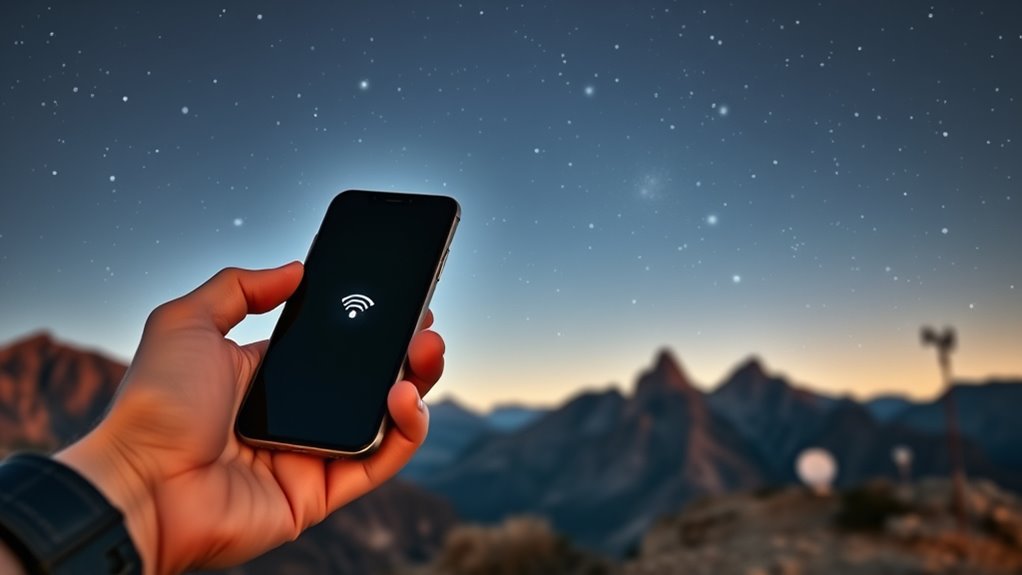
Smartphones connect to satellites through specialized communication devices called satellite antenna modules or external satellite phones that attach to your device. These modules communicate with satellites in various orbits, such as low Earth orbit (LEO) or geostationary orbit, affecting connection speed and coverage. Because satellites are far away, you might experience some signal latency, which can delay message transmission. Understanding satellite orbits is crucial to grasp how connection quality varies depending on the satellite’s position and type. To understand how this connection works, consider:
- The satellite’s orbit determines how quickly signals travel back and forth.
- Low Earth orbit satellites offer faster response times but cover smaller areas.
- Geostationary satellites provide broader coverage but can introduce more latency.
- The orbit type also influences the energy requirements and longevity of satellite communication systems. Your device sends signals upward, which are relayed via satellite, then down to a ground station, enabling communication even in remote locations. Additionally, advancements in satellite technology continue to improve connection reliability and reduce latency, making emergency communication more effective. Improvements in antenna design are also helping to enhance signal strength and reduce connection issues in challenging environments, especially as new antenna materials are developed.
The Technology Behind Satellite-Based Texting

The technology behind satellite-based texting relies on advanced radio frequency (RF) systems and digital signal processing to transmit messages through space. Your message travels from your phone to a satellite in orbit, which then relays it to a ground station or another satellite before reaching its destination. The satellite orbit, typically low or medium earth orbit, determines how quickly signals are relayed. Because signals must traverse long distances, there’s inherent signal latency, meaning a slight delay between sending and receiving messages. This delay can vary depending on satellite type and position. The system’s design minimizes latency, ensuring your messages are delivered as quickly as possible. This complex network allows reliable communication even in remote areas where traditional cell towers aren’t available, thanks to the satellite network infrastructure.
Activating Emergency SOS via Satellite

Activating Emergency SOS via satellite allows you to quickly summon help even when you’re outside cellular coverage. To do this, you need to aim your phone’s satellite antenna toward the sky to establish a connection. Once connected, your message is protected through signal encryption, ensuring your location and details stay private. Here’s what to keep in mind:
- Ensure your satellite antenna is unobstructed for a clear signal.
- Follow on-screen prompts to initiate the SOS process.
- Your device will automatically encrypt the data for secure transmission.
- Understanding encryption helps ensure your distress messages remain private during transmission.
After activation, your distress message is sent via satellite, bypassing traditional networks. This process is designed for quick, reliable emergency communication, giving you peace of mind in remote areas.
Limitations and Coverage Areas of Satellite Services
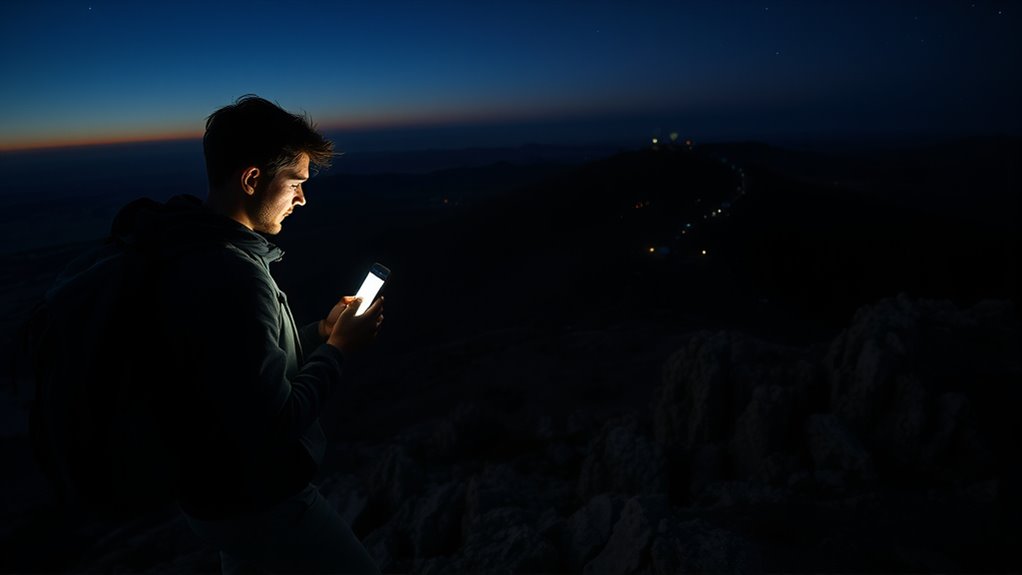
While satellite communication can be a lifesaver in remote areas, it does come with certain limitations. Geographic limitations affect where satellite services work best, mainly in open, unobstructed regions. Dense forests, tall buildings, or mountains can block signals, reducing service coverage. Satellite networks typically provide broad coverage, but they don’t reach every location, especially deep valleys or dense urban centers. You may experience delays or signal drops when moving between coverage zones. Additionally, satellite signals can be affected by weather conditions like heavy rain or storms, which further limit service reliability. Because of these geographic and environmental factors, satellite communication isn’t always guaranteed everywhere you go. Knowing these limitations helps you manage expectations and prepare for areas where satellite service might be weak or unavailable. Understanding coverage areas is essential for effective planning and safety in remote situations. Moreover, advancements in satellite technology aim to improve coverage reliability, but current limitations still impact user experience. It’s also important to consider that the signal strength can vary depending on your device and surroundings, affecting overall communication quality. For instance, satellite network density plays a crucial role in determining how well coverage is distributed across different regions. Recognizing the geographic coverage helps users better understand where satellite services are most effective.
Steps to Prepare Your Phone for Satellite Emergency Use
Preparing your phone for satellite emergency use involves several crucial steps to guarantee you’re ready when traditional networks fail. First, verify your phone’s satellite signal strength is optimized by enabling any built-in satellite mode or app. Next, update and save your emergency contact list with critical numbers, including local authorities and loved ones, so you can reach them easily via satellite. Finally, test your device’s satellite communication feature in a safe environment to confirm functionality. To make this process smoother, remember to:
- Keep your device fully charged before heading into remote areas
- Clear obstructions around your phone to improve satellite signal strength
- Familiarize yourself with the satellite emergency app’s interface and settings
- Ensure your device’s Suprem fabric is in good condition to maintain durability and performance during emergency communications
These precautions help ensure you’re prepared for any emergency when traditional networks are unavailable.
Real-Life Scenarios Where Satellite SOS Made a Difference

Satellite SOS has saved lives in many situations you’d never expect. Whether you’re in the mountains, deep in remote wilderness, or at sea, these emergencies show how essential satellite communication can be. Let’s look at some real stories where satellite rescue made all the difference.
Mountain Rescue Successes
Have you ever wondered how satellite SOS devices have saved lives during mountain emergencies? When someone gets stranded or injured high up, a satellite SOS can be a game-changer. Recent rescue stories highlight how upgraded satellite phones and effective mountain rescue training make all the difference. These devices enable quick communication in remote areas where cell signals fail. Rescuers can locate and assist victims faster, often preventing tragedy. For example:
- Mountain rescue teams rely on satellite phone upgrades for reliable communication during tough conditions.
- Trained personnel use satellite SOS signals to coordinate swift rescue operations.
- Victims’ calls often lead to faster extraction, thanks to the accuracy of satellite-based location data.
These successes demonstrate how satellite technology and proper training save lives in mountain emergencies.
Remote Wilderness Emergencies
When you find yourself stranded deep in a remote wilderness, a satellite SOS can be your lifeline. Your satellite antenna picks up the distress signal, even when cellular networks are unavailable. Despite the vast distance, the system transmits your location and emergency message via satellite, ensuring help can locate you. Be aware that signal latency may cause slight delays, but it won’t prevent rescue efforts. The satellite antenna’s design allows for reliable communication in challenging terrain, giving you reassurance that your message will get through. This technology is essential for wilderness adventurers, hunters, or hikers who venture far from civilization. In these isolated areas, satellite SOS can make the difference between rescue and tragedy, ensuring help arrives when it’s most desperately needed. Knowing how emergency communication systems operate can help you prepare better for unexpected situations, especially when relying on connected devices that support your safety in extreme environments. Having a basic understanding of satellite technology can help you better appreciate the reliability of these systems during emergencies. Recognizing the importance of signal coverage can further enhance your preparedness in remote settings.
Maritime SOS Cases
In maritime emergencies, satellite SOS technology has proven to be a lifesaver in critical moments. When you’re stranded at sea, dependable maritime communication is essential. A strong satellite signal can be the difference between rescue and disaster. Real-life cases highlight how satellite SOS alerts can reach rescue teams even when traditional radio or cellular signals fail.
Some notable examples include:
- A boat caught in a storm transmitting a distress call via satellite, enabling rescue teams to locate it quickly.
- A vessel with damaged communication systems sending an emergency SOS through satellite, leading to timely rescue.
- A sailor lost at sea activating satellite-based emergency services, which coordinated a swift rescue operation.
These cases demonstrate how satellite SOS guarantees help arrives, no matter how remote your location.
Future Developments in Satellite Communication for Mobile Devices
Advancements in satellite technology are poised to revolutionize how mobile devices connect in the future. Expect faster, more secure communication with innovations like quantum encryption, which safeguards data against hacking. Interplanetary communication may soon enable messaging across planets, expanding connectivity beyond Earth. These developments will reduce latency, improve coverage in remote areas, and support more reliable emergency services. You’ll benefit from seamless communication even in the most isolated regions, thanks to satellites that are smarter and more interconnected. As technology progresses, your devices will rely less on traditional networks and more on satellite networks, ensuring continuous access. Additionally, satellite miniaturization will allow for more cost-effective deployment of satellite constellations, further enhancing coverage and responsiveness. The integration of AI-driven networks will enable smarter, adaptive data routing to optimize performance. Here’s a quick overview of future satellite communication trends:
| Technology | Impact |
|---|---|
| Quantum encryption | Unhackable, ultra-secure messaging |
| Interplanetary comm. | Earth-to-space and space-to-Earth connectivity |
| Miniaturized satellites | Increased coverage and faster deployment |
| AI-driven networks | Smarter, adaptive data routing |
| 5G integration | Higher speeds, lower latency |
Frequently Asked Questions
Can I Send Multimedia Messages Through Satellite Emergency Texting?
You can’t send multimedia messages through satellite emergency texting, as satellite bandwidth is limited and designed mainly for simple texts. These systems prioritize quick, reliable communication during emergencies, so message size remains small to guarantee successful delivery. Multimedia content like photos or videos usually can’t be transmitted via satellite in these situations. Stick to text-only messages for satellite emergency services to avoid issues with message size and bandwidth constraints.
How Long Does It Typically Take for a Satellite SOS Message to Reach Rescue Services?
You’ll find that satellite SOS messages typically reach rescue services within 15 minutes, but satellite signal delays can sometimes extend this to 30 minutes or more. This rapid response is vital during emergencies, yet it highlights how satellite-based communication can still face unpredictable delays. Your quick action helps reduce emergency response times, but understanding these potential delays guarantees you stay prepared and patient when awaiting rescue coordination via satellite.
Are There Specific Phones or Models Compatible With Satellite Emergency Services?
You need a compatible device with satellite emergency services, such as specific models from Apple, Garmin, or Iridium. Device compatibility guarantees you can access satellite signals when traditional networks fail, providing reliable signal coverage in remote areas. Before heading into wilderness or isolated spots, check your phone’s features or consider a dedicated satellite communicator to stay connected during emergencies. Make sure your device supports satellite Emergency SOS for maximum safety.
What Are the Costs Involved in Satellite-Based Emergency Texting?
The costs for satellite-based emergency texting typically involve a service subscription fee and message fees. You pay a monthly or annual fee for access to the satellite network, plus individual message charges when you send or receive texts. These fees vary depending on the provider and plan, so it’s wise to compare options. Keep in mind, though, that having a satellite service can be essential during emergencies in remote areas.
How Reliable Is Satellite Communication During Severe Weather Conditions?
During severe weather, satellite signals can feel like trying to hear a whisper in a hurricane. Weather interference, such as heavy rain or storms, can drastically weaken or cut off your satellite communication. While satellite systems are designed to be resilient, extreme conditions may still cause delays or failures. You should be prepared for possible disruptions and have alternative ways to stay connected when weather turns hostile.
Conclusion
In emergencies, satellite-based texting can be a lifesaver. Imagine you’re hiking remote trails and suddenly lose cell service, but your satellite-enabled phone connects you to help. With just a few taps, you activate SOS and get rescue. As technology advances, these systems will become more reliable and widespread, giving you peace of mind wherever you go. Stay prepared, and remember that satellite communication might be your best chance when traditional networks fail.