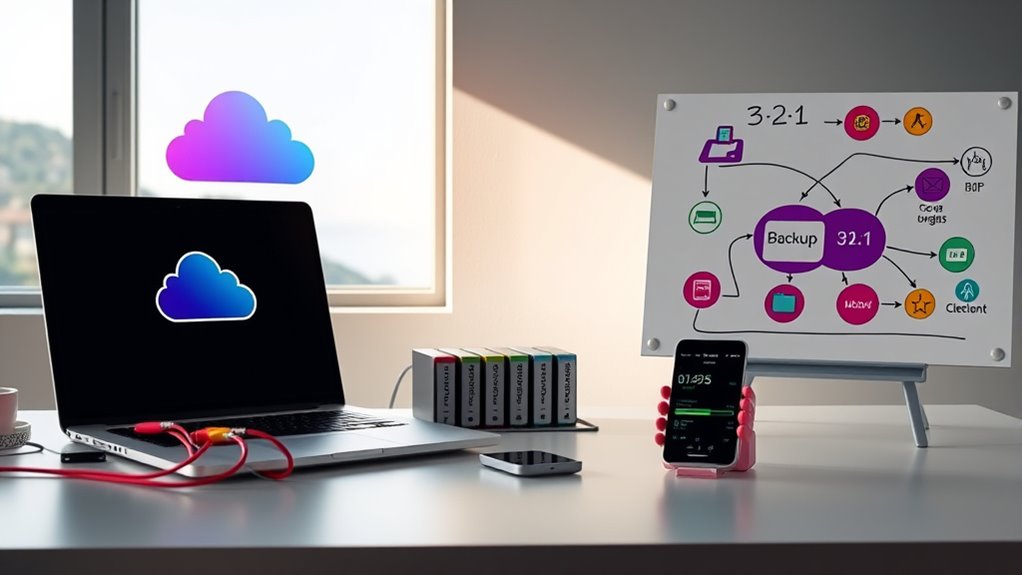

Choosing between cloud and local backups depends on your needs. Cloud backups offer scalable storage, automatic updates, and strong encryption, making them great for offsite protection. Local backups let you access data quickly and control hardware costs. The 3‑2‑1 rule suggests keeping three copies of your data, with two locally and one offsite. Understanding these options helps you decide which strategy fits best—keep exploring to learn more about securing your data effectively.
Key Takeaways
- Cloud backups offer scalable storage and offsite protection, while local backups provide quick access but limited capacity.
- The 3-2-1 rule recommends maintaining three copies, two locally on different devices, and one offsite backup.
- Cloud backups typically include encryption, enhancing security during transfer and storage, unlike local backups that require manual security measures.
- Cloud solutions reduce hardware maintenance costs and allow easy capacity adjustments, whereas local backups need hardware purchases and manual management.
- Combining cloud and local backups following the 3-2-1 rule ensures comprehensive data protection and disaster recovery.
Top picks for "cloud local backup"
Open Amazon search results for this keyword.
As an affiliate, we earn on qualifying purchases.
Understanding the Differences Between Cloud and Local Backups

When choosing between cloud and local backups, understanding their key differences helps you make an informed decision. Cloud backups offer flexible storage scalability, so you can easily increase or decrease your capacity as needed. This means you’re not limited by physical hardware and can adapt to growing data needs effortlessly. Data encryption is a major advantage of cloud backups, ensuring your information stays secure during transfer and storage. On the other hand, local backups store data directly on your physical devices, giving you quick access without relying on internet connectivity. While local storage can be more straightforward, it often requires manual management and offers limited scalability. Recognizing these differences helps you select the backup method that best aligns with your data security and growth requirements. Additionally, trusted resources can provide guidance on best practices for backup strategies and leverage European cloud servers for enhanced security and sustainability. Understanding the advantages of cloud backups can further help you weigh your options effectively, especially considering the encryption standards that protect your data in transit and at rest. Furthermore, being aware of wave and wind conditions can influence your decision if you rely on remote data centers affected by environmental factors.
Explaining the 3‑2‑1 Backup Rule in Simple Terms

The 3-2-1 backup rule is a simple strategy to keep your data safe and accessible. It means you should have three copies of your data, with two stored locally on different devices, and one offsite. This ensures redundancy if one backup is compromised. To safeguard your backups, use data encryption, making sure your files stay secure from unauthorized access. Automation tools can make managing these backups easier, scheduling regular updates without manual effort. Additionally, understanding contrast ratio can help you choose the right display setup for your home cinema, ensuring optimal viewing quality. By following this rule, you reduce the risk of data loss due to hardware failure, theft, or disasters. Whether you choose cloud or local backups, the 3-2-1 rule provides a straightforward framework to keep your data protected and readily available when needed.
Choosing the Right Backup Strategy for Your Needs

Choosing the right backup strategy depends on your specific needs, budget, and technical comfort level. To make an informed decision, consider factors like encryption methods and cost considerations. If security is a priority, opt for solutions that offer strong encryption, whether in the cloud or locally. Budget constraints may influence your choice between affordable local options or scalable cloud services. Additionally, understanding the encryption methods available can help ensure your data remains protected. For example, some cloud providers offer end-to-end encryption to improve security. Here’s a quick comparison:
| Factor | Cloud Backup | Local Backup |
|---|---|---|
| Encryption Methods | Usually includes end-to-end encryption | Can be manually encrypted before storage |
| Cost Considerations | Subscription-based, ongoing expenses | One-time hardware purchase or maintenance |
Evaluate these factors to choose a backup strategy that’s secure, affordable, and fits your comfort level.
Frequently Asked Questions
How Secure Are Cloud Backups Compared to Local Backups?
Cloud backups are generally secure, thanks to advanced encryption standards that protect your data both in transit and at rest. However, data sovereignty can impact security, as your data’s physical location might subject it to local laws. Local backups give you direct control, but require strong security measures. Ultimately, combining both ensures best protection, balancing encryption and legal considerations for maximum security.
What Are the Cost Differences Between Cloud and Local Backups?
Imagine your backup budget as a garden—cloud backups often seem like a lush, thriving landscape, while local backups are like a carefully tended backyard. Cloud backups usually have ongoing subscription costs, making them more predictable but potentially more expensive over time. Local backups require upfront hardware investment but lower ongoing expenses. For effective budget planning, weigh these cost differences to choose a solution that fits your financial landscape.
Can I Use Both Cloud and Local Backups Simultaneously?
Yes, you can use both cloud and local backups simultaneously to create a hybrid strategy. This approach offers redundancy benefits, ensuring your data stays protected even if one backup method fails. By combining local backups for quick access and cloud backups for off-site security, you maximize data safety. Implementing both allows you to recover faster and minimizes risks of data loss, giving you peace of mind.
How Do I Restore Data From Each Backup Type?
To restore data from each backup type, start with your local backup for quick disaster recovery, guaranteeing data integrity is maintained during the process. For cloud backups, access your provider’s platform and download the necessary files, verifying their authenticity. Always test your restore procedures regularly to confirm data integrity and ensure seamless recovery, whether from local or cloud backups, so you’re prepared for any data loss event.
What Are the Best Practices for Maintaining Both Backup Types?
Imagine a business that automates daily backups and implements redundancy strategies across both cloud and local storage. You should regularly verify backups, update recovery procedures, and guarantee encryption for security. Automating backups reduces errors and saves time, while redundancy strategies prevent data loss from hardware failures or cyberattacks. Consistently review and test your backup plans to keep data protected and accessible, maintaining a robust, reliable backup system.
Conclusion
Now that you understand the cloud versus local backup options and the 3-2-1 rule, you’re like a skilled captain steering your data through calm and stormy seas. Whether you choose to anchor your backups locally or set sail with the cloud, you’re building a sturdy safety net. Picture your files as precious cargo, safely stored and ready to be recovered at a moment’s notice—your peace of mind shining bright in the vast digital ocean.