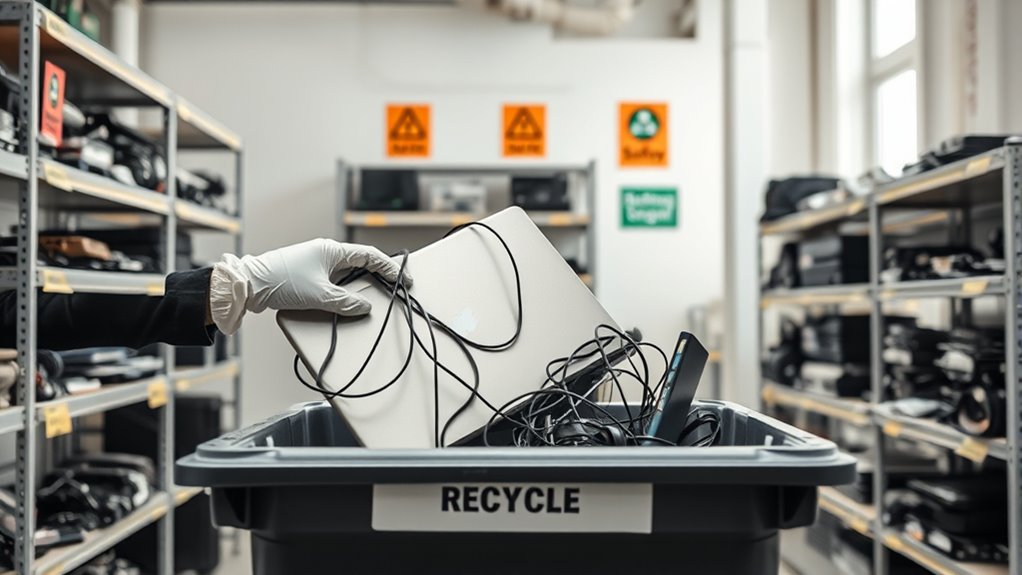

To safely recycle old electronics, first identify devices eligible for recycling and verify local regulations. Back up your data securely, then perform factory resets or use data wipe tools to protect your personal information. Find nearby recycling centers or collection events, and consider manufacturer or retailer programs that offer free take-back services. Properly dispose of batteries separately, and stay informed about accepted items to reduce e-waste responsibly. Keep going to discover simple steps to make your recycling stress-free.
Key Takeaways
- Identify recyclable electronics, remove personal data, and follow local regulations for safe disposal.
- Use manufacturer or retailer take-back programs for environmentally responsible recycling.
- Prepare devices by backing up data and securely erasing personal information before recycling.
- Find local recycling centers or collection events through online directories or government resources.
- Practice responsible disposal by recycling batteries separately and participating in donation programs.
Top picks for "safely recycle electronic"
Open Amazon search results for this keyword.
As an affiliate, we earn on qualifying purchases.
Assessing Your Old Devices and Deciding What to Keep or Recycle
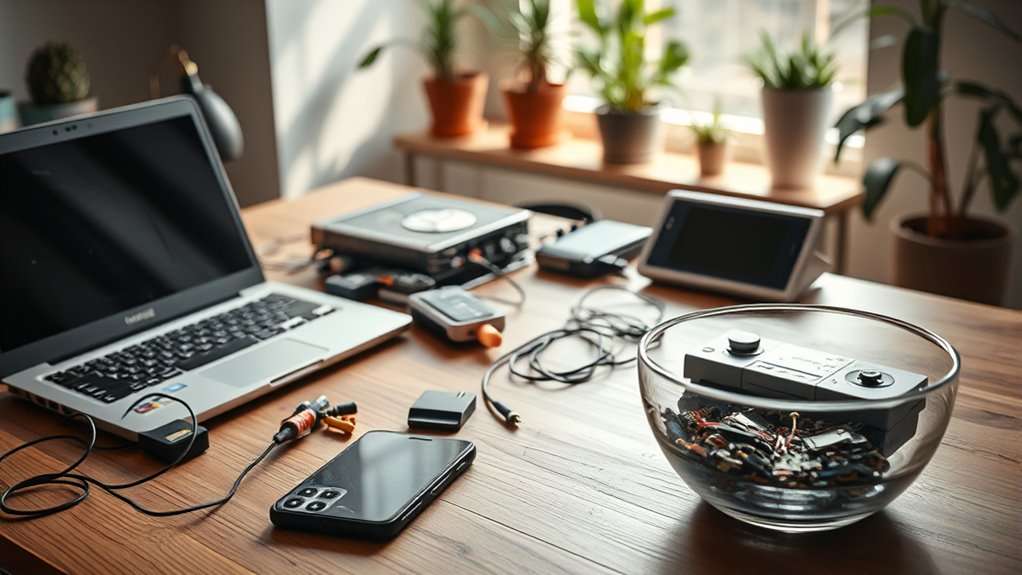
Before recycling your old electronics, it’s important to appraise which devices still hold value or function and which ones are best for disposal. Start by assessing device valuation—consider if your device still works well or if its components have resale potential. Check device compatibility to determine if it can serve as a backup or upgrade for other gadgets you own. If a device is outdated or damaged beyond repair, recycling is the best option. Conversely, if it’s still functional and valuable, you might consider selling or donating it. This initial assessment helps you make informed decisions, reduces waste, and ensures you’re not discarding usable electronics unnecessarily. Taking time to evaluate your devices streamlines the recycling process and maximizes their potential usefulness. Additionally, understanding contrast ratio can help you determine if a device’s display quality remains suitable for your needs before deciding to recycle. Recognizing the types of recycling methods available can further guide you in choosing the most environmentally responsible disposal option. For instance, some eco-friendly accommodations and resorts incorporate sustainable travel practices, setting an example for responsible tourism that minimizes environmental impact. Moreover, being aware of cloud service reliance can inform you about the importance of data security during the recycling process to protect your personal information. Knowing about energy-efficient data management can also help you reduce your overall electronic footprint.
Backing Up Data and Erasing Personal Information
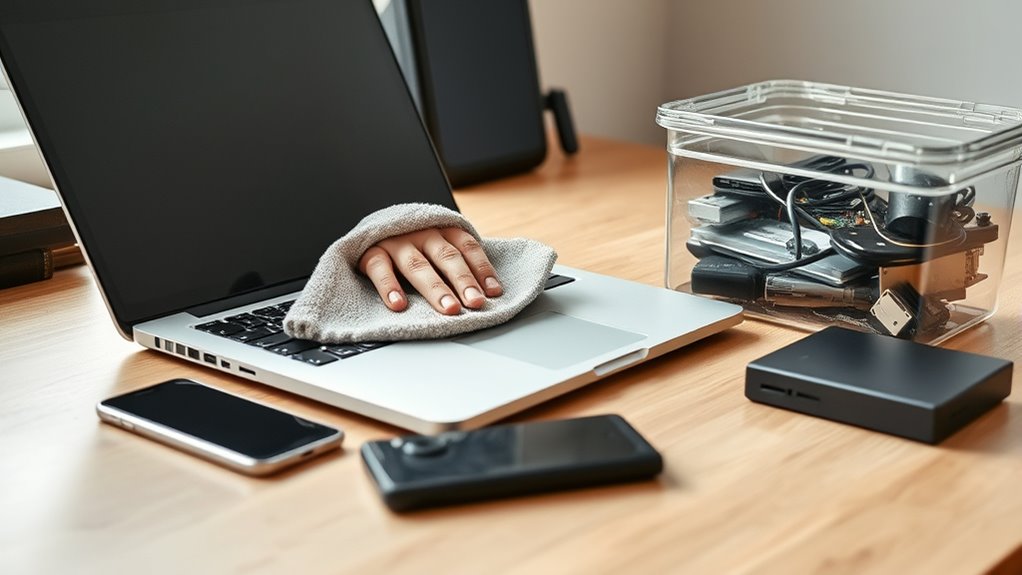
Once you’ve decided which devices you’ll keep and which you’ll recycle, it’s time to focus on protecting your personal information. Start by backing up your data to cloud storage or an external drive to prevent loss. Next, verify all sensitive info is securely erased; use built-in reset options or specialized software with data encryption to wipe your device completely. Here’s what you should do:
- Upload important files to cloud storage or an external drive.
- Use data encryption tools to protect your backup files.
- Perform a factory reset or data wipe to erase all personal data from the device.
Taking these steps guarantees your personal info stays private and your device is clean for recycling, reducing the risk of identity theft or data breaches.
Finding Local Recycling Centers and E-Waste Collection Events
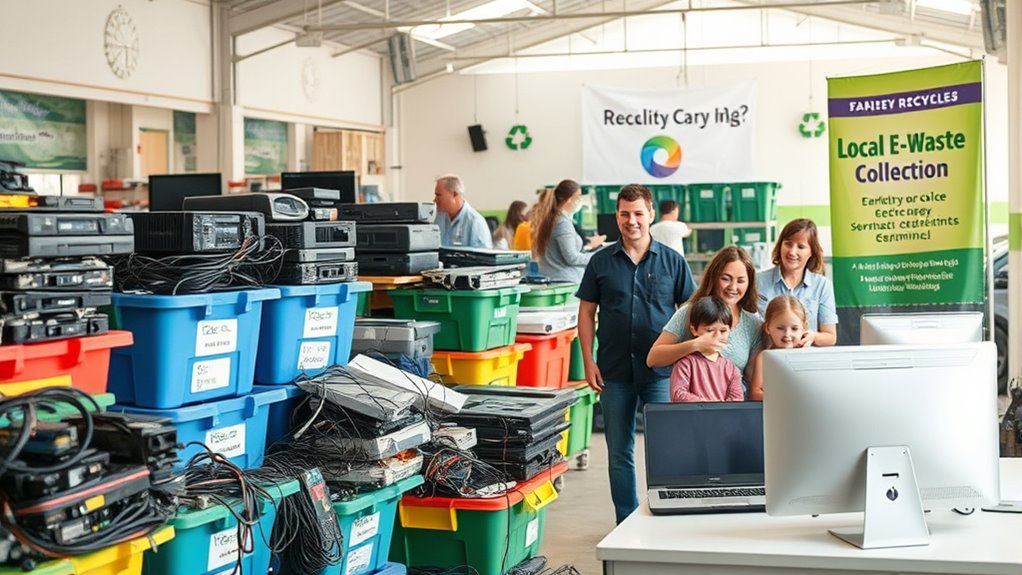
Are you wondering where to responsibly dispose of your old electronics? Start by checking online directories or your local government’s website for nearby recycling centers and e-waste collection events. Many communities offer electronics donation programs, making it easy to give your devices a second life while helping those in need. Look for events that provide recycling incentives, such as discounts or gift cards, to encourage participation. Retail stores and certified e-waste facilities often accept old gadgets for safe recycling. Contact your local waste management authority for specific schedules and locations. By taking these steps, you guarantee your electronics are disposed of responsibly, reducing environmental impact and supporting community initiatives through donation and recycling incentives.
Preparing Your Electronics for Drop-Off or Pickup
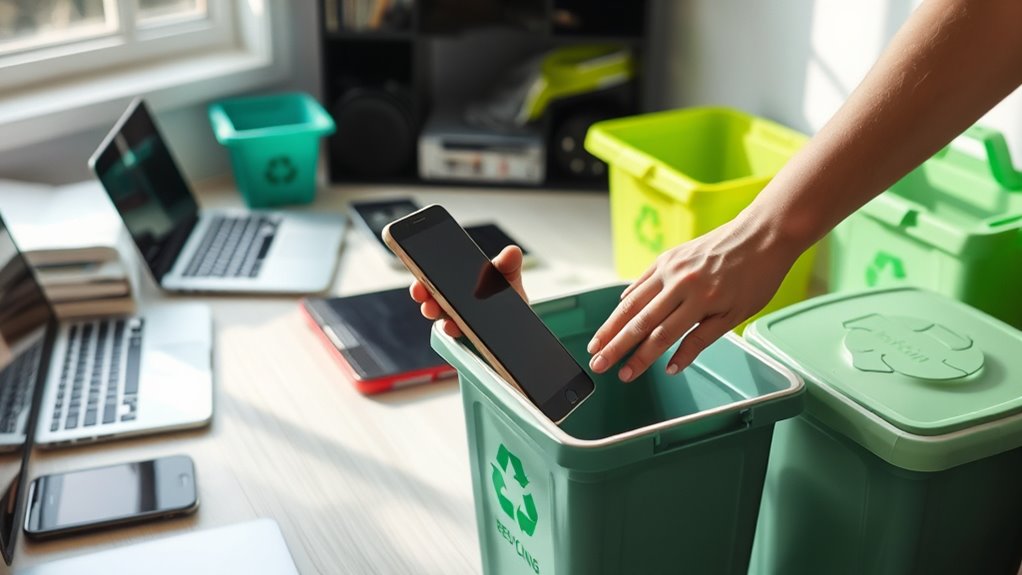
Before dropping off or scheduling a pickup, make sure you’ve backed up all important data. It’s also essential to remove any personal information from your device to protect your privacy. Taking these steps ensures your data is safe and your personal details stay private. Additionally, understanding affiliate disclosure policies can help you make informed decisions when purchasing recycling services or related products. Being aware of privacy policies and how your data is handled can further enhance your data security during the recycling process. Being familiar with cookie categories can also help you manage your preferences and control your online data during the process. Recognizing the importance of data security can prevent unauthorized access and potential misuse of your information during electronic waste disposal. Incorporating knowledge about data security measures can further safeguard your information throughout the recycling process.
Data Backup Essentials
Have you backed up your important data lately? Before recycling your electronics, make certain your data is safe. Start by choosing a reliable backup method, like cloud storage, to keep your files accessible from anywhere. Next, use data encryption to protect sensitive information during transfer and storage. Finally, verify your backups by opening files on another device, confirming everything’s intact. Here’s a quick checklist:
- Save copies of critical files to cloud storage with encryption enabled.
- Create a full backup of your device using trusted software.
- Double-check that your backups are complete and accessible.
- Remember that good data management practices support your overall health by reducing stress and protecting your personal information.
Taking these steps guarantees your data remains secure and ready for retrieval, even after your device is recycled. Proper backup practices make the process stress-free and safeguard your personal information.
Remove Personal Information
To guarantee your personal information stays secure, it’s crucial to remove all sensitive data from your devices before dropping them off or scheduling a pickup. Start by performing a factory reset, which often involves data encryption to protect your files during erasure. For devices like smartphones and tablets, ensure you follow manufacturer instructions to wipe all data completely. If you’re recycling a computer, consider securely deleting files and resetting to factory defaults, including device calibration settings, to prevent recovery of personal info. Removing personal information isn’t just about deleting files; it’s about ensuring no residual data can be accessed later. Additionally, understanding appliance testing and compatibility can help identify potential issues that could compromise your data security during disposal. Being aware of net worth and financial independence can guide you in choosing secure methods for disposing of valuable electronics. Taking these steps minimizes risks and guarantees your privacy remains protected during the recycling process. Moreover, utilizing data sanitization techniques can provide an extra layer of security to ensure your information is fully unrecoverable. Incorporating device encryption methods can further enhance your data protection efforts during the disposal process. It’s also advisable to keep updated on pinball machine technology to understand how device features might impact data security during disposal.
Understanding What Items Are Recyclable and What Are Not
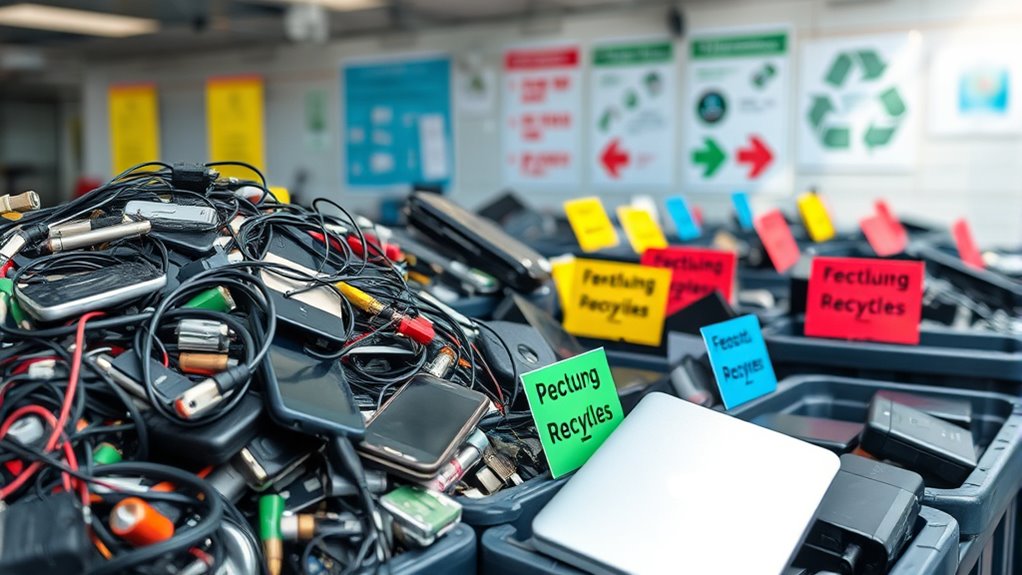
Knowing which electronic items are recyclable can be confusing, but understanding the basics makes it easier to dispose of your devices responsibly. Not all electronics are suitable for recycling, and ignoring recycling regulations can pose safety risks. For example:
- Old smartphones and tablets – usually recyclable if they are intact and free of personal data.
- Broken laptops or monitors – require special handling due to hazardous materials.
- Batteries – must be safely removed for battery safety and proper recycling. Proper handling of hazardous materials is essential to prevent environmental contamination. Educating yourself about electronic waste can help you identify which items are accepted at recycling centers. Recognizing recycling regulations specific to your area can prevent accidental violations and ensure proper disposal.
Always check local recycling regulations before disposal. Batteries, in particular, need careful handling to prevent leaks or fires. Being aware of recycling guidelines can help you make safer and more environmentally friendly choices. By identifying recyclable items and following guidelines, you help protect the environment and ensure safe recycling practices.
Exploring Manufacturer and Retailer Recycling Programs
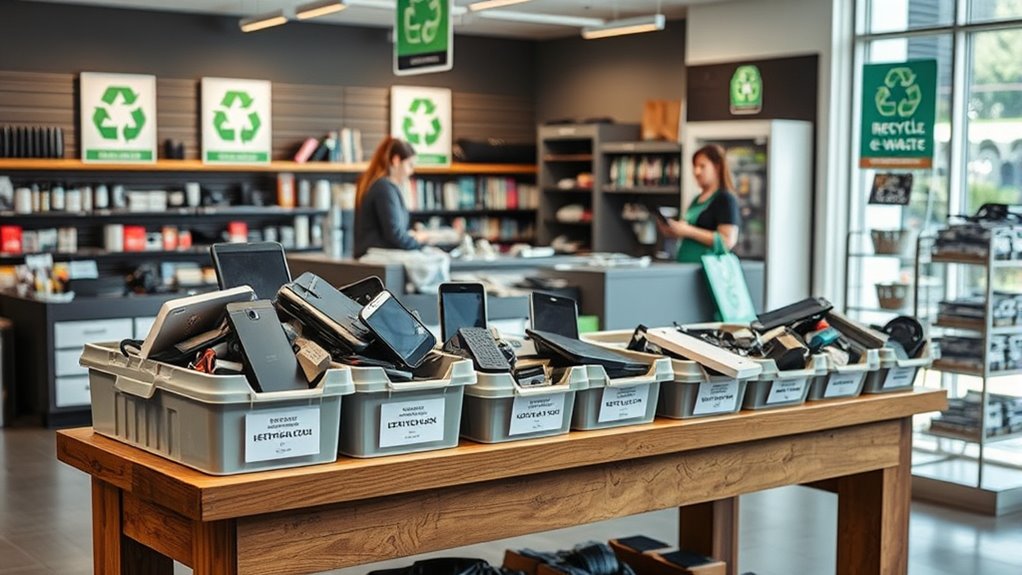
Many manufacturers now offer recycling programs for their old electronics, making it easier for you to dispose of devices responsibly. Retailers also often have take-back initiatives that accept used gadgets, sometimes even offering incentives. By exploring these programs, you can guarantee your electronics are recycled properly and safely. Additionally, utilizing smart home technology can help you monitor and manage your devices more effectively, ensuring responsible disposal when necessary. Incorporating environmental responsibility into your disposal routine helps reduce electronic waste and supports sustainable practices. Engaging in proper disposal methods can further minimize environmental impact and promote a cleaner, greener future.
Manufacturer Recycling Initiatives
Manufacturers and retailers increasingly recognize the importance of responsible e-waste disposal and have developed initiatives to encourage recycling. These programs aim to extend the product lifecycle and reduce environmental impact. When you participate, you help guarantee your old electronics are properly recycled, preventing hazardous materials from harming the environment. Here are some key features of manufacturer recycling initiatives:
- Free take-back programs for old devices, regardless of where you bought them.
- Incentives like discounts or trade-in offers for returning outdated electronics.
- Partnerships with certified recycling facilities to ensure safe processing.
- Incorporating smart gear and sustainable practices to make the process more effective and environmentally friendly. Additionally, many companies are adopting eco-friendly manufacturing principles to further minimize environmental impact.
Retailer Take-Back Programs
Have you considered how retailer take-back programs make recycling your old electronics easier? Many retailers offer these programs to encourage responsible disposal and reduce electronic waste. By participating, you can drop off devices at designated collection points, often at no cost. Retailer take-back programs simplify the recycling process, ensuring your electronics are handled properly and safely. These initiatives help prevent hazardous materials from ending up in landfills and promote reuse or recycling of valuable materials. Some retailers even provide incentives, like discounts or store credits, for recycling old devices. Taking advantage of these programs means you’re actively contributing to environmental protection while making responsible disposal convenient. Always check with your local retailer to see if they participate in a take-back program and how you can easily recycle your electronics.
Tips for Responsible Disposal and Reducing E-Waste
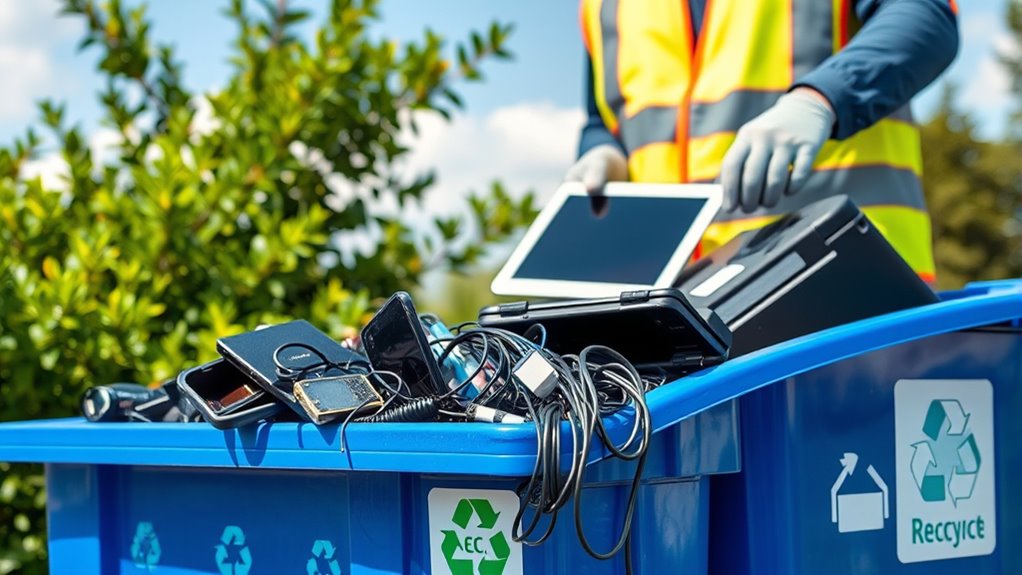
To guarantee you’re disposing of electronics responsibly, start by researching local recycling programs and drop-off centers. Proper disposal not only protects the environment but also reduces e-waste. Consider these tips:
Research local recycling options to dispose of electronics responsibly and protect the environment.
- Opt for battery recycling by taking batteries to designated collection points instead of throwing them in the trash.
- Use digital donation platforms to give your old devices a second life, helping others and reducing waste.
- Avoid impulse disposal; instead, plan regular e-waste drop-offs or recycling days in your community.
Frequently Asked Questions
How Can I Identify Genuine Recycling Centers From Scams?
To spot genuine recycling centers, look for certification standards like R2 or e-Stewards, which guarantee proper handling. Scam warning signs include lack of certification, vague or no contact info, and pushy sales tactics. Research the center’s reputation online, check reviews, and verify their credentials. If something feels off or they avoid transparency, trust your instincts and choose a reputable, certified facility to recycle your electronics safely.
Are There Specific Safety Precautions for Handling Damaged Electronics?
When handling damaged electronics, you should follow handling precautions to stay safe. Always wear proper safety gear like gloves and eye protection to avoid exposure to hazardous materials. Handle devices carefully, avoiding broken parts that could cut or puncture your skin. Work in a well-ventilated area, and wash your hands afterward. If you’re unsure about the damage, consider consulting a professional to prevent any health or safety risks.
What Are the Environmental Impacts of Improper E-Waste Disposal?
If you dispose of e-waste improperly, you cause land pollution and increase e-waste toxicity in the environment. Harmful chemicals like lead, mercury, and cadmium can leach into soil and water, affecting wildlife and human health. Your actions contribute to pollution and long-term environmental damage. To avoid this, always recycle electronics responsibly and support eco-friendly disposal methods, helping reduce e-waste toxicity and protect the land.
Can I Recycle Broken or Non-Functional Devices?
Yes, you can recycle broken or non-functional devices. First, consider repairing the device if possible, as this extends its life. If repair isn’t an option, explore electronic donation programs that accept damaged devices for parts or refurbishment. Many recycling centers also accept broken electronics, ensuring they’re disposed of safely. Always remove personal data before recycling, and check local programs for specific guidelines to keep the process stress-free.
Are There Incentives or Rewards for Recycling Electronics Responsibly?
You might think rewards for recycling electronics are rare, but many programs offer great incentives. Recycling incentives often include eco-friendly rewards like gift cards, discounts, or donations to environmental causes. These programs motivate you to responsibly dispose of your devices, knowing you’re helping reduce e-waste and protect the planet. So, next time you recycle, look out for these rewards—it’s a simple way to earn while doing good.
Conclusion
By following these simple steps, you can turn a cluttered drawer into a beacon of responsible recycling. Picture your old devices transforming from forgotten junk into resources that breathe new life into the planet. As you drop off your electronics, imagine the ripple effect—reducing e-waste, conserving resources, and helping create a cleaner, greener world. Recycling responsibly isn’t just easy; it’s your chance to be part of a brighter future.