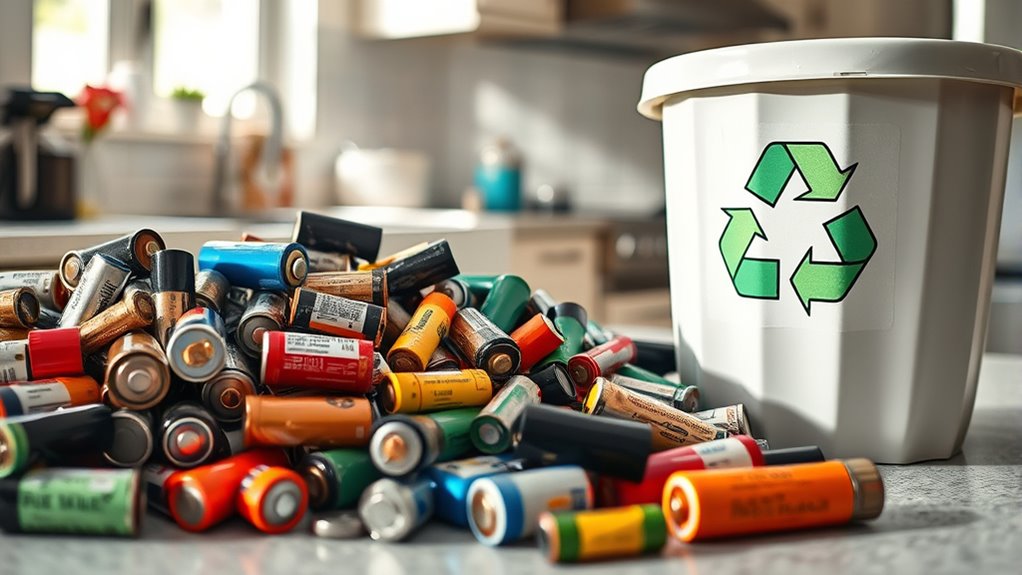

To recycle batteries safely and avoid fire hazards, never burn or puncture them, especially damaged or leaking ones. Store batteries in a cool, dry, non-conductive container away from heat and flammable materials. Fully discharge batteries before transportation and take them directly to certified recycling centers or collection points. Proper handling prevents toxic leaks, fires, and environmental harm. Keep learning about safe disposal methods to protect yourself and your surroundings from preventable accidents.
Key Takeaways
- Store batteries in non-conductive, airtight containers away from heat or flammable materials.
- Fully discharge batteries before recycling to minimize fire risk during handling and transport.
- Handle damaged or leaking batteries with gloves and eye protection, avoiding contact with hazardous contents.
- Take batteries directly to certified recycling centers and avoid disposing of them in regular trash or recycling bins.
- Educate yourself on proper storage and disposal procedures to prevent accidental fires or toxic leaks.
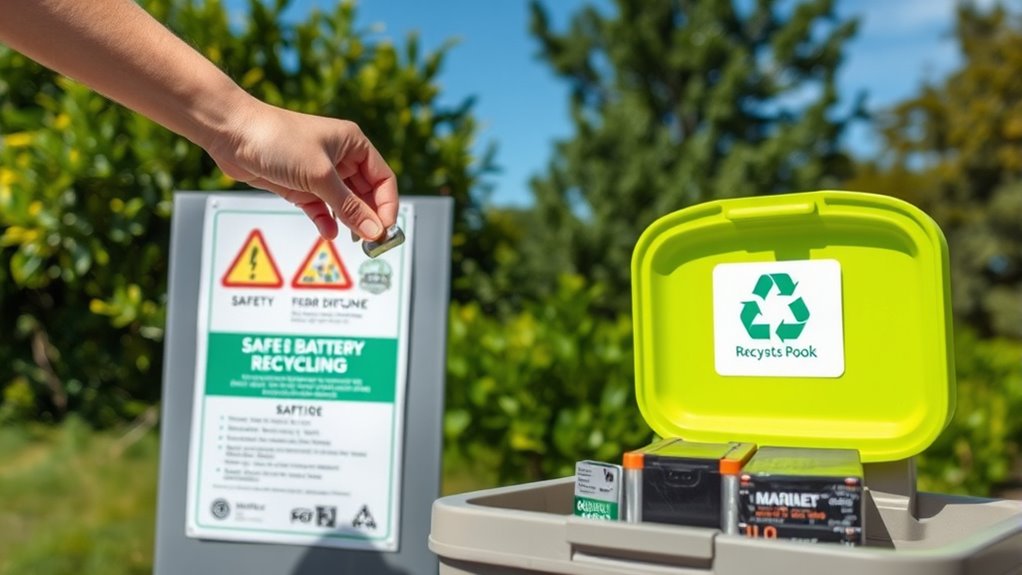
Recycling batteries safely is vital to protect the environment and prevent health hazards. When it comes to battery recycling, understanding proper procedures and safety precautions is imperative to avoid accidents or environmental damage. Batteries contain chemicals and metals that can be harmful if mishandled, so taking the right steps guarantees you’re doing your part to keep everyone safe. Before you start, familiarize yourself with local regulations regarding battery disposal, as many communities have specific rules and designated drop-off points. This knowledge helps you avoid improper disposal, which can lead to fires or toxic leaks.
One of the most important safety precautions is handling batteries carefully, especially if they are damaged or leaking. If you notice corrosion, leaks, or swelling, avoid touching the contents directly. Use gloves and eye protection to prevent exposure to hazardous substances. Store damaged batteries in a non-conductive, airtight container until you can take them to a recycling facility. Never attempt to dismantle or puncture batteries yourself, as this can cause short circuits, fires, or chemical exposure. Instead, rely on certified recycling centers equipped to handle different types of batteries safely.
When it comes to battery recycling, always keep the batteries separate from other waste. Mixed waste streams can cause fires, especially with lithium-ion batteries that are prone to thermal runaway if damaged or improperly stored. Before recycling, make sure the batteries are fully discharged if possible, to reduce the risk of sparks or fires during transport. Many recycling programs specify that batteries should be stored in specific containers—often labeled for battery disposal—and kept away from heat sources and flammable materials. Following these safety precautions minimizes the chance of accidents during handling and transportation.
You should also educate yourself about the proper storage methods before taking your batteries to a recycling facility. Keep them in a cool, dry place, and avoid stacking multiple batteries together, which can increase the risk of short circuits. When you’re ready to recycle, take your batteries directly to a certified collection point or authorized recycling center. Do not leave batteries in regular trash bins or recycling containers, as they can pose a fire risk or leak harmful substances into the environment. Safe battery recycling not only prevents fires and health hazards but also helps recover valuable materials for reuse. Additionally, understanding vetted recycling procedures ensures you follow the most reliable safety standards.
Frequently Asked Questions
Can I Recycle All Types of Batteries Together?
You shouldn’t recycle all types of batteries together. Different batteries, like alkaline, lithium, and rechargeable ones, require separate handling for safe recycling. Always take your batteries to a proper battery collection site or recycling center that accepts specific types. Mixing them can cause dangerous reactions or fires. Check local guidelines and verify you’re following safe recycling practices to protect yourself and the environment.
What Should I Do if a Battery Leaks?
If a battery leaks, act quickly to prevent hazardous waste exposure. Leaking batteries can release toxic chemicals that cause chemical spills and environmental harm. Wear gloves and protective eyewear, then carefully contain the spill with non-reactive materials like sand or baking soda. Dispose of the damaged battery at a designated hazardous waste facility. Remember, handling leaks carefully helps protect both your health and the environment. Only recycle batteries when they’re intact and undamaged.
Are There Specific Disposal Days for Batteries?
Yes, there are specific disposal days for batteries in many communities. You should check your local battery collection schedule or disposal guidelines to find out when and where to recycle them properly. Typically, designated drop-off events or collection points are set up to handle batteries safely. Always follow these guidelines to prevent leaks, fires, or environmental harm, and avoid disposing of batteries in regular trash.
How Long Does It Take for Batteries to Decompose?
Ironically, batteries don’t decompose quickly, taking hundreds to thousands of years to break down in landfills. This slow battery decomposition causes significant environmental impact, leaking toxic chemicals into the soil and water. If you toss them carelessly, you risk harming ecosystems and health. To avoid this, recycle your batteries properly, ensuring they’re processed safely and don’t contribute to long-term environmental damage. Your actions truly matter in protecting our planet.
Can Recycled Batteries Be Used to Make New Products?
Yes, recycled batteries can be used to make new products. During battery recycling, valuable materials like metals are recovered and repurposed, reducing the need for mining new resources. This process supports sustainability benefits by conserving natural resources and lowering environmental impact. You contribute to these benefits when you participate in battery recycling programs, ensuring that batteries are properly processed and materials are reused efficiently, helping create a more sustainable future.
Conclusion
Remember, recycling batteries is like tending a fragile flame—handle it with care to prevent disaster. Each battery you recycle safely is a spark of hope, lighting the way toward a safer home and cleaner planet. Ignoring proper disposal risks turning your efforts into ash, a symbol of lost potential. So, take responsibility, stay vigilant, and let your actions be the steady hand that keeps the darkness at bay. Safety begins with you—keep the flame alive.