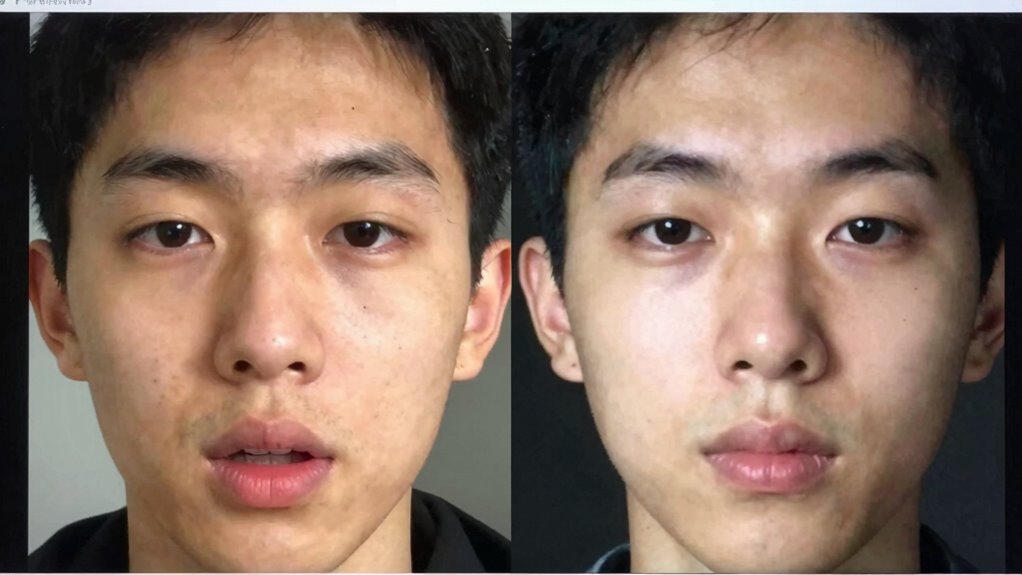

To spot a deepfake, look closely at facial movements, blinking patterns, and eye contact—these often seem unnatural or inconsistent. Check for blurry edges around the face or background, as digital manipulation can cause awkward outlines. Listen for audio mismatches or irregular speech patterns that don’t match the person’s lip movements. Subtle clues like lighting mismatches or flickering can also reveal fakes. Want to become more confident in detecting these tricks? Keep exploring to uncover more tips and techniques.
Key Takeaways
- Look for unnatural blinking, facial expressions, or inconsistent eye movements that may indicate manipulation.
- Examine edges around faces and objects for blurriness, irregularities, or mismatched lighting.
- Check for audio-visual mismatches, such as lip movements not syncing with speech.
- Pay attention to background inconsistencies or abrupt changes that suggest digital editing.
- Use digital forensics tools and deepfake detection software to analyze visual artifacts and metadata.
Understanding What Deepfakes Are
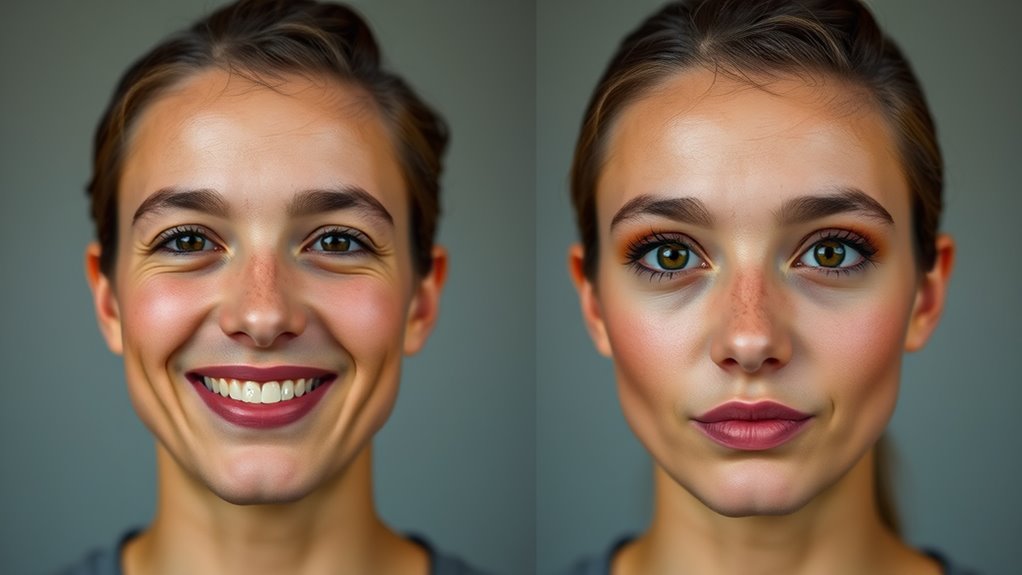
Have you ever wondered what exactly a deepfake is? It’s a synthetic media technique that uses AI to create highly realistic but fake videos or images. These manipulated visuals can make it seem like someone said or did something they never did. Understanding deepfakes is essential because they pose significant ethical implications, especially around misinformation and consent. Their societal impact can be profound, influencing public opinion, politics, or even personal reputations. Recognizing what deepfakes are helps you stay vigilant and critical of the media you consume. As these technologies advance, they challenge our trust in visual content and raise questions about authenticity. Knowing the basics empowers you to better navigate an increasingly digital world filled with realistic but deceptive media. Additionally, understanding AI-generated content can help you identify signs of manipulation and protect yourself from potential misinformation, especially as image synthesis becomes more sophisticated. Being aware of deepfake detection techniques further enhances your ability to discern real from fake media. Staying informed about media literacy strategies also supports your efforts to evaluate the credibility of digital content. Developing a critical mindset toward online visuals is crucial as the line between real and fabricated continues to blur.
The Technology Behind Deepfake Creation
You’ll learn that generative adversarial networks, or GANs, are the core technology behind deepfake creation, enabling realistic image and video synthesis. Face swapping techniques use these algorithms to replace or alter faces seamlessly within media. Understanding how these methods work helps you grasp the power and potential risks of deepfakes. Recognizing the comparative advantage of these technologies highlights their significance in modern digital innovation. Additionally, ongoing advancements in deep learning algorithms continue to improve the quality and accessibility of deepfake generation, making awareness and detection increasingly important. As these methods become more sophisticated, the importance of vetted and reliable detection tools grows, ensuring users can better distinguish between real and manipulated content. Staying informed about these technological developments allows individuals to better navigate the evolving digital landscape. Moreover, the rapid pace of AI-driven media advancements emphasizes the need for continuous education on digital authenticity.
Generative Adversarial Networks
Generative Adversarial Networks, or GANs, are the core technology behind deepfake creation, enabling machines to generate highly realistic images and videos. They consist of two neural networks that compete against each other: one creates fake content, while the other evaluates its authenticity. This process, driven by data augmentation, helps the GAN improve its realism over time. The neural network learns patterns and features from large datasets, allowing it to produce convincing deepfakes that can mimic real faces or scenes. The adversarial training pushes the networks to refine their outputs continuously, making the fakes increasingly sophisticated. GANs’ ability to generate near-photorealistic visuals is what makes deepfakes so convincing and challenging to detect.
Face Swapping Techniques
Face swapping techniques are at the heart of deepfake creation, allowing you to replace one person’s face with another in images or videos with remarkable accuracy. These methods rely heavily on advanced algorithms that analyze facial features, expressions, and movements. During the process, facial recognition software helps identify key facial landmarks, ensuring a seamless swap. To detect deepfakes, digital forensics tools examine inconsistencies, such as unnatural blinking or mismatched lighting. Understanding how face swapping works helps you recognize the technology behind deepfakes and develop better methods for spotting fakes. As these techniques become more sophisticated, digital forensics continues to adapt, scrutinizing subtle cues that reveal manipulated content and safeguarding authenticity in digital media. Studying common mistakes in statistical analysis can also improve your ability to spot anomalies in digital content.
Common Signs of Fake Videos
You can spot fake videos by paying attention to facial movements that seem off or inconsistent. Notice if the person’s eyes blink irregularly or seem unnatural, which is a common giveaway. Also, look for blurry edges or strange outlines around the face, indicating possible editing. Additionally, inconsistencies in lighting and video quality can often reveal fakes, as manipulated videos may not perfectly match the surrounding environment. Sometimes, the quality of audio may also be mismatched or distorted, further indicating a fake. Being aware of deepfake technology and its capabilities can help viewers better discern authenticity. Recognizing the limitations of current detection methods can enhance your ability to identify fakes more reliably. Moreover, paying attention to subtle artifacts that appear during video playback can also aid in detection.
Inconsistent Facial Movements
One of the clearest signs of a deepfake video is when the facial movements don’t quite match natural human behavior. You might notice unnatural facial muscle tension or awkward, inconsistent blinking patterns. These irregularities happen because deepfake algorithms struggle to perfectly replicate subtle facial cues. To help you spot these signs, here’s a quick comparison:
| Aspect | Authentic Face | Fake Face |
|---|---|---|
| Facial muscle tone | Natural, relaxed, varied | Tense or stiff, unnatural |
| Blinking patterns | Regular, spontaneous, varied | Inconsistent, robotic, infrequent |
Recognizing these signs can help you identify fake videos more easily. Sharp, unnatural facial movements indicate the video’s artificial origin. Additionally, understanding the underlying technology used in deepfakes can improve your ability to detect fakes.
Irregular Eye Blinks
Irregular eye blinks are a common sign that a video might be fake. When you observe the eye movement, unnatural blinking patterns often stand out. Fake videos tend to show inconsistent or overly perfect blinking, which doesn’t match natural human behavior. For example, the eyes may blink too slowly, too quickly, or not at all during moments when you’d expect natural eye movement. Sometimes, the blinking may be irregular or miss certain moments altogether. These subtle discrepancies can reveal that the video isn’t genuine. By paying close attention to blinking patterns, you can spot signs of manipulation. Recognizing irregular eye blinks helps you identify deepfakes and avoid being fooled by realistic yet fabricated videos. Additionally, examining other visual inconsistencies alongside blinking patterns can further improve your ability to detect fake videos. Understanding human behavior patterns can also aid in distinguishing real footage from manipulated content. Paying attention to behavioral cues, such as facial expressions and head movements, provides additional clues about authenticity. Being aware of behavioral anomalies can help you develop a more comprehensive approach to verification, especially when combined with an understanding of digital manipulation techniques.
Blurry or Odd Edges
Ever notice how fake videos often have blurry or oddly defined edges around faces and objects? These blurry edges are a common sign of deepfakes, resulting from imperfect digital blending. Sometimes, you’ll see odd edges where the background sharply contrasts with the subject, making the face or object appear unnaturally cut out. These inconsistencies occur because the algorithm struggles to seamlessly merge elements, especially around complex areas like hairlines or jawlines. If you spot blurry or odd edges that don’t match the rest of the scene, it’s a strong indicator the video might be fake. Paying close attention to these subtle cues can help you distinguish between authentic footage and deepfakes more effectively. Additionally, security zone info indicates that the use of advanced detection techniques can improve the identification of manipulated videos. Recognizing digital artifacts is crucial because they often reveal the editing flaws behind fake videos, and ongoing advancements in cybersecurity measures are improving our ability to detect such manipulations. Furthermore, understanding how image processing algorithms work can help you identify common flaws in manipulated videos before they are widely shared.
Analyzing Facial Movements and Eye Contact

When analyzing deepfakes, paying close attention to facial movements and eye contact can reveal telltale signs of manipulation. Facial expression analysis helps you spot unnatural or inconsistent expressions that may not match the situation or context. Look for subtle irregularities in muscle movements, such as forced smiles or tense features. Eye movement patterns are equally revealing; genuine eye contact involves natural blinking and smooth tracking, while deepfakes often display abnormal blinking rates or fixed gazes. Notice if eyes seem vacant or if movements feel stiff and rehearsed. These cues can help you distinguish authentic footage from manipulated content. Additionally, understanding video synthesis techniques can improve your ability to identify artifacts and inconsistencies. By honing your ability to observe these details, you improve your chances of recognizing deepfakes early and avoiding misinformation.
Checking for Inconsistencies in Audio and Visuals
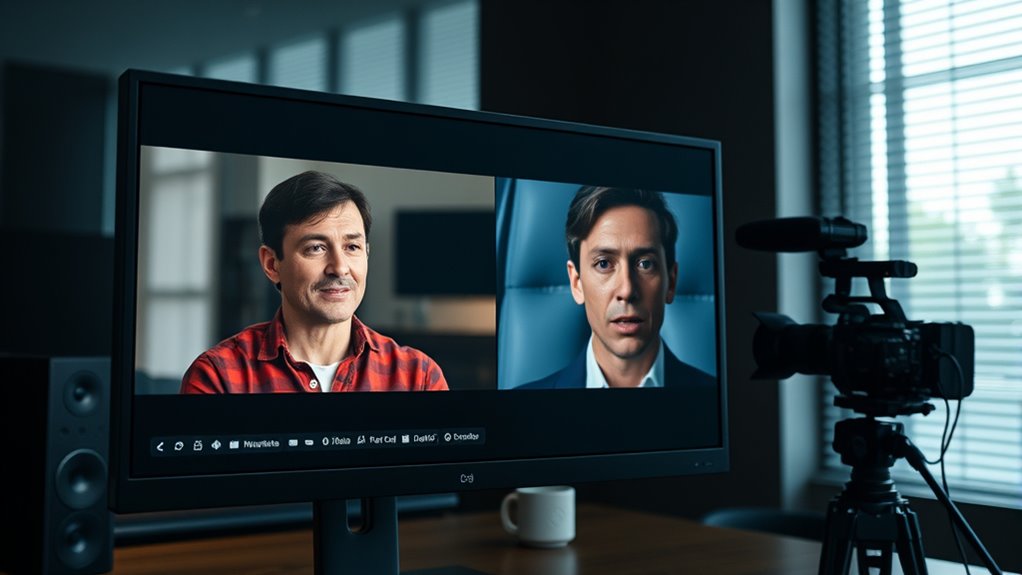
Facial movements and eye contact can reveal many signs of deepfake manipulation, but examining inconsistencies across audio and visuals offers a powerful additional layer of detection. Look for audio discrepancies, such as mismatched lip movements or unnatural pauses that don’t align with speech patterns. Pay attention to visual artifacts like irregular blinking, inconsistent shadows, or jittery edges around the face. These signs often indicate editing or synthetic generation. When audio and visuals don’t sync properly or seem out of sync, it’s a red flag. Deepfakes sometimes struggle to perfectly replicate natural speech and facial expressions simultaneously. By scrutinizing these inconsistencies, you can better identify whether a video is authentic or manipulated. Stay alert for subtle cues that reveal the artificial nature of the content.
Tools and Techniques to Detect Deepfakes
To effectively identify deepfakes, you need to leverage specialized tools and techniques designed for this purpose. Fake video detection relies on advanced algorithms that analyze inconsistencies in pixel patterns, facial movements, and lighting. Digital forensics tools scrutinize metadata and trace anomalies that might reveal manipulation. Machine learning models are trained to recognize telltale signs of deepfakes, such as unnatural eye blinking or irregular facial expressions. Some tools scan videos for artifacts like blurring or mismatched audio-visual cues. Additionally, software that performs frame-by-frame analysis can highlight subtle discrepancies. Combining these techniques enhances your ability to detect fake videos and minimize the risk of falling prey to misinformation. Staying informed about these tools is essential for effective digital literacy and safeguarding authenticity.
Staying Vigilant in a Digital World
In today’s digital age, staying vigilant is essential as misinformation and manipulated content become increasingly sophisticated. You need to question the authenticity of what you see and hear online, especially as deepfakes blur the line between real and fake. Be mindful of privacy concerns, as personal images and videos can be exploited to create convincing fakes. Recognize the ethical implications of sharing or believing unverified content, which can spread false information or harm reputations. Develop a healthy skepticism and use fact-checking tools when in doubt. By staying informed about the latest detection methods and understanding the risks involved, you can better protect yourself and others from falling victim to deceptive content. Vigilance is your best defense in a complex digital landscape.
Frequently Asked Questions
How Can I Verify the Source of a Suspicious Video?
To verify the source of a suspicious video, start by checking its origin and the credibility of the website or platform hosting it. Look for inconsistencies, such as unusual URLs or missing information. Use source verification tools or reverse image searches to trace the video’s origin. Be cautious of edited videos, and cross-reference with trusted news outlets or official accounts to confirm the content is genuine before trusting or sharing it.
Are There Legal Consequences for Creating or Sharing Deepfakes?
You should be aware that creating or sharing deepfakes can lead to serious legal ramifications, especially if they cause harm or spread misinformation. While some jurisdictions have laws addressing malicious uses, ethical considerations also play a role in responsible content creation. Ignoring these can result in fines or even criminal charges. So, think twice before producing or distributing deepfakes, as the consequences could impact your reputation and future opportunities.
Can Deepfakes Impact Political or Social Opinions?
Deepfakes can considerably impact your political or social opinions by fueling media manipulation and spreading misinformation risks. When you encounter convincing fake videos, you might believe false narratives, influencing your views or decisions. Staying critical and verifying sources helps protect you from being misled. Recognizing deepfakes and understanding their potential for manipulation empowers you to question suspicious content and avoid contributing to the spread of misinformation.
What Future Advancements Might Improve Deepfake Detection?
Imagine a glowing shield of AI detection that instantly spots subtle anomalies, or a blockchain ledger that verifies each video’s authenticity like a tamper-proof record. Future advancements might combine AI detection with blockchain verification, creating a robust system that makes deepfakes easier to identify. This synergy could provide clearer, more reliable evidence, helping you distinguish real videos from fakes with confidence and ease.
How Can Educators Incorporate Deepfake Awareness Into Lessons?
You can incorporate deepfake awareness into lessons by emphasizing media literacy and encouraging critical thinking. Teach students to analyze sources, question the authenticity of videos, and recognize common deepfake signs. Use real-world examples to illustrate how deepfakes can deceive. Foster discussions about the implications of misinformation, helping students develop skills to navigate digital content responsibly and identify fake videos, ensuring they become more discerning consumers of media.
Conclusion
So, next time you watch a video that seems too wild to be true, remember you’re now a part-time detective. With all these signs and tools, you’re basically a digital CSI — minus the lab coat. Stay skeptical, stay curious, and keep those suspicious videos at arm’s length. After all, in the world of deepfakes, believing everything you see would be the real fake. Happy fact-checking!