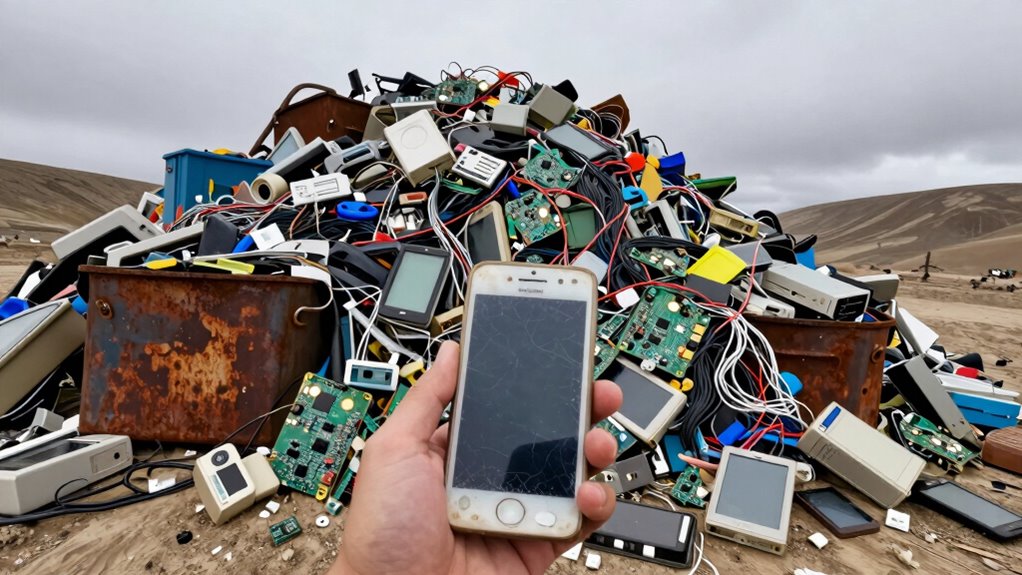

To help fight the e-waste crisis, responsibly dispose of your old electronics by using certified recycling centers or take-back programs. Before recycling, back up your data, remove accessories, and reset devices to protect your privacy. Consider donating working gadgets to charities or repairing devices to extend their life. Support eco-friendly brands and push for industry-wide sustainability. Want to learn easy, impactful steps to make a difference? Keep exploring to find out more.
Key Takeaways
- Properly recycle old electronics at certified e-waste recycling centers to prevent environmental contamination.
- Backup data, remove accessories, and disassemble devices before donating or recycling.
- Support brands and policies that promote sustainable manufacturing and responsible e-waste management.
- Extend device lifespan through maintenance, repairs, and careful handling to reduce waste.
- Increase awareness and advocate for stricter enforcement of e-waste disposal regulations worldwide.
Understanding the Impact of Electronic Waste
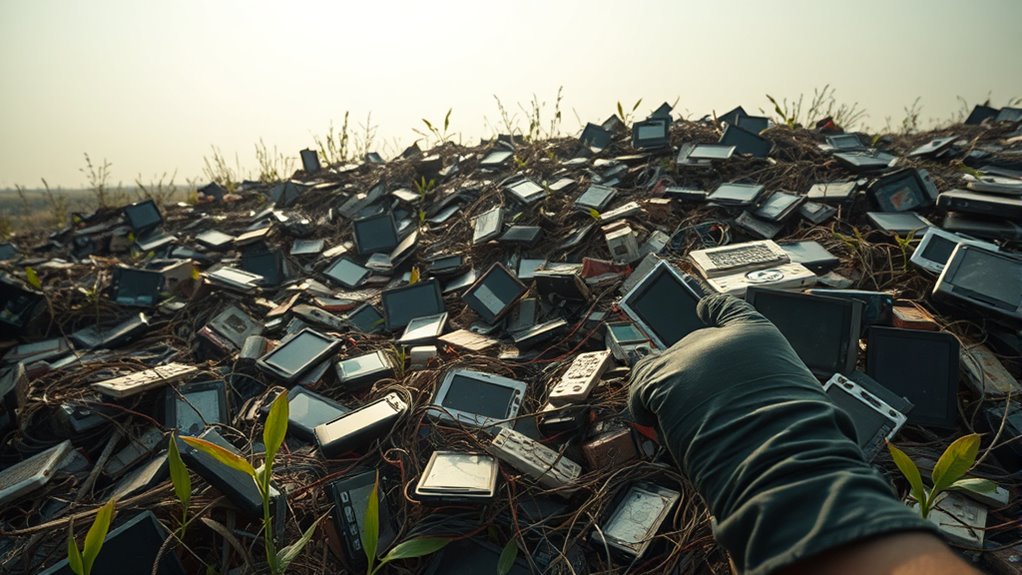
Electronic waste, or e-waste, has become one of the fastest-growing waste streams worldwide, and its impact is more serious than many realize. Environmental policies aim to regulate e-waste disposal and promote recycling, but enforcement varies globally. Your awareness as a consumer plays a vital role in addressing this crisis. When you understand how improper disposal harms ecosystems and human health, you’re more likely to make responsible choices. Supporting policies that enforce proper e-waste management encourages manufacturers to adopt sustainable practices. Additionally, your knowledge can influence others, creating a ripple effect that enhances overall waste management efforts. Recognizing the importance of environmental policies and consumer awareness helps you contribute to reducing e-waste’s harmful impact on our planet. Proper disposal methods are essential for minimizing environmental damage caused by electronic waste, and understanding waste management practices can further empower your efforts. Being informed about sustainable electronics can also guide your purchasing decisions toward longer-lasting and eco-friendly devices. Moreover, learning about the origins of cryptids can inspire curiosity about mysterious phenomena and cultural stories that have persisted through time.
Identifying Your Old Electronics That Can Be Recycled
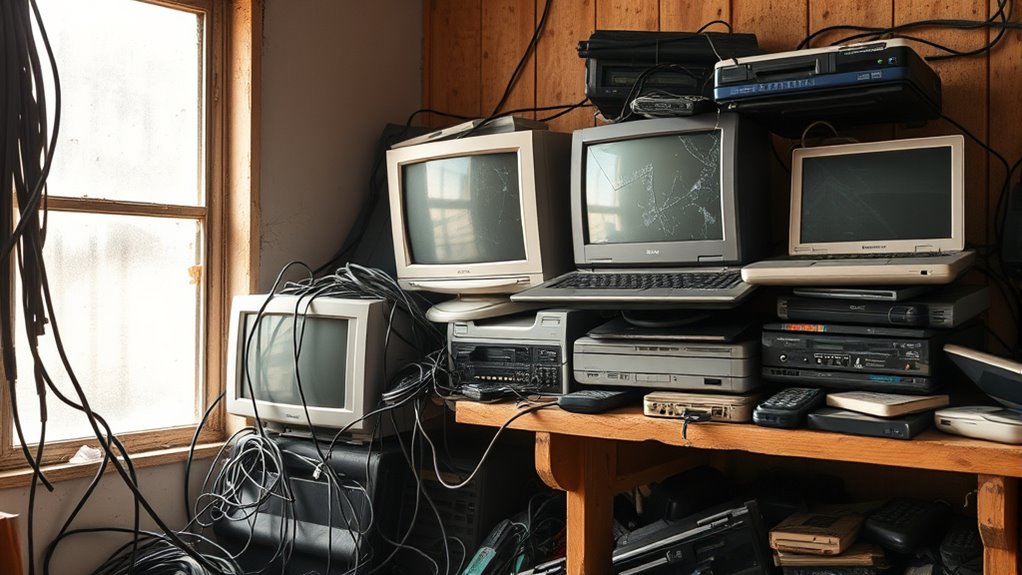
Have you ever wondered which of your old devices are still worth recycling? Identifying electronics that can be recycled helps you reduce e-waste and support sustainability. Look for devices like smartphones, tablets, laptops, and desktops, which are typically recyclable. Check if your electronics still work or if they’re outdated or broken. Recyclable devices often contain valuable materials like metals and plastics that can be recovered. Keep an eye out for devices with intact batteries, screens, or circuit boards, as these are often recyclable. If you’re unsure, consult local recycling programs or manufacturer guidelines. Recognizing which electronics are recyclable ensures you don’t toss usable devices or discard ones that can be repurposed, making your e-waste efforts more effective. Additionally, understanding the recyclable materials in electronics can further enhance your recycling efforts. Being aware of the contrast ratio in projectors can help you select the best display for your needs. A good understanding of electric power generation with bike generators can inspire sustainable solutions for off-grid energy needs. Moreover, learning about proper disposal methods can prevent hazardous components like batteries and circuit boards from harming the environment, especially considering the youngster choice trend towards innovative recycling solutions.
Safe Disposal Methods for Electronics
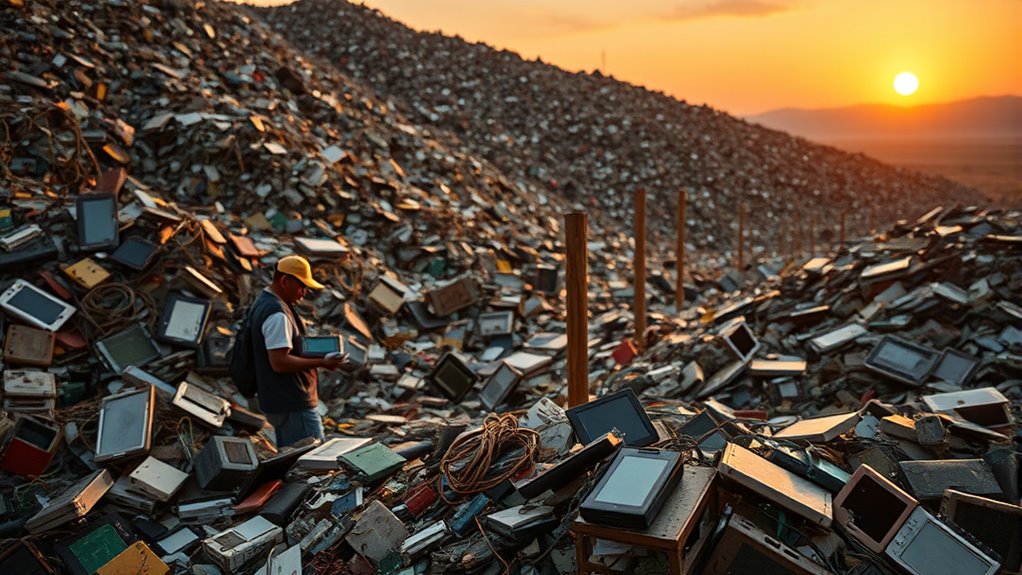
To guarantee your old devices don’t harm the environment, it’s essential to dispose of them safely. Many electronics contain hazardous materials like lead, mercury, and cadmium that can pollute water and soil if mishandled. Follow disposal regulations in your area, which often require dropping off electronics at authorized collection centers or certified e-waste recyclers. Avoid throwing electronics in regular trash, as this can lead to environmental contamination and legal penalties. Before disposal, remove batteries or any removable hazardous components, as some regulations specify separate handling. Proper disposal not only complies with affiliate disclosure but also ensures hazardous materials are managed responsibly, reducing health risks and environmental impact. By adhering to proper disposal methods, you ensure hazardous materials are managed responsibly, reducing health risks and environmental impact. Always stay informed about local disposal guidelines to contribute effectively to the e-waste management solution. Additionally, supporting initiatives that promote recycling programs can further help mitigate the environmental impact of electronic waste. Educating yourself about hazardous materials in electronics can help you identify which devices require special handling to prevent environmental contamination. Being aware of local regulations can also help you avoid unintended legal issues when disposing of electronics.
Recycling Programs and Initiatives Near You
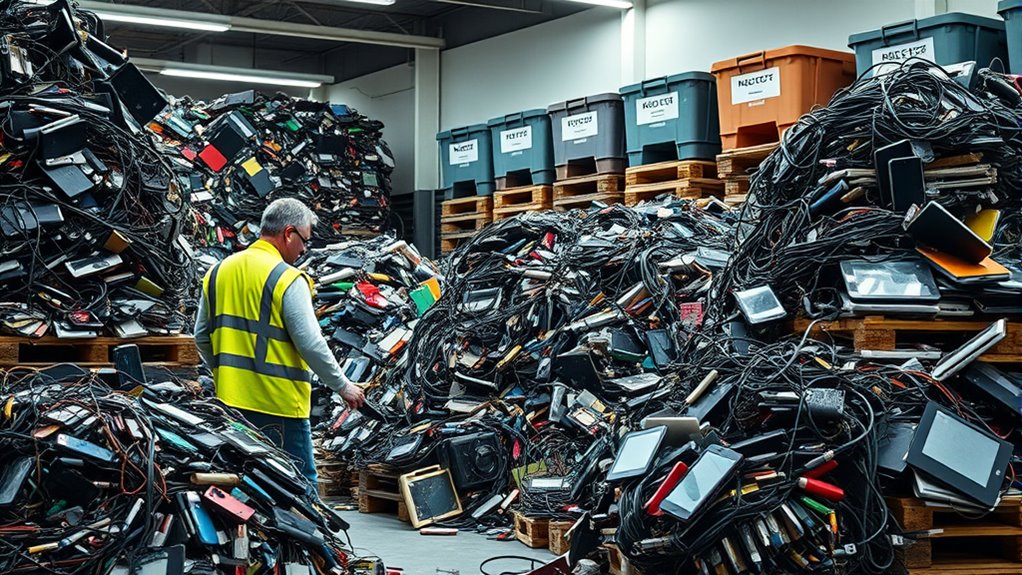
Have you checked out local recycling centers or electronics take-back events in your community? These programs make it easy to responsibly dispose of your old devices. You can also find certified disposal services that guarantee your electronics are recycled safely and properly. Additionally, look for recycling programs that offer incentives or discounts for participation, encouraging more responsible disposal habits. Participating in community-based initiatives can further amplify your positive impact on reducing e-waste. Being aware of proper disposal methods ensures your old electronics don’t contribute to environmental pollution. Consulting testing and certification standards can help you verify that your e-waste is handled in accordance with environmental safety guidelines. Understanding heat distribution in appliances can also help prolong the lifespan of your devices, reducing the need for disposal.
Local Recycling Centers
Many communities now offer dedicated recycling centers and programs specifically for e-waste, making it easier for you to dispose of your outdated electronics responsibly. These centers often accept a range of items, from smartphones to vintage gadgets, ensuring they’re handled properly. If your device is still functional, consider electronics repair to extend its life before recycling. Recycling centers provide a safe way to dispose of items containing hazardous materials, protecting both the environment and your community. Some centers even partner with local charities or repair shops, giving your old electronics a second chance. By choosing your local recycling center, you’re taking a proactive step in reducing e-waste and supporting sustainable practices. Proper disposal reduces environmental impact and helps conserve resources. Utilizing certified e-waste recycling programs ensures that hazardous components are managed safely and responsibly. As part of European cloud innovation, adopting responsible e-waste management supports the development of sustainable and secure cloud solutions. Implementing environmentally responsible practices can also encourage others in your community to participate in eco-friendly disposal methods. Additionally, many centers offer free pickup services for large or multiple items, making disposal even more convenient. It’s a simple, effective way to manage your old electronics responsibly.
Electronics Take-Back Events
Electronics take-back events are organized initiatives that make recycling your old gadgets convenient and accessible. These events often accept devices for proper disposal, ensuring valuable materials are reused. They also encourage you to explore options like device repair or software upgrades to extend your electronics’ lifespan before recycling. Participating in these events helps reduce e-waste and supports sustainable practices. Additionally, many events promote responsible use and privacy, guiding consumers on how to securely erase data and protect personal information during disposal. Understanding material recovery processes can further motivate responsible recycling efforts, as they highlight the environmental benefits of proper e-waste management. Being aware of recycling regulations in your area can also ensure that you comply with local laws and contribute to community-wide environmental goals.
Certified Disposal Services
Certified disposal services provide a reliable way to guarantee your electronic waste is recycled responsibly. These programs follow strict e-waste legislation to ensure hazardous materials are handled safely, protecting both the environment and public health. When you choose certified services, you can be confident that your old electronics, including batteries, are properly recycled through specialized battery recycling processes. Many certified facilities offer convenient drop-off locations or pick-up options near you, making responsible disposal easy. By using these services, you support sustainable practices and help reduce illegal dumping. Plus, these programs often provide transparent documentation, giving you peace of mind that your e-waste is managed ethically and legally. Taking this step ensures you’re actively contributing to solving the e-waste crisis.
How to Prepare Your Devices for Recycling
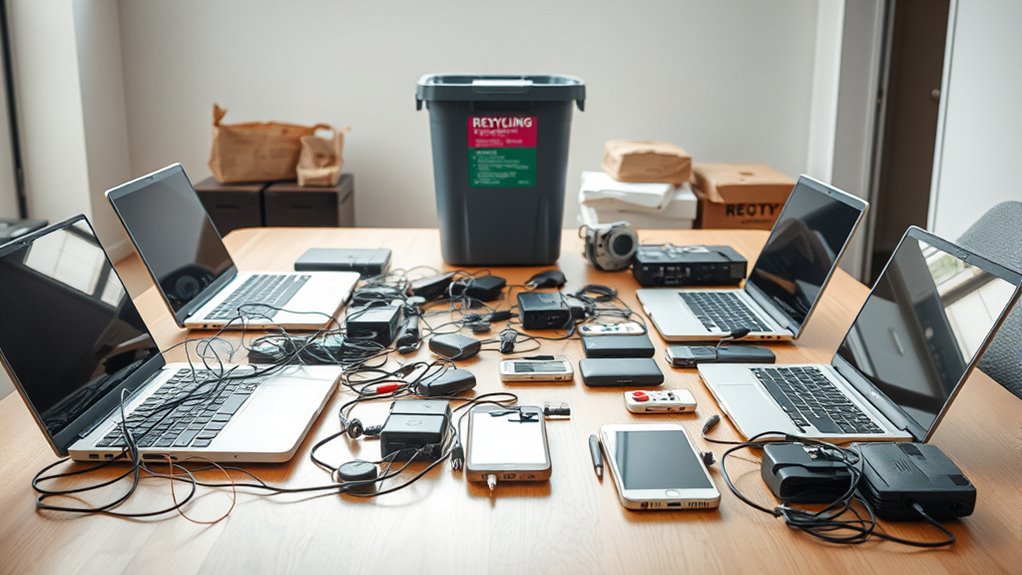
Before recycling your devices, it’s essential to take a few simple steps to protect your personal information and guarantee proper disposal. Start by backing up all important data and then perform device firmware updates to erase sensitive info securely. Next, wipe your device clean using factory reset options or data removal tools. Consider removing any accessories or external storage, like SD cards or SIM cards, to prevent data leaks. If possible, disassemble your device to facilitate electronic component reuse, reducing e-waste. Additionally, document serial numbers and details for tracking. Always check with your recycling center for specific prep instructions. Proper preparation not only safeguards your privacy but also helps maximize the reuse of valuable electronic components, making your recycling efforts more sustainable and impactful.
Donating Old Electronics to Charitable Causes

You can help reduce e-waste by donating your old electronics to local charities, but first, find out which organizations accept your devices. Make certain to check their specific donation requirements to guarantee your items qualify. Finally, prepare your electronics properly by removing personal data and cleaning them before handing them over.
Find Local Charities
Finding local charities that accept old electronics is a practical way to give your unused devices a second life and support those in need. By choosing a local charity, you simplify the donation process and guarantee your electronics reach someone who can benefit from them. To get started, research nearby organizations like shelters, schools, or community centers that accept tech donations. Reach out to confirm their acceptance policies and any specific requirements. When donating, consider:
- Contacting the charity beforehand
- Asking about accepted device types
- Scheduling a drop-off or pickup
- Gathering necessary accessories and power cords
This proactive approach makes donating easier and assures your old electronics are put to good use, helping reduce e-waste and support your community.
Check Donation Requirements
Are you aware of the specific donation requirements when giving your old electronics to charity? Many charitable electronics programs have rules to ensure your items are usable and meet their standards. Before donating, check their donation requirements carefully—some programs accept only certain devices or require that electronics be in working condition. Others may have restrictions on the age of devices or specific models they can accept. Failing to meet these requirements might mean your donation gets rejected or delayed. To make the process smooth, review the charity’s guidelines beforehand. This ensures your electronics are suitable for donation and helps the charity efficiently serve those in need. Being aware of these requirements benefits everyone and maximizes your donation’s positive impact.
Prepare Electronics Properly
Properly preparing your electronics before donating guarantees they meet charity standards and are ready for reuse. Start by backing up your data and performing a factory reset to protect your privacy. Next, clean the device, removing dust and grime, which helps with electronic refurbishment. Verify battery safety by fully charging or safely removing batteries, preventing leaks or fires during transit. Check for any hardware damage and repair minor issues if possible. Confirm that all accessories are included or note missing parts. Test the device to ensure it functions properly. Donating a well-prepared device increases its chances of successful refurbishment and prolongs its life. By taking these steps, you help charities reuse electronics efficiently and responsibly.
Choosing Eco-Friendly Electronics Brands

Choosing eco-friendly electronics brands is a smart step toward reducing e-waste and minimizing environmental harm. Look for companies that prioritize eco friendly materials in their products, such as recycled plastics or responsibly sourced metals. These brands often emphasize sustainable manufacturing processes, reducing energy consumption and waste during production. By selecting products from such companies, you support practices that lessen the environmental footprint and encourage industry-wide change. Research brands that are transparent about their sourcing and manufacturing standards, and favor those committed to sustainability. Making informed choices helps lessen the demand for raw materials and promotes innovations in eco-conscious technology. Ultimately, choosing eco-friendly brands aligns your consumer habits with your environmental values, making a tangible difference in the fight against e-waste.
The Role of Manufacturers in E-Waste Management
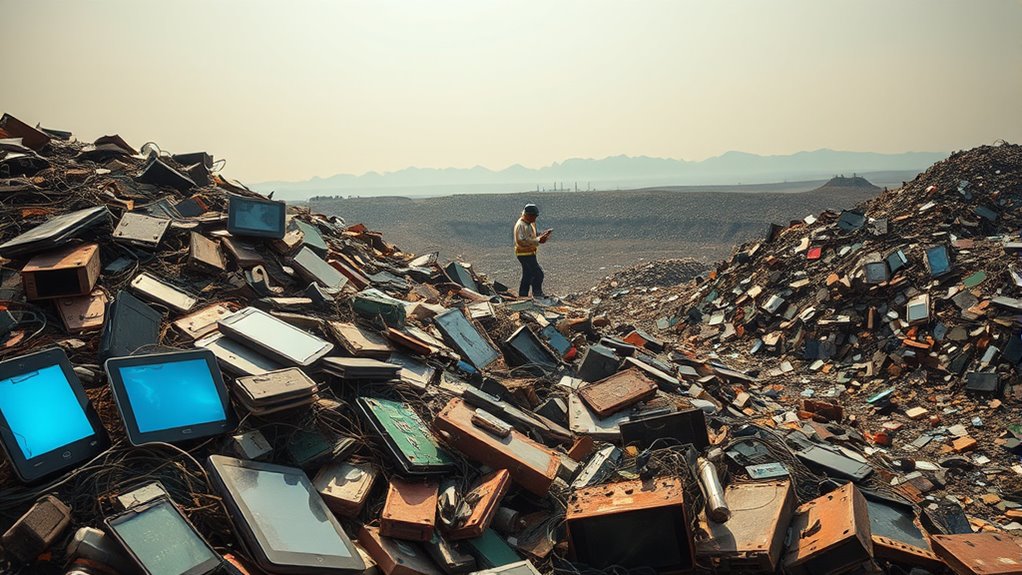
Manufacturers play a essential role in managing e-waste by designing products that are easier to recycle and repair. Their responsibility extends beyond creating innovative gadgets—they must consider the entire product lifecycle management. By adopting sustainable practices, manufacturers can reduce the environmental impact of discarded electronics.
Key actions include:
- Using recyclable and non-toxic materials
- Designing for easy disassembly and repair
- Implementing take-back programs for end-of-life products
- Promoting transparency about product sustainability
Your awareness of manufacturer responsibility encourages companies to prioritize eco-friendly design. When manufacturers create products with lifecycle management in mind, it minimizes waste and makes recycling more efficient. Ultimately, your choices and demand for responsible practices influence how manufacturers handle e-waste.
Tips for Reducing Future Electronic Waste
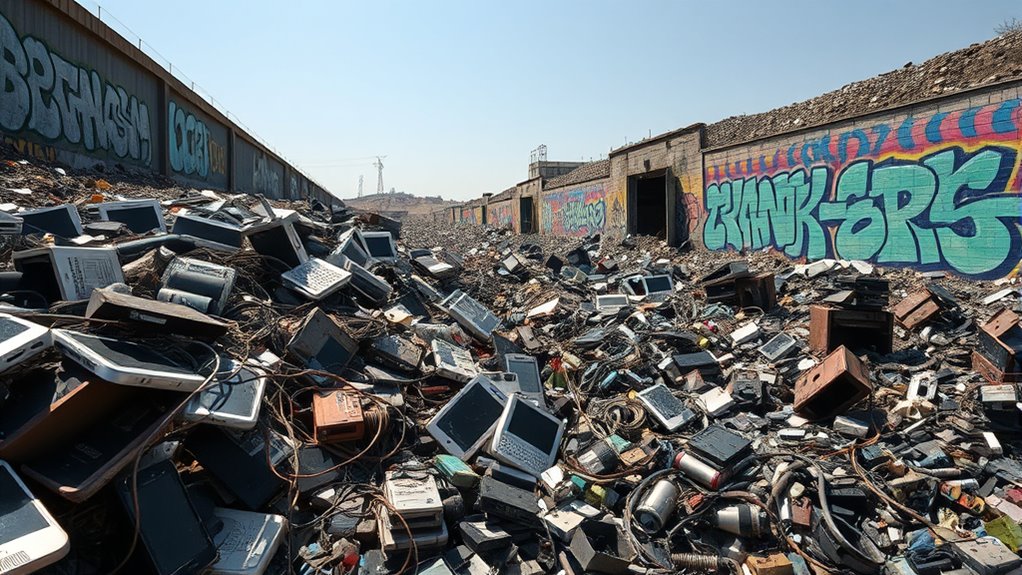
To reduce future electronic waste, you can start by extending the lifespan of your devices through regular maintenance and careful handling. Avoid rushing to replace gadgets and instead explore innovative repair options to fix issues promptly. Supporting brands that prioritize sustainable sourcing ensures your electronics are made with environmentally responsible materials, reducing waste from the outset. Additionally, consider buying quality products designed to last longer, which decreases the need for frequent replacements. When devices reach the end of their life, recycle them properly rather than discarding them improperly. By making these conscious choices, you help minimize e-waste accumulation and promote a more sustainable electronics industry. Your actions can make a significant difference in building a healthier planet.
Frequently Asked Questions
How Can I Verify if a Recycling Program Is Environmentally Responsible?
You can verify if a recycling program is environmentally responsible by checking for certification labels like R2 or e-Stewards, which follow strict recycling standards. Research the company’s practices online, ensuring they properly dispose of hazardous materials and prioritize data security. Look for transparency reports or reviews from trusted sources. If they meet recognized certification criteria, you can trust that your old electronics will be responsibly recycled with minimal environmental impact.
What Are the Legal Requirements for Disposing of Electronic Waste Locally?
You don’t have to guess—local laws require proper disposal of electronic waste, especially regarding hazardous waste regulations. You must follow specific rules for battery recycling and confirm that electronics containing hazardous materials are disposed of safely. Check your city or state’s regulations, as they often mandate certified e-waste recycling facilities. Complying with these laws helps protect the environment and prevents legal issues, making responsible disposal straightforward and essential.
Are There Financial Incentives for Recycling or Donating Old Electronics?
You can often find recycling rewards or donation incentives that make disposing of your electronics more appealing. Many programs offer discounts, gift cards, or tax benefits when you recycle or donate old devices. Check with local recycling centers or charities to see what incentives they provide. Taking advantage of these rewards not only helps the environment but also gives you a little extra benefit for your eco-friendly efforts.
How Do I Ensure My Personal Data Is Securely Erased Before Recycling?
To guarantee your personal data is securely erased before recycling, start with data wiping tools designed for your device. Perform secure deletion by overwriting all files and resetting your device to factory settings. For added security, use specialized software that permanently removes all traces of data. Always double-check that no personal information remains, and remove any external storage devices to prevent data recovery.
Can Old Electronics Be Refurbished and Sold Rather Than Recycled?
Think of your old electronics as hidden treasure chests—many still have refurbishment potential. You can resell them in thriving resale markets, giving devices a second life instead of recycling. For example, a friend sold an outdated smartphone that still worked perfectly, earning extra cash. Refurbishing and selling extends device lifespans, reduces e-waste, and benefits the environment. So, don’t toss them—consider refurbishing and tapping into resale opportunities!
Conclusion
So, next time you toss that ancient phone into the trash, imagine it launching into space like a rocket destined for a landfill planet. Instead, be the hero who recycles, donates, or chooses eco-friendly gadgets. Think of yourself as a superhero saving the Earth, one outdated device at a time. After all, if your electronics could talk, they’d thank you for avoiding a trash tsunami and keeping our planet a little less toxic.