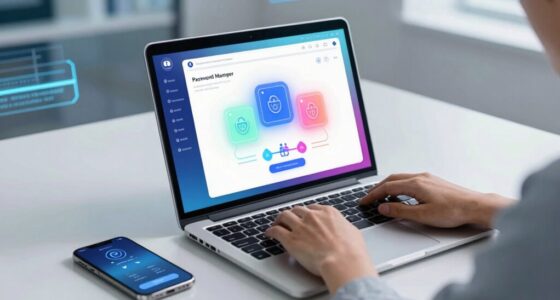

To safeguard your smart home privacy, start by changing default passwords to strong, unique ones and enable multi-factor authentication where possible. Keep your devices’ firmware and software updated regularly to patch vulnerabilities. Set up a separate Wi-Fi network just for your smart devices to isolate them from your main network. Manage permissions carefully and disable any unnecessary features. Use encryption for secure connections, and regularly monitor device activity for suspicious behavior. If you keep exploring, you’ll discover even more ways to enhance your security.
Key Takeaways
- Regularly update device firmware and software to patch vulnerabilities and enhance security.
- Manage permissions carefully, restricting access to trusted users and disabling unnecessary device features.
- Create separate Wi-Fi networks for smart devices to isolate them from main devices and limit potential breaches.
- Change default passwords to strong, unique credentials and enable two-factor authentication where possible.
- Monitor device activity logs and set up alerts for unusual behavior or unauthorized access attempts.
Understand Your Devices and Their Data Collection
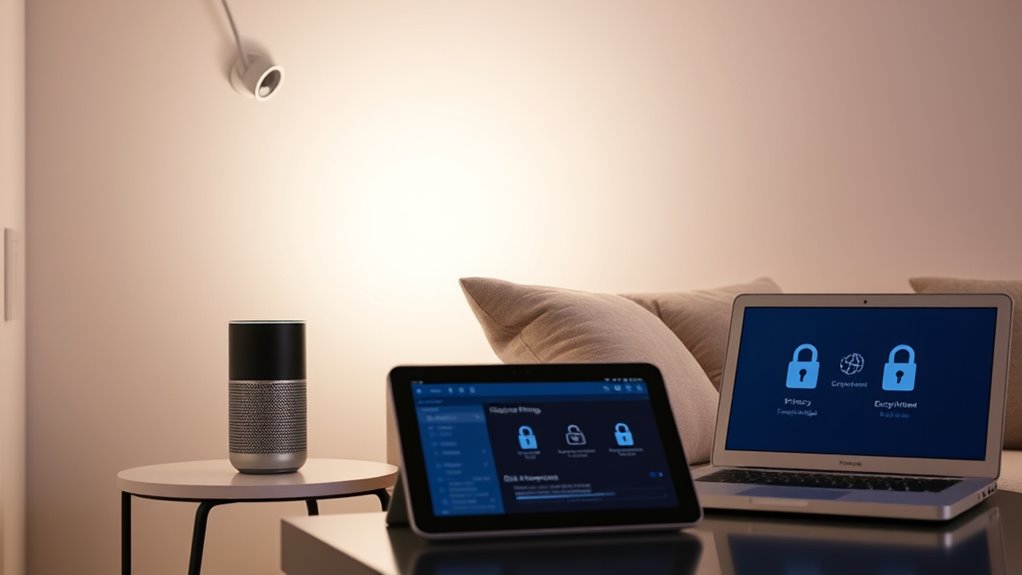
To effectively protect your smart home privacy, you first need to understand how your devices collect and use data. Many smart devices gather information through sensors, microphones, and cameras, often transmitting data to cloud servers. This data collection can include voice commands, video footage, and usage patterns, all of which impact your user privacy. Knowing what data your devices collect helps you identify potential vulnerabilities and manage your privacy settings more effectively. Some devices may share data with third parties or store it without your explicit consent. By understanding these processes, you can make informed decisions about which devices to use, how to configure their privacy options, and how to minimize unnecessary data collection, ultimately safeguarding your personal information. Additionally, the high contrast ratio of projectors can significantly improve image quality in your home theater setup, especially in darker rooms. Understanding the data transmission processes of your smart devices can help you better control where and how your personal information is shared or stored. Furthermore, being aware of the privacy policies and permissions associated with your devices allows you to better tailor your security settings to protect your data.
Change Default Passwords and Use Strong Authentication

You should change default passwords on your smart devices to prevent unauthorized access. Creating unique passwords and enabling two-factor authentication adds extra layers of security. These steps make it much harder for intruders to compromise your smart home. Additionally, regularly updating your device firmware and reviewing your privacy settings can help maintain your security and control over your smart home environment. Implementing proper load‑planning tools can also ensure your network remains secure under different device configurations and usage patterns.
Create Unique Passwords
Default passwords on smart home devices are a major security risk, so it’s essential to change them immediately. Creating unique passwords helps protect your devices from unauthorized access. Focus on password complexity by combining uppercase and lowercase letters, numbers, and symbols to make your passwords harder to crack. Good password management involves using different passwords for each device, avoiding common words, and updating passwords regularly. To strengthen your security, consider these tips:
- Use a password manager to keep track of complex passwords
- Avoid reusing passwords across multiple devices
- Change your passwords whenever a security breach occurs
Enable Two-Factor Authentication
Have you considered how adding two-factor authentication (2FA) can substantially boost your smart home security? Enabling multi factor authentication adds an extra verification step, making it harder for intruders to access your devices. Instead of relying solely on a password, 2FA requires a second form of verification, such as a code sent to your phone or biometric confirmation. This device specific verification ensures that only authorized users can control your smart home equipment. Activate 2FA on your security cameras, smart hubs, and other connected devices to strengthen your defenses. By doing so, you greatly reduce the risk of unauthorized access, keeping your cameras, mics, and other smart gadgets safer from cyber threats. Additionally, understanding the maintenance costs of your smart devices can help you better manage your security budget and ensure consistent protection. Regularly reviewing your device security configurations can help identify vulnerabilities before they are exploited. Incorporating security best practices such as regular firmware updates and strong authentication methods further enhances your smart home’s defenses. Being aware of the cybersecurity risks associated with connected devices underscores the importance of these protective measures.
Keep Firmware and Software Up to Date

Keeping your smart home devices’ firmware and software up to date is essential for maintaining security and privacy. Manufacturers regularly release firmware updates and software patches that fix vulnerabilities and improve functionality. Failing to update leaves your devices exposed to hackers and malware. To stay protected, regularly check for updates through your device settings or app notifications. Enable automatic updates whenever possible to ensure you don’t miss critical patches. Remember, outdated firmware and software are common entry points for cyber threats. Staying current with updates not only bolsters your device security but also enhances performance and feature access. Make it a routine to review your devices’ update status, so your smart home remains a safe and private space.
Set Up a Separate Network for Smart Devices

To enhance your smart home’s security, setting up a separate network for your smart devices is a smart move. Network segmentation helps keep your smart gadgets isolated from your main devices like computers and smartphones, reducing potential attack vectors. By creating a dedicated Wi-Fi network, you ensure that any vulnerabilities in your smart devices won’t compromise your primary network. Wi-Fi isolation further prevents your smart devices from communicating with each other or accessing shared resources, adding an extra layer of security. This setup limits what malicious actors can access if they compromise one device. Additionally, implementing network configuration best practices can further strengthen your smart home’s defenses. Incorporating automatic firmware updates ensures your devices remain protected against known vulnerabilities over time. Regularly reviewing device permissions and monitoring network activity can also help detect suspicious behavior early. Employing encryption protocols can safeguard data transmitted between your devices and your network, further enhancing privacy.
Manage Device Permissions and Access Controls
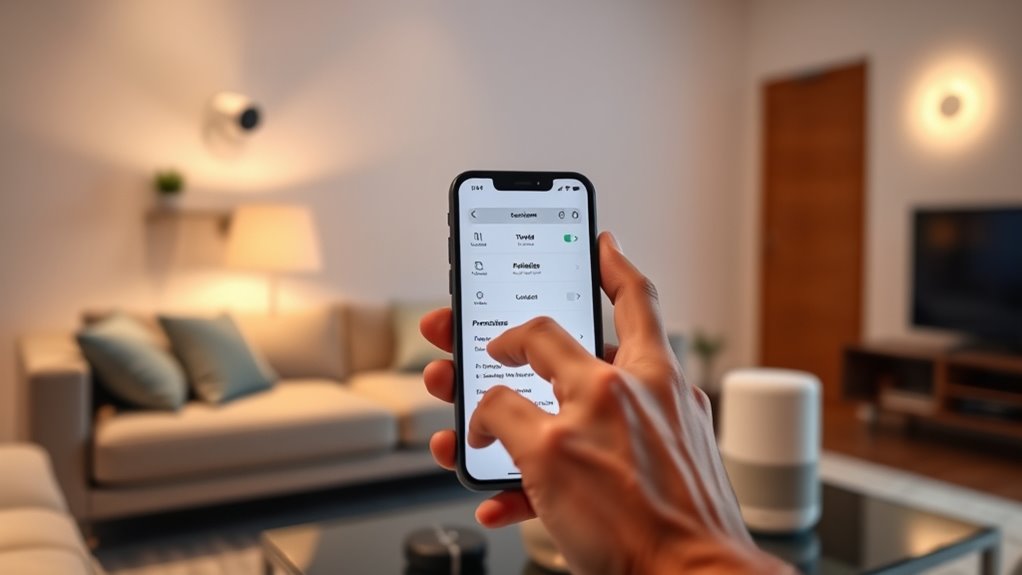
Managing device permissions and access controls is essential to prevent unauthorized use and protect your smart home. Proper access control and permission management make certain that only trusted users can operate your devices and view sensitive data. To strengthen your security, consider these steps:
- Limit device access to trusted users through user accounts and authentication
- Regularly review and update permissions, removing inactive or untrusted users
- Use multi-factor authentication for added protection on critical devices
Disable Unnecessary Features and Services

Disabling unnecessary features and services on your smart home devices reduces potential security vulnerabilities and minimizes the attack surface. Many devices come with extra functions or services, like remote access or voice assistants, which you might not need. Turning these off limits entry points for hackers and helps protect your user privacy. Keep your device firmware updated to guarantee these features are properly managed and security patches are applied. Regularly review your device settings and disable features that aren’t essential. This practice also helps prevent unnecessary data sharing or exposure. Understanding attack surfaces is crucial to recognizing how additional services can be exploited by malicious actors. By streamlining your device capabilities, you not only safeguard your privacy but also improve overall security. Limiting active services ensures your smart home remains a safe and private environment, especially when you consider device vulnerabilities that can be exploited without proper controls.
Use Encryption and Secure Connections

Using encryption and secure connections is essential to protect your smart home devices from unauthorized access and data breaches. Implementing end-to-end encryption ensures that your data remains private from the device to the server, preventing interception. Using secure protocols like HTTPS and WPA3 encrypts your network traffic, safeguarding sensitive information. To strengthen your defenses, consider:
Protect your smart home with encryption and secure protocols to keep data private and safe from intruders.
- Making sure your devices support end-to-end encryption
- Using strong, unique passwords for all connections
- Regularly updating firmware to maintain secure protocols
These steps help create a robust barrier against hackers and unauthorized monitoring. By prioritizing encryption and secure connections, you make it considerably harder for intruders to access your smart home data, keeping your privacy intact.
Regularly Monitor and Review Device Activity

You should regularly check your device activity logs to spot any unusual behavior. Scheduling routine reviews and setting up alerts can help you catch potential security issues early. Staying proactive guarantees your smart home remains private and protected. Additionally, understanding device upgrades can help you implement necessary security enhancements as needed. Being aware of piercing aftercare can remind you to keep your devices and networks sanitized from malware or unauthorized access.
Device Activity Logs
Regularly monitoring and reviewing device activity logs is essential to maintaining your smart home’s privacy. These logs record every interaction, helping you identify unusual activity that could indicate a security breach. Conducting a privacy audit by checking device activity logs enables you to spot unauthorized access or suspicious behavior early. To make this process more effective, consider:
- Verifying that only trusted devices have recent activity
- Noticing any activity during odd hours or unfamiliar locations
- Ensuring all device actions align with your typical usage
Schedule Regular Checks
Consistently scheduling checks of your device activity logs keeps potential security issues from going unnoticed. Regular review helps you catch unusual behavior early, allowing you to address vulnerabilities promptly. Incorporate routine device maintenance to guarantee your smart home systems function correctly and securely. Staying proactive through these checks also reinforces the importance of user education—understanding how your devices operate and recognizing signs of compromise. By dedicating time to review device logs and activity patterns, you maintain control over your privacy. This ongoing process helps identify any unauthorized access or suspicious activity, empowering you to take immediate action. Making regular checks a habit ensures your smart home remains a safe, private environment, and keeps you informed about your devices’ security status.
Set up Alerts
Setting up alerts for your smart home devices guarantees you’re immediately notified of any suspicious activity. This helps you stay ahead of potential privacy breaches and keeps your devices secure. Start by reviewing your privacy settings to verify alerts are enabled for unusual activity. Take advantage of alert customization options to tailor notifications to your needs, whether it’s motion detection, camera access, or microphone use. Regularly monitoring device activity through these alerts allows you to act quickly if something seems off. Keep an eye on:
- Unrecognized device access or login attempts
- Unusual camera or microphone activity
- Changes to privacy settings or permissions
- AI-driven security features that adapt to emerging threats, enhancing your overall privacy protection. Ensuring your alert system is comprehensive and real-time monitoring can significantly bolster your privacy defenses.
Frequently Asked Questions
How Can I Tell if My Smart Device Has Been Hacked?
You can tell if your smart device has been hacked by noticing unusual activity or slow performance. Check for unauthorized device access through your account settings. Make certain your device uses strong device authentication and has the latest firmware updates, as these help prevent hacking. If you see unfamiliar connections or commands, reset your device and change passwords immediately. Regularly updating firmware and monitoring device activity keeps your smart home secure.
Are There Privacy Concerns With Voice Assistants in Smart Homes?
Yes, there are privacy concerns with voice assistants in smart homes. Your voice data privacy can be compromised if third-party access isn’t properly controlled, potentially exposing sensitive conversations. Always review privacy settings, disable voice recording features when unnecessary, and be cautious about what you say around these devices. Keeping firmware updated and understanding how your data is stored or shared helps protect your privacy from unauthorized third-party access.
Can I Track Who Accesses My Smart Home Devices?
Think of your smart home like a fortress—you can track who enters by checking access logs. Yes, you can monitor device activity through these logs, which record when someone accesses your smart home devices. Make certain your devices use strong device encryption to protect data. Regularly review access logs via your app or device settings, so you stay aware of who’s entering your digital fortress and can act if anything suspicious arises.
What Legal Rights Do I Have Over My Smart Home Data?
You have the legal right to control your smart home data under data ownership laws, meaning you can access, delete, or limit how your information is used. Manufacturers must also comply with legal standards like GDPR or CCPA, which safeguard your privacy. Stay informed about your rights and ensure companies follow legal compliance, giving you confidence that your data remains yours and is handled responsibly.
How Do I Securely Delete or Reset Smart Devices?
To securely delete or reset your smart devices, start by performing a factory reset through the device settings. Make certain device encryption is enabled to protect your data during the process. After resetting, check for firmware updates to patch security vulnerabilities. This combination helps eliminate personal data, prevents unauthorized access, and keeps your device secure, giving you peace of mind that your smart home remains private.
Conclusion
By taking these steps, you’re building a fortress around your smart home, turning vulnerability into strength. Remember, every device is a window—either you keep it open or shut it tight. Stay vigilant, update regularly, and control access to protect your privacy. In the end, safeguarding your smart home isn’t just about technology; it’s about preserving the sanctuary where your life unfolds. Guard it well, for it’s your digital refuge.