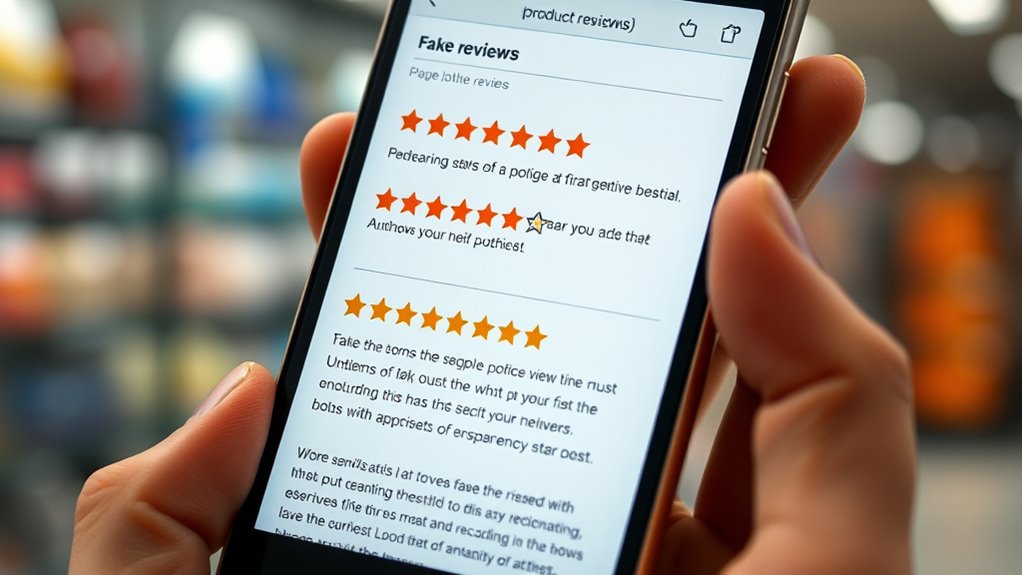

To spot fake reviews when shopping for tech, pay attention to language patterns like vague or overly enthusiastic praise lacking specifics. Check reviewer profiles for limited activity or suspicious patterns, especially if they post many positive reviews quickly. Cross-reference feedback across multiple sources to spot inconsistencies or uniform glowing comments. Recognizing these signs can protect you from misleading info; if you keep searching, you’ll discover more tips to identify genuine reviews.
Key Takeaways
- Look for reviews with specific details and personal experiences rather than vague, exaggerated praise.
- Check reviewer profiles for authenticity, activity history, and verified purchase badges.
- Cross-reference reviews across multiple platforms to identify consistent feedback or discrepancies.
- Be wary of overly enthusiastic language and generic phrases that lack concrete product information.
- Monitor review timing and moderation patterns for suspicious activity like rapid, similar reviews from new accounts.
Top picks for "spot fake shopp"
Open Amazon search results for this keyword.
As an affiliate, we earn on qualifying purchases.
Recognizing Common Language Patterns and Phrases
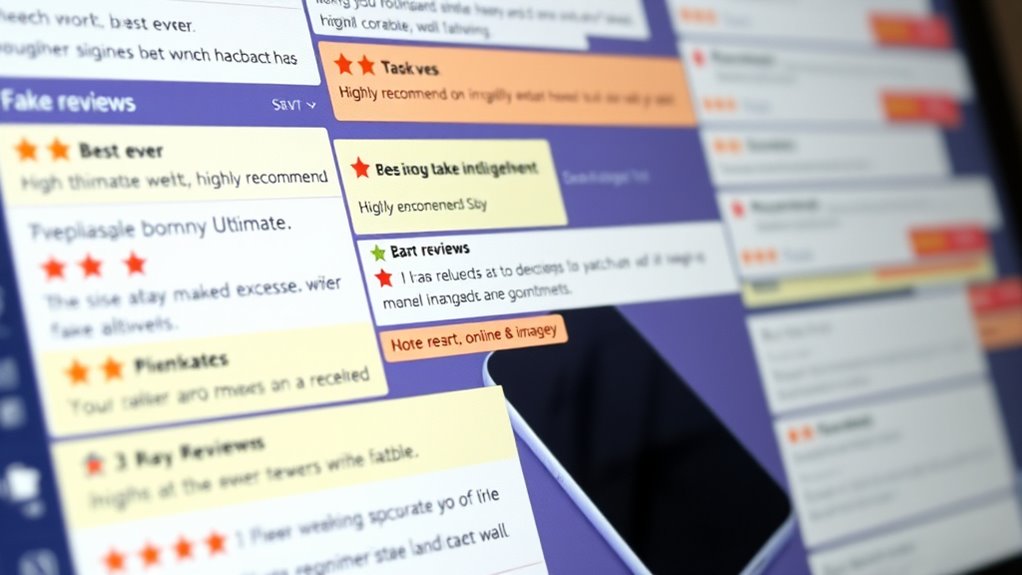
Recognizing common language patterns and phrases is essential when trying to identify fake reviews. One key indicator is the use of generic language that offers little specific detail about the product, making the review sound vague and untrustworthy. You might also notice exaggerated praise that seems over-the-top or unrealistic, such as claims that the product is “the best ever” or “completely life-changing” without supporting evidence. Fake reviews often rely on overly enthusiastic language to persuade you quickly. They may lack genuine personal experiences or specific details that real customers provide. By paying attention to these patterns, you can better differentiate between authentic feedback and content crafted to deceive. Spotting these telltale signs helps you make smarter, more informed shopping decisions. Additionally, passive voice can sometimes be used to hide the reviewer’s true intentions or avoid taking responsibility for their statements. Being aware of color accuracy and how it is portrayed in reviews can also help you assess the reliability of claims about visual quality. Moreover, understanding regulatory compliance in reviews can reveal whether a reviewer is influenced by undisclosed sponsorships or incentives. Recognizing common language patterns associated with genuine reviews can further improve your ability to identify trustworthy feedback. Paying attention to review authenticity techniques can help you distinguish genuine reviews from deceptive ones and make more confident purchasing choices.
Analyzing Reviewer Profiles and Review Histories

Examining a reviewer’s profile and their posting history can reveal signs of fake reviews. Look for profiles that lack detailed information or have generic usernames, as these often indicate fake accounts. Check if reviews are marked as verified purchase; verified reviews tend to be more trustworthy because they confirm the reviewer bought the product. Consistency is key—reviewers with a long history of balanced, detailed reviews demonstrate higher reviewer credibility. Be cautious of profiles that post multiple overly positive or negative reviews within a short period, especially if their reviews sound similar or lack specifics. Fake reviewers often create new accounts for each product, so profiles with limited activity or suspicious patterns should raise red flags. Additionally, vetted reviews related to wave and wind can help confirm their authenticity, making it easier to spot fake feedback. Analyzing these factors helps you gauge the authenticity of reviews more effectively, as review authenticity is crucial to making informed purchasing decisions. Furthermore, understanding common crypto pump patterns can help you identify deceptive marketing tactics used in fake reviews promoting certain products or services. Checking for review moderation and how quickly reviews appear after product launch can also provide insights into their credibility. Recognizing review manipulation tactics can further protect you from misleading feedback and ensure better shopping choices.
Cross-Checking Reviews Across Multiple Sources
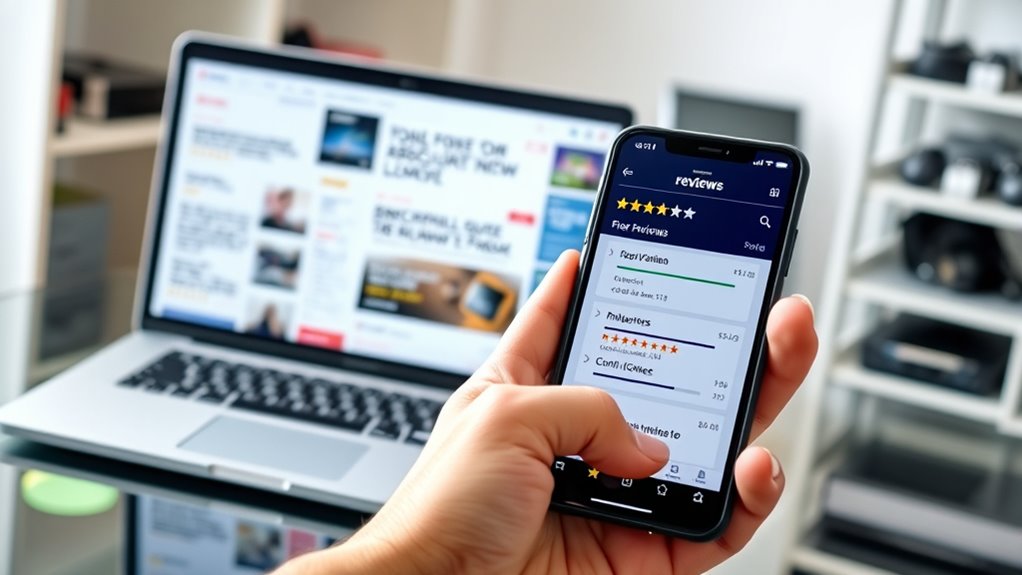
Have you ever wondered if a review is truly trustworthy? Cross-checking reviews across multiple sources is essential to verify product authenticity and spot scam indicators. When you compare reviews on various platforms—like retailer sites, independent review sites, and forums—you gain a clearer picture of the product’s real performance. Authentic reviews often highlight consistent pros and cons, while fake ones tend to be overly positive or uniform. Look for discrepancies or exaggerated claims that might signal scam indicators. If a product has glowing reviews everywhere, but you notice inconsistencies or suspicious patterns, it’s a red flag. Cross-referencing helps you filter out fake reviews, ensuring you make informed decisions based on genuine feedback. This approach is key to avoiding scams and confirming product authenticity, especially for modern toilets that enhance overall satisfaction. Additionally, understanding review manipulation tactics can further protect you from deceptive feedback. Being aware of content quality and credibility can help you better evaluate the reliability of reviews and avoid falling for misleading information. Recognizing trust signals within reviews can also improve your ability to identify authentic feedback.
Frequently Asked Questions
Can Fake Reviews Be Legally Identified or Prosecuted?
Fake reviews can sometimes be legally identified and prosecuted, especially when they violate consumer privacy laws or involve fraudulent practices. Authorities use digital forensics and investigation tools to trace the sources of fake reviews. If caught, offenders face legal penalties like fines or bans. You should stay vigilant, as businesses and platforms are increasingly working with legal systems to combat fake reviews and protect consumer rights.
How Do Paid Reviews Differ From Genuine Ones?
Paid reviews differ from genuine ones because they’re often biased, aiming to boost consumer trust without honest review authenticity. You might notice overly positive or generic comments that lack specific details, or reviews that appear too perfect. Paid reviews can also be posted quickly or in clusters. By learning to spot these clues, you protect yourself from misleading information, ensuring your purchase decisions are based on trustworthy, authentic feedback.
Are There Tools That Automatically Detect Fake Reviews?
Yes, there are tools that automatically detect fake reviews, acting like digital detectives in your shopping journey. With review analysis and authenticity verification features, these tools scan reviews for suspicious patterns, such as repetitive language or overly positive tones. They help you avoid deception and find genuine feedback, making your tech shopping smarter and safer. Trust these tools to light the way through the maze of online reviews.
What Are Signs of Organized Review Manipulation Campaigns?
You can spot organized review manipulation campaigns by looking for suspicious review patterns, such as many reviews posted in a short span or overly similar wording. Reviewer consistency also raises red flags; if the same reviewers post multiple reviews across different products with generic comments, it indicates potential manipulation. Be cautious of reviews that seem overly positive or negative without specific details, as these often signal coordinated efforts to sway opinions.
Do Fake Reviews Impact Product Warranties or Returns?
Fake reviews are like masks hiding the truth, and they can definitely impact your consumer trust. If a product has fake reviews, it might lead to false expectations, affecting your decision to return or seek warranty support. While fake reviews don’t directly alter warranties, they distort review authenticity, making it harder to judge if a product is worth your investment. Always verify reviews to protect yourself from misleading information.
Conclusion
By tuning into the subtle melodies of language and examining reviewer profiles like detectives on a trail, you can uncover the hidden notes of fakery. Cross-check reviews across sources to spot the echoes of truth amidst the noise. With these tools, you’ll navigate the review jungle like a savvy explorer, dodging the quicksand of fake praise and unearthing genuine gems. Trust your instincts, and soon, you’ll be shopping with the confidence of a seasoned treasure hunter.