

In the digital age, practicing good manners across email, text, and video is essential. You should start with polite greetings, be clear and concise, and use respectful language. Maintain professionalism during video calls by choosing appropriate backgrounds and looking at the camera. Set boundaries to avoid burnout, respond promptly, and avoid impulsive replies. Being mindful of tone and context helps prevent misunderstandings. Keep exploring to discover more ways to navigate online interactions courteously.
Key Takeaways
- Use polite greetings, clear language, and review messages to ensure respectful and effective email communication.
- Respond promptly to texts, acknowledge messages if busy, and choose words carefully to prevent misinterpretation.
- Maintain a professional appearance in video calls with proper background, eye contact, and good lighting.
- Set digital boundaries by defining work hours, managing notifications, and respecting personal time.
- Practice kindness online, avoid impulsive responses, and be mindful of tone and context to prevent misunderstandings.
professional webcam with good lighting
As an affiliate, we earn on qualifying purchases.
As an affiliate, we earn on qualifying purchases.
Crafting Respectful and Clear Email Communication
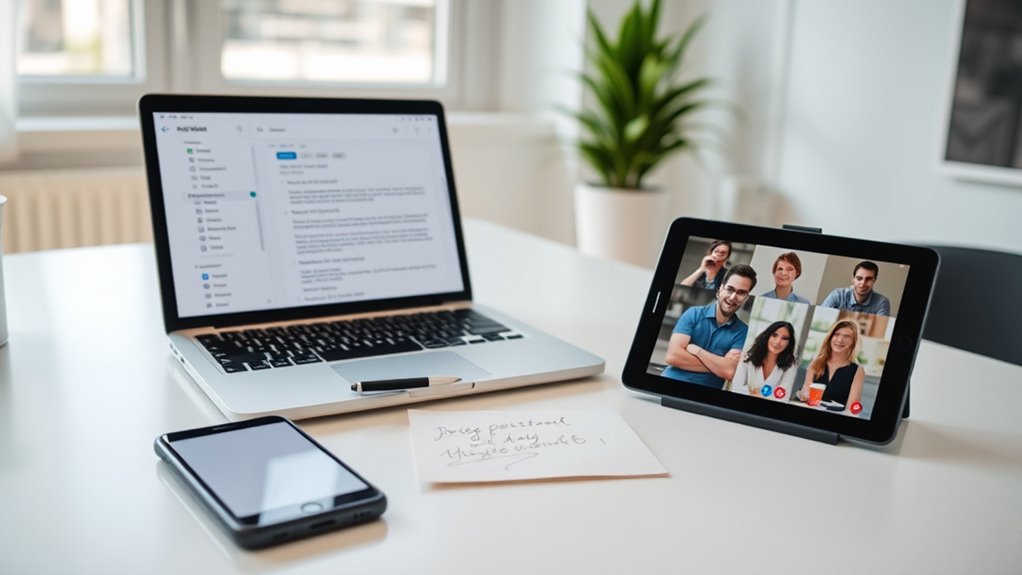
When you send an email, it’s essential to be both respectful and clear to guarantee your message is understood and well-received. Start with a friendly virtual greeting to set a positive tone. Your email tone should be professional yet approachable, avoiding overly casual language. Use polite phrases like “please” and “thank you” to show respect. Keep your message concise and focused, making it easy for the recipient to grasp your main points. Proper structure, with a clear introduction, body, and closing, helps convey your message effectively. Remember, clarity and courtesy in your email help build strong relationships and prevent misunderstandings. Always review your message before sending to ensure your tone remains respectful and your intent is clear. Additionally, paying attention to color accuracy can enhance the overall effectiveness of visual communication. Incorporating digital etiquette best practices, such as timely responses and appropriate tone, further fosters positive interactions. Being aware of website performance metrics can also guide you in crafting messages that resonate better with your audience. Understanding user privacy and cookies helps ensure your communication respects recipient preferences and data security.
ergonomic office chair for video calls
As an affiliate, we earn on qualifying purchases.
As an affiliate, we earn on qualifying purchases.
Navigating Text Messaging With Consideration

As more conversations move to text messaging, it’s important to approach this form of communication with the same respect and thoughtfulness you use in emails. Be mindful of emoji usage; while emojis can add warmth and clarity, overdoing them may seem unprofessional or distracting. Keep your messages clear and to the point, avoiding misinterpretation. Response timing also matters—try to reply within a reasonable timeframe, typically within a few hours, to show respect for the other person’s time. If you’re busy, a quick acknowledgment that you’ll respond later is courteous. Remember, tone can be hard to interpret in text, so choose your words carefully and use emojis sparingly to convey friendliness without confusion. Being aware of communication tone helps ensure your messages are received as intended.
noise-canceling headphones for online meetings
As an affiliate, we earn on qualifying purchases.
As an affiliate, we earn on qualifying purchases.
Mastering Professional and Polite Video Conferencing

Ever wondered how to make your video calls both professional and polite? Start by choosing a clean, clutter-free background or a suitable virtual background that looks professional. Make sure your camera is at eye level to create natural eye contact, which shows engagement and attentiveness. During the call, look directly into the camera when speaking, not at your screen, to foster connection. Mute yourself when you’re not speaking to minimize distractions. Dress appropriately, as if attending an in-person meeting, and maintain good posture. Be punctual and prepared, with necessary documents ready. Keep your environment quiet and well-lit, so others can focus on you. Incorporating adaptive lighting can further enhance your appearance and comfort during video calls. Additionally, ensuring your connection quality is stable helps prevent disruptions and maintains professionalism. Using video conferencing etiquette can also demonstrate respect and consideration for others’ time and attention. Being mindful of digital communication norms can help prevent misunderstandings and foster positive interactions. Maintaining a professional demeanor and showing genuine interest during your calls can leave a positive impression. These simple steps help convey respect, professionalism, and courtesy in every video conference.
virtual background for video conferencing
As an affiliate, we earn on qualifying purchases.
As an affiliate, we earn on qualifying purchases.
Managing Digital Boundaries and Responsiveness

Maintaining professionalism during video calls sets a positive tone, but managing your digital boundaries beyond the screen is equally important. Clear digital boundaries help prevent burnout and maintain work-life balance. Responsiveness management involves setting expectations for reply times and communication frequency. To do this effectively, consider these strategies:
Set clear digital boundaries to prevent burnout and maintain work-life balance beyond video calls.
- Define specific work hours and communicate them clearly
- Use status indicators to signal availability
- Prioritize urgent messages without neglecting non-urgent ones
- Limit notifications during non-work periods to avoid interruptions
- Incorporate privacy management space, time & energy savers into your digital workspace setup to foster a balanced environment, ensuring you protect your digital boundaries from encroachment.
Avoiding Common Online Etiquette Pitfalls

Online interactions can quickly go awry if you’re not careful, leading to misunderstandings or damaged relationships. One common pitfall is neglecting the impact of digital anonymity; when you hide behind a screen, it’s easy to forget the importance of kindness and respect. Avoid impulsive replies or harsh language, as online anonymity can sometimes make people feel emboldened to say things they wouldn’t face-to-face. Be mindful of tone, clarity, and context to prevent miscommunication. Remember, your words online carry weight, so think before you post or respond. Stepping out of digital anonymity and embracing accountability helps you maintain respectful interactions. Additionally, understanding Free Floating principles can help you navigate online communication more effectively. By staying aware of these pitfalls, you protect your reputation and foster healthier online relationships.
Frequently Asked Questions
How Can I Politely Decline a Digital Invitation Without Offending?
To politely decline a digital invitation, you should offer a gentle refusal that shows appreciation for the invite. Be respectful and honest about your reasons, keeping your message brief and sincere. You can say something like, “Thanks so much for inviting me, but I won’t be able to make it. I appreciate the thought and hope you have a great time.” This respectful decline maintains good relations without causing offense.
What’s the Best Way to Apologize for a Typo in a Professional Email?
To apologize for a typo in a professional email, quickly acknowledge the mistake with clear apology wording, like “Sorry for the typo in my previous email.” Keep it brief and sincere, demonstrating accountability without over-apologizing. You might add, “I appreciate your understanding,” to maintain professionalism. This shows respect for the recipient’s time and upholds good manners in your professional email communication.
How Do I Handle Technical Difficulties Gracefully During Video Calls?
Ever been caught off guard by tech troubles during a video call? Stay calm and address the issue confidently. Quickly troubleshoot with simple steps like checking your internet connection or restarting your device. Maintain good camera etiquette by staying engaged and avoiding distractions. If problems persist, calmly inform others and suggest rescheduling if needed. Your composed attitude and smooth tech troubleshooting show professionalism and help keep the meeting productive.
When Is It Appropriate to Use Emojis in Work-Related Texts?
You should use emojis in work-related texts sparingly, ensuring they align with professional boundaries and add clarity or friendliness. Emojis can convey tone and warmth, but overusing them might undermine your emoji professionalism. Consider your audience and context; if your workplace promotes casual communication, a well-placed emoji can enhance rapport. When in doubt, keep it minimal and avoid emojis in serious or formal messages to maintain professionalism.
How Can I Set Healthy Boundaries for After-Hours Digital Communication?
To set healthy boundaries for after-hours digital communication, prioritize your work-life balance by clearly defining your availability. Turn off work notifications outside of business hours and communicate these boundaries to colleagues. Schedule regular digital detox periods to disconnect completely. This helps you recharge, reduces stress, and maintains productivity. Remember, establishing these limits guarantees you stay connected to your personal life and prevents burnout in today’s always-on digital world.
Conclusion
Mastering digital manners is like tending a delicate garden—you must nurture respect, clarity, and boundaries daily. By practicing thoughtful email, considerate texts, and polished video calls, you create a respectful online environment that blooms with trust. Remember, your digital etiquette shapes how others see you—make it a reflection of your best self. Stay mindful, stay respectful, and watch your online relationships flourish like a well-tended garden in full bloom.