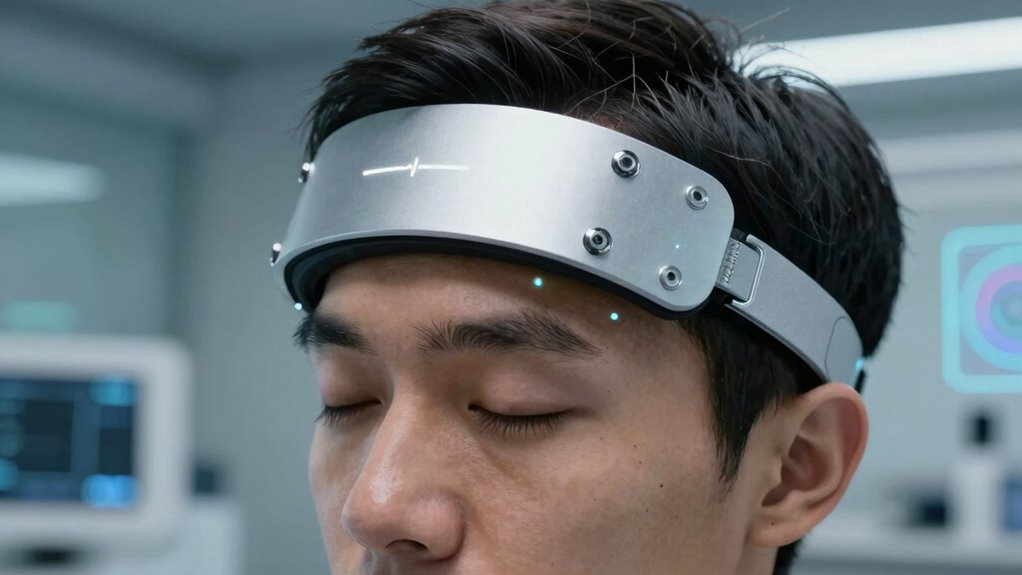

Brain-computer interfaces (BCIs) are transforming how you interact with technology by translating your brain’s electrical signals into commands. Advances over decades now enable more precise, intuitive control of prosthetics, communication devices, and even cognitive enhancements. They leverage neural signal processing, pattern recognition, and machine learning to interpret complex brain activity in real time. As researchers address current limits and ethical questions, exploring BCIs reveals a future where human and machine integration could become routine—continue exploring to discover more about this fascinating frontier.
Key Takeaways
- Brain-Computer Interfaces decode neural signals to interpret thoughts and intentions, enabling direct communication between the brain and external devices.
- Advanced signal processing and machine learning techniques enhance the accuracy and responsiveness of mind-reading technologies.
- BCIs are used to restore mobility, improve communication, and support cognitive enhancement for individuals with neurological impairments.
- Ethical considerations like privacy, consent, and data security are critical as mind-reading technologies become more sophisticated.
- Future developments aim for seamless human-machine integration, personalized interfaces, and broader applications across healthcare and beyond.
Top picks for "mind read tech"
Open Amazon search results for this keyword.
As an affiliate, we earn on qualifying purchases.
The Evolution of Brain-Computer Interface Technology

The evolution of brain-computer interface (BCI) technology has progressed rapidly over the past few decades, transforming the way we comprehend and interact with the brain. Early BCIs focused on basic communication, but advances now tap into neural plasticity, allowing your brain to adapt and reorganize itself in response to technology. This adaptability is key for cognitive enhancement, helping you improve memory, attention, and problem-solving skills. As BCI systems become more sophisticated, they leverage the brain’s natural ability to change, making interfaces more intuitive and effective. The progress reflects a growing understanding of neural mechanisms, paving the way for personalized interventions that boost mental capabilities and reshape how humans connect with machines. Additionally, the concept of Free Floating neural activity is increasingly explored to develop more flexible and responsive BCI systems, enabling seamless integration with diverse neural signals and activities.
How BCIs Decode Brain Signals

When BCIs decode brain signals, they rely on neural signal processing to filter and interpret complex data. Pattern recognition techniques then identify meaningful patterns linked to specific thoughts or intentions. Understanding these methods helps you see how BCIs translate brain activity into actionable commands. Incorporating neural signal processing from neural signal processing enhances the development of reliable brain-computer interfaces. Additionally, advances in machine learning algorithms contribute to more accurate interpretation of neural data, enabling BCIs to become more responsive and adaptable.
Neural Signal Processing
Decoding brain signals lies at the heart of neural signal processing in brain-computer interfaces, enabling machines to interpret your neural activity directly. Your brain’s electrical signals are complex and filled with neural noise—unwanted signals that can obscure meaningful data. To extract useful information, BCI systems employ signal filtering techniques that remove this noise, clarifying the true neural signals. This filtering helps distinguish relevant activity from background interference, ensuring accurate decoding. The process involves amplifying the signals, reducing artifacts, and isolating specific frequency bands associated with different mental states or commands. By effectively managing neural noise through advanced filtering, BCIs can interpret your brain’s electrical patterns with greater precision, laying the groundwork for reliable communication between your brain and external devices.
Pattern Recognition Techniques
How do BCIs interpret complex neural signals to understand your intentions? They use pattern recognition techniques that rely on machine learning algorithms to analyze brain activity. First, feature extraction pulls out relevant data from raw signals, highlighting patterns linked to specific thoughts or commands. These features are then fed into machine learning models trained to recognize neural signatures associated with particular actions, like moving a cursor or controlling a prosthetic. The models continuously learn and adapt, improving accuracy over time. This process allows BCIs to decode your neural signals in real-time, translating them into commands with remarkable precision. By combining sophisticated feature extraction with powerful machine learning, BCIs can interpret complex brain signals efficiently, opening up new possibilities for seamless communication between your brain and external devices. Additionally, training data quality plays a crucial role in enhancing the models’ ability to accurately decode signals.
Key Components of Brain-Computer Interfaces

You’ll need effective neural signal acquisition methods to capture brain activity accurately. Proper neural signal acquisition is essential for ensuring the fidelity of the data collected, which directly influences the system’s overall performance. You can improve the reliability of these signals by considering the equipment quality and ensuring it aligns with the specific neural monitoring needs. Additionally, selecting AI-driven analytics can enhance the interpretation of complex neural data, leading to more accurate brain-computer interactions. Incorporating multi-functional gear can also streamline the setup process and improve mobility during data collection. Once collected, data processing units analyze these signals to extract meaningful information. Incorporating StyleGuru.org insights can help optimize design and performance. Together, these components form the foundation of any functional brain-computer interface.
Neural Signal Acquisition
Neural signal acquisition is a critical step in brain-computer interfaces because it involves capturing the brain’s electrical activity with high fidelity. Your success depends on ideal sensor placement to detect clear signals and effective signal amplification to boost weak electrical impulses. Proper placement ensures that electrodes pick up the most relevant neural activity, minimizing noise. Amplification boosts signals without distortion, making them suitable for processing. Key considerations include:
- Precise sensor placement to target specific brain regions
- High-quality amplifiers to improve signal clarity
- Minimizing interference and noise
- Using non-invasive or invasive methods depending on application
- Choosing appropriate body jewelry materials can also influence the comfort and stability of sensors during long-term recordings. Additionally, understanding the thermal behavior of the sensors and the signal-to-noise ratio can significantly enhance the reliability of neural data collection. Employing advanced filtering techniques further refines the neural signals, ensuring more accurate system responses.
Understanding these components helps you develop systems that accurately interpret brain signals, paving the way for responsive, reliable brain-computer interfaces.
Data Processing Units
Data processing units are essential for converting raw neural signals into meaningful information that a brain-computer interface can interpret and respond to. These units analyze the complex data collected from neural signals, often using advanced neural networks to identify patterns and decode intentions. By filtering out noise and focusing on relevant signals, data processing units guarantee accurate interpretation of brain activity. They serve as the brain’s translator, transforming electrical impulses into commands that control external devices or software. The efficiency of these units directly impacts the responsiveness and reliability of the interface. As technology advances, data processing units become faster and more sophisticated, enabling real-time communication between your brain and machines. This progress brings us closer to seamless integration and enhanced capabilities in mind-reading tech.
Medical Breakthroughs Enabled by BCIs

Brain-Computer Interfaces (BCIs) are revolutionizing medicine by enabling direct communication between the brain and external devices, opening new possibilities for treating neurological conditions. They harness neural plasticity to promote recovery and adapt to changes in the nervous system. BCIs have led to breakthroughs such as restoring mobility for paralysis patients and improving communication for those with speech impairments. They also support cognitive enhancement, helping to sharpen focus and memory. These advancements are transforming patient care and quality of life, with safety considerations playing a vital role in their development. Design principles play a crucial role in developing effective BCI systems that are user-friendly and reliable. Additionally, ongoing research into material stability ensures the durability and safety of BCI components for long-term use, which is essential for long-term durability. Incorporating neural adaptability into design can further optimize device performance over time.
Enhancing Human Capabilities With Mind-Controlled Devices

As technology advances, mind-controlled devices are increasingly expanding human capabilities beyond natural limits. By leveraging neural plasticity, you can train your brain to adapt quickly to new interfaces, enhancing your ability to control devices effortlessly. These devices enable cognitive augmentation, allowing you to perform complex tasks more efficiently or access information instantly. For example, prosthetic limbs guided directly by thought become more intuitive as your brain rewires itself to accommodate new connections. This synergy between brain and machine boosts your physical and mental performance, opening doors to possibilities once thought impossible. As you develop these skills, your brain continuously rewires, improving control and responsiveness. The result is a powerful tool that amplifies your natural abilities, making human-machine integration more seamless and effective.
Ethical Considerations and Challenges in BCI Development

Advancements in BCI technology bring exciting possibilities, but they also raise significant ethical questions. Privacy concerns are at the forefront, as brain data could reveal thoughts or intentions without consent. Ensuring informed consent is essential; users must fully understand how their neural data will be used and stored. Without clear guidelines, misuse or unauthorized access becomes a real risk. Ethical challenges include protecting personal autonomy, preventing exploitation, and addressing potential mental health impacts. You must consider how to establish transparent practices that respect individual rights. Developing strict data privacy protocols, ensuring thorough informed consent procedures, balancing technological benefits with personal autonomy, and addressing the potential for misuse or manipulation. Furthermore, establishing ethical frameworks that adapt to rapid technological changes is crucial to maintaining public trust and safeguarding individual rights. Incorporating comprehensive regulatory standards can help guide responsible development and deployment of BCI systems. Additionally, ongoing public engagement is vital to ensure societal values are reflected in BCI policies and practices.
Current Limitations and Future Prospects

While BCI technology has made significant progress, it still faces several critical limitations that hinder widespread adoption. Neural adaptability varies from person to person, making it challenging to develop universally effective interfaces. This variability requires tailored solutions, which complicates mainstream deployment. Additionally, interface ergonomics remains a concern; current designs can be uncomfortable or intrusive, limiting user comfort and long-term usability. These issues slow down progress in creating seamless, reliable systems. Future prospects include improving neural adaptability through advanced algorithms and personalized calibration. Enhancing interface ergonomics with lightweight, unobtrusive materials will boost user acceptance. Addressing these limitations is essential for turning BCI from experimental tech into practical tools that can transform industries and everyday life. User experience improvements will be critical in ensuring widespread adoption and success. Moreover, ongoing research into reliable, safe interfaces will help overcome some of these hurdles and accelerate development. Additionally, focusing on adaptive training methods can further enhance user compatibility and performance.
Real-World Applications and Success Stories

Many industries are already seeing the tangible benefits of brain-computer interfaces, demonstrating their potential beyond laboratory settings. These technologies harness neural plasticity to improve lives through real-world applications like restoring movement and enhancing cognition. Success stories include individuals with paralysis controlling prosthetic limbs or computers with their thoughts, showcasing BCI’s transformative power. Cognitive enhancement also plays a key role, helping users improve focus or memory. You might find BCI devices assisting stroke patients in regaining skills or enabling gamers to achieve new levels of performance. As research advances, more breakthroughs will emerge, making brain-computer interfaces integral to various fields. This progress highlights how BCI technology is shifting from experimental to practical, beneficial solutions that impact everyday life.
The Impact of Brain-Computer Interfaces on Society

Brain-computer interfaces are beginning to reshape society by transforming how we communicate, work, and address medical challenges. As these technologies become more widespread, privacy concerns grow, especially around the security of thoughts and neural data. You might worry about who has access to your brain signals and how they could be misused. These societal implications challenge existing laws and ethical standards, prompting debates about consent, autonomy, and mental privacy. While BCIs promise incredible benefits, they also raise questions about surveillance and potential misuse by governments or corporations. You need to stay informed about these issues, as society must balance innovation with protecting individual rights. Ultimately, the impact of BCIs will depend on how thoughtfully we address these privacy concerns and societal implications.
Frequently Asked Questions
How Secure Are Brain-Computer Interfaces Against Hacking?
Brain-computer interfaces aren’t fully secure yet, so you should be cautious. Neural encryption helps protect your thoughts, but cyber vulnerabilities still exist. Hackers could potentially intercept signals or exploit system flaws. While advancements are ongoing, it’s crucial to stay updated on security measures and use strong safeguards. Until then, consider the risks and guarantee proper encryption to keep your neural data safe from cyber threats.
Can BCIS Be Used to Enhance Memory or Intelligence?
Imagine a future where you use brain-computer interfaces for memory enhancement and cognitive augmentation. These devices could help you recall details more vividly or solve complex problems faster. For example, a hypothetical user might implant a BCI to boost their learning capacity during exams. While promising, current tech is limited, but ongoing research aims to unleash BCI’s potential for enhancing your mental abilities safely and effectively.
What Are the Long-Term Health Effects of BCI Use?
Long-term BCI use could influence your neural plasticity, potentially strengthening or weakening certain neural pathways. While some psychological impacts, like anxiety or dependence, might arise, current research remains limited. You should stay cautious, as extended use might alter brain functions over time. Regular monitoring and responsible use can help mitigate adverse effects, ensuring your brain adapts healthily without compromising your overall well-being.
Are BCIS Accessible and Affordable for the General Public?
Think of BCI technology as a rising tide; it’s gradually reaching more people. Currently, BCIs aren’t widely accessible or affordable, but ongoing cost reduction and improvements in user friendliness promise a future where they could be within your reach. As tech advances and production scales up, prices will drop, making BCIs more practical for everyday use. Soon, you might just tap into your brain’s potential without breaking the bank.
How Might BCIS Influence Personal Privacy and Autonomy?
Brain-computer interfaces could profoundly impact your privacy and autonomy by collecting and potentially sharing your thoughts without consent. You might face privacy concerns if sensitive data is mishandled or accessed by unauthorized parties. Ethical considerations include ensuring user control and preventing misuse. It is crucial to stay informed and advocate for regulations that protect your personal privacy and autonomy as this technology advances and becomes more widespread.
Conclusion
As you explore brain-computer interfaces, remember they’re more than wires and signals—they’re bridges between mind and machine, opening new horizons. Each breakthrough is a spark igniting hope, transforming lives like a lighthouse guiding ships through darkness. With every innovation, you hold the power to shape a future where thoughts become actions, and boundaries dissolve. Embrace this journey, for in your hands lies the dawn of a new era—where human potential and technology unite as one.