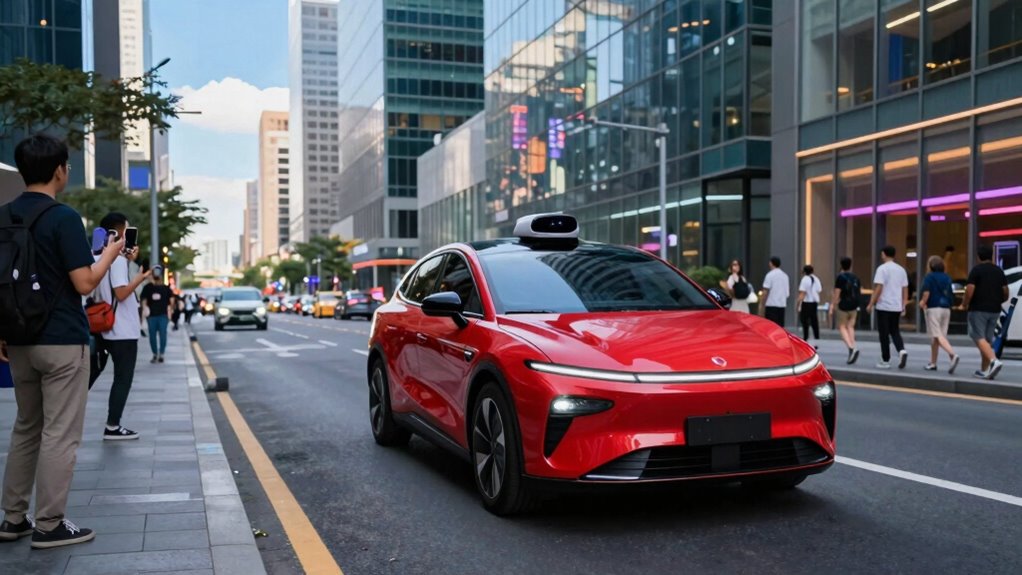

Self-driving cars are making rapid progress, with companies like Waymo, Cruise, and Tesla testing autonomous taxis in urban areas. Regulatory progress is ongoing, but challenges like sensor limitations, safety concerns, and public trust slow widespread deployment. Pilot programs offer promising insights, but full adoption depends on infrastructure upgrades, safety standards, and societal acceptance. If you keep exploring, you’ll discover the key factors shaping when robotaxis might become a common sight everywhere.
Key Takeaways
- Autonomous vehicle technology is rapidly advancing, with pilot programs and testing expanding in urban areas worldwide.
- Major companies like Waymo, Cruise, and Tesla are progressing toward fully autonomous taxis, but full deployment is still limited.
- Infrastructure upgrades, regulatory developments, and safety concerns remain significant hurdles to widespread robotaxi adoption.
- Public trust and acceptance are gradually improving through transparency, safety demonstrations, and technological improvements.
- Widespread robotaxi deployment is likely in the next few years, but full ubiquity depends on resolving technical, regulatory, and societal challenges.
Top picks for "self driv cars"
Open Amazon search results for this keyword.
As an affiliate, we earn on qualifying purchases.
The Current Landscape of Autonomous Vehicle Technology
Autonomous vehicle technology has advanced rapidly in recent years, transforming the way we think about transportation. As a result, urban infrastructure is evolving to support these new systems, with smarter traffic management and dedicated lanes improving safety and efficiency. However, ethical considerations remain central to development, especially around decision-making during unavoidable accidents and data privacy. You’ll notice that cities are redesigning roads and adding sensors to accommodate self-driving cars, making them more integrated into daily life. This progress shows a focus on safety, reliability, and societal impact. Additionally, ongoing research into ethical decision-making algorithms aims to ensure autonomous vehicles act responsibly in complex scenarios. To support these innovations, the adoption of European cloud infrastructure is crucial for ensuring secure and sustainable data management. Moreover, advancements in sensor technology are enhancing vehicle perception and environment mapping, further driving the deployment of autonomous systems. As these technologies become more widespread, public acceptance remains a key factor in accelerating adoption and integrating robotaxis into urban environments.
Major Players and Their Progress Toward Fully Autonomous Taxis
Major companies are making significant strides toward deploying fully autonomous taxis, aiming to revolutionize urban transportation. They’re focusing on integrating their technology with existing urban infrastructure, such as smart traffic signals and dedicated lanes, to improve safety and efficiency. These companies are also collaborating with insurance providers to develop policies tailored for autonomous vehicles, addressing liability concerns and risk management. Progress varies among industry leaders like Waymo, Cruise, and Tesla, with some conducting extensive public testing and others pushing toward commercial deployment. Their advancements indicate a strong commitment to overcoming technical and logistical hurdles, bringing fully autonomous taxis closer to reality. As they refine these systems, urban environments will become more adaptable to autonomous fleets, transforming how people move within cities.
Regulatory Environment and Policy Developments
How are governments and regulatory agencies keeping pace with the rapid advancements in self-driving car technology? They’re actively implementing policy reforms and updating legal frameworks to accommodate autonomous vehicles. Some regions are creating dedicated regulations that clarify liability, safety standards, and testing protocols, making it easier for companies to deploy robotaxis. Others are establishing pilot programs to gather data and refine policies before full-scale rollouts. These efforts aim to strike a balance between fostering innovation and ensuring public safety. Additionally, many authorities are collaborating with industry experts to develop safety standards that adapt to emerging technologies. While progress varies globally, a common trend is moving toward more flexible, adaptable policies that can keep up with technological breakthroughs. Overall, regulatory environments are evolving to support autonomous vehicle deployment, but clear, consistent standards remain essential for widespread adoption. Incorporating tanning tips and other safety measures can help ensure that all new transportation technologies promote public well-being. Furthermore, ongoing research into AI safety protocols is crucial to address the unique challenges posed by autonomous systems. Enhanced understanding of sensor reliability and real-time data processing will also play a vital role in ensuring safety and public trust.
Technical Challenges and Safety Concerns
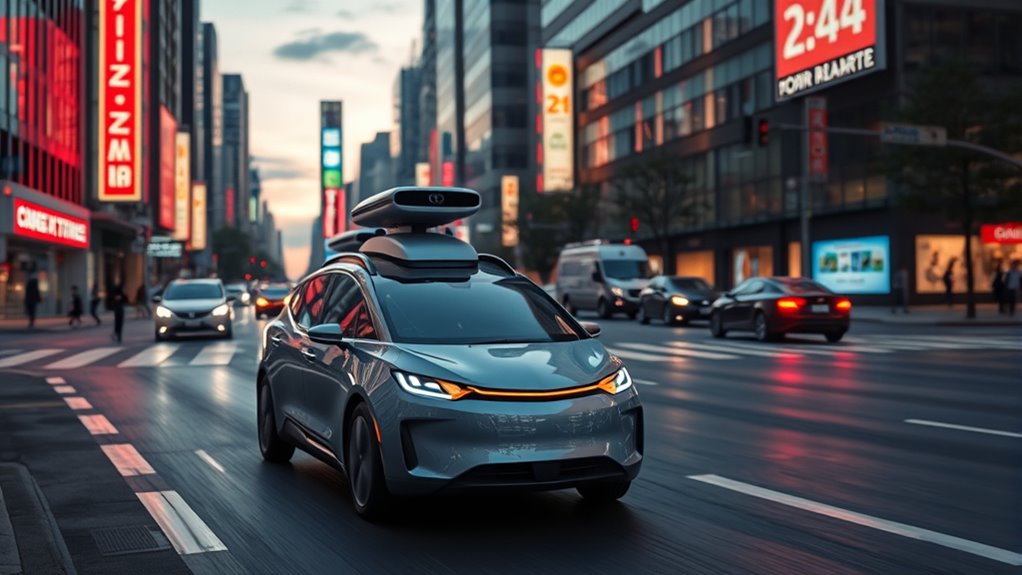
You need to understand that sensor limitations and blind spots can cause self-driving cars to miss critical obstacles. Decision-making under uncertainty remains a major hurdle, especially in complex or unpredictable situations. Addressing these challenges is essential to improve safety and build trust in autonomous vehicle technology. Additionally, implementing comprehensive sensor calibration and testing protocols can help mitigate some of these limitations. For example, ongoing research into sensor fusion techniques aims to improve the accuracy and reliability of obstacle detection under various conditions. Proper body sensor integration can further enhance the perception capabilities of autonomous systems, leading to safer navigation. Furthermore, understanding decision-making algorithms is crucial to improve how autonomous vehicles respond in unpredictable scenarios. Continual advancements in real-world testing are also crucial to ensure these systems perform reliably in diverse driving environments.
Sensor Limitations and Blind Spots
Sensor limitations and blind spots pose significant technical challenges and safety concerns for self-driving cars. While sensors like lidar, radar, and cameras enable vehicle perception, they aren’t perfect. Sensor limitations mean these systems can struggle in poor weather, low-light conditions, or when objects are partially obscured. Blind spots, areas not covered by sensors, create risks, especially when other vehicles or pedestrians appear suddenly. These gaps can cause the vehicle to misjudge distances or fail to detect obstacles altogether. As a result, autopilot systems might react too late or incorrectly. Overcoming these issues requires ongoing advancements in sensor technology, sensor fusion, and strategic system design. Until then, blind spots and sensor limitations remain critical factors affecting the safety and reliability of self-driving cars.
Decision-Making Under Uncertainty
Decisions made by self-driving cars during uncertain situations are among the most complex and critical safety challenges they face. When the AI encounters unpredictable scenarios, it must weigh multiple factors quickly, often involving ethical dilemmas and moral considerations. For example, choosing between risking passenger safety or pedestrian lives involves difficult moral trade-offs. These situations demand advanced algorithms that can handle ambiguity while aligning with societal values. However, uncertainty from sensor limitations and unpredictable human behavior complicates decision-making. Developers work to improve AI models that balance safety, legality, and ethics. Ultimately, ensuring self-driving cars make morally sound choices under uncertainty is essential for public trust and widespread adoption of robotaxis. Achieving this requires ongoing innovation and rigorous safety assessments.
Pilot Programs and Real-World Deployments

You’re probably curious about how self-driving cars are performing in real-world settings. Current pilot initiatives are making progress, but they also face operational challenges that testers work to overcome. Understanding these efforts reveals how close we are to wider deployment and what obstacles still remain. Additionally, ongoing real-world testing helps refine the technology and address safety concerns before broader adoption. As these pilot programs expand, they increasingly incorporate natural environments, which is crucial for assessing the vehicles’ ability to navigate complex and unpredictable conditions. Incorporating diverse scenarios in testing is essential for building public trust and ensuring safety in varied real-world situations. Moreover, continuous testing in varied conditions is vital to improve machine learning algorithms and adapt to unforeseen circumstances. Recognizing the importance of ethnic diversity in testing environments also plays a role in enhancing system robustness and inclusivity.
Current Pilot Initiatives
Have you wondered how self-driving cars are testing their capabilities in real-world settings? Current pilot initiatives are actively shaping the future of autonomous transportation. Cities are partnering with companies like Waymo, Cruise, and Uber to deploy robotaxis in select neighborhoods. These programs help refine urban planning strategies by analyzing how autonomous vehicles interact with existing infrastructure and traffic patterns. They also bring essential insights into insurance implications, as companies and regulators evaluate liability and coverage requirements for autonomous operations. These pilots are often limited in scope but provide valuable data on safety, efficiency, and public acceptance. As these initiatives expand, they contribute to building the foundation needed for widespread deployment, bringing us closer to a future where robotaxis are a common sight on city streets.
Operational Challenges and Progress
While pilot programs have made significant strides, deploying self-driving cars in real‑world settings still presents substantial operational challenges. You must navigate complex environments, unpredictable human behavior, and diverse weather conditions, which test the reliability of autonomous systems. Ethical dilemmas also emerge, such as decision‑making in unavoidable accident scenarios, raising questions about moral priorities. Additionally, cybersecurity threats pose serious risks; hackers could manipulate vehicle controls or steal data, compromising safety and passenger trust. Progress continues with improved sensor technology and better algorithms, but integrating these vehicles into daily traffic remains a work in progress. Overcoming these hurdles requires ongoing collaboration among automakers, regulators, and tech developers to ensure safety, security, and ethical compliance as self‑driving cars move closer to widespread deployment. Operational safety protocols are essential to address these challenges effectively. Moreover, understanding and mitigating cybersecurity vulnerabilities is critical to safeguarding autonomous vehicles from malicious attacks.
Public Perception and Consumer Acceptance
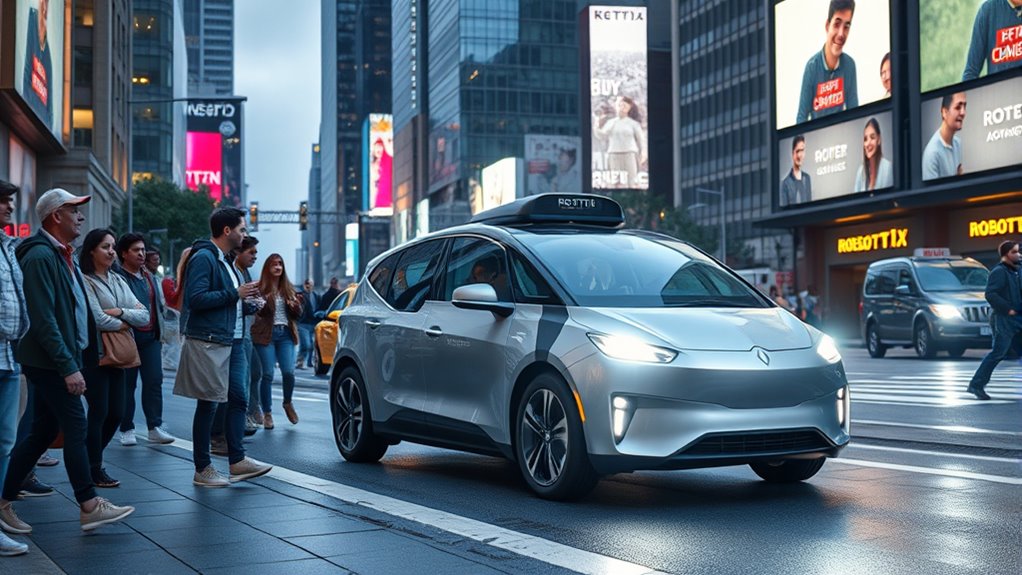
Public perception of self-driving cars plays a crucial role in their widespread adoption. If you’re skeptical about trusting these vehicles, it’s natural—public trust remains a significant hurdle. Many consumers still question the safety and reliability of autonomous technology, fueled by high-profile accidents and media coverage. This skepticism can be further exacerbated by a lack of understanding about how these systems work, which underscores the importance of transparency in safety data. Companies are working to improve transparency, sharing data and safety records to build trust. Educating the public about advancements and addressing concerns directly can help shift perceptions. Recognizing that trust in technology is fundamental to adoption, efforts to increase confidence are vital. Improving public awareness about how power systems and safety features operate can also help alleviate fears. Additionally, demonstrating consistent safety performance through reliable testing can significantly influence acceptance. Ultimately, gaining your confidence is key; without broad consumer acceptance, widespread deployment will face delays. Your perception influences the future pace of self-driving car adoption.
Opportunities and Limitations for Widespread Adoption

Despite ongoing concerns about safety and trust, self-driving cars present significant opportunities for transforming transportation. They can streamline urban planning by reducing traffic congestion and optimizing road use, leading to more efficient cities. Widespread adoption could lower insurance implications for drivers, as autonomous systems may decrease accidents caused by human error. However, limitations remain, including high deployment costs, regulatory hurdles, and technical challenges like sensor reliability in complex environments. Infrastructure upgrades are necessary for seamless integration, which might slow adoption rates. Additionally, public acceptance varies, impacting how quickly these vehicles become commonplace. While the potential benefits are substantial, overcoming these limitations requires coordinated efforts among developers, policymakers, and communities to *liberate* the full opportunities self-driving cars offer. Recognizing the importance of public trust in autonomous technology is crucial for fostering broader acceptance and integration. Building public confidence in these systems is essential to accelerate adoption and realize their full potential. comprehensive understanding of these challenges is essential to foster broader acceptance and integration.
Future Outlook: When Might Robotaxis Be a Common Sight?

The timeline for robotaxis becoming a common sight depends heavily on technological advancements, regulatory progress, and public acceptance. As urban infrastructure adapts, your daily commute could transform considerably. However, ethical considerations remain essential in shaping this future.
Consider these key points:
Key factors shaping the widespread adoption of robotaxis.
- Enhanced urban infrastructure will be essential to support widespread robotaxi deployment, reducing congestion and improving safety.
- Regulatory frameworks must evolve to address safety, liability, and data privacy, influencing how quickly robotaxis become mainstream.
- Public trust and acceptance hinge on addressing ethical concerns, such as decision-making in critical situations and data security.
While some cities may see robotaxes soon, a broader, more universal adoption depends on aligning these factors. The future is promising but requires patience and careful planning.
Frequently Asked Questions
How Will Autonomous Vehicles Impact Urban Infrastructure and City Planning?
Autonomous vehicles will transform urban infrastructure by reducing urban congestion and changing parking management. You’ll see less need for extensive parking lots, freeing up space for parks and buildings. Cities might redesign roads to accommodate self-driving cars, improving traffic flow. With improved parking management, you’ll experience easier parking solutions and fewer traffic jams, making urban areas more efficient and enjoyable to navigate.
What Are the Insurance and Liability Implications of Self-Driving Cars?
You’ll need to understand that insurance liability shifts with autonomous vehicles. When an accident occurs, legal responsibilities may fall on manufacturers, software developers, or even the vehicle owner, depending on the situation. This means insurance policies must adapt to cover new risks, and liability laws will evolve to clarify who’s responsible. Staying informed helps you navigate the changing landscape of self-driving car insurance and legal responsibilities effectively.
How Do Autonomous Vehicles Perform in Extreme Weather Conditions?
Autonomous vehicles often struggle in extreme weather conditions because sensor reliability drops during snow, fog, or heavy rain. This hampers their weather adaptation, making it harder for self-driving cars to detect obstacles and navigate safely. While manufacturers are improving sensor technology, you should be cautious in severe weather, as performance isn’t yet fully reliable. Expect ongoing advancements to better handle these challenging conditions in the future.
Will Autonomous Taxis Replace Traditional Public Transportation Systems?
Autonomous taxis are poised to revolutionize public transit, with studies showing they could reduce costs by up to 50%. As the ride-sharing evolution accelerates, these vehicles will likely supplement, not replace, traditional systems initially. You’ll see fleet management become more efficient, with autonomous taxis offering flexible, on-demand service. While they won’t fully replace mass transit overnight, they’ll reshape how you commute, making transportation more accessible and affordable.
What Are the Privacy Concerns Related to Data Collection by Self-Driving Cars?
You should be aware that self-driving cars raise significant data privacy and surveillance concerns. These vehicles collect vast amounts of data about your location, habits, and daily routines, which could be misused or hacked. This continuous data collection can lead to invasive surveillance, compromising your privacy. It is crucial to stay informed about how your data is handled and advocate for strict privacy policies to protect yourself from potential misuse.
Conclusion
Imagine stepping into a robotaxi in your city next year, just like Waymo’s pilot programs in Phoenix. While tech keeps improving and regulations evolve, widespread adoption still faces hurdles. But with ongoing innovations and increasing pilot success, it’s realistic to see autonomous taxis becoming common in the next few years. Soon, you might simply hop into a self-driving car and arrive at your destination safely and effortlessly.