

Innovative technologies are transforming how we fight climate change. Smarter renewable energy systems, like high-efficiency solar panels and wind turbines, make clean power more affordable and accessible. Advances in battery storage make renewable energy available when needed. Carbon capture tech helps reduce emissions, while smart grids optimize energy use in cities. Sustainable transportation, green building tech, and AI-driven solutions all work together to create a greener future. Discover more about these game-changing innovations as you explore further.
Key Takeaways
- Advanced renewable energy technologies like smarter water turbines and efficient solar panels reduce carbon emissions and increase clean energy adoption.
- Next-generation battery storage solutions enable reliable renewable power during low generation periods, supporting a greener grid.
- Carbon capture, utilization, and storage (CCUS) innovations, including direct air capture and mineralization, help reduce atmospheric CO₂ levels.
- Sustainable transportation advancements, such as improved electric vehicles and smart urban planning, lower fossil fuel dependence and emissions.
- AI-driven climate modeling enhances prediction accuracy, guiding effective policies and technological investments to combat climate change.
Top picks for "tech climate change"
Open Amazon search results for this keyword.
As an affiliate, we earn on qualifying purchases.
Breakthroughs in Renewable Energy Technologies
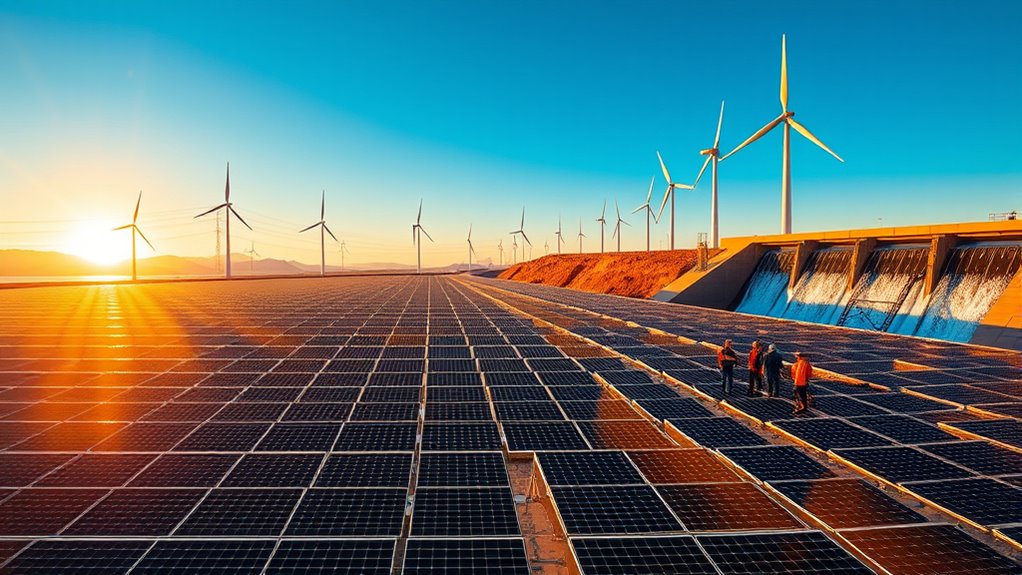
Recent advances in renewable energy technologies are transforming the way we generate power, making clean energy more efficient and affordable. The hydropower evolution has led to smarter, more sustainable water turbines that harness flowing water without harming ecosystems. These improvements boost energy output and reduce environmental impact. Additionally, the integration of smart grid systems allows for more effective distribution and management of renewable energy sources, enhancing overall efficiency. Grid modernization enables better coordination between energy sources and consumers, reducing waste and increasing reliability. Moreover, innovations in advanced energy storage solutions ensure that renewable power can be stored efficiently for use during periods of low generation. The development of energy storage systems, like batteries and other technologies, is crucial for balancing supply and demand, especially as intermittent sources like wind and solar become more prevalent. As these technologies advance, you’ll find renewable energy becoming more accessible and cost-effective. These breakthroughs help shift us away from fossil fuels, tackling climate change while providing a consistent, sustainable energy supply for the future. Additionally, wave and wind energy are gaining traction as promising sources of renewable power, with new turbines designed to maximize efficiency while minimizing environmental disruption.
The Rise of Solar Power Innovations

As solar power technology continues to advance, innovations are making solar panels more efficient and affordable than ever before. You’ll notice that improvements in photovoltaic material innovations are boosting solar panel efficiency, allowing more sunlight to convert into usable energy. These breakthroughs are driven by:
- Developing new materials that capture a broader spectrum of sunlight, increasing overall efficiency.
- Creating thin-film solar cells that are lightweight, flexible, and easier to install.
- Enhancing manufacturing techniques to reduce costs and make solar technology accessible to more communities.
- Battery technology advancements are also playing a crucial role in storing excess energy, making renewable energy more reliable and widespread.
- Ongoing research into solar panel durability is extending the lifespan of panels, reducing long-term costs for consumers and utilities alike.
- Additionally, innovations in photovoltaic materials are enabling the development of more sustainable and environmentally friendly solar solutions.
- Improvements in solar panel installation methods are simplifying deployment and helping to accelerate the adoption of solar energy worldwide.
- These innovations are also supported by government incentives that encourage adoption and investment in solar infrastructure, further accelerating progress.
Advancements in Wind Energy Systems

Advancements in wind energy systems are transforming how you harness the power of the breeze to generate electricity. Modern aero turbines are larger, more efficient, and designed for both onshore and offshore installations. Offshore setups, in particular, benefit from stronger, steadier winds, boosting energy output. Innovations include floating turbines that extend reach into deeper waters, and improved blade designs for enhanced performance. These developments enable more sustainable and cost-effective energy production, reducing reliance on fossil fuels. Additionally, technological innovations in monitoring and maintenance further optimize operational efficiency. Understanding the role of modern turbines helps illustrate how these technologies contribute to a cleaner energy future. The weight of wind turbine blades varies greatly depending on design and materials, influencing transportation and installation logistics. Moreover, ongoing research and development efforts continue to push the boundaries of wind energy capabilities. For example, the integration of advanced materials can significantly improve turbine lifespan and performance. Below is a table illustrating key features of recent wind energy advancements:
| Feature | Description | Impact |
|---|---|---|
| Larger Aero Turbines | Increased blade size and capacity | Higher energy yield |
| Floating Installations | Turbines anchored in deep water | Access to stronger winds |
| Blade Materials | Use of lightweight composites | Improved efficiency and durability |
| Smart Controls | Real-time performance adjustments | Maximized output and longevity |
| Offshore Maintenance | Modular, scalable service systems | Reduced downtime and costs |
Next-Generation Battery Storage Solutions

Next-generation battery storage solutions are revolutionizing how we store and deploy renewable energy, addressing the intermittent nature of sources like wind and solar. These advancements focus on increasing energy density, so batteries store more power in smaller sizes, making them more efficient. They also emphasize sustainability through improved battery recycling methods, reducing waste and environmental impact. Here are key innovations:
Next-generation batteries boost energy density and sustainability, making renewable energy storage more efficient and eco-friendly.
- Higher energy density batteries to maximize storage capacity.
- Advanced materials enabling faster charging and longer lifespan.
- Enhanced recycling processes to recover valuable components and minimize waste, supporting sustainable practices and reducing environmental harm. Furthermore, these improvements mean you can rely more on renewable energy, with batteries that last longer and are more environmentally friendly. As a result, energy storage becomes smarter, supporting a cleaner, more sustainable future, and innovations in battery technology continue to drive progress toward a greener planet.
Innovative Carbon Capture and Storage Techniques

Innovative carbon capture technologies are transforming how we reduce emissions, making the process more efficient and cost-effective. You need to contemplate how captured CO₂ can be utilized in products like fuels or building materials to maximize impact. Exploring dark psychology tactics can help stakeholders understand and address potential manipulation or misinformation surrounding these technologies. Ensuring storage safety and maintaining the integrity of these sites remain critical to prevent leaks and protect the environment. Additionally, understanding the net worth of individuals involved in these innovations can foster greater public support and investment in sustainable technologies. Incorporating cybersecurity measures is essential to safeguard sensitive data related to these projects and prevent cyber threats. Recognizing the importance of creative storytelling can also help communicate these advancements effectively to a broader audience. Moreover, emphasizing public awareness is vital for building trust and encouraging responsible adoption of carbon capture solutions.
Advanced Capture Technologies
Advanced capture technologies are transforming how we address carbon emissions by developing more efficient and cost-effective methods to trap CO₂ directly from industrial sources or the atmosphere. You can now explore innovative techniques like:
- Direct air capture systems that filter CO₂ directly from ambient air, reducing overall greenhouse gases.
- Oceanic absorption methods that enhance the natural process of CO₂ uptake by seawater, helping to lower atmospheric levels.
- Enhanced mineralization, where captured CO₂ reacts with minerals to form stable carbonates, locking away emissions permanently.
These advancements make carbon removal more scalable and practical, offering promising solutions for tackling climate change. By focusing on direct air and oceanic absorption, you’re working toward a future where CO₂ can be efficiently removed from the environment, making a tangible impact. Carbon removal technologies are increasingly being integrated with existing infrastructure to improve efficiency and reduce costs over time.
Utilization of Captured CO₂
Utilization of captured CO₂ offers a practical way to turn emissions into valuable products or safe storage solutions. One promising approach is enhanced mineralization, where CO₂ reacts with natural minerals to form stable carbonates, effectively locking in carbon permanently. This method reduces the risk of leakage and provides a durable storage option. Additionally, biofixation methods leverage microorganisms or plants to absorb and convert CO₂ into biomass or other useful materials. These techniques can produce biofuels, bioplastics, or fertilizers, adding economic value while mitigating climate impact. By transforming captured CO₂ into marketable products or stable compounds, you can help close the carbon loop, making emissions management more sustainable and economically viable. This innovative utilization not only curbs greenhouse gases but also creates new opportunities for green industries. Deep product research helps ensure the effectiveness and safety of these emerging solutions.
Storage Safety and Integrity
Ensuring the safety and integrity of CO₂ storage sites is critical as more industries adopt carbon capture technologies. You need to consider several key factors to maintain storage safety and uphold storage integrity:
- Regular monitoring to detect leaks early and prevent environmental harm.
- Using advanced sealing techniques to ensure CO₂ stays securely underground.
- Implementing rigorous site selection processes to choose geologically stable formations.
These steps help prevent accidental releases, protect surrounding ecosystems, and maintain public trust. By focusing on storage safety, you ensure that captured CO₂ remains securely stored, minimizing risks associated with leaks or containment failures. Innovative techniques and strict protocols are essential to preserve storage integrity, making carbon capture a safe and reliable climate solution.
Sustainable Transportation Technologies

You can make a difference by exploring how electric vehicle advancements are transforming transportation and reducing emissions. Innovative alternative fuels are also playing a key role in creating cleaner, more sustainable options. Together, these technologies are shaping the future of eco-friendly mobility.
Electric Vehicle Advancements
Advancements in electric vehicle (EV) technology are transforming sustainable transportation by making EVs more efficient, affordable, and accessible. Today’s electric cars benefit from breakthroughs in battery technology, extending range and reducing costs. To understand the impact, consider these key developments:
- Improved Battery Efficiency: New chemistries increase energy density, allowing longer drives on a single charge.
- Faster Charging: Ultra-fast chargers cut charging time dramatically, making EVs more convenient.
- Lower Costs: Mass production and better materials are driving down the price of electric cars, making them more accessible to everyone.
These innovations mean you can now enjoy a reliable, eco-friendly electric car that fits your lifestyle and helps combat climate change. The future of sustainable transport is electric, and it’s closer than ever.
Alternative Fuel Innovations
While electric vehicles lead the charge toward sustainable transportation, alternative fuel technologies are expanding the options available for reducing carbon emissions. Biofuel development offers a promising solution by converting organic materials into cleaner-burning fuels, which can seamlessly replace traditional gasoline and diesel. This reduces greenhouse gases without requiring a complete overhaul of existing infrastructure. Additionally, the hydrogen economy is gaining momentum as a zero-emission fuel source, with hydrogen-powered vehicles emitting only water vapor. Advances in hydrogen production, storage, and fueling stations are making this technology more viable for widespread adoption. Together, these innovations in biofuels and hydrogen are broadening the landscape of sustainable transportation, providing cleaner, more versatile options that complement electric vehicles in the fight against climate change.
Smart Grids and Energy Management Systems

Smart grids and energy management systems are transforming how we produce, distribute, and consume electricity, making the power supply more efficient and reliable. By implementing smart grid optimization and advanced energy management algorithms, you can better balance supply and demand in real-time. This leads to reduced energy waste and lower costs. Here’s how they make a difference:
Smart grids optimize energy use, reduce waste, and support renewable integration for a greener, more reliable electricity future.
- They enable real-time monitoring and control of energy flow.
- They optimize energy use across homes and industries.
- They facilitate integration of renewable sources, reducing reliance on fossil fuels.
With these technologies, you can actively participate in a smarter, greener energy future. As a result, these systems help stabilize the grid, promote sustainability, and cut greenhouse gas emissions—crucial steps in combating climate change.
Green Building and Urban Planning Technologies

Building on the improved energy management enabled by smart grids, green building and urban planning technologies focus on creating sustainable, energy-efficient environments from the ground up. You can contribute by supporting developments that prioritize urban green spaces, which reduce heat, improve air quality, and boost biodiversity. Using eco-friendly building materials, like recycled steel or bamboo, minimizes environmental impact and enhances building efficiency. Thoughtful urban planning incorporates walkable neighborhoods and accessible public transit, reducing reliance on cars and lowering emissions. These innovations aim to design cities that are resilient, healthier, and more sustainable. By integrating green spaces and sustainable materials into urban environments, you help create communities that are better suited to combat climate change while improving quality of life.
The Role of Artificial Intelligence in Climate Action

How is artificial intelligence transforming efforts to combat climate change? AI-driven climate modeling allows you to predict future environmental shifts more accurately, helping policymakers craft better strategies. It accelerates data analysis, revealing patterns that humans might miss. Here are three ways AI is making a difference:
AI enhances climate predictions, accelerates data analysis, and supports responsible deployment to fight climate change effectively.
- Improving climate predictions with AI-driven climate modeling for precise forecasts.
- Optimizing renewable energy deployment by analyzing vast datasets efficiently.
- Addressing ethical considerations by ensuring AI applications promote transparency and fairness.
While AI offers powerful tools, it’s imperative to consider ethical implications, like data privacy and bias. Your role involves understanding these innovations and advocating responsible use, ensuring AI serves humanity’s best interests in fighting climate change.
Frequently Asked Questions
How Cost-Effective Are These New Green Technologies for Everyday Consumers?
Green technologies are increasingly cost-effective for you, thanks to ongoing cost analysis and improved manufacturing. While some innovations still surpass affordability benchmarks, many are becoming accessible, reducing your long-term expenses through energy savings and incentives. As prices drop and efficiency rises, you’ll find adopting green solutions more affordable, making it easier for you to support environmental efforts without breaking the bank.
What Are the Potential Environmental Impacts of Large-Scale Battery Manufacturing?
Large-scale battery manufacturing can impact the environment through resource extraction and waste, but you can help reduce this by supporting battery recycling efforts. Recycling minimizes raw material extraction, lessening environmental damage and reducing the strain on the supply chain. By choosing products from companies that prioritize sustainable supply chains, you contribute to lowering pollution and conserving resources, making battery production more eco-friendly and sustainable for the planet.
How Do AI Systems Ensure Transparency and Prevent Misuse in Climate Solutions?
You can guarantee AI systems promote transparency and prevent misuse by focusing on algorithm transparency and ethical AI practices. By making algorithms open and accessible, you allow others to review and understand how decisions are made. Implementing ethical AI standards guides responsible development, ensuring systems align with environmental goals without harmful biases. This approach fosters trust, accountability, and safeguards in climate solutions, helping you create effective, fair, and trustworthy innovations.
Can Renewable Energy Sources Fully Replace Fossil Fuels Worldwide?
Renewable energy can potentially replace fossil fuels, but it’s not straightforward. You’ll need effective energy storage solutions and seamless grid integration to manage variability from sources like wind and solar. While tech advances make this increasingly possible, full replacement requires significant infrastructure upgrades and policy support. So, while promising, renewables alone might not fully supplant fossil fuels overnight; a balanced, integrated approach is essential.
What Policies Are Needed to Accelerate Adoption of These Innovations Globally?
You should support policies that promote international treaties, subsidies, and incentives to accelerate adoption globally. These measures encourage countries to collaborate, reduce emissions, and invest in clean tech. By backing such policies, you help create a level playing field, making renewable energy more affordable and accessible. Your involvement can also push governments to prioritize climate action, ultimately speeding up the shift away from fossil fuels worldwide.
Conclusion
As you explore these innovations, remember they’re the seeds of hope in our fight against climate change. Like a lighthouse guiding ships safely to shore, technology illuminates a path toward a sustainable future. By embracing these breakthroughs, you become part of the solution—helping to steer our planet away from the brink and into a brighter, greener horizon. Together, your actions can turn the tide and make a lasting impact.