

Many of your gadgets, like smartphones and smart speakers, are always listening to pick up wake words, which can lead to accidental recordings and data collection without your full awareness. They gather voice, location, and sensor data to personalize services but also pose privacy risks if misused or mishandled. Recognizing signs your devices are listening and managing privacy settings can help protect you — stay tuned to learn how to regain control.
Key Takeaways
- Devices with always-on microphones activate through wake words, often listening continuously and sometimes without clear triggers.
- Voice and sensor data are passively collected, analyzed, and shared, raising significant privacy concerns.
- Unintentional recordings and background noises can lead to unwanted data storage and potential breaches.
- Users should review privacy settings, understand data policies, and enable encryption to protect their information.
- Legal protections like GDPR and CCPA aim to safeguard user privacy but require active user engagement and oversight.
Top picks for "technology privacy gadget"
Open Amazon search results for this keyword.
As an affiliate, we earn on qualifying purchases.
The Rise of Always-On Microphones
Always-on microphones have become increasingly common in our homes and devices, constantly listening for voice commands. This ambient listening feature activates the microphone as soon as you speak a wake word like “Hey Siri” or “Alexa.” With microphone activation, your device stays alert, ready to respond instantly, without needing manual input. This seamless interaction offers convenience but raises privacy concerns, as the microphone is always listening in the background. Many people worry about what happens when the microphone picks up private conversations or sensitive information unintentionally. Despite efforts to limit false activations, the constant ambient listening means your voice could be captured at any moment. Understanding how these microphones work helps you make informed decisions about your privacy and device usage. Additionally, the adoption of European cloud solutions can enhance data security and privacy, giving users greater control over their voice data. Furthermore, microphone sensitivity settings can often be adjusted to reduce unintended recordings and improve privacy.
How Devices Collect and Use Your Data
Devices gather your data through methods like tracking your activity, listening to your commands, and monitoring your location. They use this information to personalize services, improve performance, or target ads. Understanding these processes helps you see how your data is constantly being collected and used. Additionally, many devices employ cookie categories to manage how your information is stored and shared. Recognizing the types of privacy policies in place can further help you understand how your data is protected or shared. Some devices also utilize local automation features to process data directly on the device, enhancing privacy. Awareness of device security practices is essential to prevent unauthorized access to your information.
Data Collection Methods
Many modern gadgets secretly gather your data through various methods, often without you even realizing it. Voice data is captured when you speak to virtual assistants or voice-activated devices, which record and analyze your commands. Device sensors also play a significant role, collecting information about your movements, location, and environment. For example, accelerometers detect motion, while cameras and microphones pick up visual and auditory cues. Some devices track your habits passively, logging usage patterns and interactions. This data collection occurs continuously, often in the background, to improve device functionality or target advertising. Sensor technology enables devices to gather detailed environmental and behavioral information, often without explicit user awareness. While these methods can enhance your experience, they also raise privacy concerns, especially when data is collected without clear consent or understanding. Additionally, free floating data can sometimes be aggregated and shared with third parties, increasing the risk of misuse. Understanding the data collection methods helps you better grasp how your information is used and how to protect your privacy. Furthermore, many gadgets utilize encryption techniques to protect your data during transmission, though these are not always foolproof. Being aware of data security practices can help you take steps to safeguard your personal information.
Data Usage Purposes
Have you ever wondered how the data collected by your gadgets is actually used? Companies analyze voice data to improve voice recognition features and deliver more personalized experiences. Your voice commands help refine AI systems, making them more accurate over time. Additionally, your data contributes to user profiling, allowing businesses to understand your preferences, habits, and needs better. This profiling enables targeted advertising, tailored recommendations, and customized services. While these practices can enhance usability, they also raise privacy concerns. Companies might share or sell your data to third parties, increasing the risk of misuse. Ultimately, your voice data isn’t just for immediate service improvements—it plays a significant role in building detailed profiles that influence your online environment and advertising exposure.
Common Signs That Your Gadgets Are Listening

If your gadgets seem to respond unexpectedly or pick up on conversations without any clear trigger, it’s a sign they might be listening. You might notice your device activating suddenly, even when you didn’t say the wake word, which points to voice activation features working in the background. Additionally, audio anomalies like strange sounds, faint conversations, or background noises appearing at odd times can indicate your device is eavesdropping. You could also observe targeted ads or suggestions that closely match private conversations, even when you haven’t spoken aloud about those topics. These signs suggest your gadgets are capturing more than just commands—they might be listening to your private moments without your knowledge. Stay alert to these cues to protect your privacy. Recognizing the voice activation features and understanding how connected devices operate can help you better identify potential privacy breaches. Being aware of connected device operation and how data is collected can further empower you to safeguard your personal information.
The Role of Voice Assistants in Modern Life
Voice assistants have become central to many households, making daily tasks easier and more convenient. However, this convenience raises concerns about how your data is collected and used. As they integrate with smart home devices, it’s important to contemplate the privacy risks involved. For example, understanding market options can help consumers make more informed decisions about voice assistant products and their privacy implications. Additionally, being aware of connectivity standards can help users better secure their devices from potential breaches. Regular updates and security patches are also essential to protect against emerging vulnerabilities and ensure your piercing care and hygiene remains uncompromised. Staying informed about credit card insights can further help users safeguard their financial information when using connected devices. Moreover, exploring privacy policies allows users to understand how their data is managed and shared.
Voice Assistants and Data
How deeply have voice assistants become woven into our daily routines? They listen, understand, and respond through advanced voice recognition. Every command you give is processed, stored, and analyzed, raising questions about data privacy. To safeguard your information, firms use data encryption, securing your conversations from unauthorized access. Consider this visual:
| Your Commands | Data Security Measures |
|---|---|
| Setting reminders | Encrypted transmission |
| Asking for weather | Secure cloud storage |
| Playing music | User authentication |
| Controlling smart devices | Regular data audits |
| Searching the web | Privacy policies in place |
While voice assistants offer convenience, it’s crucial to comprehend how your data flows and the safeguards protecting it. Your voice is becoming a valuable commodity. Understanding data management practices can help you make informed decisions about your privacy. Additionally, staying informed about industry trends ensures you are aware of evolving privacy practices. Being aware of user consent policies can further empower you to control your personal information. Recognizing the importance of privacy policies in safeguarding your data is essential as technology continues to advance.
Privacy Concerns Rise
As voice assistants become more integrated into daily life, concerns about privacy grow louder. You might worry about how your voice data is stored and used, especially if companies don’t clearly explain their policies. Many devices claim to use data encryption to protect your information, but breaches can still happen. More importantly, your user consent isn’t always transparent; you often agree to terms without fully understanding what data is collected or shared. This lack of clarity fuels fears that your conversations could be monitored or misused without your knowledge. As a result, privacy concerns rise, prompting calls for stricter regulations and better safeguards. You deserve to know exactly how your data is handled and to have control over your personal information. Additionally, understanding security and safety measures can help you make informed choices about your devices.
Smart Home Integration
Smart home integration has transformed the way you interact with everyday devices, making tasks more convenient and efficient. With voice commands, you can effortlessly control lights, thermostats, and security systems without lifting a finger. The key is device compatibility; not all gadgets work seamlessly together, so choosing compatible products guarantees smooth operation. Voice assistants, like Alexa or Google Assistant, respond instantly to your commands, creating a hands-free experience. However, this convenience comes with privacy considerations—your voice data is constantly being listened to and processed. By understanding how these devices interpret your commands and what data they collect, you can better protect your privacy while enjoying the benefits of smart home integration. Additionally, support Breakfast options are often available in smart home setups, offering convenient ways to start your day.
Privacy Settings and How to Manage Them
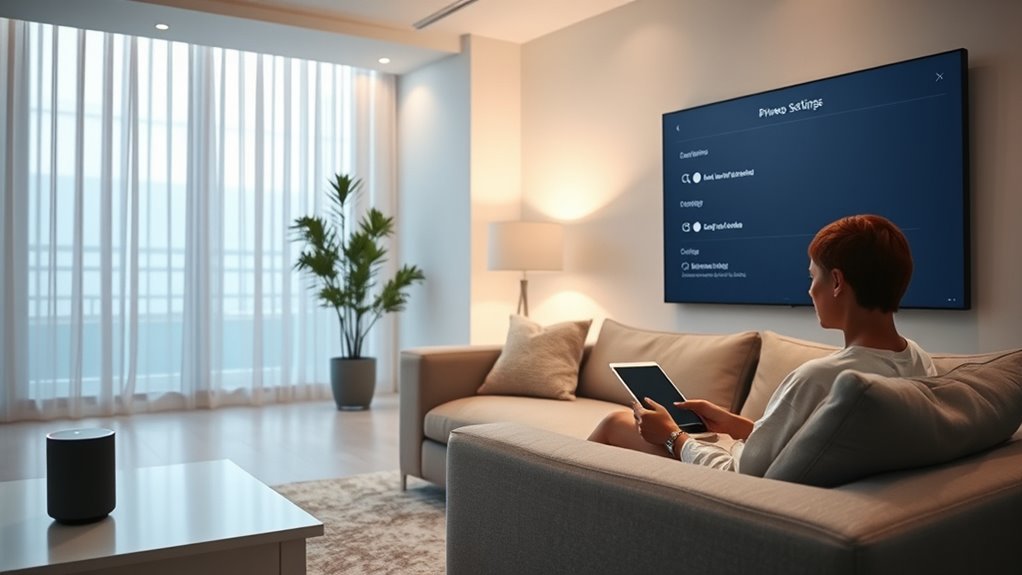
Have you ever wondered how to control what others see about you online? Managing your privacy settings is key. Start by reviewing the privacy options on your devices and apps; many platforms let you limit who can view your information. Pay attention to privacy policies—these documents explain how your data is used and shared. Enable data encryption where possible, as it protects your information from unauthorized access. Regularly update your settings to keep pace with new features and threats. Turn off permissions for mic and camera when you don’t need them. Remember, controlling your privacy isn’t a one-time task; it’s an ongoing process that helps safeguard your personal information and keeps your digital footprint in check. Incorporating auditory processing awareness into your understanding can also help you recognize potential privacy risks related to sound data collection and how to mitigate them.
Potential Risks of Over-Listening Technology
Over-listening technology, such as voice assistants and smart speakers, can pose significant privacy risks. When these devices constantly listen, your conversations can be unintentionally recorded and stored. This data may be vulnerable if not properly protected through data encryption, increasing the chance of unauthorized access. Additionally, voice recognition systems can misinterpret commands or accidental sounds, leading to unintended recordings. The risks include:
- Sensitive information being stored without your knowledge
- Data breaches exposing personal details
- Unauthorized third-party access to recordings
- Loss of control over your private conversations
Being aware of these dangers helps you understand that over-listening devices require careful management and robust security measures to protect your privacy.
Legal Frameworks and Consumer Rights
Legal frameworks and consumer rights play a crucial role in safeguarding your privacy amid the use of voice-activated devices. These legal safeguards set clear boundaries on how companies can collect, store, and use your data, ensuring transparency and accountability. Consumer protections give you the right to access, correct, or delete your information, and to be informed about data practices. Regulations like the GDPR in Europe and the CCPA in California strengthen your control over personal data, requiring companies to obtain your consent and notify you of data breaches. By understanding these protections, you can better advocate for your privacy rights and hold companies accountable if they misuse your information. Overall, legal frameworks are essential in maintaining trust and ensuring your privacy isn’t compromised.
Practical Tips to Protect Your Privacy
Protecting your privacy while using voice-activated devices requires proactive steps. First, review and adjust your device settings to limit data sharing and disable voice recordings if possible. Always demand clear user consent before enabling new features or sharing data. Use encryption techniques to secure your communications, ensuring that your data stays protected from unauthorized access. Additionally, regularly update your device software to patch security vulnerabilities. Be cautious about granting permissions to apps and devices, only allowing essential access. Remember, staying informed about privacy policies helps you make smarter choices.
- Limit data collection and sharing
- Disable voice recordings when not needed
- Enable encryption techniques for sensitive data
- Always read user consent agreements carefully
Frequently Asked Questions
Can Devices Listen Without My Knowledge or Consent?
Yes, your devices can listen without your knowledge or consent, raising privacy concerns. Many gadgets, like smartphones and smart speakers, have microphone access enabled by default or through app permissions. If you don’t review device permissions regularly, you might unknowingly allow listening features that compromise your privacy. To protect yourself, always check and manage your device permissions, and disable microphone access when you don’t need it.
How Accurate Are Voice Recognition Technologies Used by These Gadgets?
Voice recognition accuracy has improved considerably thanks to technological advancements, making your gadgets more reliable than ever. Today, these systems can understand natural language, accents, and context with high precision. While they aren’t perfect, most devices accurately interpret commands most of the time. You can generally trust their voice recognition capabilities, but occasional misunderstandings may still occur, especially with background noise or complex instructions.
Do All Smart Devices Record and Store Conversations Automatically?
Like a curious cat, many smart devices listen constantly, but not all record and store conversations automatically. Privacy concerns arise because some gadgets send voice data to cloud servers, risking data security breaches. To protect yourself, check device settings, disable features you don’t need, and stay informed about how your data is used. Being proactive helps you maintain control over your privacy and reduces potential risks.
What Are the Signs That My Device Is Secretly Listening?
You might notice privacy concerns if your device unexpectedly activates or if ads suddenly become eerily relevant without clear reason. Unusual device behavior, like background noise or responding without prompts, can also be signs it’s secretly listening. Stay alert for these clues, as they indicate your device could be recording conversations. Protect your privacy by reviewing your device’s settings and being cautious about what permissions you grant.
Are There Specific Laws Protecting Me From Unauthorized Listening?
Think of privacy regulations as a fortress guarding your personal space. Yes, there are laws like GDPR and CCPA that protect you from unauthorized listening, offering legal protections against data misuse. These regulations require companies to be transparent about data collection and give you control over your information. While no system is foolproof, understanding your rights helps you stand firm against invasive practices and keeps your privacy boundaries intact.
Conclusion
Think of your devices as a garden with delicate flowers—you control what blooms and what stays hidden. By staying vigilant and managing your privacy settings, you keep your personal information from becoming an open book. Remember, just like a gardener tends to their plants, you have the power to prune and protect your digital space. Stay alert, take control, and guarantee your gadgets serve you—not the other way around.