
The global chip wars impact the gadgets you buy by shaping their features, prices, and availability. Countries and companies compete to develop faster, more efficient semiconductors, but geopolitical tensions can disrupt supply chains, causing delays and higher costs. This competition drives innovation, making devices smarter and more powerful but also more expensive. If you want to understand how these battles influence your everyday tech, there’s more to uncover as the industry evolves.
Key Takeaways
- Geopolitical tensions disrupt supply chains, causing device shortages and higher prices for consumers.
- Trade restrictions limit access to advanced manufacturing technologies, slowing innovation and affecting gadget features.
- Chip shortages lead to delays in product launches and reduced availability of new gadgets.
- Competition among countries and companies accelerates innovation, resulting in more powerful and feature-rich devices.
- Ongoing global conflicts influence chip pricing, impacting the affordability of smartphones, laptops, and other electronics.
The Role of Semiconductors in Modern Devices

Semiconductors are the essential building blocks of modern electronic devices, enabling them to process and store information efficiently. Advances in semiconductor fabrication have allowed manufacturers to develop smaller, faster, and more powerful chips. By shrinking transistor sizes through chip design advancements, you get devices with increased performance and energy efficiency. These improvements mean your smartphones, laptops, and other gadgets can handle complex tasks seamlessly. As semiconductor fabrication techniques evolve, they push the limits of what chips can do, directly impacting device capabilities. Without continuous innovation in chip design, your devices would quickly become outdated. Energy-efficient manufacturing techniques further enhance the sustainability of semiconductor production, reducing environmental impact. The rapid pace of semiconductor development ensures your gadgets remain smarter, faster, and more reliable, powering everything from everyday tasks to cutting-edge technologies.
Key Players and Countries in the Chip Industry

Several countries and companies dominate the global chip industry, shaping the future of technology. The U.S., China, and Taiwan lead the market, while emerging startups are pushing innovation forward. Patent disputes are common, fueling rivalry and legal battles that influence supply chains. Here’s a snapshot of key players:
| Country/Company | Focus Area | Notable Fact |
|---|---|---|
| USA | Design, R&D | Apple, Intel |
| China | Manufacturing, Assembly | SMIC, HiSilicon |
| Taiwan | Foundries | TSMC, UMC |
| South Korea | Memory Chips | Samsung, SK Hynix |
| Emerging Startups | AI chips, Edge tech | Graphcore, Cerebras |
This landscape keeps evolving, driven by innovation and legal disputes that directly impact the gadgets you use daily.
How Geopolitical Tensions Impact Chip Supply and Prices
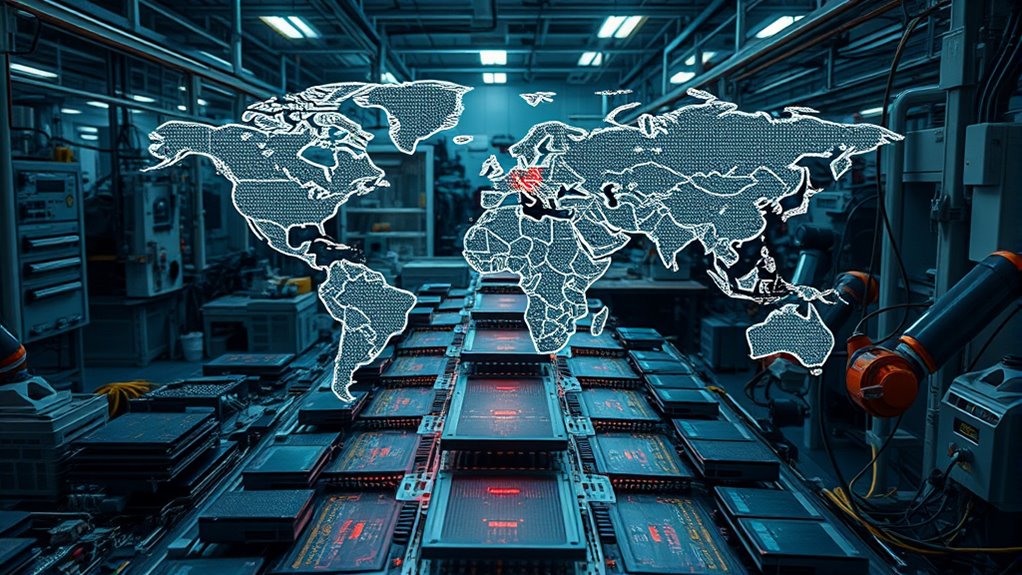
Geopolitical tensions markedly disrupt the global chip supply chain, causing fluctuations in prices and availability that directly affect your gadgets. When countries impose trade restrictions or enact trade restrictions, supply chain disruptions become common, making it harder for manufacturers to source essential semiconductor components. These disruptions lead to shortages, delays, and higher costs, which can increase the prices of your devices. Tensions between major chip-producing nations can also limit access to advanced manufacturing technologies, further constraining supply. As a result, you might notice longer wait times for new gadgets or higher prices for existing ones. In this volatile environment, geopolitical conflicts create ripple effects that threaten the stability of the chip market, ultimately impacting what you buy and how much you pay.
The Innovation Race and Its Effect on Gadget Features

As the global chip supply faces ongoing disruptions, companies are racing to outpace rivals through rapid innovation. This urgency leads to significant improvements in gadget features, especially with AI integration becoming more seamless. You’ll notice smarter devices that anticipate your needs, from voice assistants to personalized recommendations. Wearable tech advancements also accelerate, offering more health-tracking capabilities and longer battery life. Manufacturers push the boundaries to stand out, often prioritizing cutting-edge features over cost considerations. This innovation race means your gadgets will likely become more intelligent, responsive, and versatile, but it also creates a sense of constant upgrade cycles. Additionally, the push for advanced semiconductor technology drives the development of more powerful and efficient processors in consumer electronics, further enhancing device capabilities. For example, quality control measures in manufacturing help ensure higher reliability and performance of these sophisticated components. Moreover, the adoption of next-generation chips fosters the integration of innovative functionalities that were previously unattainable. The ongoing semiconductor development also leads to quicker adoption of new standards and protocols in consumer devices. Ultimately, the fierce competition fuels progress, ensuring you get more sophisticated, feature-rich devices—though sometimes at a higher price.
What Consumers Can Expect in the Future of Tech and Chips
What can you expect from the future of tech and chips as innovations continue to accelerate? You’ll see emerging materials like graphene and new semiconductors that boost performance and energy efficiency. Consumer trends point to smarter, more connected devices that adapt to your needs. Chips will become more powerful while remaining compact, enabling smaller gadgets with longer battery life. Expect AI integration to enhance user experiences and security. Manufacturing will focus on sustainability, reducing environmental impact. Additionally, faster development cycles mean new tech reaches you sooner. The push for innovation will also lead to personalized gadgets tailored to your habits and preferences. Overall, the future promises smarter, more efficient tech driven by emerging materials and a keen focus on consumer demands.
Frequently Asked Questions
How Do Chip Shortages Influence the Affordability of Consumer Electronics?
Chip shortages cause supply chain disruptions, which often lead to higher prices for consumer electronics. When chip availability drops, manufacturers face delays and increased costs, and they usually pass these price fluctuations onto you. As a result, gadgets become more expensive, and delays in product releases may occur. You might notice that popular devices cost more or are harder to find, especially during periods of significant chip shortages.
What Environmental Impacts Are Associated With Semiconductor Manufacturing?
You should know that semiconductor manufacturing impacts the environment through a significant footprint, including water and energy consumption. It also contributes to resource depletion, as rare minerals are extracted for chip production. This process can produce hazardous waste and emissions, affecting ecosystems and human health. Being aware of these environmental impacts encourages companies to adopt sustainable practices and you to support eco-friendly brands.
How Do Smaller Countries Participate in the Global Chip Industry?
Think of smaller countries as tiny but essential puzzle pieces in the global chip industry. They participate through emerging markets and focus on local fabrication, building specialized factories, and offering unique innovations. By investing in local infrastructure and skills, they become key players. This not only boosts their economies but also diversifies the supply chain, making the whole industry more resilient and competitive, even from a small corner of the world.
Can Alternative Materials Replace Silicon in Future Semiconductor Development?
Yes, alternative materials like graphene, gallium nitride, and transition metal dichalcogenides could replace silicon in future semiconductors. These emerging materials offer higher speed, better efficiency, and improved thermal performance. As a consumer, you might see faster, more energy-efficient gadgets as researchers develop these future semiconductors. Staying informed about advancements in emerging materials helps you understand how upcoming technology could transform the devices you rely on daily.
How Might AI Advancements Change Chip Manufacturing and Design?
Coincidences in innovation lead to major shifts; AI advancements will revolutionize chip manufacturing and design. You’ll see AI-driven fabrication streamline processes, reducing errors and boosting efficiency. Quantum chip design becomes more feasible, enabling faster, more powerful devices. As AI continues to evolve, it will open new possibilities, making your gadgets smarter and more capable, all while reshaping the global tech landscape and the chips powering your everyday technology.
Conclusion
As the saying goes, “you’re only as strong as your weakest link,” and right now, the global chip industry is that link. Staying informed about the geopolitical tensions and innovation race helps you understand how your gadgets are made and priced. While challenges persist, this battle for chip dominance pushes tech forward, promising smarter, faster devices in the future. Keep an eye on these shifts—they’ll shape the gadgets you’ll be using tomorrow.