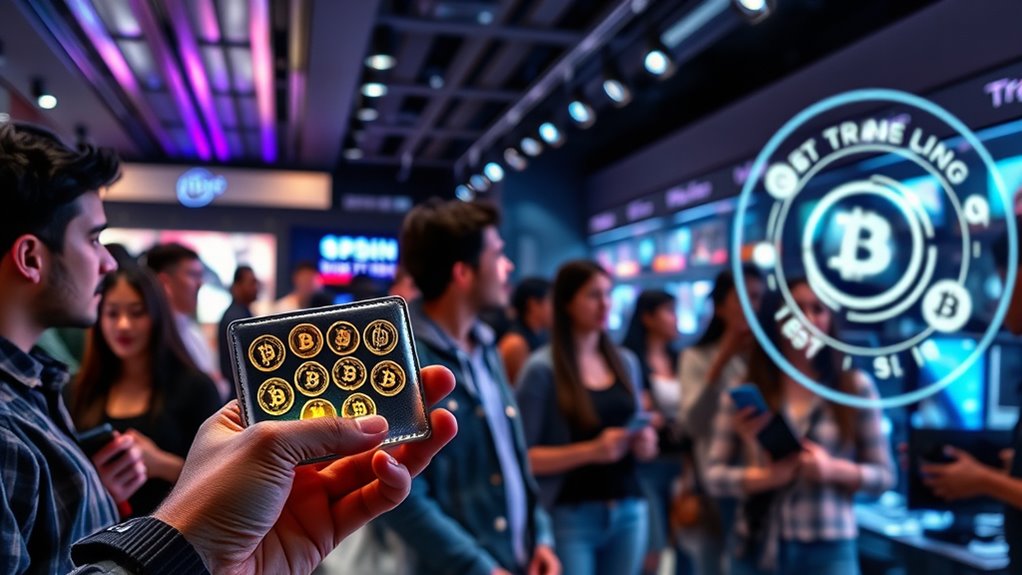

You can now use digital coins like Bitcoin and Ethereum to buy gadgets, as more retailers accept crypto payments. However, challenges like slow transaction speeds, high volatility, and tricky regulations can make this difficult in practice. While crypto is growing in mainstream use, it’s not yet perfect for everyday purchases. If you want to understand how these hurdles affect your ability to shop with crypto and what the future holds, keep exploring the details.
Key Takeaways
- Increasing retailers accept cryptocurrencies like Bitcoin for purchasing gadgets online, boosting mainstream adoption.
- Digital wallets enable seamless crypto transactions, making gadget purchases more convenient.
- Challenges such as transaction speed, price volatility, and regulatory issues hinder widespread crypto-based gadget buying.
- Blockchain security ensures safe transactions, encouraging consumer confidence in using crypto for gadgets.
- The future of crypto in retail looks promising with technological advancements and expanding merchant support.
The Rise of Cryptocurrency Adoption in Retail

Have you noticed how more retailers are accepting cryptocurrencies as a payment option? This shift highlights ongoing blockchain innovation, making transactions faster and more secure. Retailers now leverage digital wallets, allowing customers to store their digital coins conveniently and pay seamlessly at checkout. These wallets simplify the payment process, eliminating the need for cash or credit cards. As more brands embrace cryptocurrency, the adoption rate continues to grow, signaling a broader acceptance of digital currencies in everyday shopping. This trend not only boosts convenience but also pushes the boundaries of traditional retail, encouraging innovation in payment methods. With blockchain technology enabling transparent, tamper-proof transactions, both consumers and merchants gain confidence, fueling further integration of cryptocurrencies into the retail landscape. Additionally, the versatility of digital wallets supports various payment methods, further enhancing the user experience. Moreover, understanding contrast ratio and other technical factors can help consumers make more informed choices when selecting devices that support these innovative payment options. Staying updated on blockchain security measures can be important in ensuring the stability and security of the technology powering these transactions. Furthermore, considering vetted wave and wind can be important in ensuring the stability and security of the technology powering these transactions. Staying informed about electric safety measures is also crucial when integrating new payment hardware into your retail space, ensuring compliance and protection.
How Cryptocurrencies Are Used for Everyday Purchases

Are cryptocurrencies truly becoming part of your daily shopping routine? Increasing merchants accept digital coins for small purchases, making it easier to use your crypto for everyday items. But, you need to prioritize cryptocurrency security to protect your digital assets from theft or fraud. Managing your digital wallet efficiently is vital, ensuring your private keys stay safe and transactions are secure. Using mobile apps or hardware wallets helps you maintain control and prevent hacks. As more businesses integrate crypto payment options, you’ll find it simpler to spend your digital coins without converting to cash. Still, always stay vigilant about digital wallet management and security practices, so your crypto remains protected while you shop for groceries, gadgets, or coffee. Additionally, understanding security protocols can significantly reduce the risk of losing your digital assets. Staying informed about cryptocurrency regulations can also help you avoid legal pitfalls and ensure compliant transactions. Embracing European cloud innovation can further enhance the security and efficiency of your digital transactions, providing a robust foundation for safe crypto usage. Incorporating essential security measures, such as multi-factor authentication, can further safeguard your digital assets during transactions.
Major Platforms Accepting Digital Coins

Many cryptocurrency-friendly retailers now accept digital coins as payment, making it easier to buy gadgets online. Tech giants are also starting to embrace crypto, opening new possibilities for consumers. As these platforms expand their crypto support, you’ll find more opportunities to use digital coins for everyday purchases. This shift demonstrates the growing acceptance of crypto payments, which is facilitated by increasing digital currency adoption across various sectors, highlighting how digital currencies are becoming more integrated into mainstream commerce. Additionally, the integration of crypto into retail systems signals a broader move toward mainstream adoption, encouraging more consumers to explore digital currency options. Moreover, monitoring market trends and insights can help consumers make informed decisions when using crypto for shopping, ensuring they capitalize on favorable conditions. Regular practice and familiarization with visual and auditory cues can further enhance consumers’ confidence in using crypto for transactions.
Cryptocurrency-Friendly Retailers
As the popularity of digital currencies grows, several major retail platforms now accept cryptocurrencies as a form of payment. These retailers recognize the potential of blockchain scalability to handle increased transaction volume efficiently, making crypto payments smoother. By accepting digital coins, they tap into a growing customer base interested in cryptocurrency mining and blockchain technology. You can now buy gadgets and electronics from stores like Newegg and Overstock using Bitcoin or Ethereum. This shift demonstrates how mainstream retailers are bridging the gap between traditional shopping and the crypto world. As more retailers embrace cryptocurrency, the convenience of using digital coins for everyday purchases becomes clearer, paving the way for wider adoption in the retail space. Additionally, embracing practical leadership tips can help these businesses successfully navigate the evolving landscape of digital currency acceptance and customer engagement. Understanding how to prevent cross contact and maintain cleanliness in retail environments can also enhance customer trust and safety as they incorporate new payment methods. Moreover, the integration of secure and reliable electric bike payment options can further facilitate transactions for tech-savvy consumers. Proper handling and safe storage of digital assets is crucial for maintaining security and trust in these new payment systems.
Tech Giants Embracing Crypto
Major tech giants are increasingly integrating cryptocurrencies into their payment options, signaling mainstream acceptance. This shift opens exciting possibilities, from purchasing NFT art to engaging in blockchain gaming. You can now use digital coins to buy exclusive virtual assets or even upgrade gadgets with crypto. Leading platforms are embracing crypto payments, making it easier to:
- Own rare NFT art that appreciates over time
- Explore immersive blockchain gaming worlds
- Support innovative digital creators directly
- Use your crypto to access premium features
- Experience seamless transactions without traditional banks
This trend highlights how digital currencies are transforming the tech landscape, turning everyday purchases into opportunities for entertainment, investment, and creativity. As more platforms accept crypto, your ability to buy gadgets and digital assets with digital coins becomes more effortless and exciting. Additionally, Free Floating concepts like natural pools and landscaping are inspiring innovative ways to enhance your digital and physical environments, merging technology with natural beauty.
Challenges Facing Crypto as a Practical Payment Method

You might find that transaction speeds can slow down during busy times, making quick purchases frustrating. Price swings also make it hard to rely on crypto for everyday spending, since values can change dramatically in minutes. These issues raise questions about whether digital coins are ready to replace traditional payment methods. Additionally, community support plays a crucial role in helping users navigate the uncertainties associated with crypto transactions. The lack of widespread merchant acceptance further limits the practicality of using crypto for daily purchases. Moreover, industry trends indicate that technological improvements and regulatory clarity are essential for broader adoption. Improving transaction reliability is key to making crypto a truly practical payment option. As AI-driven innovations continue to influence financial technologies, the development of secure and efficient transaction systems becomes increasingly vital.
Transaction Speed Limitations
While cryptocurrencies promise fast and secure transactions, their speed often falls short when used for everyday payments. Blockchain scalability remains a major hurdle, causing delays in transaction confirmation. This means you might experience frustrating wait times, even for small purchases. The limited transaction capacity results in network congestion during peak times, slowing down the entire system. You could find yourself unable to buy that quick coffee or gadget due to these delays. The inability to process multiple transactions simultaneously hampers crypto’s practicality. These speed limitations make digital coins less reliable for real-time shopping, leaving you hesitant to rely solely on them. Without significant improvements, blockchain scalability and transaction confirmation times will continue to restrict crypto’s role as a convenient payment method.
- Endless waiting, even for simple purchases
- Unpredictable delays ruin shopping plans
- Network congestion stalls your transactions
- Frustration grows with each slow confirmation
- Your everyday spending feels out of reach
Price Volatility Concerns
Price swings make using cryptocurrencies for everyday purchases risky because their value can change dramatically in a short period. This volatility affects market stability, making it difficult for merchants and consumers to rely on digital coins for regular transactions. When prices fluctuate unexpectedly, what you pay today might be worth considerably less or more tomorrow. This unpredictability discourages many from adopting cryptocurrencies as a practical payment method. Businesses face uncertainty in pricing and profit margins, while consumers worry about losing value during a simple purchase. These frequent price fluctuations undermine confidence and hinder mainstream acceptance. Until the market stabilizes, using cryptocurrencies for everyday gadgets and goods remains a challenge, limiting their potential as a reliable medium of exchange.
Volatility and Its Impact on Buying Power

Because cryptocurrencies are known for their rapid price swings, their volatility directly affects your ability to use digital coins for purchasing gadgets. When value fluctuations happen suddenly, your buying power can shrink or grow unexpectedly, making planning difficult. This unpredictability can leave you hesitant, unsure if your crypto holdings will cover the gadget you want tomorrow. The fear of losing significant value in moments of price swings can diminish your confidence in using crypto for purchases. You might miss out on deals or face unexpected costs. The volatile nature of digital coins creates emotional stress, as you constantly monitor market shifts. It’s a rollercoaster that impacts your ability to reliably convert crypto into tangible goods, challenging the idea that digital coins are a stable, everyday currency.
Regulatory Hurdles and Legal Considerations

The unpredictable swings in crypto prices are only part of the challenge; legal and regulatory hurdles also complicate using digital coins for everyday purchases. You need to navigate complex tax compliance rules that vary by country, making it difficult to report gains accurately. Jurisdictional restrictions further limit where and how you can use cryptocurrencies, as some regions impose strict bans or heavy regulations. These legal considerations can slow down or even prevent transactions, forcing you to stay informed about local laws. You might also face issues with anti-money laundering policies or licensing requirements, which add layers of complexity. Ultimately, these regulatory hurdles mean that, despite the potential, using digital coins for buying gadgets isn’t straightforward and requires careful attention to legal details.
The Future of Crypto in Consumer Transactions

Advancements in blockchain technology and growing acceptance from major retailers suggest that digital coins could become more integrated into everyday consumer transactions. You might soon experience seamless peer-to-peer payments with just a few taps, bypassing banks and traditional systems. Blockchain security guarantees your transactions are safe from fraud and hacking, giving you peace of mind. As more merchants embrace crypto, you’ll see faster checkouts and reduced fees. The potential to use digital coins for everyday gadgets excites you with convenience and innovation. Imagine a world where your favorite electronics are just a crypto transaction away. The future of crypto in consumer transactions is promising, fostering trust, security, and accessibility. Get ready to embrace a new era where digital coins empower your shopping experience.
- Feel confident knowing your transactions are protected by blockchain security
- Experience the thrill of instant peer-to-peer payments
- Enjoy lower fees that save you money
- Witness retail revolution with crypto-friendly stores
- Trust in a future where digital coins simplify your life
Comparing Crypto Payments to Traditional Currency Transactions

While crypto payments offer faster and often cheaper transactions, they also present notable differences from traditional currency methods. Crypto transactions rely on blockchain technology, which faces challenges like limited scalability that can slow down processing times during high demand. Unlike traditional banking, crypto mining requires significant energy and computational power, impacting transaction speed and costs. A quick comparison:
| Feature | Traditional Currency | Crypto Payments |
|---|---|---|
| Transaction Speed | Seconds to days | Minutes, but varies with blockchain scalability |
| Cost | Usually low, depends on banks | Can be high during congestion |
| Energy Use | Low | High (crypto mining) |
| Security | Centralized systems | Decentralized, transparent |
Understanding these differences helps you decide if crypto can truly replace or supplement traditional transactions for buying gadgets.
Frequently Asked Questions
How Secure Are Cryptocurrency Transactions for Everyday Shopping?
Cryptocurrency transactions can be quite secure if you pay close attention to wallet security. However, you’re still vulnerable to cryptocurrency scams, so always double-check recipient addresses and avoid sharing your private keys. Use reputable wallets with strong encryption, enable two-factor authentication, and keep your software updated. While digital coins offer a secure way to pay, your vigilance is key to preventing fraud and ensuring your transactions stay safe.
What Are the Environmental Impacts of Widespread Crypto Adoption?
Widespread crypto adoption can profoundly impact the environment, mainly through high energy consumption from mining processes. If you support green energy initiatives, you help reduce the carbon footprint associated with cryptocurrencies. Moving to renewable energy sources for mining can lessen environmental harm, making crypto more sustainable. Your choices can push the industry toward greener practices, ultimately decreasing negative ecological effects and promoting eco-friendly innovation in digital currency transactions.
Can Crypto Payments Be Reversed or Refunded Easily?
Crypto payments are generally not easily reversible or refundable because of their nature, which emphasizes irreversible transactions. If you send digital coins, it’s unlikely you can cancel or reverse the transaction unless the recipient agrees. Refund policies vary by platform or merchant, but most rely on traditional methods for refunds, not the blockchain. Always double-check recipient details before sending, as reversibility isn’t built into most crypto transactions.
How Do Transaction Fees Affect Small Purchases?
Transaction fees can substantially impact small purchases because the fee structure often remains fixed or varies minimally regardless of purchase size. You might find that the transaction cost eats up a large portion of your payment, making small transactions less economical. When using crypto, it’s important to take these fees beforehand, as they can sometimes outweigh the value of the item you’re buying, especially with higher network congestion.
What Are Future Technological Innovations That Could Facilitate Crypto Shopping?
Future innovations in crypto shopping will likely include seamless integration of digital wallets with biometric security, making transactions safer and faster. Advances in cryptocurrency regulation could streamline legal frameworks, boosting consumer confidence and adoption. Enhanced digital wallet security measures, like multi-factor authentication, will protect your assets during purchases. These innovations will make buying gadgets with crypto more convenient, secure, and compliant with evolving regulations, opening new possibilities for digital currency use in everyday shopping.
Conclusion
As you consider using cryptocurrencies for everyday purchases, remember that volatility and regulatory hurdles still pose challenges. For example, if you bought a gadget with Bitcoin last year, its value might now be markedly different, affecting your buying power. While crypto adoption is growing, it’s essential to stay informed about the risks and future developments. Ultimately, digital coins could become more practical, but for now, they’re still charting their place in your shopping cart.