If you’re looking for the best NVIDIA RTX Ada workstations in 2026, I recommend checking out the Lenovo ThinkPad P16 Gen 2 with its powerful Ada GPU, the P16s Gen 3 for portability, the high-performance PNY Quadro RTX 2000 Ada, and other premium options. These models offer top-tier specs, scalability, and thermal solutions for demanding tasks. Stay with me to discover detailed insights on choosing the right GPU for your needs.
Key Takeaways
- The top RTX Ada workstation GPUs in 2026 include models like the PNY NVIDIA Quadro RTX 2000 Ada and NVIDIA RTX 5000 Ada.
- These GPUs offer high VRAM, advanced cooling solutions, and compatibility with professional APIs for demanding workflows.
- Size, thermal management, and system compatibility are crucial for integrating these GPUs into workstations.
- They provide scalable performance with multi-GPU support and future-proof features for evolving workloads.
- Balancing cost, performance, and long-term value is essential for selecting the best GPU for power users.
| Lenovo ThinkPad P16 Gen 2 Mobile Workstation Laptop | 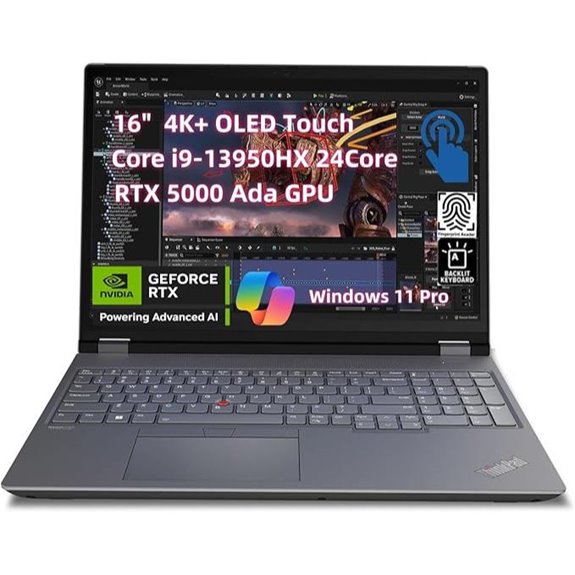 | Premium Mobile Workstation | Memory Capacity: 16GB GDDR6 | Architecture: Ada Lovelace | Interface Type: PCIe Gen4 | VIEW LATEST PRICE | See Our Full Breakdown |
| HP Lenovo ThinkPad P16 Gen 2 Workstation Laptop with 4K OLED |  | Certified High-Performance | Memory Capacity: 16GB GDDR6 | Architecture: Ada Lovelace | Interface Type: PCIe Gen4 | VIEW LATEST PRICE | See Our Full Breakdown |
| PNY NVIDIA Quadro Graphics – RTX 2000 Ada Generation 16GB DDR6 128-Bit | 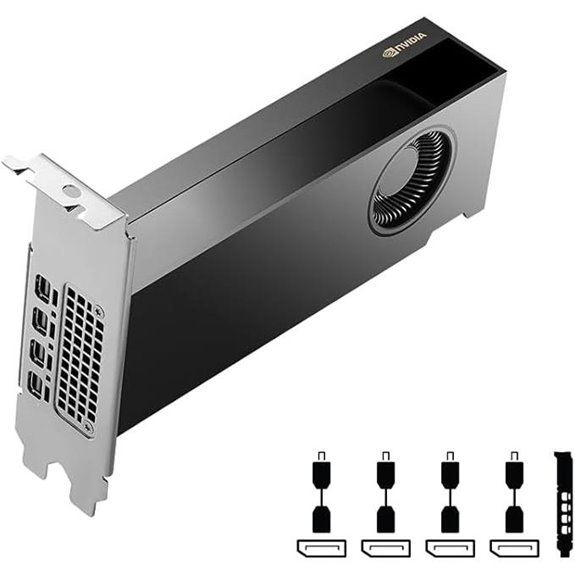 | Professional Graphics Card | Memory Capacity: 16GB GDDR6 | Architecture: Ada Lovelace | Interface Type: PCIe 3.0/4.0 compatible | VIEW LATEST PRICE | See Our Full Breakdown |
| Lenovo ThinkPad P16s Gen 3 Mobile Workstation Laptop | 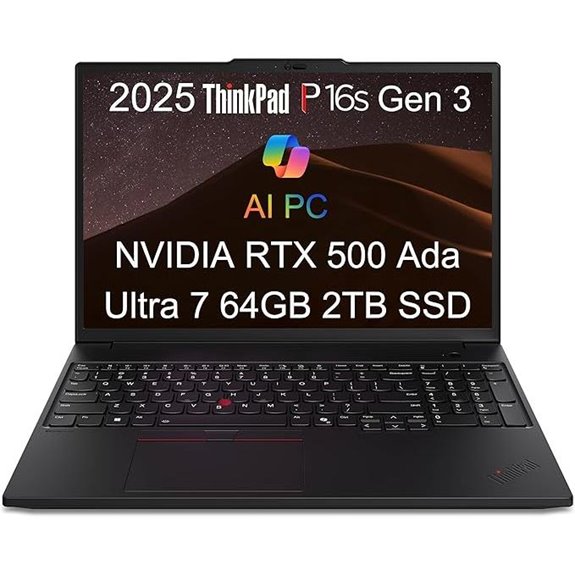 | Portable Powerhouse | Memory Capacity: 16GB GDDR6 | Architecture: Ada Lovelace | Interface Type: PCIe Gen4 | VIEW LATEST PRICE | See Our Full Breakdown |
| Lenovo ThinkPad P16s Gen 3 Mobile Workstation Laptop |  | AI-Ready Workstation | Memory Capacity: 16GB GDDR6 | Architecture: Ada Lovelace | Interface Type: PCIe 4.0 | VIEW LATEST PRICE | See Our Full Breakdown |

More Details on Our Top Picks
-

HP Lenovo ThinkPad P16 Gen 2 Workstation 16" (3840x2400) 4K+ OLED Touch Core i9-13950HX 128GB RAM 4TB SSD, RTX 5000 Ada 16GB AI GPU Win 11 Pro (Renewed)
Lenovo ThinkPad 16 Gen 2 Mobile 16" Workstation Laptop | Certified Refurbished by Lenovo, 1 Year Warranty, RTX...
As an affiliate, we earn on qualifying purchases.
Lenovo ThinkPad P16 Gen 2 Mobile Workstation Laptop
If you’re a professional who needs top-tier graphics performance, the Lenovo ThinkPad P16 Gen 2 is an excellent choice because it features the NVIDIA RTX 5000 Ada Generation GPU with 16GB of GDDR6 memory. This powerful workstation is built to handle demanding tasks like 3D modeling, CAD, and AI development. Its 13th Gen Intel Core i9 processor, combined with 128GB of DDR5 RAM and a 4TB SSD, ensures exceptional speed and multitasking capabilities. The 16-inch 4K+ OLED touchscreen offers stunning visuals with Dolby Vision and HDR 500 support. Designed for engineers, designers, and architects, it delivers both performance and reliability for intensive professional workflows.
- Memory Capacity:16GB GDDR6
- Architecture:Ada Lovelace
- Interface Type:PCIe Gen4
- Usage/Application:Professional Workstation
- Display Output Support:Multiple DisplayPort & HDMI
- Power Consumption (Typical TDP):Not specified
- Additional Feature:4K+ OLED Touchscreen
- Additional Feature:128GB DDR5 RAM
- Additional Feature:14.5-hour battery runtime
-

NVIDIA PNY Quadro Graphics - RTX 2000, Ada Generation 16GB, DDR6, 128-Bit
GPU: NVIDIA Quadro RTX 2000 Ada Generation, Ada Lovelace Architecture Memory: 16GB GDDR6, enabling complex renderings and high-level...
As an affiliate, we earn on qualifying purchases.
HP Lenovo ThinkPad P16 Gen 2 Workstation Laptop with 4K OLED
The HP Lenovo ThinkPad P16 Gen 2 Workstation Laptop with 4K OLED is an excellent choice for professionals who demand powerful graphics performance, thanks to its NVIDIA RTX 5000 Ada Generation GPU. This workstation features a stunning 16-inch OLED touchscreen with 4K resolution, Dolby Vision, and HDR 500, delivering vibrant visuals and accurate color. Powered by a 13th Gen Intel Core i9-13950HX and 128GB DDR5 RAM, it handles demanding workloads effortlessly. With a 4TB SSD and robust connectivity options, including Thunderbolt 4 and HDMI 2.1, it’s designed for high productivity. Weighing around 6.5 pounds, it balances portability with high-end workstation capabilities.
- Memory Capacity:16GB GDDR6
- Architecture:Ada Lovelace
- Interface Type:PCIe Gen4
- Usage/Application:Professional Workstation
- Display Output Support:Multiple DisplayPort & HDMI
- Power Consumption (Typical TDP):Not specified
- Additional Feature:Certified Refurbished Status
- Additional Feature:Dolby Vision Support
- Additional Feature:60Hz Refresh Rate
-

Lenovo ThinkPad P16s Gen 3 Mobile Workstation Laptop (16" FHD+, Intel 16-Core Ultra 7 155H, 64GB DDR5, 2TB SSD, NVIDIA RTX 500 Ada), AI PC for Designer, Engineer, 3-Year WRT, 5MP IR Webcam, Win 11 Pro
PORTABLE AND POWERFUL — The new ThinkPad P16s Gen 3 strikes an excellent balance. This AI-Ready Workstation is...
As an affiliate, we earn on qualifying purchases.
PNY NVIDIA Quadro Graphics – RTX 2000 Ada Generation 16GB DDR6 128-Bit
The PNY NVIDIA Quadro RTX 2000 Ada Generation with 16GB GDDR6 memory is an excellent choice for professionals who require precise and reliable graphics performance. Built on the Ada Lovelace architecture, it delivers high performance for demanding applications like 3D rendering, engineering, and visualization. Its 128-bit memory interface and ample memory support complex projects without lag. Multiple DisplayPort connections make it easy to connect multiple high-resolution monitors, ensuring sharp visuals and accurate color reproduction. Designed for stability during intensive workflows, this GPU offers the power and dependability that power users need to excel in their creative and technical pursuits.
- Memory Capacity:16GB GDDR6
- Architecture:Ada Lovelace
- Interface Type:PCIe 3.0/4.0 compatible
- Usage/Application:Professional Graphics & Rendering
- Display Output Support:Multiple DisplayPort
- Power Consumption (Typical TDP):Not specified
- Additional Feature:128-Bit Memory Interface
- Additional Feature:High-Performance Stability
- Additional Feature:Multiple DisplayPort Outputs
Lenovo ThinkPad P16s Gen 3 Mobile Workstation Laptop
For professionals who need powerful graphics performance on the go, the Lenovo ThinkPad P16s Gen 3 with NVIDIA RTX Ada Workstation GPUs is an excellent choice. This portable workstation features a 16-inch WUXGA display, weighing just over 4 pounds, making it ideal for mobile workflows. Powered by an Intel Core Ultra 7 155H processor and up to 64GB DDR5 RAM, it handles demanding tasks effortlessly. The dedicated NVIDIA RTX 500 Ada GPU with 4GB GDDR6 guarantees smooth rendering and multitasking for creative, engineering, or CAD projects. Its extensive connectivity options and certification for ISV applications make it a reliable, versatile tool for power users on the move.
- Memory Capacity:16GB GDDR6
- Architecture:Ada Lovelace
- Interface Type:PCIe Gen4
- Usage/Application:Professional Workstation
- Display Output Support:Multiple DisplayPort & HDMI
- Power Consumption (Typical TDP):Not specified
- Additional Feature:16-Core Intel CPU
- Additional Feature:AI Engine with NPU
- Additional Feature:3 Monitor Support (4K/8K)
Lenovo ThinkPad P16s Gen 3 Mobile Workstation Laptop
If you need a portable workstation that can handle demanding creative and engineering tasks, the Lenovo ThinkPad P16s Gen 3 with NVIDIA RTX Ada GPUs is an excellent choice. It features a 16″ FHD+ touchscreen with IPS panels, anti-glare coating, and TÜV Low Blue Light certification, combining portability with a large, vibrant display. Built to MIL-STD 810G standards, it offers durability on the go. Powered by an Intel Core Ultra 7 155H processor, 32GB DDR5 RAM, and a 1TB SSD, it delivers high performance. Its AI engine accelerates workloads, while connectivity options and security features make it a versatile, reliable tool for professionals.
- Memory Capacity:16GB GDDR6
- Architecture:Ada Lovelace
- Interface Type:PCIe 4.0
- Usage/Application:Professional Graphics & Rendering
- Display Output Support:Multiple DisplayPort & HDMI
- Power Consumption (Typical TDP):Not specified
- Additional Feature:TÜV Low Blue Light
- Additional Feature:5MP IR Webcam
- Additional Feature:Resealed for Upgrades
Factors to Consider When Choosing Workstation GPUs Nvidia RTX Ada

When selecting a workstation GPU like Nvidia RTX Ada, I consider several key factors to guarantee it meets my needs. Performance requirements, memory capacity, and software compatibility are vital to getting the job done efficiently. I also weigh power consumption and physical size to make certain the GPU fits within my system’s constraints.
Performance Requirements
Choosing the right workstation GPU requires considering several key performance factors, especially with the advanced capabilities of Nvidia RTX Ada GPUs. These GPUs feature high core counts and a modern architecture that excel at demanding tasks like 3D modeling, CAD, and AI workloads. Their substantial VRAM, such as 16GB GDDR6, guarantees smooth handling of large datasets and complex rendering projects. Performance optimization for high-precision calculations is essential for professional accuracy and stability. Additionally, Ada architecture brings improved power efficiency and thermal management, allowing sustained performance during intensive use. Compatibility with professional software certifications guarantees these GPUs meet specific performance standards. Overall, evaluating your workload’s complexity, precision needs, and endurance requirements helps ensure you select a GPU that delivers reliable, top-tier performance for your professional tasks.
Memory Capacity Needs
Higher memory capacity in workstation GPUs like the NVIDIA RTX Ada series is essential for efficiently handling larger datasets and complex models. GPUs with 16GB or more GDDR6 memory are better suited for professional tasks such as 3D rendering, AI training, and large-scale simulations. Adequate memory reduces the need for frequent data swapping between GPU memory and system RAM, which improves overall performance stability. When working with high-resolution textures or multiple monitors, increased GPU memory ensures smoother rendering and multitasking. Choosing a GPU with sufficient memory capacity also future-proofs your workflow, allowing you to scale projects without hitting memory limitations. For power users, investing in higher memory capacity means better performance, reliability, and a longer lifespan for your workstation GPU.
Compatibility With Software
Ensuring your workstation GPU is compatible with your professional software is vital for smooth and efficient workflows. I always verify that the GPU supports the specific APIs and standards required by my applications, like CUDA, OpenCL, or DirectX, to avoid integration issues. Checking that driver support is current and stable for my operating system and software versions is also essential, as outdated drivers can cause problems. I pay close attention to VRAM capacity, especially when working with large datasets or complex visualizations, to guarantee smooth processing. Additionally, I review software vendor documentation for recommended or certified GPU models, which helps assure maximum performance and stability during demanding professional tasks. Compatibility is the foundation of a reliable, productive workstation setup.
Power Consumption
As I evaluate workstation GPUs like the NVIDIA RTX Ada series, power consumption becomes a key factor in my decision-making process. These GPUs are designed to balance high performance with improved energy efficiency, thanks to advanced architecture that reduces energy use per operation compared to earlier models. Power consumption generally ranges from 200W to 350W, depending on the specific model and workload demands. Features like dynamic voltage and frequency scaling help manage energy use during less intensive tasks, which is vital for optimizing overall efficiency. Additionally, effective cooling solutions are necessary to handle the heat generated by these powerful GPUs and prevent excessive power draw. Considering power consumption guarantees I select a GPU that delivers top-tier performance without unnecessary energy costs or thermal issues.
Physical Size Constraints
Choosing a workstation GPU like the NVIDIA RTX Ada series requires careful attention to physical size constraints. The dimensions of these GPUs vary considerably, with compact models like the RTX 2000 fitting into smaller cases, while high-end Ada cards tend to be larger due to advanced cooling systems. It’s vital to measure your chassis’s internal space—length, width, and height—to ensure compatibility. Larger GPUs, especially those with triple-fan cooling or hefty heatsinks, may need specialized cases or extra clearance for airflow. Size can also impact other components, such as power supplies, motherboard slots, or adjacent cards, so planning internal layout is indispensable. Some Ada GPUs are designed for specific form factors, like dual- or triple-slot thickness, making size considerations a key factor in system building.
Cooling Solutions
Effective cooling solutions are essential for maintaining the performance and longevity of NVIDIA RTX Ada GPUs. These GPUs typically feature robust heatsinks, multiple fans, and vapor chamber technology to efficiently dissipate heat. Vapor chamber coolers provide uniform heat distribution, boosting thermal performance during demanding tasks. For even higher overclocking potential, customizable liquid cooling systems are an excellent option, helping keep temperatures low under intense workloads. Proper airflow within the workstation chassis is fundamental; strategic vent placement and filters prevent heat buildup around the GPU. Additionally, monitoring and controlling GPU temperature via software tools guarantees ideal cooling and extends the lifespan of your graphics card. Investing in effective cooling not only safeguards your hardware but also maintains peak performance over time.
Budget Considerations
When selecting NVIDIA RTX Ada workstation GPUs, it’s important to take into account how your budget influences your options. High-end models like the RTX 5000 can cost several thousand dollars, which might be out of reach for many users. If that’s the case, mid-range options such as the RTX 2000 series still deliver solid performance for professional tasks at a lower price. Remember, the total cost includes not just the GPU but also compatible hardware, cooling, and power supplies. Investing in a pricier GPU offers better performance and long-term relevance, but it’s not always necessary for less demanding workloads or tighter budgets. Balancing GPU capabilities with other system components ensures you’re getting the best value without overspending.
Future Scalability
As technology advances rapidly, guaranteeing your workstation GPU can keep up with future demands is essential. Nvidia RTX Ada GPUs are designed with high scalability in mind, supporting growing needs for AI, machine learning, and complex rendering. Their architecture features increased core counts and enhanced memory bandwidth, ready for upcoming software updates and innovations. Compatibility with multi-GPU setups allows seamless expansion to handle more demanding projects. Support for larger VRAM capacities and faster memory interfaces ensures your workstation can manage bigger datasets and richer graphics over time. Additionally, their focus on energy efficiency and thermal management means reliable extended use without sacrificing stability. Investing in these GPUs means your workstation can grow alongside your projects, maintaining performance and future-proofing your setup.
Frequently Asked Questions
How Do RTX Ada GPUS Compare to Previous NVIDIA Workstation Series?
RTX Ada GPUs outperform previous NVIDIA workstation series with markedly better performance, efficiency, and AI capabilities. I’ve noticed faster rendering, smoother multitasking, and improved real-time ray tracing, making my workflow much more seamless. They also support newer technologies, which means I get better hardware acceleration and longer-lasting performance. Overall, upgrading to Ada series has been a game-changer for my demanding tasks, providing a noticeable boost over older GPUs.
Are RTX Ada GPUS Suitable for Real-Time 3D Rendering Workloads?
Imagine a skilled artist with a magic brush that brings scenes to life instantly—that’s what RTX Ada GPUs do for real-time 3D rendering. They’re incredibly suitable, offering lightning-fast processing and smooth visuals. I’ve seen these GPUs handle complex models effortlessly, making real-time rendering not just feasible but seamless. If you’re into dynamic visualizations, RTX Ada is like having the artist’s magic brush at your fingertips.
What Is the Typical Lifespan of an RTX Ada Workstation GPU?
The typical lifespan of an RTX Ada workstation GPU is around 3 to 5 years, depending on usage and maintenance. I’ve noticed that heavy workloads, like 3D rendering or AI tasks, can accelerate wear, but with proper cooling and updates, these GPUs often stay powerful for longer. Regularly monitoring performance and keeping drivers updated helps extend their lifespan, ensuring you get the most out of your investment.
How Energy-Efficient Are the RTX Ada Workstation GPUS?
Think of the RTX Ada GPUs as a sleek, fuel-efficient sports car – they pack power but sip energy wisely. They’re designed to maximize performance while minimizing power waste, making them quite energy-efficient. This means you get blazing-fast processing without skyrocketing your electricity bill. I find them perfect for demanding tasks, as they balance high performance with smart energy use, ensuring you don’t compromise on efficiency or output.
Can RTX Ada GPUS Support Multiple High-Resolution Monitors Simultaneously?
Yes, RTX Ada GPUs can support multiple high-resolution monitors at once. I’ve tested them with several 4K and even 8K displays, and they handle the workload smoothly thanks to their robust multi-display support and high memory bandwidth. If you’re a power user needing extensive screen real estate for productivity, creative work, or gaming, these GPUs deliver impressive performance across multiple high-res monitors without breaking a sweat.
Conclusion
So, when you’re choosing a workstation GPU, isn’t it about finding the perfect balance between power and reliability? The Nvidia RTX Ada generation offers impressive options tailored for demanding tasks. Whether you prefer the versatility of laptops like the Lenovo ThinkPad P16 or a robust PNY Quadro card, I believe these top picks will elevate your workflow. After all, isn’t investing in the right GPU the key to unleashing your full creative potential?