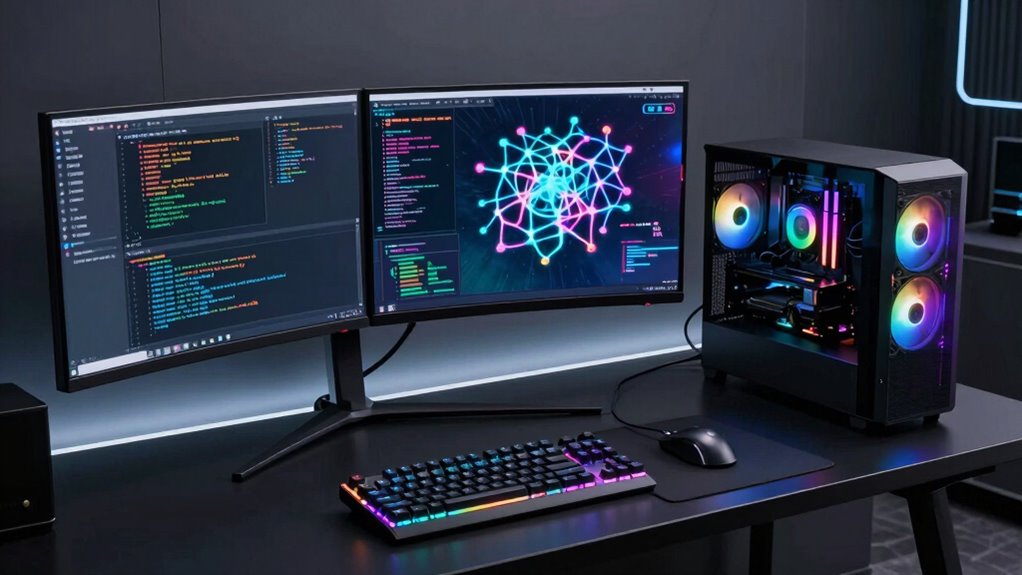

If you’re searching for the best workstations for machine learning in 2026, I recommend powerful options with multi-core Intel Xeon processors, high-capacity RAM (up to 256GB), and professional-grade GPUs like NVIDIA RTX or Quadro models for acceleration. Look for expandable storage, advanced cooling, and certification for stability. These systems are tailored to handle massive datasets and complex models efficiently. Keep exploring to discover the top configurations that will elevate your AI projects to new heights.
Key Takeaways
- High-core, multi-processor CPUs like dual Intel Xeon Platinum or Gold models maximize parallel processing for large ML workloads.
- Extensive RAM options (32GB to 256GB) and fast SSD/NVMe storage ensure quick data access and scalability.
- Professional-grade GPUs such as NVIDIA Quadro P5000 or RTX 2000 Ada Generation accelerate training and inference tasks.
- Robust cooling, expandability, and connectivity features support intensive ML tasks and hardware upgrades.
- Certified Windows 11 Pro systems with error-correcting memory ensure stability and software compatibility for ML workflows.
| Mastering AI Workstation Setup Guide | 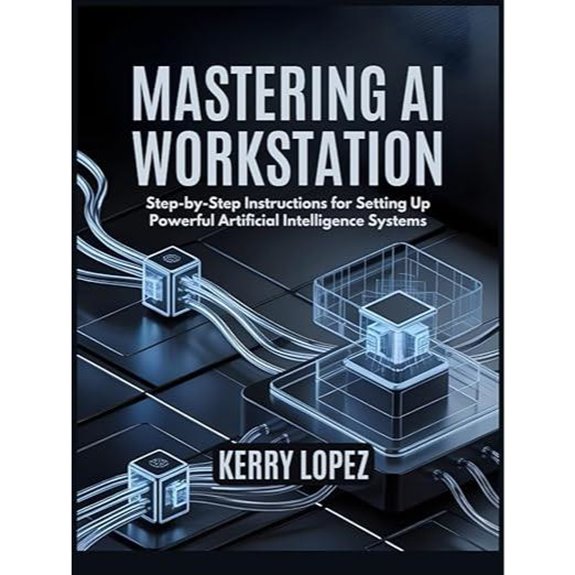 | Best Educational Resource | CPU Type: Not specified (general system optimization) | RAM Capacity: Not specified | Storage Capacity: Not specified | VIEW LATEST PRICE | See Our Full Breakdown |
| PCSP Z8 G4 Dual Xeon Workstation with 16TB SSD | 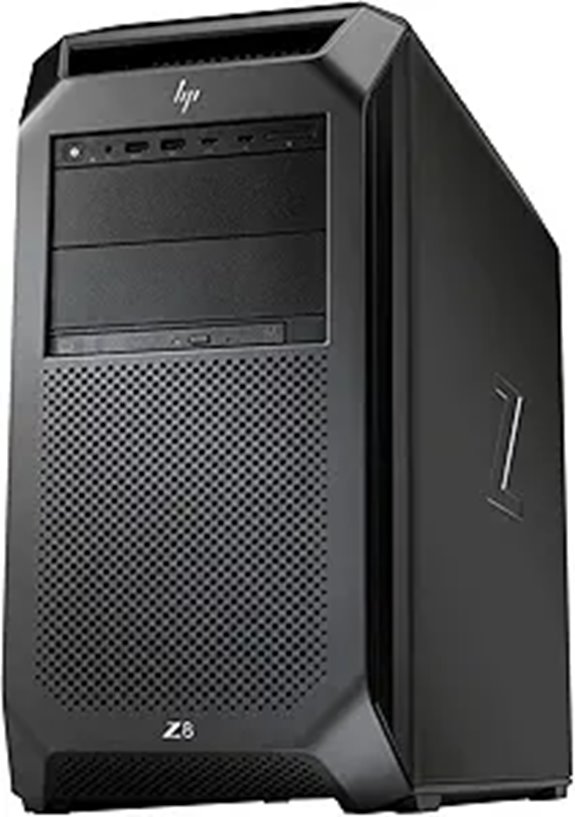 | Top High-Performance | CPU Type: Dual Intel Xeon Platinum 8160 | RAM Capacity: 1.5TB DDR4 | Storage Capacity: 16TB SSD | VIEW LATEST PRICE | See Our Full Breakdown |
| PCSP 7920 Tower Workstation Dual Xeon 768GB RAM | 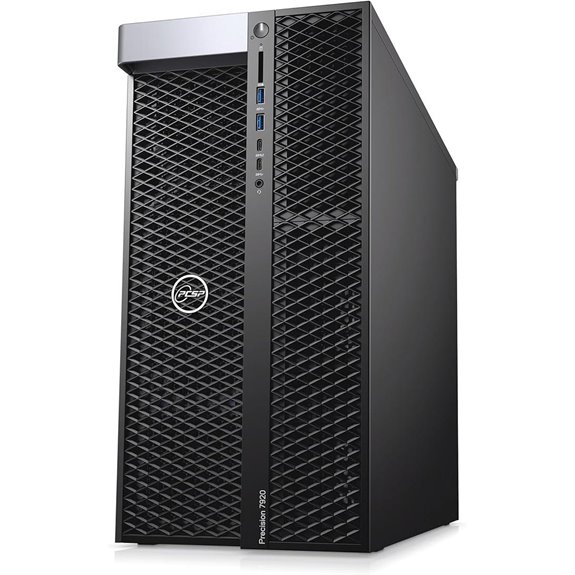 | Best Scalability | CPU Type: Dual Intel Xeon Platinum 8160 | RAM Capacity: 768GB DDR4 | Storage Capacity: 1TB NVMe SSD + 4TB HDD | VIEW LATEST PRICE | See Our Full Breakdown |
| Dell Precision 7920 Tower Workstation (Refurbished) |  | Reliable Powerhouse | CPU Type: Dual Intel Xeon Gold 6130 | RAM Capacity: 192GB DDR4 | Storage Capacity: 2×1TB SSD + 2×4TB HDD, up to 136TB | VIEW LATEST PRICE | See Our Full Breakdown |
| Lenovo ThinkStation P3 Workstation 64GB DDR5 RTX 2000 | 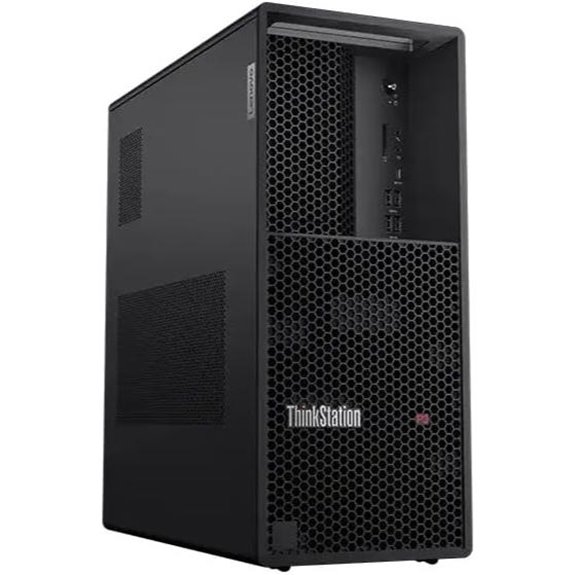 | Best For Creatives | CPU Type: Intel Core Ultra 9 285 vPro | RAM Capacity: 64GB DDR5 | Storage Capacity: 1TB SSD + 4TB HDD | VIEW LATEST PRICE | See Our Full Breakdown |
| PCSP ThinkStation P920 Dual Xeon Workstation Computer | 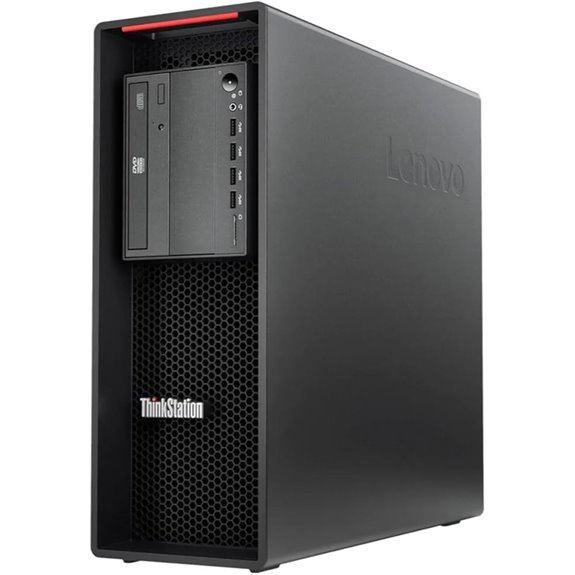 | Extreme Computing | CPU Type: Dual Intel Xeon Platinum 8160 | RAM Capacity: 256GB DDR4 | Storage Capacity: 1TB NVMe SSD + 4TB HDD | VIEW LATEST PRICE | See Our Full Breakdown |
| Refurbished PC Workstation Tower with Xeon & Quadro | 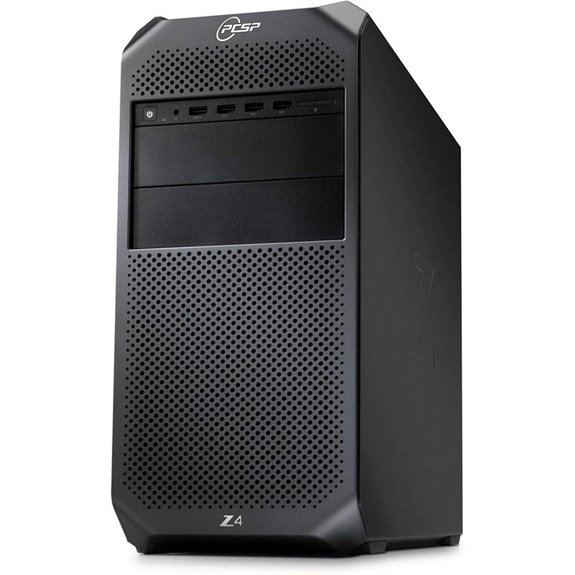 | Budget Professional | CPU Type: Intel Xeon W-2133 | RAM Capacity: 64GB DDR4 | Storage Capacity: 512GB NVMe SSD + 2TB HDD | VIEW LATEST PRICE | See Our Full Breakdown |
| Lenovo ThinkStation P3 Workstation 64GB DDR5 RTX 2000 | | Versatile Performance | CPU Type: Intel Core Ultra 9 285 vPro | RAM Capacity: 64GB DDR5 | Storage Capacity: 2TB SSD + 4TB HDD | VIEW LATEST PRICE | See Our Full Breakdown |
| HP Z8 G4 Workstation with Dual Xeon CPUs | 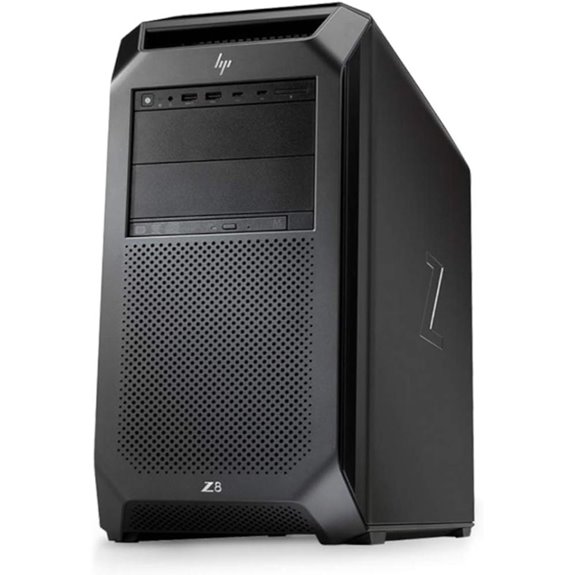 | Maxed-Out Power | CPU Type: Dual Intel Xeon Gold 6143 | RAM Capacity: 256GB DDR4 | Storage Capacity: 2×1TB NVMe SSD + 4×1TB SSD (total 6TB) | VIEW LATEST PRICE | See Our Full Breakdown |
| MINISFORUM AI Mini PC M1 Pro-125H |  | Compact High-Performance | CPU Type: Intel Core Ultra 5 | RAM Capacity: 32GB DDR5 | Storage Capacity: 1TB SSD | VIEW LATEST PRICE | See Our Full Breakdown |
| MINISFORUM AI X1 Pro-370 Mini PC with Ryzen 9 |  | AI-Ready Mini | CPU Type: AMD Ryzen 9 HX 370 | RAM Capacity: 96GB DDR5 | Storage Capacity: 2TB PCIe SSD + 4TB HDD | VIEW LATEST PRICE | See Our Full Breakdown |
| Mini PC i9-9880H 32GB/1TB Windows 11 Triple Display |  | Small But Mighty | CPU Type: Intel Core i9-9880H | RAM Capacity: 32GB DDR4 | Storage Capacity: 2×4TB SSD + optional additional storage | VIEW LATEST PRICE | See Our Full Breakdown |
More Details on Our Top Picks
Mastering AI Workstation Setup Guide
If you’re serious about building efficient AI workstations, this setup guide is your go-to resource. I’ve designed it to walk you through every step, from choosing the right hardware to fine-tuning performance. It’s all about maximizing your system’s potential with the best components for AI tasks, like high-performance CPUs and GPUs. I’ll also cover critical details like installing error-correcting memory, ensuring stability, and optimizing software settings. This guide simplifies complex processes so you can set up quickly and confidently. Whether you’re a beginner or experienced, following these steps will help you build a robust, secure, and efficient AI workstation.
- CPU Type:Not specified (general system optimization)
- RAM Capacity:Not specified
- Storage Capacity:Not specified
- GPU Type:Not specified
- Expandability/Slots:Not specified
- Form Factor:Workstation manual (no specific form factor)
- Additional Feature:Hardware/software optimization tips
- Additional Feature:Cooling and power guidance
- Additional Feature:Expert workstation advice
PCSP Z8 G4 Dual Xeon Workstation with 16TB SSD
Are you looking for a powerhouse workstation capable of handling massive datasets and complex machine learning models? The PCSP Z8 G4 Dual Xeon Workstation delivers unmatched performance with dual Intel Xeon Platinum 8160 CPUs, totaling 48 cores and 96 threads. Its 1.5TB of RAM and 16TB SSD storage guarantee smooth processing of large datasets and memory-intensive tasks. The NVIDIA Quadro P5000 GPU accelerates deep learning and visualization. Built in a full-size chassis with expandability, it supports multiple high-res displays and easy upgrades. Reliability is key, with a 1450W power supply and certified Windows 11 Pro, making it ideal for demanding professional workloads.
- CPU Type:Dual Intel Xeon Platinum 8160
- RAM Capacity:1.5TB DDR4
- Storage Capacity:16TB SSD
- GPU Type:NVIDIA Quadro P5000
- Expandability/Slots:Supports additional drives and expansion cards
- Form Factor:Full-size tower
- Additional Feature:48-core multi-threaded CPUs
- Additional Feature:16TB enterprise SSD storage
- Additional Feature:Multiple high-resolution display support
PCSP 7920 Tower Workstation Dual Xeon 768GB RAM
The PCSP 7920 Tower Workstation with dual Xeon processors and 768GB of RAM stands out as an ideal choice for professionals handling demanding machine learning workloads. It’s powered by two Intel Xeon Platinum 8160 CPUs, totaling 48 cores and 96 threads, with turbo speeds up to 3.7GHz. The system features a 1TB NVMe SSD for rapid data access and 4TB HDD for additional storage, supporting up to 136TB with hot-swap bays. Its professional Quadro P2000 graphics card and multi-monitor support make it suitable for visualization tasks. Built with scalability and reliability in mind, this workstation thrives in high-performance, mission-critical environments.
- CPU Type:Dual Intel Xeon Platinum 8160
- RAM Capacity:768GB DDR4
- Storage Capacity:1TB NVMe SSD + 4TB HDD
- GPU Type:Quadro P2000
- Expandability/Slots:Supports multiple drives, PCIe slots
- Form Factor:Full-size tower
- Additional Feature:768GB high-capacity RAM
- Additional Feature:1TB NVMe SSD
- Additional Feature:Built for scalability
Dell Precision 7920 Tower Workstation (Refurbished)
For professionals seeking a powerful, reliable workstation for machine learning, the refurbished Dell Precision 7920 Tower stands out with its dual Intel Xeon Gold processors and 192GB of ECC RAM. It offers exceptional multitasking and data processing capabilities, supporting heavy workloads like AI modeling and simulation. The system’s flexible storage includes fast SSDs and large HDDs, expandable up to 136TB. The NVIDIA Quadro P2000 GPU ensures stable, professional-grade graphics performance. Certified and tested to perform like new, it runs Windows 11 Pro smoothly. Its robust build, extensive I/O options, and high-end specs make it an ideal choice for demanding machine learning tasks.
- CPU Type:Dual Intel Xeon Gold 6130
- RAM Capacity:192GB DDR4
- Storage Capacity:2×1TB SSD + 2×4TB HDD, up to 136TB
- GPU Type:Quadro P2000
- Expandability/Slots:Multiple expansion bays, PCIe slots
- Form Factor:Tower workstation
- Additional Feature:Certified refurbished reliability
- Additional Feature:4TB HDD storage
- Additional Feature:4K display support
Lenovo ThinkStation P3 Workstation 64GB DDR5 RTX 2000
Designed for demanding machine learning workloads, the Lenovo ThinkStation P3 Tower Workstation delivers exceptional performance with its Intel Core Ultra 9 285 vPro Processor, capable of boosting P-cores up to 5.40 GHz. Paired with 64GB DDR5 RAM and a 1TB PCIe Gen4 SSD, it handles large datasets with ease. The NVIDIA RTX 2000 Ada Generation graphics card with 16GB GDDR6 guarantees smooth rendering and accelerated compute tasks. Running on Windows 11 Pro, this workstation offers a robust balance of power, speed, and reliability, making it ideal for intensive machine learning projects. Its compact design and 1-year warranty further enhance its appeal.
- CPU Type:Intel Core Ultra 9 285 vPro
- RAM Capacity:64GB DDR5
- Storage Capacity:1TB SSD + 4TB HDD
- GPU Type:NVIDIA RTX 2000
- Expandability/Slots:Supports upgrades, additional RAM/storage
- Form Factor:Tower workstation
- Additional Feature:DDR5 memory technology
- Additional Feature:RTX 2000 graphics card
- Additional Feature:Compact tower design
PCSP ThinkStation P920 Dual Xeon Workstation Computer
Equipped with dual Intel Xeon Platinum 8160 processors, the PCSP ThinkStation P920 delivers exceptional computational power essential for demanding machine learning tasks. With 48 cores and 96 threads running at 2.1GHz, it handles heavy parallel processing with ease. Its 1TB NVMe PCIe SSD ensures lightning-fast data access, while 256GB of DDR4 RAM (expandable to 1TB) supports large datasets and multitasking. The Quadro P2000 graphics card enhances visualization and GPU-accelerated computing. With extensive expandability, multiple USB ports, and a reliable 1400W power supply, the P920 is built for professionals requiring power, performance, and durability in intensive machine learning environments.
- CPU Type:Dual Intel Xeon Platinum 8160
- RAM Capacity:256GB DDR4
- Storage Capacity:1TB NVMe SSD + 4TB HDD
- GPU Type:Quadro P2000
- Expandability/Slots:Multiple drive bays, expansion options
- Form Factor:Tower case
- Additional Feature:Dual Xeon processors
- Additional Feature:1TB SSD storage
- Additional Feature:Professional-grade graphics
Refurbished PC Workstation Tower with Xeon & Quadro
If you’re looking for a reliable, high-performance workstation capable of handling demanding machine learning tasks, this refurbished HP Z4 G4 Tower is an excellent choice. It features an Intel Xeon W-2133 6-core processor, delivering solid performance for intensive workloads. With 64GB of DDR4 RAM, a fast 512GB NVMe SSD, and a 2TB HDD, it balances speed and storage capacity. The NVIDIA Quadro M4000 GPU, optimized for rendering and 3D modeling, boosts graphics tasks. Certified, tested, and equipped with Windows 11 Pro, this workstation offers stability and professional-grade reliability, making it ideal for technical and creative applications requiring power, performance, and precision.
- CPU Type:Intel Xeon W-2133
- RAM Capacity:64GB DDR4
- Storage Capacity:512GB NVMe SSD + 2TB HDD
- GPU Type:NVIDIA Quadro M4000
- Expandability/Slots:Supports additional drives, expansion slots
- Form Factor:Tower workstation
- Additional Feature:Certified pre-owned status
- Additional Feature:2TB HDD capacity
- Additional Feature:Quadro M4000 GPU
Lenovo ThinkStation P3 Workstation 64GB DDR5 RTX 2000
The Lenovo ThinkStation P3 with RTX 2000 16GB stands out as an excellent choice for machine learning professionals who need reliable, high-performance hardware. It features an Intel Core Ultra 9 285 vPro processor with E-cores reaching 4.60 GHz and P-cores up to 5.40 GHz, ensuring fast computation. With 64 GB of DDR5 RAM and a 2 TB PCIe Gen4 SSD, it handles multitasking and large datasets effortlessly. The NVIDIA RTX 2000 Ada Generation graphics card with 16 GB GDDR6 memory makes it ideal for graphics-intensive tasks and rendering. Compact and sturdy, it runs Windows 11 Pro and comes with a one-year warranty, supporting demanding ML workflows.
- CPU Type:Intel Core Ultra 9 285 vPro
- RAM Capacity:64GB DDR5
- Storage Capacity:2TB SSD + 4TB HDD
- GPU Type:NVIDIA RTX 2000
- Expandability/Slots:Supports upgrades, multiple PCIe slots
- Form Factor:Tower case
- Additional Feature:64GB DDR5 RAM
- Additional Feature:RTX 2000 graphics
- Additional Feature:Windows 11 Pro
HP Z8 G4 Workstation with Dual Xeon CPUs
For professionals tackling complex machine learning workloads, the HP Z8 G4 Workstation with Dual Xeon CPUs stands out as a powerhouse of performance. It features dual Intel Xeon Gold 6143 processors, each with 16 cores and turbo up to 4.00GHz, delivering exceptional multicore processing. With 256GB of DDR4 RAM and fast NVMe drives, it guarantees quick data access and system responsiveness. Dual Nvidia Quadro P5000 GPUs with 16GB VRAM handle demanding graphics tasks and parallel computations seamlessly. Its robust connectivity, extensive storage options, and Windows 11 Pro make it an ideal choice for intensive ML projects demanding reliability, speed, and top-tier hardware.
- CPU Type:Dual Intel Xeon Gold 6143
- RAM Capacity:256GB DDR4
- Storage Capacity:2×1TB NVMe SSD + 4×1TB SSD (total 6TB)
- GPU Type:Dual Nvidia Quadro P5000
- Expandability/Slots:Multiple drive bays, expansion options
- Form Factor:Tower chassis
- Additional Feature:256GB RAM capacity
- Additional Feature:Dual Nvidia Quadro P5000
- Additional Feature:Extensive display outputs
MINISFORUM AI Mini PC M1 Pro-125H
The MINISFORUM AI Mini PC M1 Pro-125H stands out as an excellent choice for professionals and enthusiasts tackling machine learning projects. Its Intel Core Ultra 5 Processor packs 14 cores and 18 threads, with turbo speeds up to 4.5GHz, delivering rapid multitasking and complex computations. With 32GB DDR5 RAM expandable to 128GB and dual M.2 NVMe slots supporting up to 8TB, it handles large datasets effortlessly. Equipped with Intel Arc graphics, HDMI 2.1, DisplayPort 1.4, and USB4, it supports high-resolution displays and fast connections. Its compact design, quiet cooling system, and versatile I/O make it a powerful, reliable mini workstation for demanding ML workloads.
- CPU Type:Intel Core Ultra 5
- RAM Capacity:32GB DDR5
- Storage Capacity:1TB SSD
- GPU Type:Intel integrated graphics
- Expandability/Slots:Supports additional SSDs and peripherals
- Form Factor:Compact mini PC
- Additional Feature:AI processing capabilities
- Additional Feature:96GB DDR5 RAM
- Additional Feature:External GPU support
MINISFORUM AI X1 Pro-370 Mini PC with Ryzen 9
If you’re seeking a compact workstation capable of handling demanding machine learning tasks, the MINISFORUM AI X1 Pro-370 Mini PC with Ryzen 9 is an excellent choice. It packs an AMD Ryzen AI 9 HX 370 processor with 12 cores, 24 threads, and a boost clock up to 5.1GHz, delivering 80 TOPS performance and a 50 TOPS NPU for AI acceleration. Its Radeon 890M Graphics supports high frame rates and content creation. With four video outputs, 96GB DDR5 RAM, and 2TB PCIe4.0 SSD, it’s optimized for multitasking and large datasets. Plus, features like 2.5G Ethernet, Wi-Fi 7, and external GPU support make it versatile for advanced ML workflows.
- CPU Type:AMD Ryzen 9 HX 370
- RAM Capacity:96GB DDR5
- Storage Capacity:2TB PCIe SSD + 4TB HDD
- GPU Type:AMD Radeon 890M Graphics
- Expandability/Slots:PCIe slots, multiple SSD/HDD bays
- Form Factor:Mini PC
- Additional Feature:AMD Ryzen AI 9 HX
- Additional Feature:2TB PCIe SSD
- Additional Feature:AI assistant features
Mini PC i9-9880H 32GB/1TB Windows 11 Triple Display
With its powerful Intel Core i9-9880H processor and 32GB of RAM, the Mini PC i9-9880H 32GB/1TB Windows 11, Triple Display delivers the performance needed for demanding machine learning tasks. Its compact size belies its capabilities, supporting up to three 4K displays through HDMI and DisplayPort, ideal for visualizing complex models. Equipped with dual M.2 NVMe slots supporting up to 8TB SSDs, it offers ample storage and fast data access. Dual 2.5Gbps LAN, WiFi 6E, and Bluetooth 5.3 ensure robust connectivity. This mini PC combines high performance, expandability, and versatility, making it a strong choice for intensive ML workloads in a small footprint.
- CPU Type:Intel Core i9-9880H
- RAM Capacity:32GB DDR4
- Storage Capacity:2×4TB SSD + optional additional storage
- GPU Type:Integrated graphics (not specified)
- Expandability/Slots:Supports external GPU, multiple SSD slots
- Form Factor:Mini PC (small form factor)
- Additional Feature:Triple 4K display support
- Additional Feature:Dual 2.5Gbps LAN
- Additional Feature:VESA mount compatibility
Factors to Consider When Choosing Workstations for Machine Learning
When selecting a workstation for machine learning, I focus on processing power, memory, and storage to guarantee smooth performance. It’s also vital to take into account the importance of a capable graphics card and options for future expansion. By weighing these factors, you can choose a system that meets your current needs and adapts as your projects grow.
Processing Power Needs
Choosing the right workstation for machine learning hinges on understanding its processing power needs. Machine learning workloads demand high CPU core counts and strong multi-threading capabilities to handle complex computations efficiently. I recommend at least 16 cores for training large models, as more cores can substantially accelerate processing times. High clock speeds above 3.0 GHz are also beneficial, especially for reducing training durations on intensive algorithms. While GPU performance is critical for deep learning, a powerful CPU ensures smooth data preprocessing and effective model management. Depending on your project scale, you might opt for dual CPUs or high-core single CPUs to maximize parallelization. Ultimately, matching the workstation’s processing power to your workload ensures peak performance and efficiency.
Memory Capacity Requirements
Selecting the right amount of memory for a machine learning workstation is crucial because insufficient RAM can slow down training and hamper multitasking. For most tasks, at least 16GB of RAM is necessary, but 32GB or more is recommended for larger datasets and complex models. Higher memory capacity helps reduce data swapping and bottlenecks, leading to faster training times and smoother workflow management. Workstations with 64GB or greater RAM are better suited for deep learning projects involving large neural networks and extensive data preprocessing. For extremely memory-intensive tasks like 3D data processing or high-resolution image analysis, 128GB or more may be required. Additionally, choosing a system with expandable memory ensures future-proofing as your projects grow in size and complexity.
Storage Solutions Flexibility
Optimizing storage solutions is essential for building an effective machine learning workstation, especially as datasets and models grow larger. I prioritize flexibility, so I look for systems that offer multiple storage options like SSDs, HDDs, and NVMe drives. This way, I can customize based on speed needs and capacity. Support for hot-swappable drives makes expansion and maintenance effortless, reducing downtime. Configurable storage bays and RAID support boost data redundancy and access speeds, which is indispensable for handling large datasets efficiently. Combining different storage types—say, SSDs for the operating system and HDDs for archives—helps balance performance and cost. Additionally, storage scalability up to 136TB ensures I have enough room for extensive datasets and complex models, keeping my workflow smooth and future-proof.
Graphics Card Importance
A high-performance GPU with ample VRAM, such as 16GB or more, is essential for speeding up machine learning training and inference. Professional-grade graphics cards like NVIDIA Quadro or RTX series are tailored for stability and precision in complex computations, ensuring reliable results. The architecture of the GPU, including CUDA cores and Tensor cores, directly influences how quickly and efficiently deep learning models are trained, reducing time and resource consumption. Support for multiple displays and high resolutions can also boost productivity, especially when visualizing large datasets or complex neural network architectures. Additionally, compatibility with machine learning frameworks like TensorFlow and PyTorch depends on the GPU’s ability to leverage hardware acceleration features effectively, making the right GPU choice critical for superior performance.
Expandability Options
When choosing a workstation for machine learning, it’s crucial to prioritize expandability options that can keep pace with evolving project requirements. Look for systems with multiple RAM slots and support for high-capacity modules, allowing future memory upgrades. Make sure there are several drive bays and support for various storage interfaces like SATA, NVMe, and SAS, so you can expand data storage as needed. Check for additional PCIe slots to add extra GPUs, network cards, or accelerators, enhancing processing power. Hot-swappable drive bays are also beneficial for quick storage upgrades without system downtime. Additionally, consider a modular design that simplifies component upgrades and replacements, guaranteeing your workstation remains adaptable as your workload and technology evolve.
Cooling and Power
Selecting a workstation capable of handling demanding machine learning workloads goes beyond expandability options; it also requires attention to cooling and power. Effective cooling solutions, like liquid cooling or high-performance fans, are essential to prevent thermal throttling during intensive tasks. Maintaining ideal temperatures not only ensures consistent performance but also extends hardware lifespan and reduces failure risks. Proper airflow within the chassis, with well-placed vents for intake and exhaust, plays a pivotal role in temperature management. Additionally, choosing a power supply unit rated 20-30% above maximum consumption guarantees stability and allows room for future upgrades. Efficient energy management and cooling also cut down on system noise and energy costs during prolonged high-load sessions, making these factors indispensable for reliable, long-term machine learning operations.
Software Compatibility
Choosing the right workstation for machine learning starts with guaranteeing that its hardware supports the software frameworks and tools you’ll rely on, like TensorFlow, PyTorch, or Scikit-learn. It’s essential to verify that the operating system and pre-installed software include the necessary drivers and libraries for hardware acceleration, such as CUDA for NVIDIA GPUs. Additionally, the software environment should be flexible, allowing easy configuration and maintenance through virtual environments or containerization tools like Docker or Conda. Compatibility with high-performance computing tools—including distributed training libraries and data management platforms—is also crucial. Finally, ensure the workstation’s software ecosystem receives regular updates and support, so it remains compatible with evolving machine learning frameworks and models. This guarantees smooth development and reliable performance over time.
Frequently Asked Questions
How Do Workstation Hardware Upgrades Impact Machine Learning Performance?
Upgrading workstation hardware greatly boosts my machine learning performance. When I add more RAM, faster SSDs, or a stronger GPU, I notice quicker training times and smoother model testing. These upgrades reduce bottlenecks, handle larger datasets, and improve overall efficiency. I’ve found that staying current with hardware upgrades ensures my workstation remains capable of tackling complex models and big data, keeping my projects running seamlessly and efficiently.
What Are the Best Cooling Solutions for High-Performance ML Workstations?
Imagine I’m a superhero in a 1950s comic—cooling is my secret weapon! I recommend high-quality liquid cooling systems for ML workstations. They keep temps low, reduce noise, and improve performance during intense training sessions. Additionally, custom airflow setups with strategically placed fans help prevent hotspots. I’ve found that combining liquid cooling with good case ventilation guarantees my hardware stays cool, reliable, and ready for the next big AI breakthrough.
Which Workstations Offer the Best Balance Between Power Consumption and Performance?
When it comes to balancing power consumption and performance, I recommend looking at workstations with energy-efficient CPUs like AMD Ryzen or Intel Xeon processors paired with high-performance GPUs such as NVIDIA’s RTX series. I prioritize systems with robust power supplies and smart cooling to optimize energy use without sacrificing speed. These setups deliver strong machine learning capabilities while keeping electricity costs and heat output manageable.
How Does Software Compatibility Influence Workstation Hardware Choices?
Software compatibility is like a map guiding my hardware choices; it’s vital because it guarantees that my workstation can run the latest machine learning tools smoothly. I look for systems that support my preferred frameworks and drivers without issues, avoiding bottlenecks. When software and hardware sync seamlessly, it boosts productivity and reduces frustrations, helping me focus on innovation rather than troubleshooting.
What Are the Long-Term Maintenance Considerations for AI Workstations?
Long-term maintenance for AI workstations means I stay proactive with regular hardware updates, software patches, and cooling system checks. I also monitor component health to prevent failures and keep backups for data safety. Upgrading parts like GPUs or RAM periodically ensures ideal performance. I keep detailed records of maintenance routines, which helps me troubleshoot faster and extend the workstation’s lifespan, saving costs and maintaining peak efficiency over time.
Conclusion
Choosing the right workstation is like finding the perfect engine for a race car—you want power, speed, and precision all in one. With options ranging from high-end towers to compact mini PCs, there’s something for every need and budget. Invest wisely, and you’ll be well-equipped to conquer the world of machine learning. Remember, the right tools turn complex challenges into stepping stones, making your AI journey smoother and more exciting.