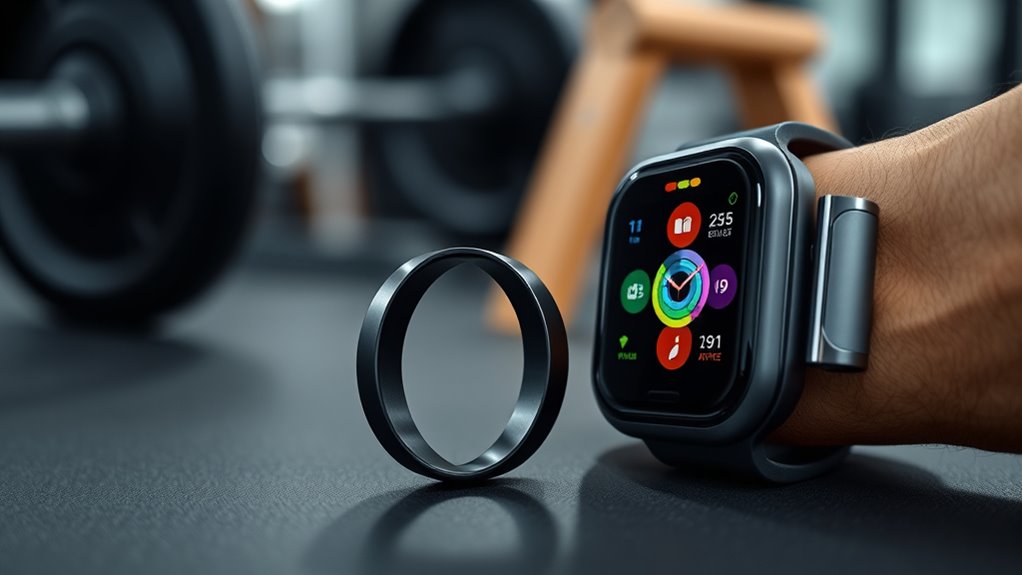

Choosing between a fitness ring and a smartwatch depends on what matters most to you. If you want long battery life and a discreet, stylish accessory, a fitness ring may suit your lifestyle better. On the other hand, if you prefer detailed health metrics, notifications, and more features, a smartwatch offers more functionality, but with added bulk and frequent charging. Either way, there’s more to examine that can help you find the perfect fit for your routine.
Key Takeaways
- Fitness rings offer longer battery life and low maintenance, while smartwatches require frequent recharging.
- Rings provide a discreet, jewelry-like appearance; watches are larger and more prominent accessories.
- Smartwatches deliver comprehensive features like GPS, notifications, and app support; rings focus on essential health metrics.
- Rings emphasize sleek, minimalist design with natural materials; smartwatches can be customized but are more conspicuous.
- Rings suit users seeking subtle, all-day wear; smartwatches cater to those needing detailed tracking and connectivity.
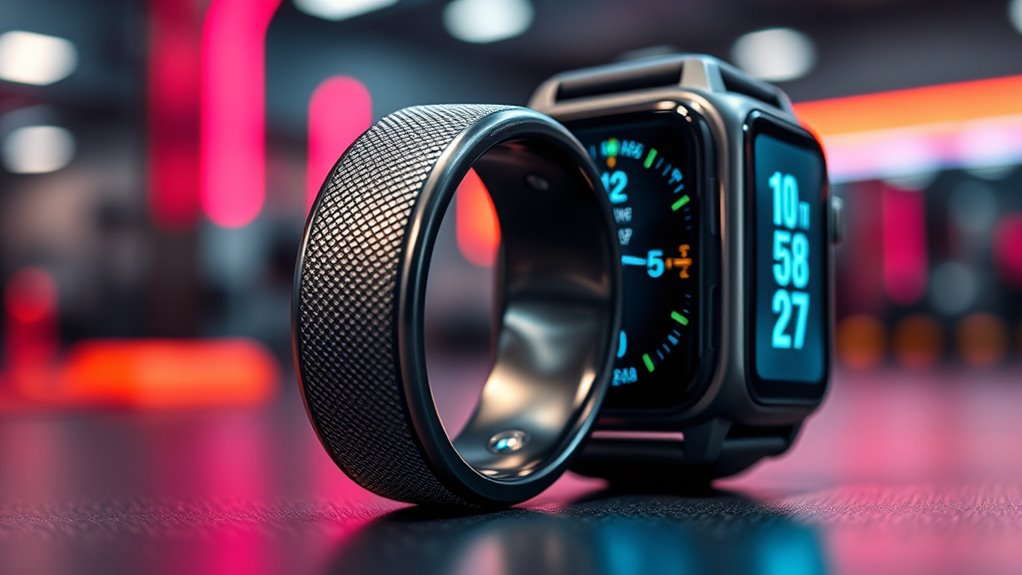
When choosing a fitness tracker, you might find yourself torn between a sleek fitness ring and a versatile smartwatch. Both options have their unique appeal, but understanding how they compare in key areas can help you make the right choice. One of the most important factors is battery life. Fitness rings typically excel here because they are designed with minimal hardware, which means they consume less power. You can often go several days, sometimes even a week, without needing to recharge. This low-maintenance aspect appeals to those who prefer a device that fits seamlessly into their busy lives without constant attention. Smartwatches, on the other hand, tend to have shorter battery life—often lasting one to two days—due to their larger screens, multiple features, and continuous data syncing. If you’re someone who doesn’t want to worry about frequent charging, a fitness ring might be the smarter choice.
Design aesthetics also play a significant role in your decision. Fitness rings are compact, lightweight, and discreet, resembling jewelry more than a tech gadget. They offer a sleek, minimalist look that blends well with everyday wear, making them ideal if you prefer a subtle accessory. Their unobtrusive design means you can wear them all day, whether you’re at work, working out, or going out socializing. Conversely, smartwatches are larger and more prominent, with customizable watch faces and additional features like notifications, apps, and even music controls. While some models are slim and stylish, they generally demand more visual attention and may not suit every outfit or occasion. If aesthetics matter to you and you want something that looks elegant and understated, a fitness ring’s design might appeal more.
However, it’s worth noting that the sleek design of a fitness ring might limit some features, like a larger display or advanced health metrics. Smartwatches, with their bigger screens, provide more detailed insights at a glance—such as heart rate, GPS navigation, and notifications—making them a versatile tool for those who want comprehensive health tracking and connectivity options. But this versatility comes with trade-offs: bulkier design and more frequent charging. If you prioritize a device that’s easy to wear all day with minimal fuss, the fitness ring’s sleek, low-profile design and impressive battery life make it an attractive option. Additionally, some modern fitness rings now incorporate natural materials that enhance comfort and style, appealing to users seeking both function and fashion. Ultimately, your choice depends on whether you prefer a discreet, long-lasting tracker or a feature-rich, more conspicuous device. Both have their merits, but considering your lifestyle and aesthetic preferences will help you pick the perfect match.
Frequently Asked Questions
Can Fitness Rings Track Sleep Quality Better Than Smartwatches?
Fitness rings often provide better sleep tracking accuracy because they are less intrusive and stay comfortably on your finger all night. You’re more likely to wear them consistently, leading to more reliable data. Their wearable comfort means you barely notice them while sleeping, unlike some smartwatches that can be bulky or uncomfortable. As a result, fitness rings can sometimes give a clearer picture of your sleep quality than smartwatches.
Are Fitness Rings Suitable for Extreme Sports or High-Impact Activities?
Imagine your fitness ring as a sleek shield, but even the toughest one can crack under extreme impact. For high-impact sports or extreme activities, fitness rings often lack impact resistance and durability, making them less suitable. You need gear that can withstand the jolt of a fall or a collision. A smartwatch typically offers better impact resistance, so it’s a smarter choice when pushing your limits in intense, high-impact environments.
How Do Fitness Rings Handle Data Privacy Compared to Smartwatches?
You’ll find that fitness rings prioritize data privacy through robust data encryption, ensuring your health info stays secure. They often emphasize user anonymity, limiting personal details shared or stored. Compared to smartwatches, which may sync data with cloud services, rings typically offer better privacy controls. So, if privacy’s a concern, a fitness ring handles your data more securely, giving you peace of mind during your workouts.
What Is the Battery Life Difference Between Fitness Rings and Smartwatches?
You’ll find that fitness rings usually have better battery endurance, often lasting several days or even a week, meaning less frequent charging. In contrast, smartwatches typically require daily or every few days of charging due to higher power consumption. This means you’ll spend less time plugged in with a ring, while a smartwatch might need more regular charging to keep all functions running smoothly.
Can Fitness Rings Be Used for Swimming or Water-Based Exercises?
Yes, fitness rings can be used for swimming or water-based exercises if they have water resistance. Look for rings with a high water resistance rating to guarantee they can handle swimming, splashes, and sweat. Water resistance allows you to track your water-based activities accurately, providing data on your swimming capability, laps, and overall performance. Always verify the specific water resistance level to match your activity level and prevent damage.
Conclusion
When choosing between a fitness ring and a smartwatch, consider what feels right for your lifestyle. The ring offers a subtle, almost secretive nudge toward activity, while the smartwatch provides a lively, energetic reminder. Think of it as finding your perfect dance partner—sometimes quiet and graceful, other times bold and lively. Whichever you pick, remember it’s all about gently guiding you toward your goals, making the journey feel natural and enjoyable.