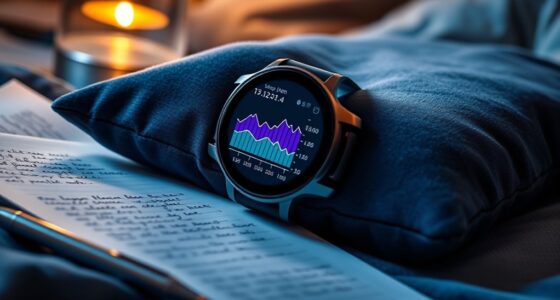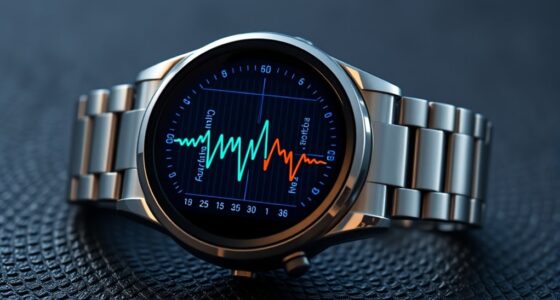
To understand your VO2 max on your watch, check the display after your workouts; it typically shows a number representing your cardiovascular fitness level. Your device calculates this using heart rate, pace, GPS data, and sometimes user input during supported activities like running or cycling. Keep in mind external factors like temperature, hydration, and fit can influence the results. To get the most accurate insights and improve your fitness, continue exploring the details behind these numbers.
Key Takeaways
- Your watch estimates VO2 Max by analyzing heart rate, pace, and GPS data during specific workouts like running or cycling.
- Ensure the watch fits snugly and conditions are optimal to improve measurement accuracy.
- VO2 Max is typically displayed in your watch’s health or fitness app, often as a numerical value or trend graph.
- External factors such as temperature, hydration, and stress can influence readings; consider these when interpreting results.
- Regular activity tracking over time helps monitor progress and adjust training to improve your VO2 Max.
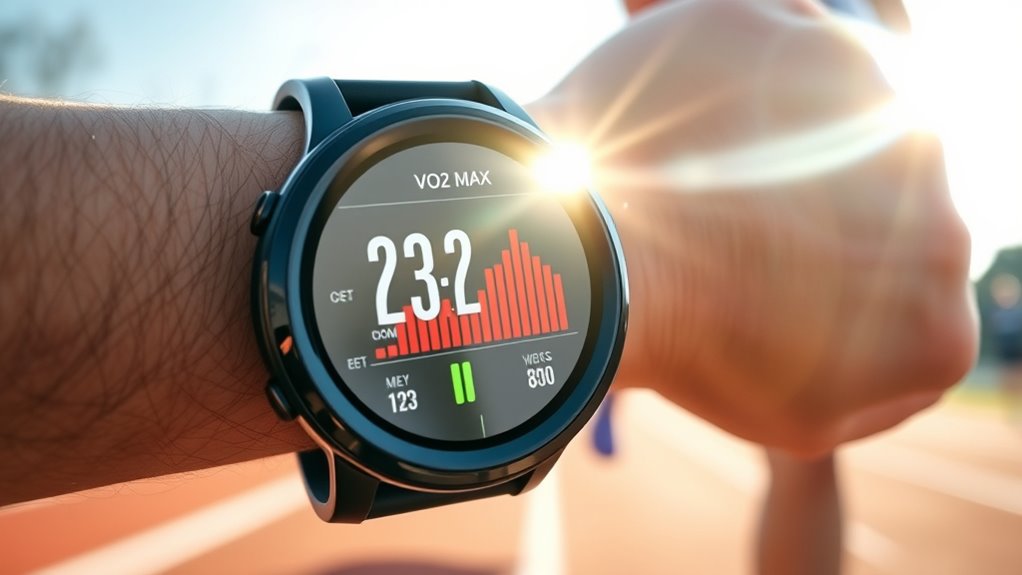
Ever wondered how fit you really are without visiting a lab? Your smartwatch might be the key. Many modern watches now come equipped with features that estimate your VO2 Max, giving you valuable insight into your cardiovascular fitness level. These features analyze data such as your heart rate, pace, and sometimes even your GPS location during workouts. But understanding how to interpret this number and improve it requires a little guidance.
First, it’s helpful to familiarize yourself with your watch model features. Some watches automatically calculate VO2 Max after you complete certain activities, like running or cycling, using built-in sensors and algorithms. Others might require you to input specific data or follow certain workout protocols. Once you know what your device can do, you can start applying training suggestions based on your VO2 Max reading. For example, if your score is low, it indicates room for improvement in cardiovascular endurance. You might consider incorporating more interval training or steady-state cardio sessions into your routine. Conversely, if your VO2 Max is high, you could focus on maintaining your level with varied workouts and recovery days.
Your watch’s VO2 Max estimate isn’t just a number; it’s a snapshot of your current fitness. To get the most accurate reading, confirm your device is properly fitted and that you’re performing activities within the watch’s supported parameters. Many watches recommend a warm-up or specific conditions to optimize the measurement. Keep in mind that external factors like temperature, hydration, and even stress levels can influence the reading, so don’t get discouraged if it fluctuates day to day. Additionally, smart home technology features can help create an optimal environment for workouts, such as adaptive lighting or climate control, enhancing your training results.
Ensure your watch fits properly, perform supported activities, and consider external factors for accurate VO2 Max readings.
Tracking your VO2 Max over time can reveal trends and help you set realistic goals. Regular workouts, especially those that push your aerobic capacity, can steadily increase your score. Watch model features often include trend graphs and historical data, making it easier to see your progress at a glance. Use this information to adjust your training suggestions; for example, if your VO2 Max plateaus, it might be time to change your routine or add different types of cardio to challenge your body.
Top picks for "watch read"
Open Amazon search results for this keyword.
As an affiliate, we earn on qualifying purchases.
Frequently Asked Questions
How Accurate Is Watch-Measured VO2 Max Compared to Lab Tests?
Your watch-measured VO2 max provides a decent accuracy comparison to lab tests, but it’s not perfect. Factors like activity impact, terrain, and effort level can influence readings, making them less precise than controlled lab measurements. While your watch offers a convenient way to track trends over time, keep in mind that it’s an estimate. For detailed analysis, lab tests remain the gold standard, but your watch is great for regular monitoring.
How Often Should I Check My VO2 Max for Progress?
Think of your VO2 max like a garden; it needs regular tending. Check it every 2-4 weeks to track progress without overwatering. Consistent training and good hydration keep your fitness blooming. Frequent checks might cause unnecessary worry, while infrequent ones could miss important shifts. Stay steady, monitor your progress, and adjust your routine as needed, ensuring your fitness garden thrives over time.
Can Certain Activities Affect My Watch’s VO2 Max Reading?
Certain activities can affect your watch’s VO2 max reading, especially if they influence your heart rate variability and activity consistency. Intense workouts, like running or cycling, might temporarily boost your score, while inconsistent activity levels can cause fluctuations. To get accurate readings, stay consistent with your exercise routine and monitor your heart rate variability, which helps your watch provide more reliable VO2 max estimates over time.
What Factors Influence Variations in VO2 Max Readings?
Imagine your VO2 max reading as a garden that flourishes with care. Genetic factors set the soil’s richness, while training consistency acts as the watering schedule. Both influence how lush and healthy your fitness landscape becomes. Variations occur when your efforts fluctuate or genetic predispositions change, causing your reading to ebb and flow. Keep steady, nurture your habits, and your VO2 max garden will thrive with vibrant, accurate measurements.
How Can I Improve My VO2 Max Based on Watch Data?
To improve your VO2 max based on watch data, focus on training in your cardio endurance and training zones. Incorporate high-intensity interval training (HIIT) and sustained efforts at 70-85% of your max heart rate. Consistently pushing yourself in these zones stimulates your cardiovascular system, boosts your aerobic capacity, and raises your VO2 max over time. Track your progress regularly and adjust workouts to challenge your limits safely.
Conclusion
So, next time you check your watch’s VO2 max, remember it’s not just a number—it’s a snapshot of your fitness potential. Some say it’s the ultimate indicator of endurance, but others argue it’s influenced by factors like temperature and hydration. While it’s a useful tool, don’t rely solely on it. Use it as motivation, but trust your body’s overall progress. Keep pushing, and your VO2 max will reflect your true fitness journey.