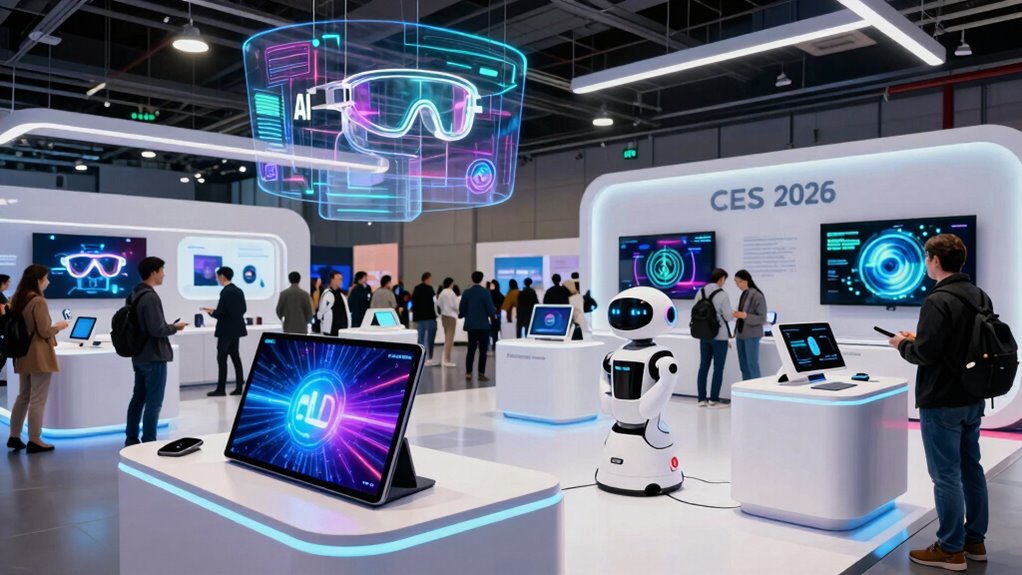

At CES 2026, you’ll see AI making a quantum leap, powered by breakthroughs in quantum computing, making devices smarter and more responsive while addressing ethical concerns. Sustainable tech is everywhere, with eco-friendly gadgets and durable systems gaining popularity. Next-generation wearables now feature advanced sensors and seamless health monitoring, blending fashion with function. Smart home ecosystems are becoming more connected and adaptive, offering immersive, sensory-rich experiences. Keep exploring to discover how these innovations are shaping your future environment.
Key Takeaways
- Quantum-powered AI breakthroughs enable smarter, faster devices with enhanced responsiveness and integrated ethical safeguards.
- Sustainable technologies like biodegradable gadgets, eco-friendly materials, and advanced solar solutions lead eco-conscious innovation.
- Next-gen wearables offer stylish designs, advanced sensors, and immersive sensory feedback for personalized health and virtual experiences.
- Smart home ecosystems feature seamless connectivity, improved privacy, and immersive virtual environments with adaptive, intelligent systems.
- Emphasis on safe, durable installations with advanced virtual-physical interactions, elevating immersive environments and system reliability.
Top picks for "biggest trend everyone"
Open Amazon search results for this keyword.
As an affiliate, we earn on qualifying purchases.
Artificial Intelligence Takes a Quantum Leap
At CES 2026, artificial intelligence has made a remarkable leap forward, pushing the boundaries of what’s possible. This year, advancements in quantum computing are fueling AI development, enabling faster data processing and more complex algorithms. These breakthroughs allow you to see smarter, more responsive AI systems integrated into everyday devices. However, with these powerful innovations come concerns around AI ethics. Developers are actively addressing issues like bias, privacy, and decision transparency to ensure responsible AI use. Quantum computing’s ability to accelerate AI capabilities is revolutionizing industries, but it also emphasizes the need for careful regulation. As a result, you’ll notice a greater focus on balancing technological progress with ethical considerations, shaping an AI-driven future that’s both innovative and responsible. Additionally, the integration of European cloud servers ensures that these advancements are built on sustainable and secure infrastructures, reinforcing the importance of responsible innovation.
Sustainable Tech Becomes Mainstream

Sustainable technology has moved from niche innovation to mainstream priority, driven by growing environmental concerns and consumer demand. At CES 2026, solar innovation takes center stage, with companies revealing highly efficient, affordable solar panels that seamlessly integrate into everyday life. Biodegradable gadgets also gain momentum, designed to reduce e-waste and environmental impact. These devices are made from eco-friendly materials that break down naturally, making disposal safer for the planet. You’ll notice a shift toward sustainability not just in product design but in company commitments as well. Consumers now prioritize eco-conscious choices, pushing manufacturers to develop smarter, greener solutions. Additionally, eco-friendly materials are becoming more prevalent in the manufacturing process, further supporting this sustainability wave. Innovations in battery technologies are also enhancing the viability of sustainable devices, making renewable energy solutions more accessible. This trend reflects a collective effort to balance technological advancement with environmental responsibility, ensuring a sustainable future driven by innovation that cares for the planet. For example, many companies are now incorporating sustainable supply chains to reinforce their commitment to environmental stewardship. As technology advances, the integration of energy-efficient designs in consumer electronics is also gaining importance, highlighting a broader industry focus on reducing energy consumption and environmental impact. Moreover, the adoption of recyclable materials in product manufacturing is helping to minimize waste and promote circular economy practices.
Next-Gen Wearables and Health Devices

Next-generation wearables and health devices are transforming personal healthcare by offering more accurate, seamless monitoring features. These devices blend fashion innovation with eco-friendly materials, making health tech both stylish and sustainable. You’ll notice:
Next-gen wearables combine style, precision, and sustainability for smarter, more comfortable health monitoring.
- Sleek designs that adapt to your style, incorporating innovative fabrics and eco-friendly materials.
- Advanced sensors that track essential signs with increased precision, providing real-time health insights. These sensors are also becoming more wearable-friendly, ensuring they integrate smoothly into daily life.
- Enhanced comfort, with lightweight, breathable components ideal for daily wear. Additionally, ongoing improvements in sensor technology allow for even more detailed health data collection without sacrificing comfort. Incorporating biocompatible materials further enhances user comfort and reduces skin irritation.
- Smart integration, seamlessly syncing with your devices and health apps for effortless data management. The incorporation of biometric analytics enables deeper insights into your overall wellness.
Additionally, the integration of psychological assessment tools into wearable tech allows for better understanding of mental health alongside physical health. These innovations make it easier to stay on top of your health while expressing your personal style. As fashion innovation and eco-conscious choices become more prominent, these wearables redefine what it means to care for yourself sustainably.
Smart Home Ecosystems Expand and Evolve

Smart home ecosystems are becoming more sophisticated and integrated, transforming how you interact with your living space. Voice control now makes managing your devices seamless, allowing you to adjust lighting, temperature, and security with simple commands. Manufacturers are enhancing connectivity between devices, creating a unified experience that feels intuitive. However, privacy concerns are more prominent than ever, as these ecosystems collect vast amounts of data. You need to be cautious about how your information is used and stored. Companies are addressing this by introducing stronger security measures and more transparent privacy policies. As ecosystems evolve, expect more personalized automation and smarter integrations, but always stay aware of privacy implications to ensure your smart home remains a safe and comfortable space. Additionally, advances in connected appliances are making kitchens more interactive and efficient, enabling you to monitor and control your devices remotely for a truly modern cooking experience. Moreover, the development of interoperable standards is helping different smart devices work better together, creating a more cohesive smart home environment. The push for standardized communication protocols is also driving better device compatibility and user experience. Incorporating connected home fitness technology can further enhance your wellness routines by integrating fitness devices into your smart ecosystem for a holistic lifestyle experience. As these systems become more adaptive and intuitive, they can better anticipate your needs and preferences, making daily routines more seamless.
Immersive Experience Technologies Reach New Heights

As smart home ecosystems become more interconnected and responsive, the focus is shifting toward creating truly immersive digital experiences. CES 2026 showcases how immersive experience technologies are reaching new heights, especially with advances in virtual art and sensory interfaces. You can now:
- Explore enthralling virtual art installations that adapt to your mood.
- Use enhanced sensory interfaces that stimulate sight, sound, and touch simultaneously.
- Interact with environments that respond in real-time, elevating gaming and entertainment.
- Experience more realistic virtual worlds through improved haptic feedback and spatial audio.
- Incorporate sanitation and maintenance considerations to ensure these immersive systems are safe and durable.
- Additionally, attention to cleaning routines and protective coatings helps extend the lifespan of sensitive components, ensuring consistent performance over time.
- Manufacturers are also emphasizing system durability, which is crucial for maintaining immersive experiences in high-use environments.
- Implementing robust system safety protocols is essential to prevent malfunctions and protect users in these advanced environments.
- As these technologies become more prevalent, ongoing safe installation practices are vital for reliable and secure operation within home or commercial settings.
These innovations make digital interactions more vivid and engaging, blurring the line between the virtual and physical worlds. You’re invited to immerse yourself in this evolving landscape where technology elevates your sensory experiences to unprecedented levels.
Frequently Asked Questions
What Are the Potential Privacy Concerns With New CES Technologies?
You should be aware that new CES technologies can raise data privacy and surveillance concerns. As devices collect more personal information, you might worry about how your data is stored and used. Surveillance concerns increase when devices have cameras or microphones that could be accessed without your consent. To protect yourself, stay informed about privacy policies and use settings that limit data sharing, ensuring your personal information remains secure.
How Affordable Will These Innovative Gadgets Become for Average Consumers?
You’ll likely find these innovative gadgets becoming more affordable, thanks to advancements in manufacturing and increased competition, which boost consumer accessibility. As technology evolves, prices tend to drop, making it easier for you to access cutting-edge features without breaking the bank. While some premium gadgets might still be pricey initially, expect more mainstream options to offer affordable pricing, ensuring you can enjoy the latest innovations without overspending.
Which Companies Led the Most Groundbreaking Innovations at CES 2026?
Like explorers venturing into uncharted territory, you’ll see companies like Samsung and Sony leading at CES 2026. They’re pushing boundaries with groundbreaking innovations in AI integration and wearable tech, transforming everyday experiences. These giants are not just showcasing gadgets but redefining how you interact with technology. Their focus on seamless AI-powered devices and sleek wearables promises a future where your tech feels more intuitive and integrated into your life than ever before.
How Will These Trends Influence Future Tech Regulations?
These trends will substantially influence future tech regulations by prompting policymakers to address emerging regulation challenges. You’ll see stricter tech policies around data privacy, AI safety, and sustainability, as regulators try to keep pace with rapid innovation. As new technologies become mainstream, you’ll need to stay informed about evolving regulations, and companies will face increased scrutiny to ensure their innovations align with evolving tech policy standards.
What Industries Are Most Likely to Be Disrupted by These Advancements?
You’ll find that autonomous vehicles and smart home gadgets are set to disrupt transportation and home automation industries considerably. An impressive 65% of consumers now prioritize smart tech in their homes, indicating rapid adoption. These advancements will challenge traditional auto manufacturers and home appliance companies to innovate swiftly. As a result, expect shifts in regulations, new market leaders, and increased competition, transforming everyday life and business operations profoundly.
Conclusion
So, after all the buzz at CES 2026, it’s funny how we’re still chasing the latest gadgets while the real revolution—sustainable, intelligent tech—is quietly shaping our future. You might think you’re just upgrading your devices, but soon, your entire home and health could run on AI and green tech. Ironically, the biggest trend is how seamlessly tech integrates into everyday life, making it almost invisible—until you realize you’re living in the future you’ve been waiting for.