
Shopping for an 8TB SATA SSD in 2026 means accepting a few hard truths: you are buying this capacity because your machine lacks NVMe slots, your NAS needs drop-in 2.5-inch bays, or you want silent, shock-proof bulk storage that no hard drive can match. Every drive here tops out around 560/530 MB/s, because that is simply the ceiling of the SATA bus. What actually separates these drives is endurance, sustained write behavior, and price per terabyte. My top pick is the Samsung 870 EVO, which pairs a class-leading 4,800 TBW endurance rating with the most consistent long-term write performance in this format. If your workload is read-heavy archival storage rather than constant writing, the Samsung 870 QVO undercuts it meaningfully on price. And for buyers on a tight budget who accept an unproven track record, the KingSpec 8TB is the cheapest ticket to this capacity class. Below, I break down exactly who each drive is for and where the tradeoffs bite.

Get the latest gadgets delivered free with Prime
- Fast, free delivery on millions of items
- Prime Video, Amazon Music and more included
- Member-only deals all year
Complete the kit



Key Takeaways
- The Samsung 870 EVO’s 4,800 TBW rating is more than triple the 870 QVO’s endurance (2,880 TBW), making it the pick for write-heavy NAS, editing, and scratch-disk use.
- The 870 QVO delivers identical 560/530 MB/s peak speeds to the EVO but relies on QLC flash, so sustained writes slow down more once the TurboWrite buffer fills.
- KingSpec is the only budget-brand option here; the lower price reflects a shorter 3-year warranty and a less proven reliability record than Samsung.
- All five drives share the same 2.5-inch SATA III form factor and 8TB capacity, so compatibility differences are minimal — the real decision is endurance versus price.
- If your system supports NVMe, an 8TB SATA drive only makes sense for NAS bays, drive cages, or older laptops where SATA is the only interface available.
| Samsung 870 EVO 8TB SATA III 2.5″ Internal SSD |  | Best Overall | Capacity: 8TB | Interface: SATA III 6 Gb/s | Form Factor: 2.5 inch | VIEW ON AMAZON | See Our Full Breakdown |
| Samsung 870 QVO 8TB SATA 2.5 Inch Internal SSD (MZ-77Q8T0) |  | Best Value | Capacity: 8 TB | Interface: SATA 6 Gb/s (backward compatible) | Form Factor: 2.5 Inch | VIEW ON AMAZON | See Our Full Breakdown |
| Samsung 870 QVO SATA III SSD 8TB 2.5″ Internal Solid State Drive | 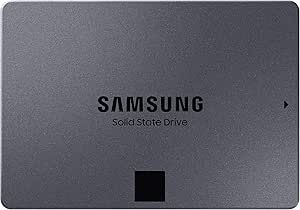 | Best for Multi-Drive Arrays | Capacity: 8TB | Form Factor: 2.5 inches | Interface: SATA III | VIEW ON AMAZON | See Our Full Breakdown |
| Samsung 870 EVO 8 TB SATA 2.5″ Internal SSD (MZ-77E8T0B/EU) |  | Best for Creators and NAS Upgrades | Capacity: 8 TB | Interface: SATA 6 Gb/s (compatible with 3.0 and 1.5 Gb/s) | Form Factor: 2.5 inch | VIEW ON AMAZON | See Our Full Breakdown |
| KingSpec 8TB 2.5″ SATA III Internal SSD |  | Best Budget Pick | Capacity: 8TB | Interface: SATA III (6Gb/s), backward compatible with SATA II | Form Factor: 2.5 inch | VIEW ON AMAZON | See Our Full Breakdown |
| sata ssds 8tb | Capacity | Interface | Form Factor | Sequential Read |
|---|---|---|---|---|
| Samsung 870 EVO 8TB SATA III 2 | 8TB | SATA III 6 Gb/s | 2.5 inch | Up to 560 MB/s |
| Samsung 870 QVO 8TB SATA 2.5 I | 8 TB | SATA 6 Gb/s (backward compatible) | 2.5 Inch | Up to 560 MB/s |
| Samsung 870 QVO SATA III SSD 8 | 8TB | SATA III | 2.5 inches | — |
| Samsung 870 EVO 8 TB SATA 2.5" | 8 TB | SATA 6 Gb/s (compatible with 3.0 and 1.5 Gb/s) | 2.5 inch | 560 MB/s |
| KingSpec 8TB 2.5" SATA III Int | 8TB | SATA III (6Gb/s), backward compatible with SATA II | 2.5 inch | — |
More Details on Our Top Picks
Samsung 870 EVO 8TB SATA III 2.5″ Internal SSD
When I line up every 8TB SATA drive on the market, the Samsung 870 EVO is the one I would put in my own NAS bay without hesitation. The headline number is 4,800 TBW of rated endurance — an enormous figure that means you could write roughly 2.6 terabytes per day for five years before hitting the warranty limit. That is what separates it from the QVO sitting lower in this list, which carries a substantially lower endurance rating for similar money saved.
Performance is everything SATA allows: 560/530 MB/s sequential with TurboWrite keeping write speeds consistent during large transfers. Samsung’s sixth-generation V-NAND and the MKX controller also deliver stronger random I/O than value-tier competitors, which shows up in day-to-day responsiveness when the drive is nearly full. Samsung Magician adds firmware updates, health monitoring, and encryption management — software support that the KingSpec simply cannot match. The tradeoff is price: this is the most expensive drive here per terabyte, and anyone with a free NVMe slot should think hard before paying SATA prices. But for a NAS, an older workstation, or a drive cage full of 2.5-inch bays, nothing else in this format combines endurance, polish, and resale trust as well.
Pros:- Class-leading 4,800 TBW endurance rating
- Consistent sustained writes thanks to TurboWrite and a large variable buffer
- Samsung Magician software for health monitoring, encryption, and firmware updates
- Extensively validated across NAS systems, chipsets, and video recording devices
Cons:- Highest price per terabyte in this lineup
- SATA interface caps speeds far below modern NVMe drives
- Overkill for read-only archival storage
Best for: NAS builders, video editors, and anyone running write-heavy workloads who wants maximum longevity from an 8TB SATA drive
Not ideal for: Buyers with free M.2 NVMe slots, or those whose 8TB drive will sit mostly idle as cold storage where the EVO’s endurance premium is wasted
- Capacity:8TB
- Interface:SATA III 6 Gb/s
- Form Factor:2.5 inch
- Sequential Read:Up to 560 MB/s
- Sequential Write:Up to 530 MB/s
- Endurance:4,800 TBW
- Warranty:5-year limited
- Software:Samsung Magician
Our verdict“The 870 EVO 8TB is the safest and most durable 8TB SATA drive you can buy, and worth the premium whenever data is written often.”
Samsung 870 QVO 8TB SATA 2.5 Inch Internal SSD (MZ-77Q8T0)
The 870 QVO is the smart middle path in this comparison: Samsung reliability and the same 560/530 MB/s peak speeds as the EVO, at a meaningfully lower price per terabyte. Its role in my lineup is clear — this is the drive for people whose 8TB of storage is mostly read from, not written to. Game libraries, media collections, backups, and archives are exactly what QLC flash handles gracefully. Its SATA 6 Gb/s interface is backward compatible with older 3 Gb/s and 1.5 Gb/s controllers too, which makes it unusually forgiving in aging machines.
Where the QVO gives ground to the EVO is sustained writing. Once its intelligent TurboWrite buffer fills during a very long transfer, write speeds drop as the drive manages QLC cells directly — a real annoyance if you regularly move 500GB video projects. Endurance is also lower than the EVO’s rating, which matters for a scratch disk but hardly at all for an archive. Compared with the KingSpec further down, you give up some peak write speed on paper but gain a far more established reliability record and broader compatibility testing. For most buyers who don’t write heavily, this is the best price-to-trust ratio in 8TB SATA.
Pros:- Same 560/530 MB/s peak speeds as the pricier EVO
- Lower cost per terabyte than TLC-based rivals
- Broad SATA compatibility including legacy 3 Gb/s and 1.5 Gb/s systems
- Samsung brand support and firmware ecosystem
Cons:- Sustained writes slow noticeably once the TurboWrite buffer fills
- Lower endurance rating than the 870 EVO
- Real-world performance depends on system configuration
Best for: Budget-conscious builders storing game libraries, media archives, and backups that are read far more often than written
Not ideal for: Video professionals and anyone running constant large write workloads, who should step up to the 870 EVO
- Capacity:8 TB
- Interface:SATA 6 Gb/s (backward compatible)
- Form Factor:2.5 Inch
- Sequential Read:Up to 560 MB/s
- Sequential Write:Up to 530 MB/s
- Model:MZ-77Q8T0
- Use Case:Personal, gaming, and business storage
Our verdict“The 870 QVO 8TB is the value king for read-heavy bulk storage, as long as you’re not hammering it with writes all day.”
Samsung 870 QVO SATA III SSD 8TB 2.5″ Internal Solid State Drive
This second 870 QVO listing is essentially the same drive family as my value pick, so why does it earn its own slot? Because when you’re populating a multi-bay NAS or RAID array, you often buy three or four drives at once, and this listing frequently carries different pricing and availability than its sibling. At array quantities, even a modest per-unit saving compounds quickly. The drive itself offers the same 560/530 MB/s sequential performance and a solid 2,880 TBW endurance rating, which is the number that matters when several drives share a write load across a RAID set.
Compared with the EVO entries above, the endurance gap narrows in practice inside an array, because writes are striped across every member drive — each QVO in a four-bay RAID 5 absorbs only a fraction of total traffic. That makes the QVO a genuinely rational choice here, not just a compromise. Against the KingSpec, you get the same Samsung validation story with NAS systems, motherboards, and chipsets that IT deployments depend on. The drawbacks haven’t changed: this is still a SATA drive stuck at SATA speeds, and QLC sustained-write throttling can surface during large array rebuilds. If a rebuild is a rare event for you, that’s an acceptable trade for the savings.
Pros:- 2,880 TBW endurance rating suits shared array workloads
- Identical 560/530 MB/s speeds to the EVO lineup
- Improved random access and reliability over prior QVO generations
- Often the best per-unit price when buying in multiples
Cons:- Same QLC sustained-write throttling as the standard QVO
- Duplicated product — watch pricing against the sibling listing
- Large-capacity SSD premium over hard drives remains steep
Best for: IT professionals and NAS owners buying multiple 8TB drives at once for RAID arrays where cost per bay matters
Not ideal for: Single-drive power users who write constantly and are better served by the 870 EVO’s higher endurance
- Capacity:8TB
- Form Factor:2.5 inches
- Interface:SATA III
- Sequential Speed:560/530 MB/s
- Endurance:2,880 TBW
- Target Users:IT professionals, creators, everyday users
Our verdict“The smart buy for populating NAS bays in bulk, where QVO economics and striped writes make the endurance tradeoff largely disappear.”
Samsung 870 EVO 8 TB SATA 2.5″ Internal SSD (MZ-77E8T0B/EU)
This EU-market listing of the 870 EVO 8TB is the same hardware as my top pick — same 6th-generation V-NAND, same MKX controller, same 4,800 TBW rating and 5-year warranty — but it deserves separate attention because of how Samsung positions its compatibility story. The listing highlights validation across NAS systems, video recording devices, chipsets, and motherboards, plus bundled data migration software for cloning an aging hard drive. That combination makes this listing the one I would point creators and NAS upgraders toward when it’s priced below the primary listing, which happens regularly.
The upgrade angle matters more than it sounds. Replacing a slow 8TB hard drive in an editing workstation or surveillance recorder with this drive means up to 3.6x faster access to footage, silent operation, and shock resistance a spinning platter can’t offer. Samsung’s free migration tool moves everything over without a clean reinstall, lowering the barrier for less technical buyers. The downsides are inherited from the platform: SATA speeds are the floor for modern standards, and at 8TB you’re paying a large premium over an equivalently sized hard drive. Compared with the QVO listings, this is the one to buy when the drive will be written to constantly — 4K/8K editing, continuous recording — because that’s precisely where its endurance advantage pays off.
Pros:- 4,800 TBW endurance suited to 4K/8K editing and continuous recording
- Free Samsung data migration software for easy HDD upgrades
- Validated with NAS systems, chipsets, and recording devices
- TurboWrite sustains high write speeds with a large variable buffer
Cons:- Hardware identical to the main 870 EVO listing — buy whichever is cheaper
- Premium price over hard drive storage at the same capacity
- SATA interface limits raw throughput versus NVMe
Best for: Video editors and NAS owners upgrading from hard drives who want bundled migration software and maximum write endurance
Not ideal for: Shoppers who find the primary 870 EVO listing cheaper, since the hardware is identical
- Capacity:8 TB
- Interface:SATA 6 Gb/s (compatible with 3.0 and 1.5 Gb/s)
- Form Factor:2.5 inch
- Sequential Read:560 MB/s
- Sequential Write:530 MB/s
- Endurance:4,800 TBW
- Warranty:5-year limited
- NAND / Controller:6th-gen V-NAND, MKX controller
- Weight:48 g
Our verdict“Buy this listing when it undercuts the primary 870 EVO — you get the same elite endurance plus a smooth HDD-to-SSD upgrade path.”
KingSpec 8TB 2.5″ SATA III Internal SSD
Let me be direct about the KingSpec 8TB: this is the cheapest legitimate path to 8TB of SATA solid-state storage in this comparison, and that is its entire reason for existing. The spec sheet reads respectably — 550/520 MB/s sequential with 3D NAND, wear leveling, TRIM, and S.M.A.R.T. monitoring — and the drive works across Windows, Linux, Unix, and DOS, so compatibility is broad. For a secondary machine, a media server, or a project where four Samsung drives would blow the budget, one KingSpec can make an otherwise impossible build happen.
But the reasons it costs less are real. The 3-year warranty is two years shorter than Samsung’s, peak write speed trails the 870 drives slightly, and — more importantly — KingSpec lacks Samsung’s years of documented endurance data and compatibility validation with NAS vendors. If a Samsung drive dies, the failure pattern and recovery path are well understood; with a budget brand, you are accepting more uncertainty about flash quality and firmware maturity. My honest framing: this drive makes sense when capacity per dollar is the only metric that matters and the data on it is backed up elsewhere. If it isn’t, and this is your primary storage, spending more on the QVO or EVO is cheaper than data recovery ever will be.
Pros:- Lowest price for 8TB SATA SSD capacity in this lineup
- Respectable 550/520 MB/s sequential performance
- Shock resistance and low power consumption
- 3-year warranty with lifetime technical support
Cons:- Less proven long-term reliability than Samsung’s QLC and TLC drives
- Shorter 3-year warranty versus Samsung’s 5 years
- Slightly lower write speed and no comparable software suite
Best for: Budget builders who need 8TB of SSD capacity for the lowest possible price and keep their data backed up
Not ideal for: Anyone storing irreplaceable data or running 24/7 NAS duty, who should pay up for Samsung’s proven reliability
- Capacity:8TB
- Interface:SATA III (6Gb/s), backward compatible with SATA II
- Form Factor:2.5 inch
- Read Speed:550 MB/s
- Write Speed:520 MB/s
- Flash Type:3D NAND
- Warranty:3-year limited
- OS Support:Windows, Linux, Unix, DOS
Our verdict“The KingSpec is an acceptable budget gamble for backed-up, capacity-first storage — just don’t trust it with your only copy of anything.”
How We Picked
Because every 8TB SATA SSD hits roughly the same interface ceiling, I did not rank these drives on peak sequential speed — that would be meaningless when four of the five quote 560/530 MB/s. Instead, I weighted endurance ratings (TBW), since an 8TB drive is almost always purchased for years of heavy-duty storage, and a drive that wears out early is a worse buy at any price. I also compared warranty length and software support, which signal how much faith a manufacturer has in its own flash. Sustained write behavior mattered too: QLC-based drives like the QVO series read just as fast as TLC drives but throttle harder during long transfers, which matters if you regularly move hundreds of gigabytes at a time. Finally, I factored in price per terabyte, because at this capacity even small percentage differences add up to real money. The lineup below is ordered from the most durable, best-supported option down to the most affordable gamble.
| sata ssds 8tb | Interface |
|---|---|
| Samsung 870 EVO 8TB SATA III 2 | SATA III 6 Gb/s |
| Samsung 870 QVO 8TB SATA 2.5 I | SATA 6 Gb/s (backward compatible) |
| Samsung 870 QVO SATA III SSD 8 | SATA III |
| Samsung 870 EVO 8 TB SATA 2.5" | SATA 6 Gb/s (compatible with 3.0 and 1.5 Gb/s) |
| KingSpec 8TB 2.5" SATA III Int | SATA III (6Gb/s), backward compatible with SATA II |
Factors to Consider When Choosing Sata Ssds 8tb
Before you click buy on any 8TB SATA SSD, a short reality check will save you money and regret. Here is what actually drives the decision at this capacity.Endurance (TBW) Matters More at 8TB
A terabytes-written rating defines how much data you can write over the drive’s life. The 870 EVO’s 4,800 TBW dwarfs typical QLC ratings, and the difference compounds because an 8TB drive invites huge transfers. If you edit video, run databases, or use the drive as a scratch disk, pay for endurance. If you mostly read stored files, the cheaper QVO’s lower rating will likely outlive your ownership of the drive.
TLC vs QLC Flash
The EVO uses TLC NAND; the QVO uses QLC. QLC stores more bits per cell, which cuts costs but slows sustained writes once the cache buffer fills and wears cells faster. For archives and game libraries you will never feel the difference. During a 400GB video dump, you will. Match the flash type to your write pattern, not the marketing on the box.
SATA Is a Ceiling, Not a Starting Point
Every drive here peaks near 560 MB/s because SATA III tops out at 6 Gb/s. No firmware or NAND wizardry changes that. If your system has a free M.2 slot, an NVMe drive at the same price delivers several times the throughput — so only choose 8TB SATA when your hardware (NAS bays, 2.5-inch enclosures, older laptops) genuinely requires it.
Warranty and Software as Insurance
Samsung’s 5-year warranty and Magician software (health monitoring, encryption, firmware updates, data migration) represent real value over budget brands with 3-year coverage and no tooling. On an 8TB drive holding millions of files, the ability to monitor health and clone an old drive cleanly is worth a modest price premium.
Price per Terabyte Discipline
At this capacity, always divide price by eight and compare listings. The two 870 EVO listings and two QVO listings in this roundup are identical hardware sold under different SKUs, and their prices move independently. Buying the same drive from the cheaper listing is the easiest savings in this entire category.
Frequently Asked Questions
Is an 8TB SATA SSD still worth buying in 2026?
It depends entirely on your hardware. If you have a modern desktop with free M.2 slots, an 8TB NVMe drive will deliver five to ten times the throughput for similar money, making SATA hard to justify. But SATA remains the right choice in three situations: NAS units with 2.5-inch bays, older laptops and workstations with no NVMe support, and drive enclosures or surveillance systems built around the 2.5-inch form factor. In those cases an 8TB SATA SSD is not a compromise — it is the only option that fits.
What is the real difference between the Samsung 870 EVO and 870 QVO at 8TB?
The EVO uses TLC NAND with a 4,800 TBW endurance rating, while the QVO uses QLC NAND with a lower 2,880 TBW rating and a lower price. Peak speeds are identical at 560/530 MB/s, but the QVO slows down more during sustained writes once its TurboWrite buffer fills. Practically, the EVO suits write-heavy workloads like video editing and continuous recording, while the QVO is excellent for game libraries, backups, and archives that are read far more often than they are written.
How long will an 8TB SATA SSD actually last?
Longer than most people will own it. Samsung’s 4,800 TBW rating on the 870 EVO means you could write about 2.6TB per day, every day, for five years and still be within warranty. Even the QVO’s 2,880 TBW allows roughly 1.5TB of daily writes over the same period. A typical user writes a few gigabytes a day, meaning these drives will likely outlast the systems they live in — which is why endurance should only drive your purchase decision if you genuinely write heavily.
Are budget brands like KingSpec reliable for 8TB drives?
They can be, but the risk profile is different. Budget brands source NAND of varying quality, offer shorter warranties (three years versus Samsung’s five), and lack the years of documented failure data and NAS compatibility validation that Samsung has accumulated. If the KingSpec holds backed-up data in a non-critical machine, the savings are reasonable. If it is your primary or only copy of important files, the price difference between it and an 870 QVO is small compared to the cost of recovering data from a failed budget drive.
Can I use these 8TB SATA SSDs in a NAS?
Yes, and Samsung specifically validates the 870 EVO and QVO with major NAS systems, chipsets, and motherboards. SSDs bring silent operation, low power draw, vibration immunity, and instant seek times compared to hard drives. Two cautions apply: confirm your NAS model supports 8TB 2.5-inch drives (some bays have capacity limits), and consider that SSDs cost far more per terabyte than NAS hard drives, so most builders reserve them for cache tiers or performance pools rather than bulk capacity.
Conclusion
The right 8TB SATA SSD comes down to what you’ll do with it. Write-heavy users — video editors, surveillance systems, anyone with a scratch disk — should buy the Samsung 870 EVO 8TB and not think twice; its 4,800 TBW rating and consistent sustained writes justify the premium. Read-heavy buyers stocking game libraries, media archives, and backups get nearly identical performance for less with the 870 QVO. NAS and RAID builders buying multiple drives should watch both QVO listings and grab whichever is cheaper per unit. Upgraders replacing a hard drive in an editing rig or recorder will appreciate the EU-listed 870 EVO’s bundled migration software. And strict budget builders can take the KingSpec route, provided everything on it is backed up elsewhere. Whatever you choose, remember the ceiling: all of these drives perform within a few percent of each other, so let endurance, warranty, and price per terabyte — not speed claims — make the final call.
Halloween Picks
halloween
As an affiliate, we earn on qualifying purchases.