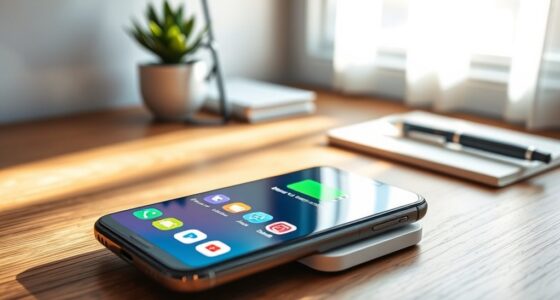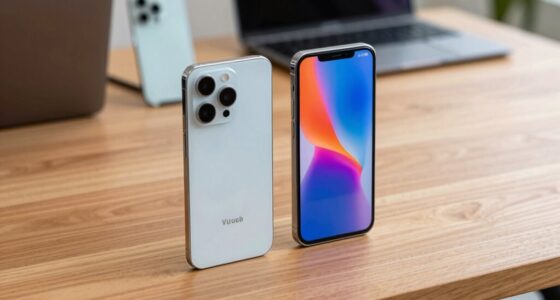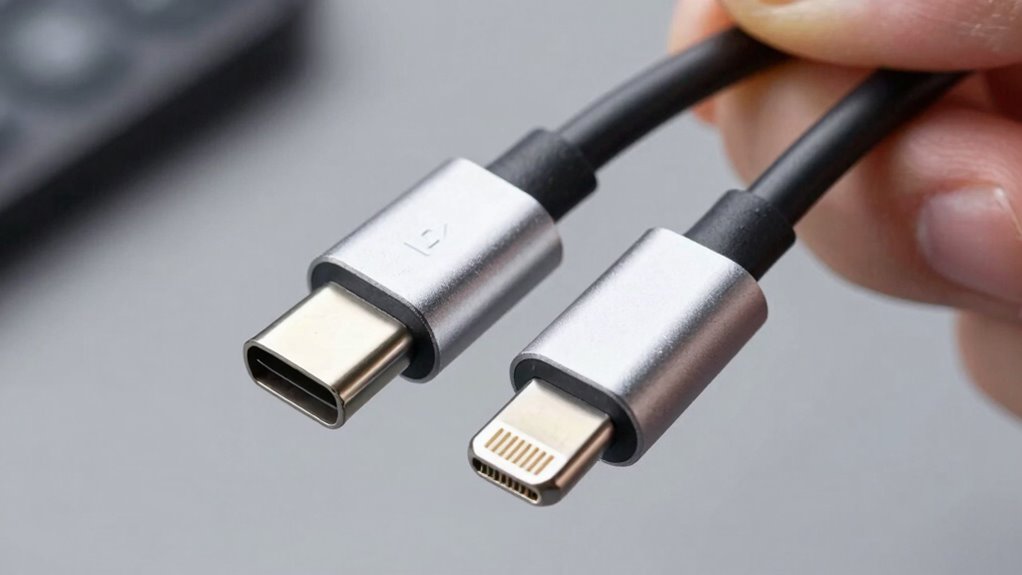

Apple switched from Lightning to USB-C mainly because of industry standards, regulatory pressures, and the desire to improve user experience. USB-C offers faster data transfer, universal compatibility, and supports new features like wireless charging. It also helps reduce electronic waste by standardizing chargers. This change affects your devices and ecosystem, making accessories more versatile. To understand how this move impacts you and the broader tech landscape, there’s more to explore below.

Get the latest gadgets delivered free with Prime
- Fast, free delivery on millions of items
- Prime Video, Amazon Music and more included
- Member-only deals all year
Key Takeaways
- Regulatory mandates worldwide pushed Apple to adopt a universal standard, reducing reliance on proprietary connectors.
- USB-C offers faster data transfer and more versatile device compatibility than Lightning.
- Industry trends toward standardization and sustainability favor USB-C for eco-friendly and long-term use.
- Transition enhances device interoperability, simplifies accessory compatibility, and promotes future-proofing.
- Apple’s switch aligns with global efforts to streamline technology, reduce electronic waste, and promote innovation.
As an affiliate, we earn on qualifying purchases.
The Evolution of Apple’s Charging Ports
Apple’s journey with charging ports has been marked by a series of significant changes aimed at improving user experience and device design. Early on, the company focused on refining battery technology, making batteries last longer and charge faster. As wireless charging technology advanced, Apple began integrating it into its devices, reducing dependence on physical ports. This shift allowed for sleeker designs and more durable devices, eliminating port-related wear and tear. Over time, the company moved from proprietary connections to more universal solutions like Lightning, and now, with the adoption of USB-C, it aims to standardize charging and data transfer. Color accuracy and contrast ratios have become increasingly important in the display industry, influencing how devices are designed for optimal visual performance. These innovations reflect Apple’s commitment to enhancing convenience, leveraging advancements in battery tech and wireless charging to create a seamless user experience. Additionally, monitoring market trends and technological innovations has been crucial in guiding these transitions. Recognizing the importance of universal standards, Apple’s switch to USB-C aligns with broader industry shifts toward common charging interfaces. Moreover, considering auditory processing developments underscores the importance of compatibility and adaptability in evolving technology.
USB-C charging cable for Apple devices
As an affiliate, we earn on qualifying purchases.
As an affiliate, we earn on qualifying purchases.
Regulatory Pressures and Industry Standards
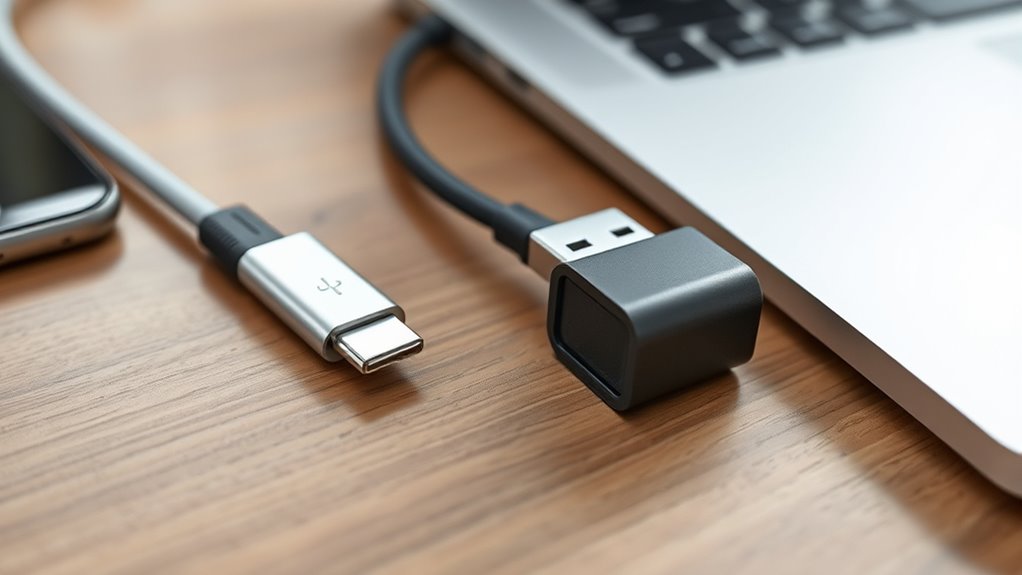
Regulatory mandates are pushing companies to adopt a common charging standard, making devices more compatible. Industry standards also encourage manufacturers to streamline their designs, reducing confusion for consumers. These pressures are shaping the future of device connectivity, influencing whether USB-C or Lightning prevails. Additionally, the adoption of new Rhythm Failure technologies and standards may further impact connector choices in upcoming device models. The evolving landscape underscores the importance of industry compliance to meet regulatory requirements and stay competitive. Moreover, as the industry moves toward greater standardization, manufacturers are increasingly aligning their products with emerging global protocols to ensure broader interoperability, including considerations of heat distribution and material compatibility to enhance device longevity.
Regulatory Mandates Accelerate Change
Recent regulatory mandates have pushed industry players to adopt a universal charging standard, prompting rapid changes in the way devices connect and charge. By moving toward a common standard like USB-C, manufacturers can realize significant standardization benefits, simplifying design and reducing costs. This shift streamlines manufacturing processes, allowing companies to produce fewer components and improve efficiency. As regulations drive this progression, companies no longer need to develop multiple connectors for different regions or device types, saving time and resources. For consumers, this results in more consistent accessories and fewer compatibility issues. Additionally, the adoption of standardized connectors like USB-C can promote water safety by reducing electronic waste and ensuring safer charging practices. Overall, regulatory pressures accelerate industry change by encouraging a move toward uniform standards, which enhances manufacturing efficiencies and benefits both producers and end-users.
Industry Standardization Promotes Compatibility
Industry standardization plays a crucial role in promoting compatibility across devices, especially as regulatory pressures encourage manufacturers to adopt common connectors like USB-C. When devices share the same port, you benefit from improved adapter compatibility, reducing the need for multiple cables and adapters. This standard also guarantees that charging speed can be optimized, allowing you to charge your devices quickly and efficiently regardless of the brand. With industry-wide adoption of USB-C, you’ll notice fewer connection issues and more reliable performance, streamlining your experience. As regulations push for universal standards, manufacturers are motivated to align with these standards, making it easier for you to use one charger across multiple devices. Ultimately, industry standardization simplifies your tech setup and enhances overall device compatibility.
universal USB-C data transfer cable
As an affiliate, we earn on qualifying purchases.
As an affiliate, we earn on qualifying purchases.
Advantages of USB-C Over Lightning
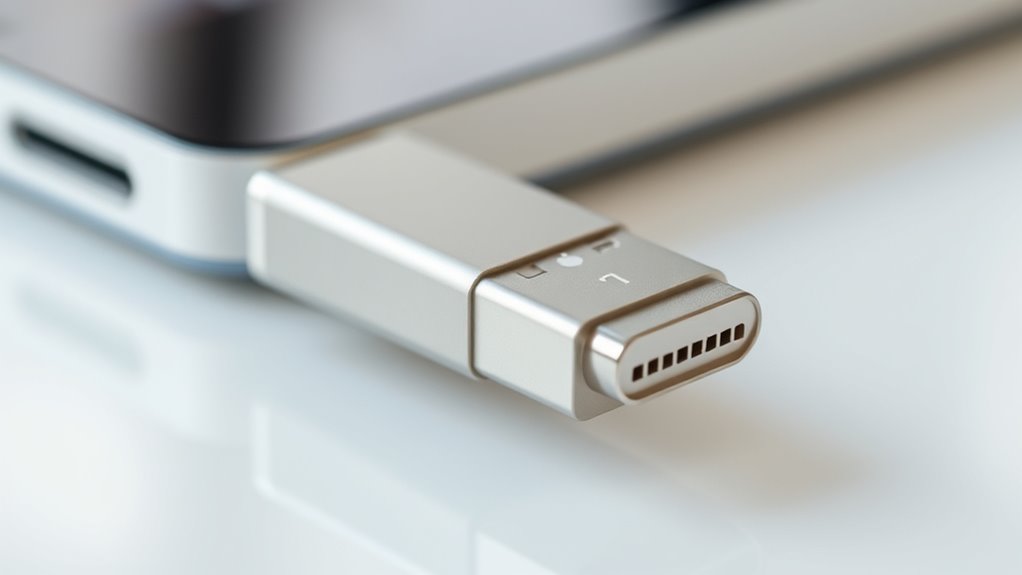
One of the key advantages of USB-C over Lightning is its versatility and wider adoption across different devices. USB-C supports faster data transfer, making file sharing more efficient. It also enables wireless charging capabilities, reducing cable clutter and enhancing convenience. Unlike Lightning, USB-C is compatible with many gadgets, from laptops to monitors, increasing its usefulness. The universal standard simplifies your tech setup and minimizes the need for multiple cables. Here’s a quick comparison:
| Feature | USB-C | Lightning |
|---|---|---|
| Data Transfer Speed | Faster, up to 10 Gbps | Limited, slower |
| Wireless Charging | Supported | Not supported |
| Device Compatibility | Broad, multi-device support | Limited to Apple products |
| Standardization | Industry-wide | Apple-specific |
| Future Proofing | More future-proof | Less adaptable |
As an affiliate, we earn on qualifying purchases.
Impact on Device Design and User Experience
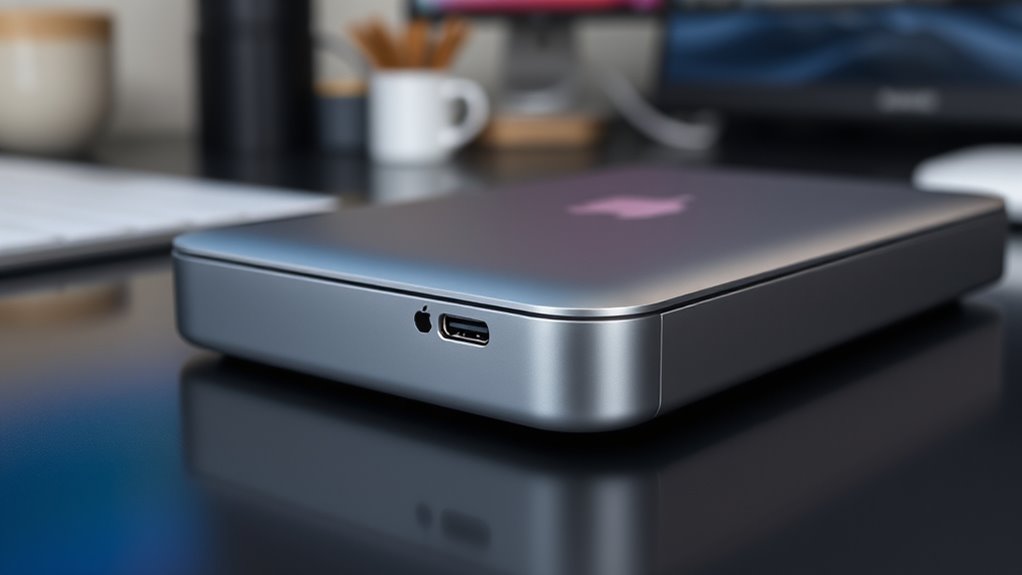
The choice between USB-C and Lightning considerably influences device design and your overall user experience. Switching to USB-C allows for slimmer, more streamlined devices since it supports wireless charging directly, eliminating the need for bulky port covers or adapters. This change enhances device aesthetics, making your gadgets look cleaner and more modern. Additionally, USB-C’s universal nature simplifies cable management, reducing clutter and improving convenience. Wireless charging becomes more seamless, encouraging a clutter-free experience and enabling easier charging on the go. Overall, adopting USB-C can lead to a more polished, minimalist design and a smoother user experience, aligning with modern expectations for sleekness and functionality. This shift impacts how your device looks and how effortlessly you can use it daily. Furthermore, the standardization of connectors promotes long-term compatibility and sustainability, reducing electronic waste and the need for multiple cables. The move towards universal standards also supports ongoing innovation in device connectivity and accessories. A consistent charging experience is also achieved, making it easier for users to rely on a single charging method across multiple devices. As a result, users can benefit from enhanced device durability, since USB-C ports are generally more robust and less prone to damage than traditional connectors. Additionally, the increased adoption of USB-C encourages manufacturers to design more future-proof devices, ensuring compatibility with upcoming technologies and accessories.
Compatibility and Ecosystem Changes
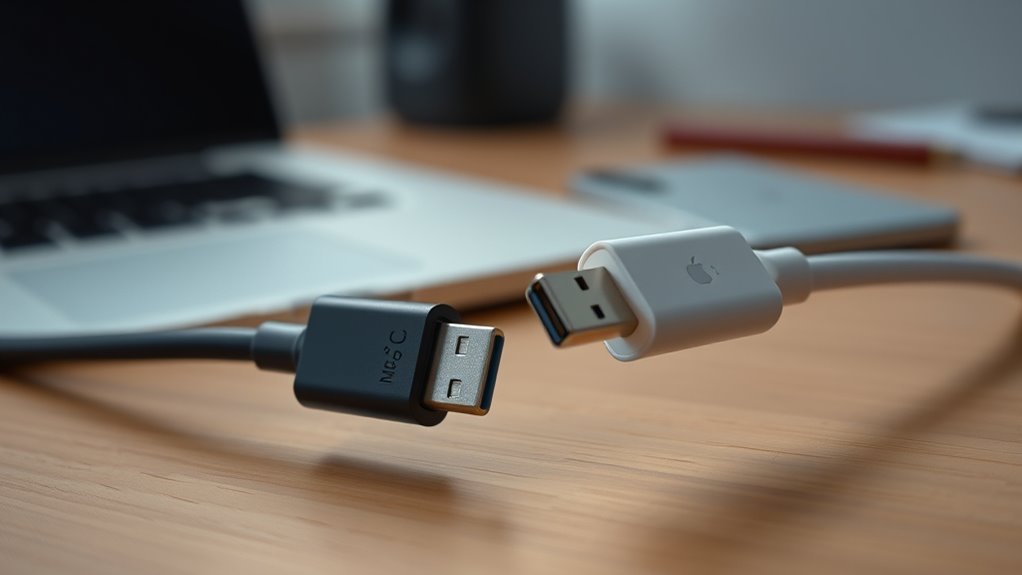
Switching to USB-C substantially impacts device compatibility and the broader ecosystem you interact with daily. You’ll notice changes in several areas:
Switching to USB-C enhances compatibility and creates a more unified ecosystem for your devices and accessories.
- Wireless charging becomes more standardized, making it easier to find compatible chargers across brands.
- Accessory compatibility expands, allowing you to use a wider range of cables, docks, and adapters without hassle.
- Data transfer speeds improve, benefiting your file sharing and syncing experience. This enhancement also supports more advanced data protocols, further streamlining your workflow.
- Compatibility with third-party peripherals increases, offering more options for external devices like keyboards or external drives.
- The shift also influences device interoperability, enabling smoother integration between different gadgets and platforms. Additionally, increased wave and wind efficiency can lead to better energy management in your devices, further enhancing ecosystem harmony. Enhanced power delivery standards ensure faster charging times and improved energy efficiency across devices. As a result, overall device longevity can be positively affected by these technological improvements.
These changes streamline your experience, reducing the need for multiple adapters and enhancing your ability to connect seamlessly across different ecosystems. Overall, this shift fosters a more unified and flexible ecosystem.
Environmental and Sustainability Considerations
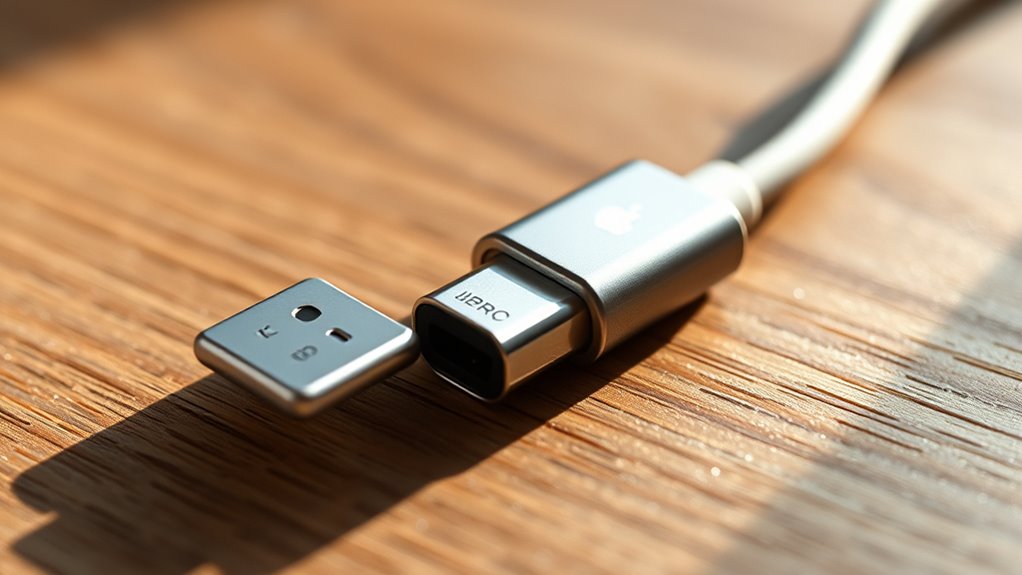
Switching to universal ports like USB-C can help reduce electronic waste by minimizing the number of cables and adapters you need. Choosing devices made with eco-friendly materials further supports sustainability efforts. Supporting natural pool designs that blend with the environment can also contribute to a more sustainable backyard, promoting biodiversity and reducing chemical usage. Incorporating eco-conscious design principles into your home can amplify these positive environmental impacts. Additionally, adopting modular electronics can extend the lifespan of your devices, further reducing waste and resource consumption. Implementing recycling programs and responsible disposal methods is essential to maximize environmental benefits. Together, these choices can make a meaningful difference for the environment.
Reducing Electronic Waste
Choosing a universal charging standard like USB-C can considerably cut down on electronic waste, as it reduces the need for multiple cables and adapters. This shift encourages manufacturers to produce more durable devices with improved battery longevity, decreasing the frequency of replacements. Additionally, USB-C’s faster data transfer capabilities mean fewer devices are abandoned due to obsolescence. To maximize environmental benefits, consider these points:
- Standardized cables eliminate redundant accessories.
- Longer-lasting batteries reduce device disposal.
- Faster data transfer extends device usability.
- Reusable cables decrease waste from damaged or unused chargers.
- Implementing a universal standard supports sustainable practices across the electronics industry. Moreover, widespread adoption fosters a more collaborative approach among manufacturers, further reducing waste.
Promoting Eco-Friendly Materials
Promoting eco-friendly materials in electronic devices plays a crucial role in reducing environmental impact. By choosing biodegradable plastics, manufacturers can guarantee that components break down more easily after disposal, decreasing landfill waste. Incorporating recycled materials, such as recycled plastics and metals, conserves natural resources and minimizes extraction-related environmental damage. When Apple shifts to USB-C, prioritizing these sustainable materials helps lessen the ecological footprint of production. Using biodegradable plastics reduces plastic pollution, while recycled components lower energy consumption during manufacturing. These efforts demonstrate a commitment to environmental sustainability, encouraging other companies to adopt similar practices. Ultimately, promoting eco-friendly materials supports a more sustainable tech industry and benefits the planet long-term.
Challenges and Transition for Consumers
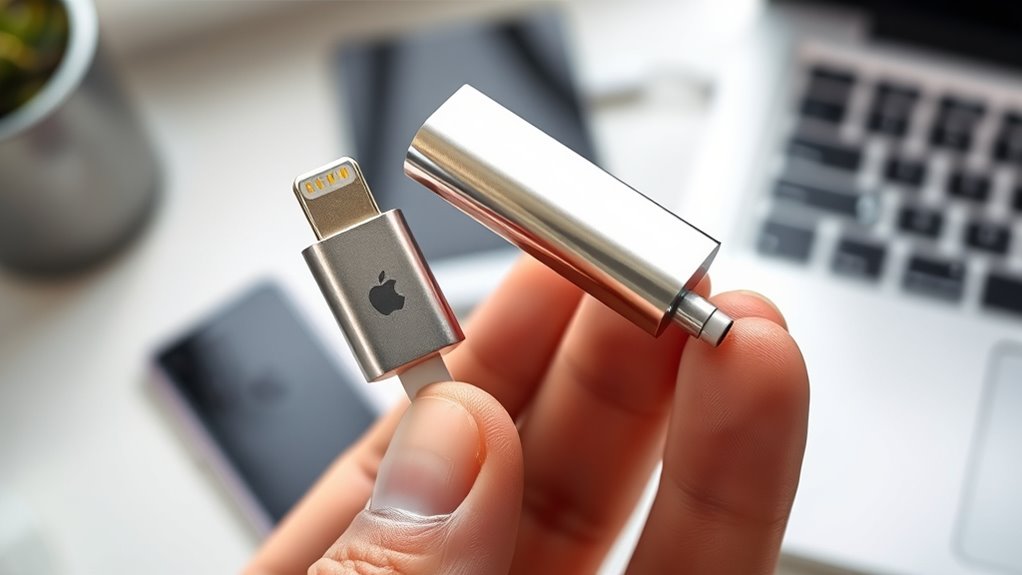
Although the shift to USB-C presents many benefits, it also poses significant challenges for consumers. You might face hurdles in consumer adaptation and accessory compatibility. To navigate this transition smoothly, consider these points:
- You may need to replace or upgrade existing accessories that aren’t compatible with USB-C.
- Adapting to new charging and data transfer standards could require time and learning.
- Some older devices might become obsolete, prompting additional purchases.
- You’ll need to stay informed about which accessories and peripherals support the new port.
These challenges can be manageable with planning, but they require patience and awareness. Understanding the importance of consumer adaptation and accessory compatibility will help you transition more efficiently and make informed decisions.
Future Implications for Apple and the Tech Market
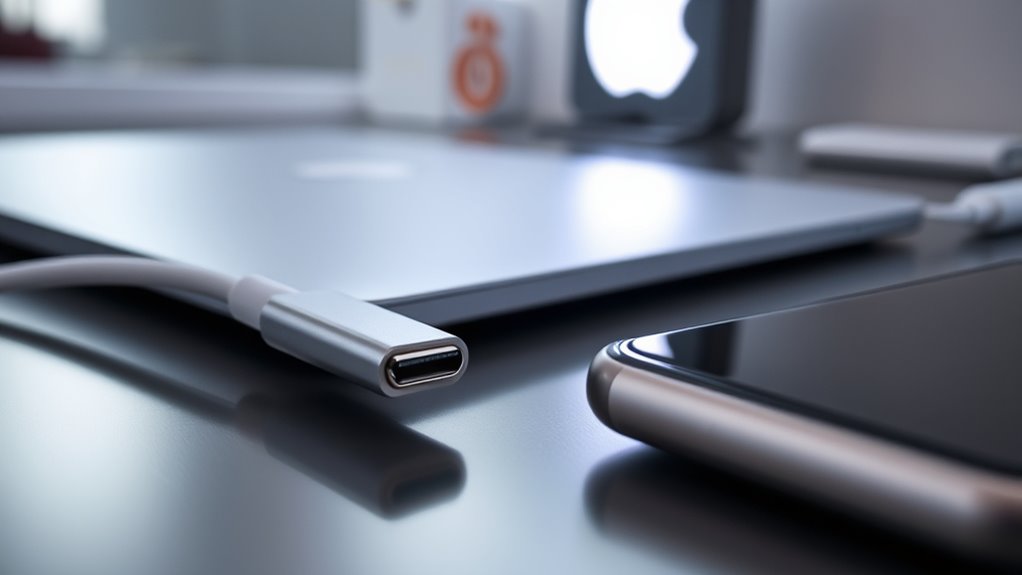
The adoption of USB-C is poised to reshape Apple’s product strategy and influence the broader tech industry. This move encourages technological innovation, pushing other companies to adopt similar standards and develop new, compatible devices. As Apple aligns with universal charging, it could lower accessory costs and reduce electronic waste, benefiting consumers and the environment. Additionally, this shift intensifies market competition, prompting brands to innovate faster and offer better features to stand out. Apple’s transition to USB-C signals a future where proprietary connectors become less relevant, fostering interoperability across devices. For you, this means a more streamlined ecosystem and enhanced device compatibility. Ultimately, this change underscores Apple’s commitment to innovation, setting a new industry standard and transforming the landscape for years to come.
Frequently Asked Questions
Will All Future Apple Devices Exclusively Use USB-C Ports?
Yes, future Apple devices will likely use USB-C ports, promoting universal compatibility and port standardization. You’ll find that this shift makes it easier to connect your devices with a wide range of accessories and chargers, reducing the need for multiple cables. By adopting USB-C, Apple aligns with industry standards, ensuring your devices stay compatible with new technology and simplifying your overall user experience.
How Does the Switch to USB-C Affect Data Transfer Speeds?
Switching to USB-C considerably improves your data transfer speeds, often reaching up to 10 Gbps or more, depending on the device and cable quality. This change also enhances cable compatibility, making it easier to connect with a wider range of accessories and peripherals. You’ll notice faster file transfers and more efficient charging, all thanks to the universal design of USB-C, which streamlines your connectivity options across your Apple devices.
Are There Any Security Concerns With USB-C Compared to Lightning?
Sure, USB-C isn’t perfect—those security vulnerabilities and data encryption concerns make it tempting to stay cautious. You might think, “Great, now my device’s security depends on how well I protect my connection.” While USB-C’s open standard can expose you to potential risks, proper encryption and security practices substantially reduce vulnerabilities. So, yes, it has risks, but with vigilance, you can enjoy its convenience without compromising your data.
Will Existing Lightning Accessories Still Work With New Devices?
Your existing Lightning accessories might still work with new devices, but you’ll need an adapter for compatibility. Apple plans for accessory migration, so many Lightning accessories will require a USB-C to Lightning adapter. Keep in mind, not all accessories will seamlessly transfer; some may face compatibility issues. To guarantee smooth use, check if your accessories are supported or consider upgrading to USB-C compatible versions for better performance and future-proofing.
How Will This Change Influence Third-Party Accessory Markets?
This change will push third-party accessory markets to adapt quickly. You’ll find more diverse options as manufacturers innovate with USB-C compatibility, improving accessory innovation. While some existing Lightning accessories might need adapters, expect new accessories to offer broader compatibility, giving you more choices. Overall, this shift encourages a more versatile ecosystem, making it easier for you to find compatible accessories and benefit from ongoing technological advancements.
Conclusion
As you embrace the USB-C switch, remember that change is the only constant in tech. While the progression may come with hurdles, it ultimately simplifies your device ecosystem and supports sustainability. Like the saying goes, “The best time to plant a tree was 20 years ago; the second best time is now.” Embracing this shift positions you at the forefront of innovation, ready to adapt and thrive in an ever-evolving digital world.
Halloween Picks
halloween
As an affiliate, we earn on qualifying purchases.