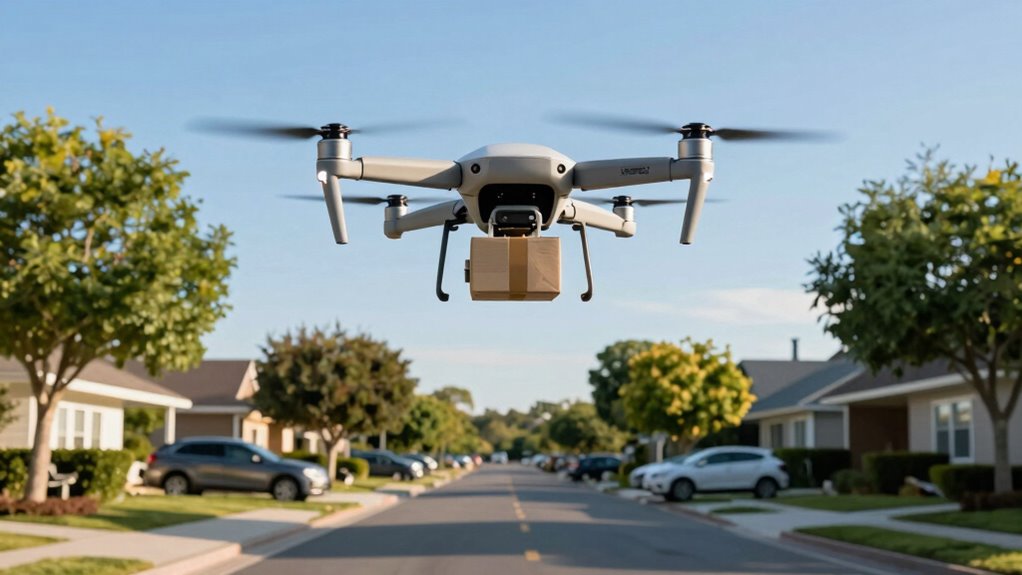

Drone deliveries are advancing quickly, with companies testing urban routes and improving battery life to increase range and payload capacity. However, widespread drop-offs at your door are still a few years away due to ongoing regulatory, safety, and infrastructure challenges. While pilot programs show promise, full implementation depends on government approvals and technological improvements. If you want to see when drone deliveries might become a regular part of your life, keep exploring the latest developments.
Key Takeaways
- Widespread drone delivery at homes is expected within the next 5 to 10 years as technology and regulations mature.
- Pilot programs in select cities are already testing urban drone deliveries, paving the way for broader adoption.
- Advances in battery life, payload capacity, and navigation improve safety and efficiency, accelerating deployment timelines.
- Regulatory frameworks are evolving to address safety, privacy, and airspace management, crucial for routine doorstep deliveries.
- Public acceptance and infrastructure development are key factors influencing how soon drones will regularly deliver packages to your door.
Top picks for "drone delivery soon"
Open Amazon search results for this keyword.
As an affiliate, we earn on qualifying purchases.
The Current Landscape of Drone Delivery Technology
The current landscape of drone delivery technology is rapidly evolving as companies and regulators work to overcome logistical and safety challenges. You’ll notice that advancements in drone batteries are critical, as they directly impact flight time and range. Longer-lasting batteries enable drones to cover greater distances and carry more deliveries efficiently. Payload capacity is also improving, allowing drones to carry larger or multiple packages at once, making deliveries more practical. However, balancing payload weight with battery life remains a key hurdle. Innovations in battery technology and drone design are helping to push these limits, but widespread adoption still depends on refining these components. Additionally, Battery innovation is essential for expanding drone capabilities, and ongoing research is focused on developing more efficient energy sources. As the technology progresses, expect drones to become more capable, reliable, and ready to serve your delivery needs more frequently. Furthermore, regulatory frameworks are progressively adapting to accommodate the growing presence of delivery drones in urban and rural environments. Staying informed about regulatory developments is crucial for understanding the future accessibility of drone services. Moreover, advancements in drone safety are increasingly emphasizing collision avoidance and autonomous navigation to ensure secure operations.
Regulatory and Legal Challenges Facing Drone Services
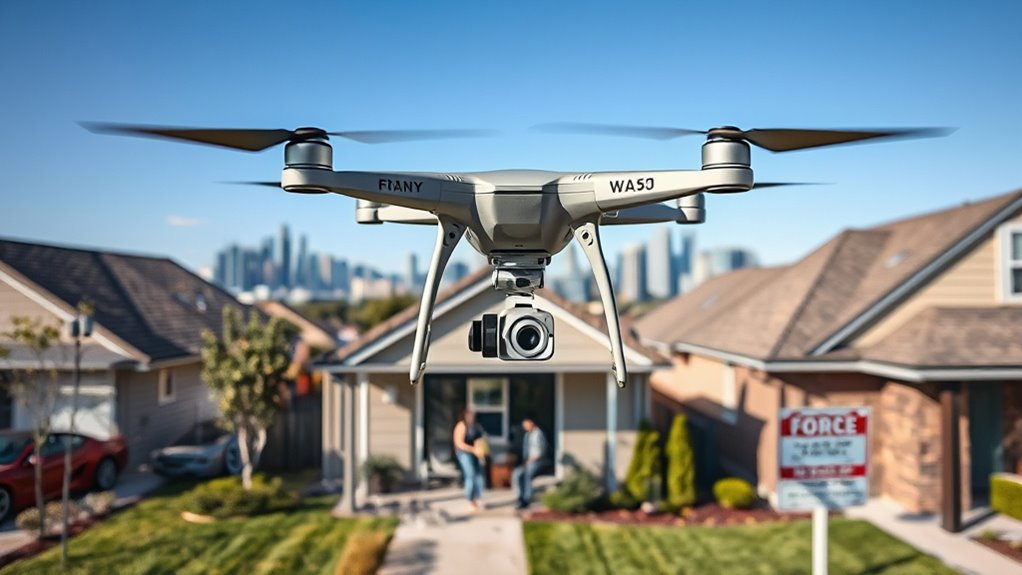
As drone delivery services expand, they face significant regulatory and legal hurdles that can slow down their deployment. Privacy concerns are a major issue, as drones capture images and data that might infringe on individuals’ rights. Regulators worry about surveillance and data security, making it challenging to develop clear rules. Liability issues also complicate matters; questions arise about who’s responsible if a drone crashes, damages property, or causes injury. Without well-defined legal frameworks, companies hesitate to fully commit to large-scale operations. steering airspace regulations, securing permits, and ensuring safety standards are ongoing challenges. Until authorities address these legal and regulatory concerns, widespread drone delivery remains a distant goal, leaving many wondering when they’ll actually see drones dropping packages at their doors.
Key Players and Pilot Programs in the Industry
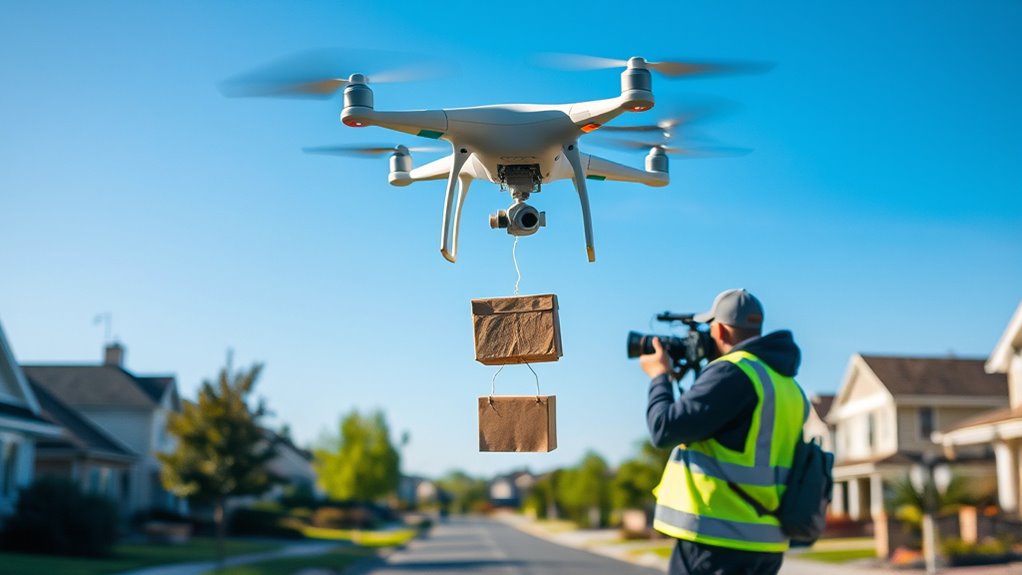
Various companies and government agencies are leading the way in testing and deploying drone delivery through innovative pilot programs. These initiatives focus on urban integration, helping drones navigate crowded environments safely and efficiently. Major players like Amazon, Google’s Wing, and UPS are actively conducting pilot programs to demonstrate feasibility and build trust. Consumer acceptance plays a vital role, as public confidence in safety and privacy influences broader adoption. These programs often involve real-world deliveries in select cities, allowing companies to gather data, refine technology, and address concerns. By collaborating with regulators and communities, these key players aim to prove that drone delivery can be reliable, convenient, and integrated seamlessly into urban life. Their success will shape how quickly drone deliveries become a common sight at your doorstep.
Logistics and Infrastructure Requirements for Widespread Use
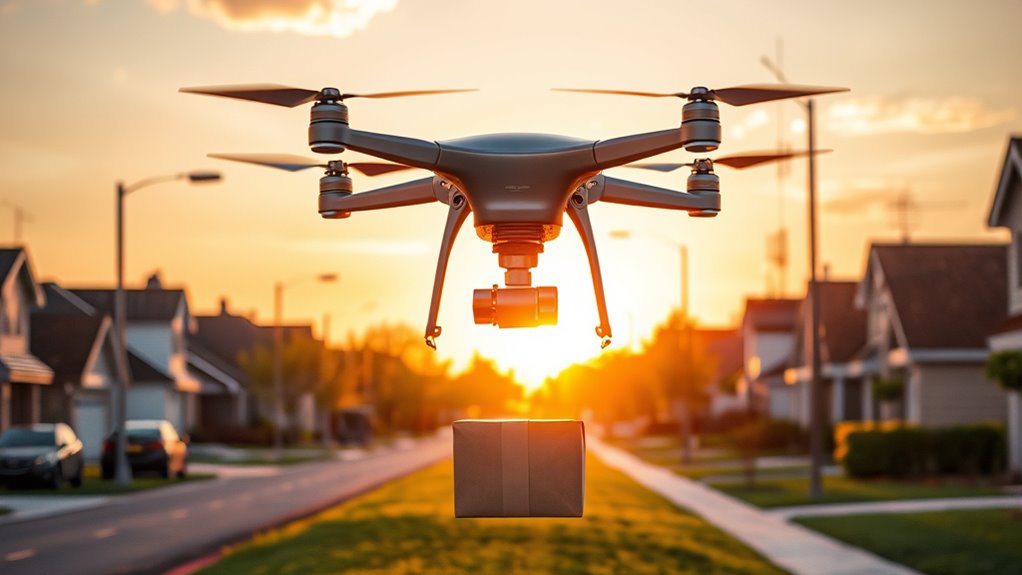
To make drone deliveries widespread, you need to consider airspace regulations that keep everyone safe and organized. You’ll also require specialized delivery hubs and clear landing zones on roads to support quick, reliable drops. Without these infrastructure elements, scaling up drone delivery becomes a major challenge.
Airspace Regulation Needs
Effective airspace regulation is essential to safely integrate drone deliveries into existing transportation networks. You need clear rules to prevent accidents, address urban privacy concerns, and combat drone hacking. Without proper oversight, drones could intrude on private spaces or become vulnerable to malicious interference. Regulations should define flight paths, altitude limits, and no-fly zones, especially around sensitive areas. To visualize the needs, consider this overview:
| Aspect | Challenge | Solution |
|---|---|---|
| Urban Privacy | Protecting residents from intrusive flights | Enforce privacy buffers and altitude rules |
| Drone Hacking | Preventing malicious interference | Implement robust cybersecurity measures |
| Air Traffic Control | Coordinating multiple drone operations | Develop integrated traffic management |
| No-Fly Zones | Restricting access to sensitive areas | Map and enforce restricted zones |
| Certification | Ensuring drone safety and compliance | Standardize drone registration and testing |
Delivery Hub Infrastructure
Building a reliable network of delivery hubs is essential for supporting widespread drone operations. These hubs serve as central points for drone dispatch and coordination, ensuring timely deliveries. To do this effectively, infrastructure must address urban noise, minimizing disturbances to nearby residents and businesses. Clear regulations around noise levels help maintain community acceptance. Privacy concerns also arise, as hubs and flying routes could inadvertently capture sensitive information. Designing hubs with secure, discreet locations can alleviate these worries. Additionally, technological investments in tracking and communication systems ensure seamless operation. Strategically placed hubs reduce travel distance, optimize routes, and increase efficiency. By balancing logistical needs with community considerations like noise and privacy, you can develop a resilient, socially responsible drone delivery network ready for widespread use.
Road and Landing Zones
Have you considered how road and landing zone design is essential for the success of widespread drone delivery? Proper urban integration ensures drones can safely navigate crowded environments, minimizing risks to people and property. Landing zones need to be strategically placed, accessible, and secure, allowing quick package drop-offs and pickups. These zones also play a crucial role in drone maintenance, providing designated areas for inspections and repairs without disrupting delivery flow. Well-planned roads and landing zones reduce delays and improve efficiency, making drone deliveries more reliable. As cities evolve, infrastructure must adapt to accommodate drone traffic, ensuring seamless integration into existing transportation networks. Additionally, logistics planning is critical for coordinating delivery routes and schedules to optimize efficiency and safety. Effective urban infrastructure is vital for supporting the integration of drones into daily life, ensuring they operate smoothly within city environments. Ultimately, thoughtful design of these zones will determine how smoothly drone delivery becomes a common part of everyday life.
Timeline Predictions and Factors Influencing Adoption
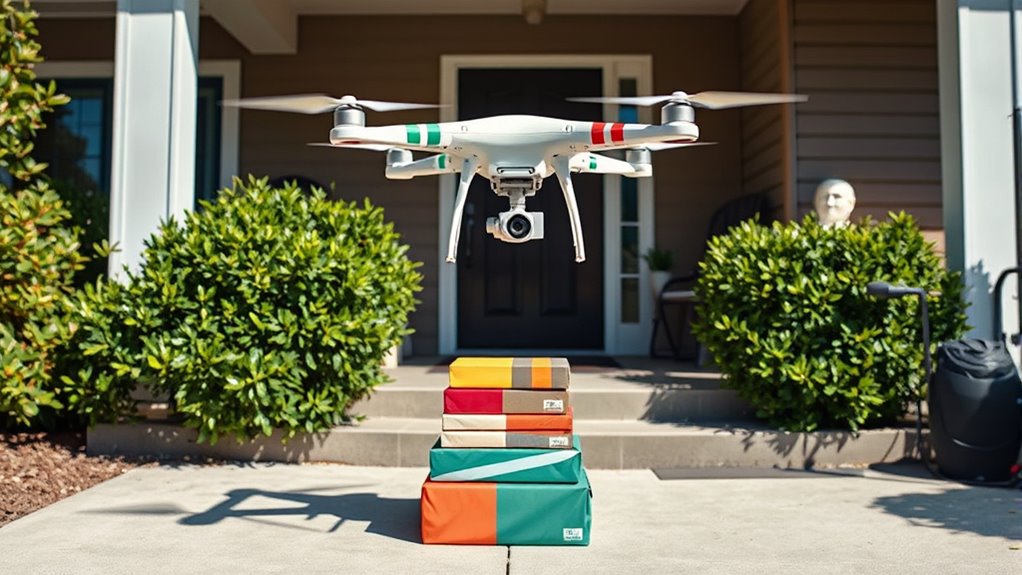
Predicting when drone delivery will become widespread remains challenging due to various technological, regulatory, and societal factors. Urban integration is a key hurdle, as cities need to adapt infrastructure and airspace management for drones. Regulations are evolving slowly, balancing safety and innovation, which delays large-scale deployment. Societal acceptance also plays a role, especially with privacy concerns rising as drones fly over neighborhoods. If privacy issues aren’t addressed, public resistance could slow adoption considerably. Technological advancements are progressing, but widespread use depends on seamless integration into existing logistics systems. Overall, while some pilot programs show promise, full-scale adoption might still take several years, possibly a decade, before drone deliveries become a common sight at your doorstep.
What the Future Holds for Drone Delivery Services
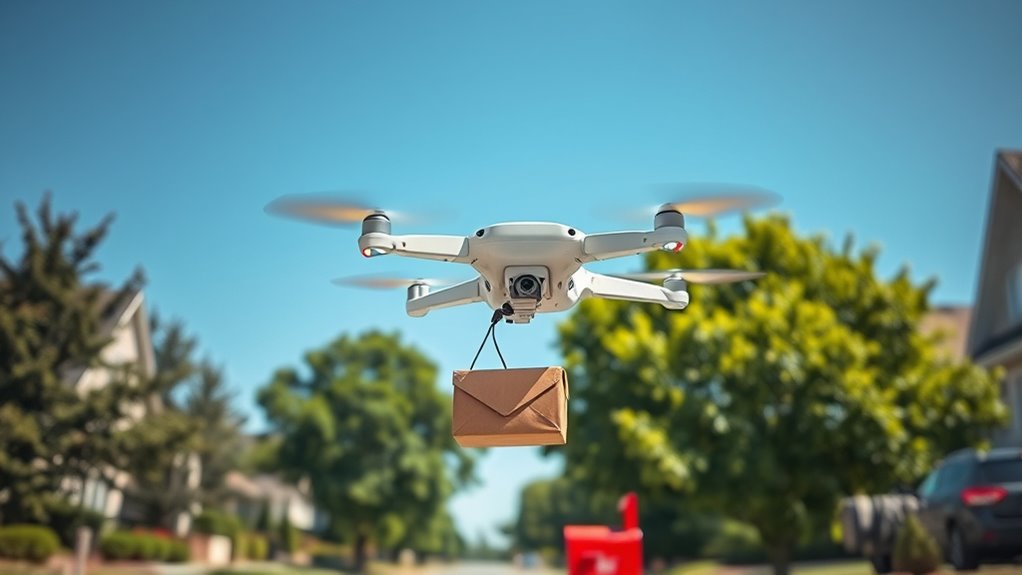
As technology continues to advance, drone delivery services are poised to become more integrated into everyday life, transforming how goods reach consumers. In the future, urban safety will be a key focus, with improved drone navigation reducing risks to pedestrians and vehicles. Regulatory frameworks will likely evolve to guarantee safe operations in crowded areas, making drone deliveries more reliable. Environmental impact is also a major consideration; advancements in battery technology and flight efficiency will minimize emissions and noise. You can expect drones to be more eco-friendly, reducing the carbon footprint of last-mile delivery. Additionally, urban airspace management will become increasingly sophisticated to ensure seamless drone operations amidst growing urban congestion, which will require innovative air traffic control solutions. To support these developments, drone regulation policies will need to adapt quickly to keep pace with technological innovations. As these innovations unfold, drone delivery services will become faster, safer, and more sustainable, seamlessly fitting into your daily routine while addressing critical urban safety and environmental concerns. The integration of advanced navigation systems will further enhance reliability and efficiency in complex urban environments.
Frequently Asked Questions
How Secure Are Drone Delivery Systems Against Hacking and Theft?
You might wonder about drone delivery security, and it’s a valid concern. These systems face cybersecurity vulnerabilities that hackers could exploit, but companies are actively working on theft prevention measures like encrypted communications and secure flight paths. While no system is entirely foolproof, ongoing improvements aim to shield your packages from hacking and theft. Staying informed and choosing trusted providers can help ensure your deliveries remain safe and secure.
What Environmental Impacts Could Widespread Drone Delivery Have?
Imagine Icarus flying too close to the sun; widespread drone deliveries could impact the environment by disrupting wildlife and increasing energy use. While eco-friendly packaging reduces waste, the noise and flight paths of drones may disturb animals and ecosystems. If not carefully managed, these deliveries might lead to more pollution and habitat disturbance, risking long-term ecological balance. You should consider these impacts as drone technology becomes more common.
How Will Drone Delivery Services Affect Local Employment Opportunities?
Drone delivery services may cause some job displacement in traditional delivery roles, but they’ll also create new employment opportunities. You’ll find jobs in drone maintenance, operation, and logistics management that didn’t exist before. While some courier positions might decline, the industry’s growth offers a chance for you to gain new skills and switch to emerging roles. Embracing this change can help you stay relevant in the evolving delivery landscape.
What Are the Privacy Concerns Related to Drone Surveillance?
Imagine a drone silently hovering outside your window, capturing every moment—this is the risk of privacy invasion. You might not realize how easily drone surveillance can compromise your personal data security. With advanced cameras and sensors, drones could collect sensitive information, creating a threat to your privacy. As drone technology advances, you need to stay alert about potential breaches and demand strict regulations to protect your personal space.
How Will Drone Deliveries Be Integrated With Existing Delivery Networks?
You’ll see drone deliveries integrated with existing networks through autonomous navigation, which helps drones find efficient routes and avoid obstacles. Delivery companies will coordinate with ground services to optimize timing and coverage. To guarantee package safety, drones will use secure locking mechanisms and sensors to prevent theft or damage. As technology advances, expect smoother integration, with drones becoming a seamless part of your overall delivery experience.
Conclusion
As you watch drone delivery become more common, remember, Rome wasn’t built in a day. While technology advances and regulations loosen, it’ll take time before drones regularly drop packages at your doorstep. Stay patient and keep an eye on industry progress. Eventually, with perseverance and innovation, the sky will be the limit—literally—bringing convenience right to your door. The future’s just around the corner, and it’s worth the wait.