
When building a gaming PC, avoid choosing incompatible components like mismatched CPU and motherboard, which can cause stability issues. Don’t forget future-proofing by selecting parts with room for upgrades, and make certain your power supply can handle current and future needs. Proper cooling, cable management, and aesthetics also matter for longevity and looks. Skipping BIOS updates or neglecting a clear budget can lead to costly mistakes. Stick with these tips, and you’ll set yourself up for success.
Key Takeaways
- Ensure component compatibility, including CPU, motherboard, RAM, and power supply, to prevent system instability and damage.
- Plan for future upgrades by choosing flexible hardware options and considering emerging technologies.
- Select a reliable, adequately rated power supply and ensure proper cooling and airflow for optimal performance.
- Research component sizes, compatibility, and installation requirements to avoid fitting or connectivity issues.
- Organize cables and lighting for better airflow, aesthetics, and ease of maintenance during upgrades.

Asus ROG Strix B550-F Gaming WiFi II AMD AM4 (3rd Gen Ryzen) ATX Gaming Motherboard (PCIe 4.0,WiFi 6E, 2.5Gb LAN, BIOS Flashback, HDMI 2.1, Addressable Gen 2 RGB Header and Aura Sync)
AM4 socket: Ready for AMD Ryzen 3000 and 5000 series, plus 5000 and 4000 G-series desktop processors.Bluetooth v5.2
As an affiliate, we earn on qualifying purchases.
As an affiliate, we earn on qualifying purchases.
Choosing Incompatible Components
Choosing incompatible components can cause serious issues when building a gaming PC. If your CPU and motherboard don’t match, overclocking stability becomes a problem, leading to crashes or hardware damage. Similarly, mismatched RAM speeds or incompatible power supplies can cause system instability. Don’t overlook RGB lighting compatibility; some cases or motherboards don’t support certain lighting strips or features, which can limit customization options. Always double-check socket types, chipset compatibility, and wattage ratings before purchasing. Incompatibility can force costly replacements or prevent your build from functioning properly. Ensuring all parts work seamlessly together helps avoid headaches and guarantees peak performance, especially if you plan to push your hardware with overclocking or build a visually striking setup with RGB lighting. Additionally, considering projector compatibility with your setup can enhance your gaming and entertainment experience. Being aware of smart home integration options can also help you manage your gaming environment more efficiently, such as controlling lighting or temperature through connected devices. Understanding component specifications ensures your build is future-proof and capable of handling upcoming games and applications. Checking for energy efficiency ratings can also reduce long-term power consumption and operational costs. Moreover, consulting wave and wind data can help you optimize your cooling solutions for better airflow and thermal management.

Auotac 1000W Fully Modular Power Supply, 80+ Gold Certified PSU, ATX 3.1 & PCIe 5.1 Ready, 12V-2×6 Native Connector, 140mm RGB Low-Noise Smart Fan, 105℃ Japanese Capacitors, Black
80 PLUS GOLD CERTIFIED: Delivering gold-level performance with 92% efficiency, ensuring effective power transmission to your components.
As an affiliate, we earn on qualifying purchases.
As an affiliate, we earn on qualifying purchases.
Skipping Future-Proofing Considerations

If you skip future-proofing, you might limit your upgrade options later on. Overlooking compatibility flexibility can make future component additions difficult or impossible. Ignoring emerging technologies could leave your system behind as new hardware and features become standard. Additionally, failing to consider advanced strategies can hinder your ability to optimize performance and adapt to evolving gaming requirements. Planning for scalability and maintaining an awareness of technological trends can help ensure your gaming PC remains competitive over time. Being aware of hardware upgrade paths and how they align with your current build can further enhance your system’s longevity and expandability, ensuring you stay ahead in the rapidly evolving gaming landscape. Recognizing future hardware compatibility is essential for avoiding costly upgrades or rebuilds down the line.
Ignoring Upgrade Potential
Many builders overlook the importance of future-proofing their gaming PCs, focusing instead on current needs and budget constraints. This often leads to future proofing mistakes, where they buy components that won’t support upgrades down the line. Upgrade neglect can limit your system’s lifespan and force costly replacements sooner than necessary. For example, choosing a motherboard with limited RAM slots or a weaker power supply can restrict future upgrades. Skipping these considerations might save money now but can cause frustration later. To avoid this, select a motherboard with extra RAM slots, a more robust power supply, and a CPU socket that supports newer processors. Thinking ahead ensures you can upgrade components easily, saving you money and maintaining your gaming performance over time. Additionally, understanding wiring basics can help you plan for power and connectivity needs as your system evolves. Being aware of component compatibility ensures your upgrades will be smooth and effective, preventing compatibility issues down the road. Moreover, considering upgradability factors is essential to create a flexible build that adapts to new hardware advancements. Incorporating future-proofing strategies during the initial build can help extend your system’s relevance and performance in the long run. Incorporating knowledge of scalable components can further enhance your ability to adapt your gaming PC for future demands.
Overlooking Compatibility Flexibility
Overlooking compatibility flexibility can severely limit your ability to upgrade your gaming PC later on. If you don’t consider future component overclocking potential, you might choose a motherboard or CPU that doesn’t support higher speeds, restricting performance gains down the line. Similarly, ignoring the compatibility of gaming peripherals, like high-end controllers or VR headsets, can force costly replacements sooner than necessary. Ensuring your motherboard supports future RAM upgrades, multiple GPUs, and overclocking features gives you room to grow. It’s also important to choose a power supply that can handle future component additions. Planning for compatibility flexibility now helps you adapt to evolving technology and avoid costly upgrades later, making your gaming PC more versatile and resilient to future demands. Being aware of potential upgrade paths ensures your system remains relevant and capable over time. Additionally, considering future-proofing features during your build can provide a smoother upgrade experience as technology advances. Recognizing component compatibility from the start can prevent bottlenecks and ensure all parts work seamlessly together.
Neglecting Future Technologies
Planning your gaming PC without considering future technologies can leave you stuck with outdated hardware sooner than expected. Ignoring future tech means missing out on upcoming upgrades and improvements that align with evolving gaming trends. To build a future-proof system, choose a motherboard with support for the latest CPUs and RAM standards. Opt for a GPU that can handle upcoming game titles and new graphics features. Keep an eye on emerging tech like faster SSDs or new connectivity options that enhance performance. By thinking ahead, you ensure your system remains relevant as gaming trends shift and new hardware standards emerge. Electrical concepts and safety considerations are also crucial when planning for future upgrades to avoid potential hazards. Neglecting these considerations can make your investment obsolete quickly, forcing you to upgrade sooner than you’d like. Staying informed about future-proofing strategies and hardware compatibility can help you maximize your gaming experience and make smarter hardware choices.

airgoo Addressable RGB PC LED Strip, Flexible Diffused Silicon Neon ARGB Strip with Magnetic Brackets, Compatible with 5V 3-pin ARGB Motherboard Headers, AG-NEON-LS1
✅ Two Addressable RGB LED Strips: Each led strip come with silicon rubber tube housing, overall dimension is…
As an affiliate, we earn on qualifying purchases.
As an affiliate, we earn on qualifying purchases.
Underestimating Power Supply Requirements

Many new builders overlook how important a reliable power supply is, especially when planning for future upgrades. Choosing a low-quality unit might save money now but can lead to instability or damage later. Make sure to pick a high-quality PSU that can handle your current setup and future enhancements. Additionally, understanding Free Floating concepts can help you better plan your system’s capacity and ensure your hardware remains stable. Properly assessing your power requirements ensures you select a PSU that provides sufficient headroom for peak loads and potential expansions. Recognizing the total cost of ownership of your power supply can also prevent unexpected expenses down the line. Being aware of long-term reliability factors can further guide you toward a more durable and cost-effective choice. It’s also helpful to consider the efficiency ratings of different units to maximize energy savings and reduce heat output over time.
Ignoring Future Upgrades
Failing to contemplate future upgrades when selecting a power supply can lead to serious problems down the line. If you don’t plan ahead, your current power supply might not support future components, limiting compatibility flexibility. This can force you to replace the entire unit prematurely, wasting money and time. To avoid this, choose a power supply with extra capacity to handle future upgrades comfortably. Look for units with higher wattage ratings and modular cables for easy adjustments.
- Guarantee your power supply can support potential hardware upgrades
- Opt for a slightly higher wattage than your current needs
- Check for compatibility with upcoming components and technologies
Choosing Low-Quality Units
Choosing a low-quality power supply can quickly lead to stability issues and hardware failures. Many overlook this, especially when trying to save money on budget peripherals or prioritizing case aesthetics. A cheap unit might seem tempting, but it often can’t deliver consistent power, risking component damage or crashes during intense gaming sessions. Underestimating your power needs can cause system instability, even if your components are compatible on paper. Invest in a reputable, high-quality power supply that meets or exceeds your current requirements, leaving room for future upgrades. This ensures your system runs smoothly and safely. Remember, a reliable power supply is the backbone of your gaming PC—skimping on it can undo all your build efforts.

DARKROCK 3-Pack 120mm Black Computer Case Fans High Performance Cooling Low Noise 3-Pin 1200 RPM Hydraulic Bearing Quiet Long life Up to 30,000 hours 5 Years After-sales Service
High Performance Cooling Fan: The design of nine fan blades, the maximum speed reaches 1200 RPM, and it…
As an affiliate, we earn on qualifying purchases.
As an affiliate, we earn on qualifying purchases.
Ignoring Proper Cooling and Airflow
Ignoring proper cooling and airflow can lead to serious performance issues and even hardware damage. Without effective airflow enhancement, your components may overheat, causing thermal throttling and reduced gaming performance. Poor thermal management results in higher temperatures, shortening your hardware’s lifespan and increasing failure risks. To avoid these problems, focus on:
- Installing case fans strategically for ideal airflow
- Ensuring unobstructed air paths for better heat dissipation
- Selecting a case with good ventilation to support heat exchange
Overlooking Compatibility of RAM and Motherboard
Ensuring your RAM is compatible with your motherboard is essential for a stable and efficient gaming PC. You need to check RAM compatibility before purchasing to avoid issues like boot failures or system crashes. Your motherboard has specific motherboard slots designed for certain RAM types, speeds, and capacities. Using incompatible RAM can prevent your system from booting or limit performance. Review your motherboard’s specifications to find the supported RAM modules, including maximum capacity and supported speeds. Additionally, pay attention to the number of motherboard slots available to guarantee you can expand your RAM later if needed. Proper compatibility guarantees your RAM will work smoothly with your motherboard, providing optimal performance and stability for gaming. Don’t overlook these details—your gaming experience depends on it.
Neglecting to Research the GPU’s Size and Power Needs
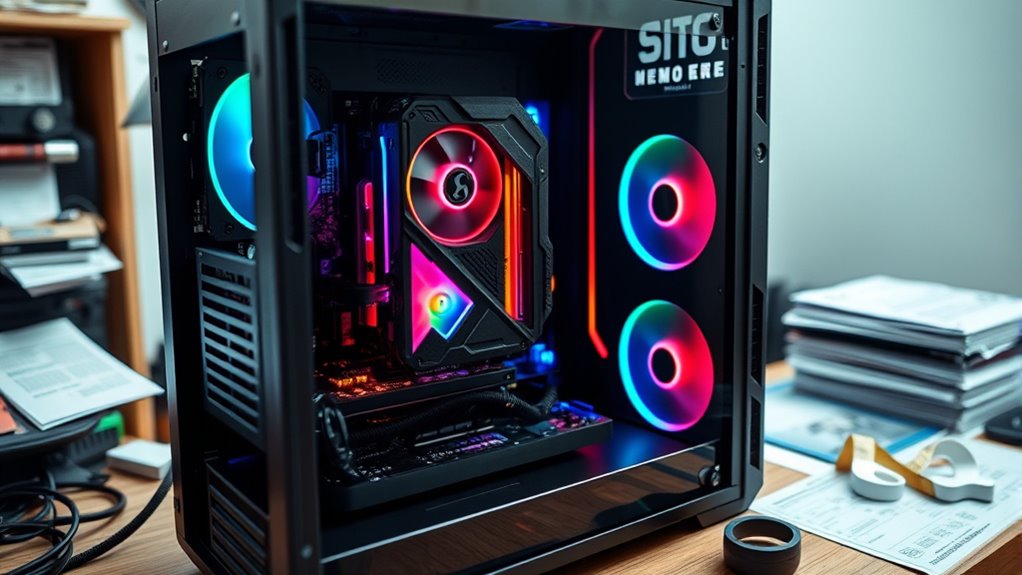
Failing to research your GPU’s size and power needs can lead to serious issues during your build. If you overlook GPU size, it might not fit your case, forcing you to choose a different one or return the card. Ignoring power needs can cause your system to become unstable or fail to boot altogether. To avoid these problems, consider these points:
- Check the GPU’s dimensions to ensure it fits comfortably in your case.
- Verify your power supply can handle the GPU’s power requirements.
- Confirm your case has enough airflow and space for proper cooling.
Not Planning for Adequate Storage Options
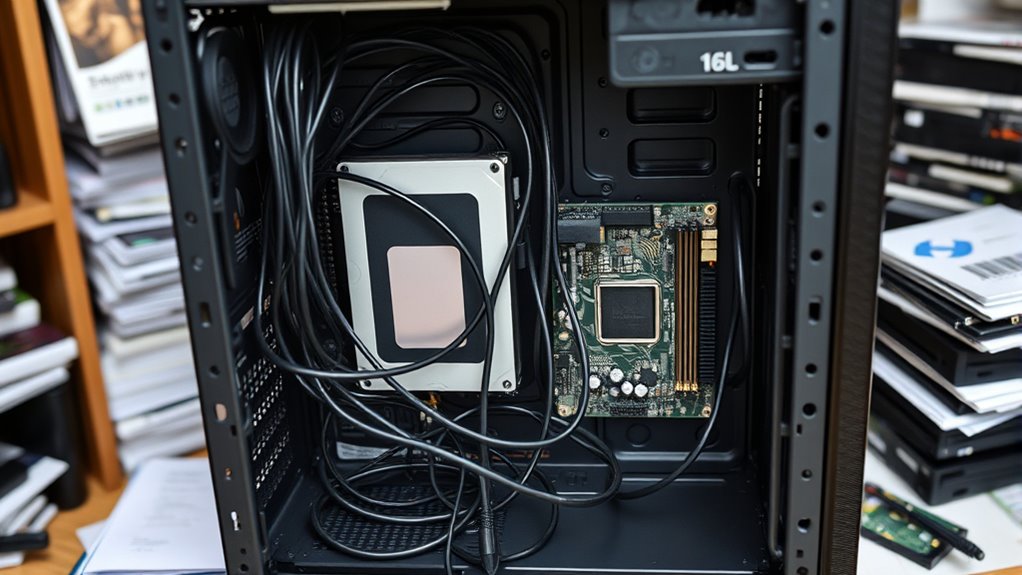
Planning your storage options carefully is essential to prevent running out of space or facing slow load times later on. Start by evaluating how much space your games and files will need, and consider future growth. Relying solely on your PC’s internal drive can limit options, so incorporate external storage solutions like external SSDs or HDDs for additional capacity. This keeps your main drive free for performance-critical tasks. Additionally, cloud backups provide a secure way to store important files and game saves without cluttering your local storage. Make sure your setup allows easy access to these options, and don’t skimp on storage, as running out of space can frustrate your gaming experience and require costly upgrades down the line. Proper planning ensures smooth gameplay and peace of mind.
Forgetting to Update BIOS and Drivers
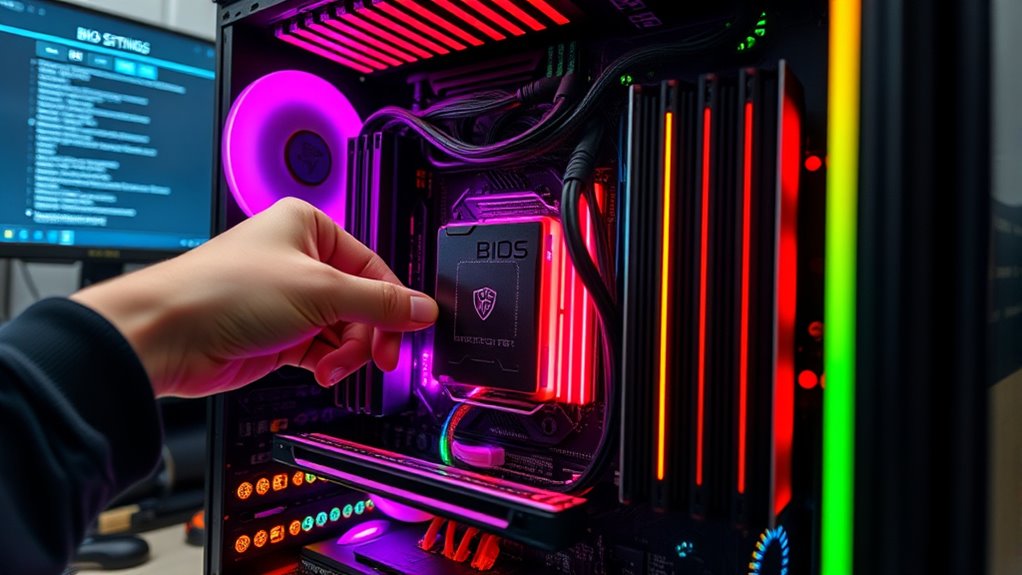
Updating your BIOS and drivers might seem like a minor step, but skipping it can cause compatibility issues, stability problems, and performance drops. BIOS updates often fix bugs, improve hardware compatibility, and enhance system stability. Driver updates ensure your graphics card and other components run at their best. Neglecting these updates can lead to crashes, lower frame rates, or hardware not functioning correctly. To avoid these issues:
Regularly update BIOS and drivers to ensure system stability, compatibility, and optimal gaming performance.
- Regularly check for BIOS updates on your motherboard manufacturer’s website.
- Install the latest driver updates for your GPU, motherboard, and peripherals.
- Use tools like Device Manager or manufacturer utilities to keep drivers current.
Staying up-to-date with BIOS and driver updates keeps your gaming PC running smoothly and maximizes performance. Don’t overlook these essential steps in your build process.
Purchasing Components Without a Clear Budget
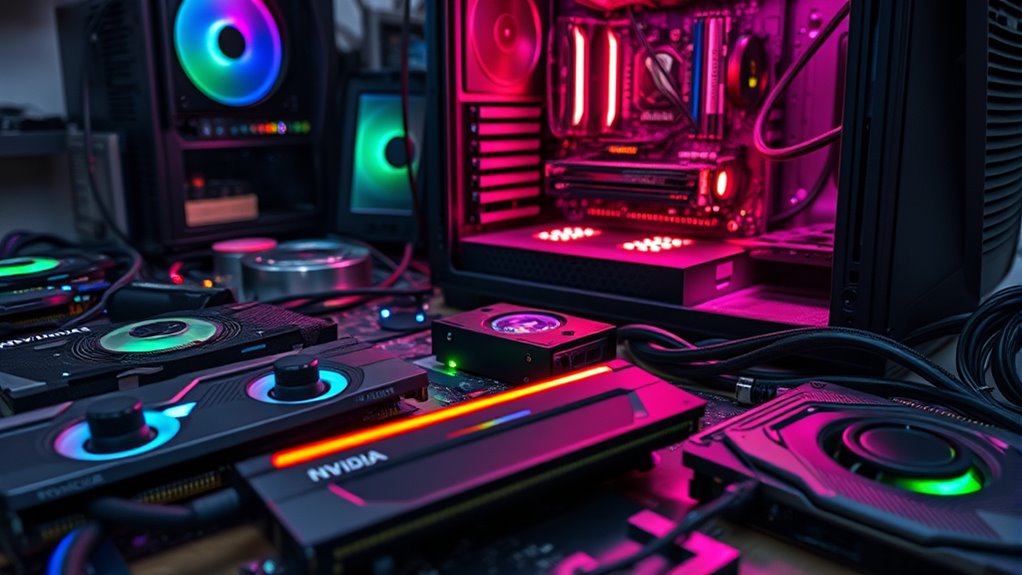
Before you start purchasing components for your gaming PC, it’s essential to establish a clear budget. Without proper budget planning, you risk overspending on unnecessary parts or compromising on vital ones. Make sure to research components thoroughly, comparing prices and performance. Setting a budget helps prioritize your needs and prevents impulse buys. Use this simple guide to keep your spending in check:
| Budget Range | Key Components | Suggested Focus |
|---|---|---|
| Low | CPU, GPU | Balance performance and cost |
| Mid | RAM, SSD | Increase multitasking |
| High | Cooling, Case | Enhance aesthetics & airflow |
Stick to your plan, and avoid the trap of buying without a clear purpose. Proper budget planning makes building a gaming PC smoother and more successful.
Overlooking Cable Management and Aesthetics
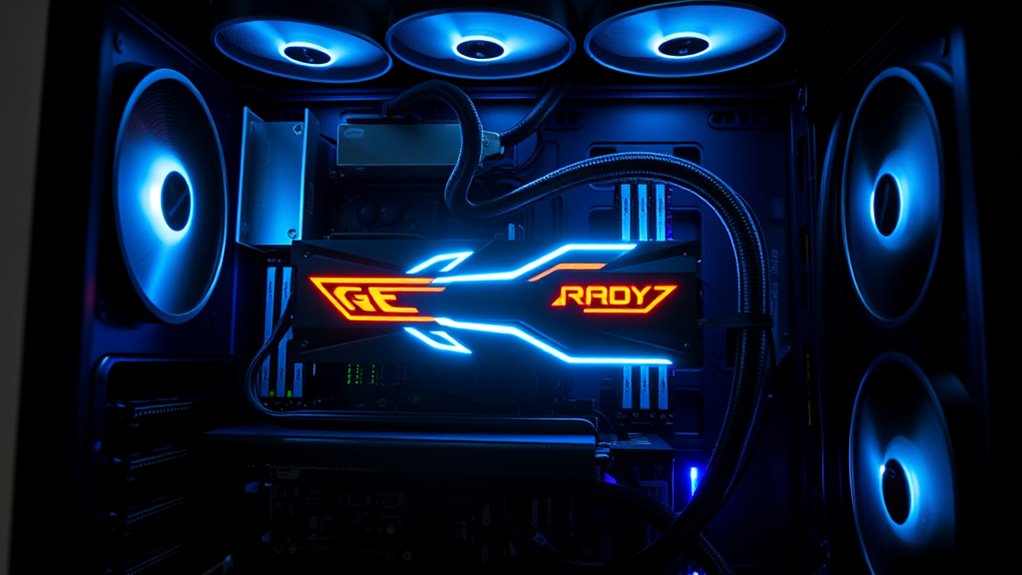
Even if your primary focus is on performance, neglecting cable management and aesthetics can lead to a cluttered, difficult-to-maintain build. Proper cable routing not only improves airflow but also enhances the overall look of your setup. Ignoring aesthetic lighting can make your PC appear dull and uninviting. When you plan your build, consider how cables will be routed behind the motherboard tray for a clean appearance. Adding subtle RGB or LED strips can elevate your gaming environment. Don’t underestimate the power of a tidy setup in boosting your satisfaction and ease of maintenance.
Prioritize cable management and aesthetic lighting for a cleaner, more efficient gaming setup.
- Focus on cable routing for a clean look and better airflow
- Incorporate aesthetic lighting to personalize your build
- Regularly tidy cables to prevent dust buildup and ensure easy upgrades
Frequently Asked Questions
How Do I Choose the Right Case Size for My Components?
You should choose a case size that matches your components’ compatibility and airflow needs. If you have high-performance parts like a large GPU or multiple fans, go for a mid or full tower for better space and cooling. Make certain the case supports your motherboard form factor. Good airflow is essential, so pick a case with ample ventilation and enough room for airflow paths to keep your components cool and functioning at their best.
What Are the Signs of an Underpowered Power Supply?
If your power supply is underpowered, you’ll notice signs like system instability, unexpected shutdowns, or random crashes during gaming or heavy tasks. You might also experience power surges or failure to boot. These power supply issues can damage components over time. To avoid this, make certain your PSU provides enough wattage for your hardware, and opt for a reputable brand to prevent system instability and ensure reliable performance.
How Often Should I Clean My Pc’s Cooling System?
Think of your PC’s cooling system like a revitalizing gust—if dust buildup blocks that gust, it struggles to stay cool. You should clean your cooling system every 3 to 6 months, depending on your environment. Regular cleaning prevents overheating and performance dips. Keep a consistent cleaning schedule, and your PC will run smoother, just like a well-oiled machine, ready to conquer your gaming sessions.
Is It Necessary to Upgrade Drivers After Building My PC?
Yes, you should definitely upgrade drivers after building your PC. Driver updates improve software compatibility, fix bugs, and enhance performance, ensuring your hardware runs smoothly. Check for the latest driver updates from your GPU, motherboard, and other components’ manufacturers. Regularly updating drivers helps prevent issues, maximizes your gaming experience, and keeps your system secure. Don’t skip this step—it’s essential for peak performance right from the start.
How Can I Plan for Future Hardware Upgrades Effectively?
You can plan for future hardware upgrades effectively by setting a realistic budget plan now, so you’re prepared for upcoming improvements. Consider your upgrade timeline, focusing on components that’ll need replacing first, like GPU or storage. Keep an eye on technology trends and compatibility to avoid bottlenecks later. This proactive approach guarantees your system stays current without overspending, making upgrades smoother and more cost-efficient over time.
Conclusion
Avoiding these common mistakes is like building a solid foundation for a towering skyscraper—you’ll make certain your gaming PC stands tall and steady. Stay mindful of compatibility, future-proofing, and cooling, and don’t let budget or aesthetics fall by the wayside. With careful planning, your dream gaming rig will come to life, running smoothly like a well-orchestrated symphony. Take your time, and soon you’ll be gaming at the peak of your potential.