Mirrorless and DSLR cameras differ mainly in size, with mirrorless models being more compact and lightweight, while DSLRs offer a larger grip and better stabilization. Both use different sensors and lenses, impacting image quality and versatility. Autofocus, video features, and viewfinder options also set them apart, with mirrorless generally providing newer tech and easier operation. To uncover which suits your style and budget best, explore how these differences influence your photography experience.

Get the latest gadgets delivered free — and shop member deals
- Fast, free delivery on millions of items
- Access to Prime Big Deal Days deals on October 6–7
- Prime Video, Amazon Music and more included
Key Takeaways
- Mirrorless cameras are more compact and lightweight, offering better portability, while DSLRs are bulkier with larger grips for stability.
- DSLRs typically have larger sensors (full-frame or APS-C), providing superior image quality and low-light performance compared to most mirrorless models.
- Mirrorless cameras feature faster autofocus with advanced tracking and better video capabilities, though DSLRs excel in low-light autofocus reliability.
- Lens options are broader for DSLRs due to established mounts, whereas mirrorless systems often require adapters but are rapidly expanding their lens selections.
- Mirrorless cameras generally have shorter battery life but offer easier, more intuitive controls, making them suitable for beginners and casual users.
Design and Size Differences
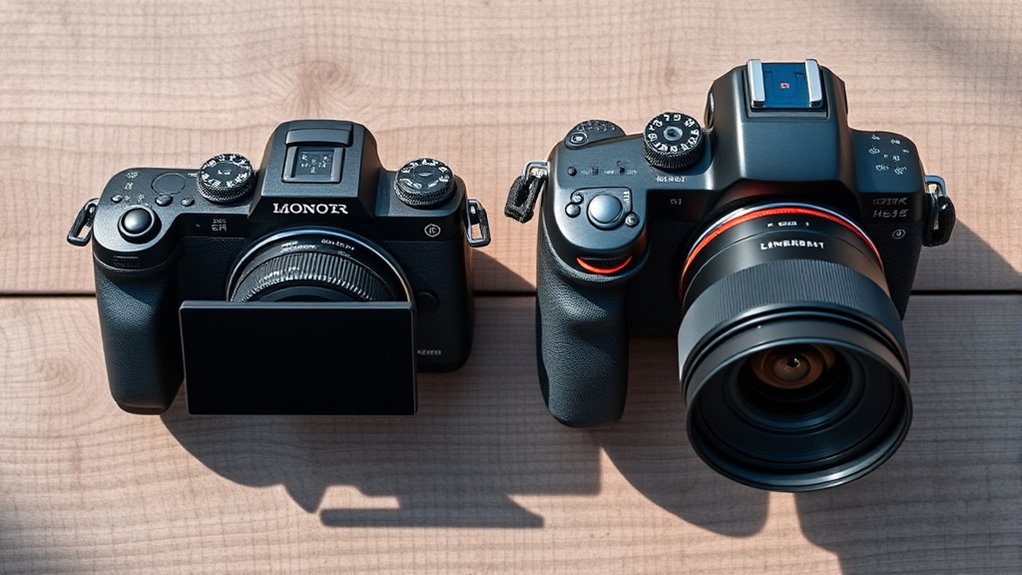
When comparing mirrorless and DSLR cameras, the design and size differences are immediately noticeable. Mirrorless models are generally more compact and lightweight, making them easier to carry and handle during extended shoots. This smaller size often enhances ergonomics comfort, allowing you to hold the camera steadily without fatigue. In contrast, DSLRs tend to be bulkier, with a more substantial grip that many photographers find more comfortable for extended use. Aesthetic appeal also plays a role; mirrorless cameras often feature sleek, modern designs that appeal to those seeking a minimalist look. Additionally, high refresh rates in certain models can provide smoother viewing experiences for photographers and videographers alike. The sensor size also varies between the two types, affecting image quality and depth of field. Ultimately, your choice depends on whether you prioritize portability and comfort or prefer a more traditional, substantial feel that some find more reassuring and easier to stabilize.
Sensor Technology and Image Quality
The size of the sensor greatly impacts your image quality, with larger sensors capturing more light and detail. You’ll also want to think about how each camera’s image processing capabilities enhance your photos, especially in challenging conditions. Understanding these factors helps you choose the right camera for sharp, vibrant images. Additionally, choosing energy-efficient and sustainable cloud solutions can support your digital workflow while reducing environmental impact. In addition, sensor technology plays a crucial role in determining the overall performance and versatility of your camera system, including how well it performs with different Glycolic Acid concentrations for skin benefits. Moreover, the sensor size influences not only image quality but also the depth of field and low-light performance, which are important considerations for various photography styles. Furthermore, advancements in sensor design continue to improve the dynamic range and color accuracy of modern cameras, making them more versatile for different genres of photography.
Sensor Size Differences
Sensor size plays a vital role in determining image quality, especially when comparing mirrorless and DSLR cameras. Larger sensor size variations typically produce better image quality, especially in low-light conditions, and offer a shallower depth of field. DSLRs usually feature bigger image sensors, such as full-frame or APS-C, compared to many mirrorless options, though recent advancements have narrowed this gap. The differences in image sensor types also impact performance, with full-frame sensors capturing more light and detail. A larger sensor enables better dynamic range and less noise at higher ISOs. While mirrorless cameras often have smaller sensors, their sophisticated sensor technology compensates in many areas. Sensor technology continues to evolve, further enhancing image quality across both camera types. Additionally, innovations in sensor design are helping to bridge the gap in performance and quality between different camera formats. Understanding sensor calibration is essential for maximizing image quality and ensuring consistent results across various shooting conditions. Advances in sensor manufacturing techniques are also contributing to improvements in sensor durability, making them more resistant to environmental factors. Ultimately, sensor size influences your final image quality and creative possibilities, regardless of camera type.
Image Processing Capabilities
Advancements in sensor technology have markedly boosted the image processing capabilities of both mirrorless and DSLR cameras. Modern sensors work with sophisticated software algorithms that enhance image quality, reduce noise, and improve color accuracy. These improvements mean you get sharper, more vibrant photos straight out of the camera. To illustrate, here’s a comparison of their image processing features:
| Feature | Mirrorless Cameras | DSLR Cameras | Common Benefits |
|---|---|---|---|
| Sensor Technology | Advanced sensors with fast data transfer | Larger sensors, high sensitivity | Better low-light performance |
| Software Algorithms | Real-time processing, AI enhancements | Post-processing flexibility | Improved image clarity |
| Image Quality | High-resolution, detailed images | Rich color depth, sharpness | Superior overall image quality |
Both types excel with powerful image processing, but your choice depends on specific needs. Additionally, ongoing developments in sensor technology continue to narrow the performance gap between these camera types. As a result, manufacturers are increasingly integrating AI-driven enhancements to further optimize image output across both platforms.
Autofocus Performance
Autofocus performance is a key factor when choosing between mirrorless and DSLR cameras, as it directly affects your ability to capture sharp images quickly and accurately. You’ll notice that autofocus speed varies between models, impacting how fast your camera can lock onto a subject. Mirrorless cameras have made significant advances, offering rapid autofocus that rivals DSLRs, especially with their on-sensor phase detection. Autofocus accuracy is equally important, ensuring your images are sharp where you want them. Both camera types now feature advanced eye and subject tracking, improving focus precision. However, in challenging conditions like low light or fast-moving subjects, some DSLRs still hold an edge in autofocus reliability. Overall, modern mirrorless cameras deliver impressive autofocus performance that meets most shooting needs. Additionally, the availability of ourmindandbody.com offers further insights into optimizing your photography techniques. Improvements in autofocus technology continue to bridge the gap between the two camera types, making the choice more about personal preference and specific use cases. As technology advances, the reliability of autofocus systems in mirrorless cameras continues to improve, making them increasingly competitive with traditional DSLRs. For example, camera sensor advancements have played a crucial role in these improvements. Understanding autofocus systems is essential for photographers aiming to maximize their gear’s capabilities.
Viewfinder and Screen Options
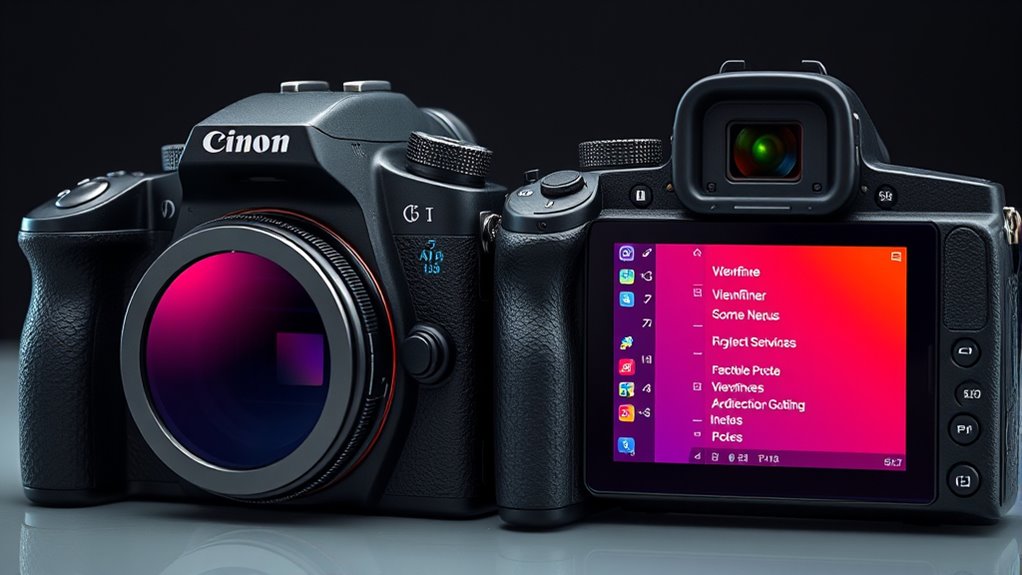
When it comes to composing and reviewing your shots, the viewfinder and screen options play a significant role in your shooting experience. Your choice affects how accurately you see your scene and how comfortably you shoot. There are different viewfinder types, such as optical and electronic, each offering unique benefits. Optical viewfinders provide a clear, lag-free view, ideal for bright conditions, while electronic viewfinders display a digital preview with real-time exposure and focus info. Screen resolution also matters; higher resolutions offer sharper images and more detailed previews. Consider these factors:
- Type of viewfinder (optical vs. electronic)
- Screen size and articulating options
- Screen resolution for clarity
- How viewfinder and screen work together for your shooting style
Additionally, some advanced models incorporate adaptive display technology that adjusts the screen brightness and contrast based on lighting conditions, enhancing visibility and accuracy. Understanding the viewfinder types and their compatibility with different cameras helps photographers choose the right system for their needs and shooting environment. The ergonomics and interface of the camera also influence ease of use during prolonged shooting sessions. Moreover, considering the lighting conditions you most frequently shoot in can help determine which display options will be most effective for you.
Lens Compatibility and Selection
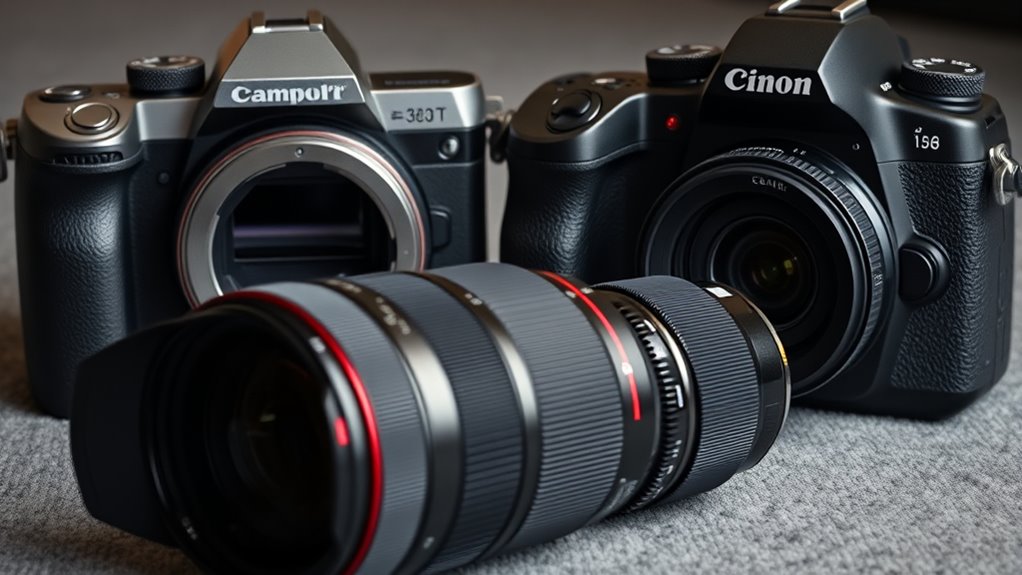
Lens compatibility is a crucial factor to take into account because it directly impacts your ability to find suitable lenses for your photography needs. The lens mount determines which lenses work with your camera, so verify your chosen camera has a compatible mount for your preferred lenses. DSLR cameras often have a wider range of lens options and established mounts like Canon’s EF or Nikon’s F, giving you more flexibility. Mirrorless cameras tend to use newer mounts, such as Sony’s E-mount or Fujifilm’s X-mount, which may require adapters for certain lenses. Additionally, filter compatibility matters, as some lenses have larger or specialized filter threads. Confirming filter sizes ensures you can use your accessories without hassle, maximizing your creative options across different camera systems. Lens compatibility plays a key role in ensuring your investment remains versatile and future-proof.
Battery Life and Power Consumption
You’ll notice that mirrorless cameras often drain batteries faster than DSLRs due to their power-hungry electronic viewfinders and screens. Battery lifespan varies between models, especially when features like image stabilization are active, affecting overall endurance. Understanding these differences helps you choose a camera that matches your shooting habits and power needs.
Power Efficiency Differences
While mirrorless cameras often have the advantage of being more compact and lightweight, they typically consume more power than DSLRs due to their electronic viewfinders and live LCD screens. This results in higher battery drain and challenges in power management. To improve power efficiency, consider these factors:
- Display Usage: Turning off the LCD screen when not needed reduces power consumption.
- Auto Sleep Settings: Shortening auto sleep timers helps conserve energy during inactivity.
- Image Stabilization: Active stabilization systems increase power drain; disabling them when unnecessary saves battery.
- Firmware Optimization: Regular updates can enhance power efficiency by refining hardware control and reducing unnecessary power use.
Understanding these elements helps you manage power better and extend your camera’s operational time.
Battery Lifespan Variations
Battery lifespan varies markedly between mirrorless and DSLR cameras, influenced by their design and power consumption patterns. Mirrorless cameras tend to consume more power because they rely heavily on electronic viewfinders or LCD screens for framing shots, which can drain the battery quickly. This results in shorter battery longevity compared to DSLRs, which use optical viewfinders that require less power. Effective power management becomes essential for extending battery life in mirrorless models, such as turning off unnecessary features or lowering screen brightness. DSLR cameras generally offer longer battery life out of the box, making them better suited for extended shooting sessions. Your choice depends on how well each camera manages power and how often you need to recharge during shoots.
Impact of Image Stabilization
Image stabilization (IS) systems, whether built into the camera body or lenses, considerably impact power consumption in both mirrorless and DSLR cameras. Using sensor stabilization to reduce shake demands extra energy, which can drain your battery faster. This increased power draw affects overall battery life and device efficiency. To understand this better:
- Sensor stabilization requires continuous motor activity, increasing power use.
- Optical IS lenses may consume more energy during stabilization adjustments.
- Electronic stabilization can drain batteries quicker due to real-time processing.
- Improved image clarity often demands more stabilization effort, further reducing battery lifespan.
While IS enhances image clarity, it’s a trade-off you face with power consumption, especially during extended shooting sessions. Balancing stabilization needs with battery management becomes essential for ideal performance.
Video Capabilities and Features
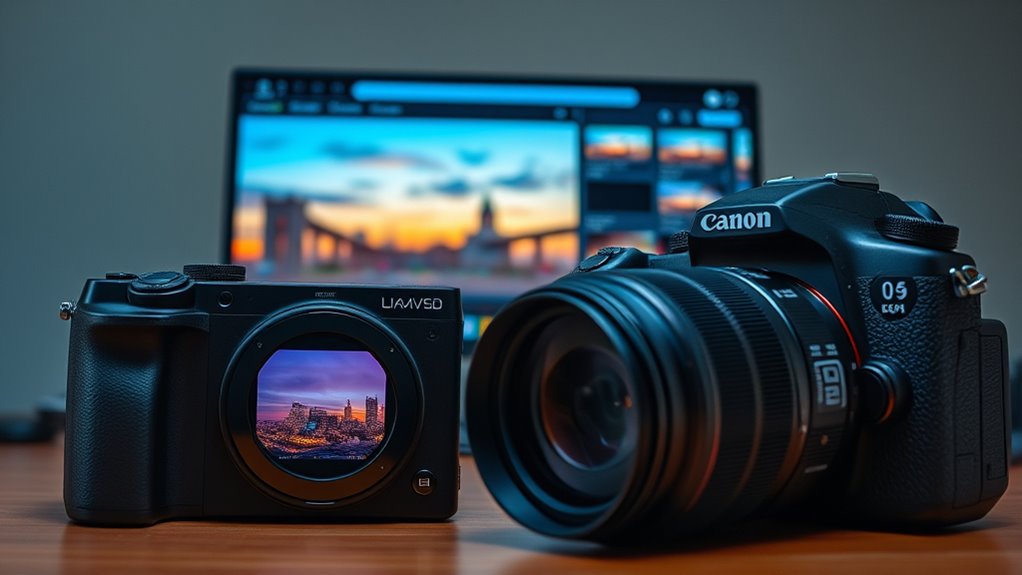
Have you ever wondered how mirrorless and DSLR cameras compare when it comes to video capabilities? Both offer impressive video features, but there are key differences. Mirrorless cameras often provide higher video resolution options, like 4K or even 6K, giving you sharper footage. They also tend to support higher frame rates, allowing for smoother slow-motion videos. DSLR cameras may have more limited options in some models but still deliver solid video performance, especially at 1080p and 60 frames per second. Overall, mirrorless cameras generally excel in offering more advanced video features, making them a popular choice for videographers. Your decision should consider the specific video resolution and frame rate options that match your creative needs.
Price Range and Value
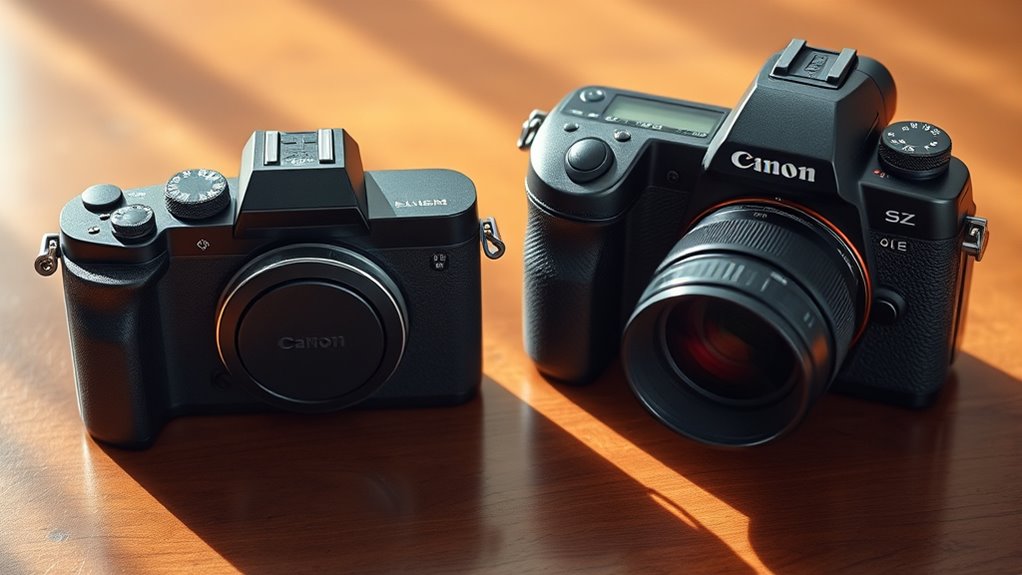
When comparing mirrorless and DSLR cameras, price range and overall value play crucial roles in your decision-making process. Mirrorless cameras often come with a higher initial cost, but they can save you money long-term due to smaller accessory investments. DSLRs may be more budget-friendly upfront, but you might spend more on lenses and accessories later. Consider these points:
Mirrorless cameras cost more initially but save money over time with fewer accessories than DSLRs.
- Entry-level mirrorless models typically cost between $500-$800, while DSLRs can start around $400.
- Mid-range options for both are around $1,000-$2,000, with mirrorless cameras offering advanced features.
- High-end mirrorless systems tend to be more expensive but provide cutting-edge technology.
- Accessory investments, like lenses and flashes, can considerably impact overall value, especially for DSLR systems with a broader range of compatible gear.
Your choice depends on balancing initial costs and future accessory investments.
User Experience and Learning Curve
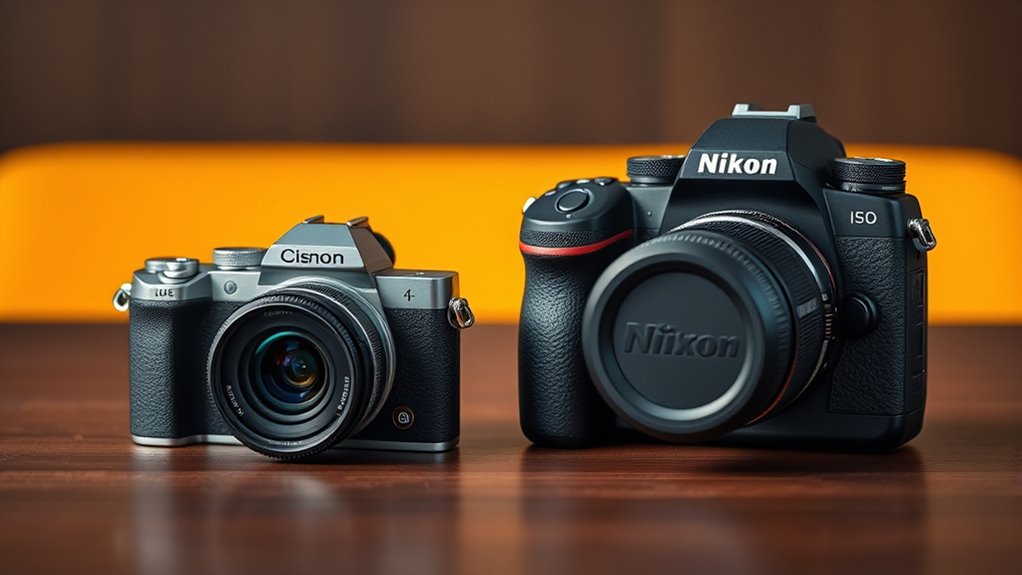
Choosing between mirrorless and DSLR cameras often depends on how easily you can learn and navigate their features. Mirrorless cameras generally have simpler menu navigation, making it easier for beginners to adjust settings quickly. They also tend to be lighter and more ergonomic, providing better comfort during extended shoots. DSLR cameras, however, offer a more familiar feel with their larger bodies and physical dials, which some users find intuitive. The table below outlines key differences:
| Aspect | Mirrorless | DSLR |
|---|---|---|
| Menu Navigation | Simplified, touch-screen options | More complex, physical menus |
| Ergonomic Comfort | Compact, lightweight design | Larger, more stable grip |
| Learning Curve | Easier for new users | Steeper but familiar |
Your choice hinges on comfort and how quickly you can master the controls.
Frequently Asked Questions
Which Camera Type Is Better for Professional Wildlife Photography?
For professional wildlife photography, a DSLR camera often outperforms mirrorless options due to its superior camera ergonomics and faster autofocus. You’ll benefit from the robust build, longer battery life, and extensive lens selection that help capture fast-moving animals in challenging conditions. While mirrorless cameras are lighter and more compact, DSLRs give you the reliability and performance needed in wildlife photography, ensuring you don’t miss essential moments.
How Do Mirrorless Cameras Handle Low-Light Shooting Compared to DSLRS?
You’ll find mirrorless cameras handle low-light shooting quite well thanks to their sensor sensitivity, which often rivals or exceeds that of DSLRs. They typically produce less noise at high ISO settings, meaning clearer images in dim conditions. This improved noise performance allows you to capture sharper, more detailed shots without needing extra lighting. Overall, for low-light photography, mirrorless cameras offer excellent performance, making them a solid choice over traditional DSLRs.
Can I Use DSLR Lenses on Mirrorless Cameras With Adapters?
Yes, you can use DSLR lenses on mirrorless cameras with adapters. Adapter usage allows you to bridge the boundary between different lens compatibility, making your lens collection more versatile. Keep in mind, though, that some features like autofocus might slow or weaken due to compatibility issues. So, while adapters open up options, you should verify if your lens and camera model pair perfectly for maximum picture-taking performance.
Are Mirrorless Cameras More Durable Than DSLRS in Harsh Conditions?
Yes, mirrorless cameras are often more durable in harsh conditions because they typically have better sensor durability and weather sealing. You’ll find that many models are designed to withstand dust, moisture, and extreme temperatures, making them reliable in tough environments. While DSLRs also offer weather sealing, mirrorless cameras tend to be more compact and resilient, so you can confidently shoot outdoors without worrying about damage from the elements.
Which Camera Type Offers Better Future Upgradeability and Technology Updates?
You’ll find mirrorless cameras offer better future proofing and access to the latest technological advancements. Manufacturers focus heavily on developing mirrorless systems, leading to more frequent updates, new features, and lens options. This means your camera stays current longer and adapts to evolving photography needs. DSLR technology advances slower, with fewer new innovations, making mirrorless models the smarter choice if you want a camera that remains cutting-edge.
Conclusion
Choosing between mirrorless and DSLR cameras ultimately depends on your needs and preferences. Do you value compactness and cutting-edge tech, or do you prefer a traditional feel with longer battery life? Both offer incredible options, so consider what matters most to you—whether it’s image quality, size, or budget. Whichever you pick, you’ll be capturing memories with a device built to elevate your photography. Are you ready to find your perfect camera match?
Fall Picks
fall essentials
As an affiliate, we earn on qualifying purchases.