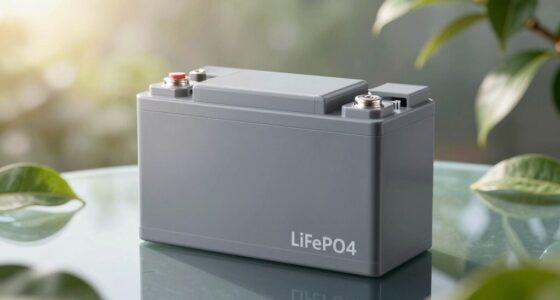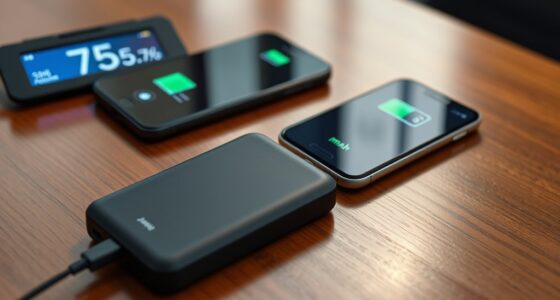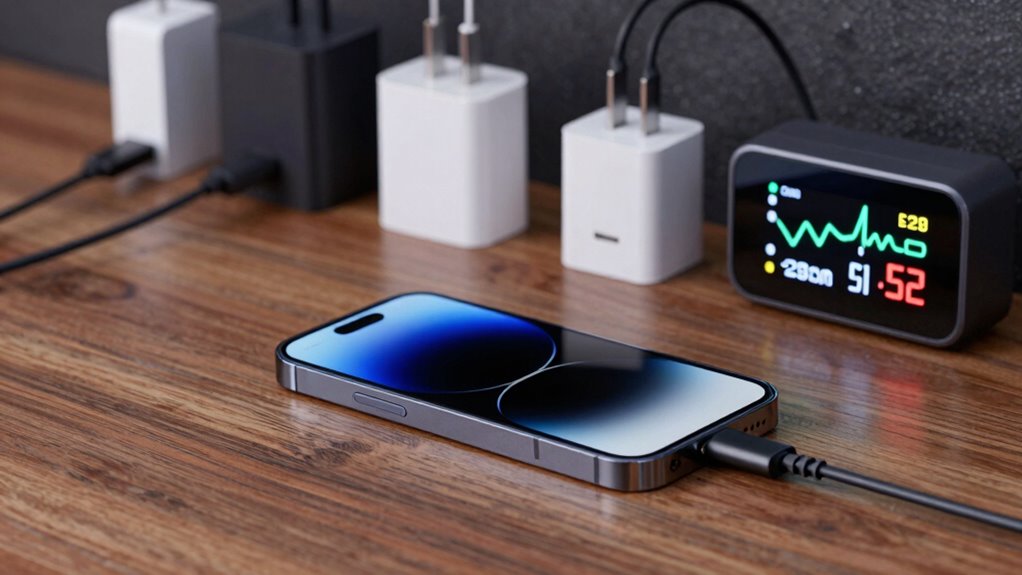

A charger’s speed depends mainly on its wattage, compatibility, and quality. Higher wattage chargers (like 18W or more) deliver power faster if your device supports quick charging protocols. Using a poor-quality or mismatched charger can slow things down or pose safety risks. Good internal circuitry and safety features also make a difference. If you want to understand all the factors that affect your charging speed, keep exploring these key points.

Get the latest gadgets delivered free with Prime
- Fast, free delivery on millions of items
- Prime Video, Amazon Music and more included
- Member-only deals all year
Key Takeaways
- Higher wattage output enables faster charging if the device supports quick charging protocols.
- Compatibility between charger standards and device battery capacity affects charging speed.
- Quality internal circuitry and components ensure efficient power regulation and safety.
- Multiple ports and proper power distribution impact overall charging efficiency.
- Advanced safety and power management features optimize charging performance and protect devices.
Ever wondered why some chargers seem to power up your devices faster than others? The answer often lies in a few key factors, especially the charger’s ability to deliver power efficiently, which is influenced by its design, including battery capacity compatibility and the number and type of charging ports. When you’re shopping for a charger, understanding these elements can help you pick one that meets your needs for speed and convenience.
First, the charger’s power output plays a crucial role. Chargers with higher wattage ratings generally charge devices faster, but only if your device supports quick charging protocols. For example, a charger that outputs 18W or more can considerably cut down your charging time compared to standard 5W chargers. The reason is that higher wattage allows more electricity to flow into your device’s battery in a shorter period. However, the actual charging speed also depends on your device’s battery capacity. Larger batteries, like those in tablets or high-end smartphones, require more power to charge effectively, so a charger with a high wattage capacity tailored to the device’s needs will deliver faster results.
Higher wattage chargers charge faster, but device compatibility and battery capacity also matter for optimal speed.
Charging ports are another critical factor. Multiple ports might seem convenient, but they can sometimes distribute power unevenly if the charger isn’t designed properly. A charger with dedicated, high-output ports ensures each device receives the ideal amount of current, maintaining fast charging speeds. Some chargers feature ports that automatically adjust their output depending on the device connected, which can help achieve maximum charging speed without damaging the battery. Additionally, the type of port matters—USB-C ports, for instance, often support quicker charging standards like Power Delivery, making them preferable for rapid and efficient charging. Advanced circuitry inside the charger also plays a vital role in optimizing charging performance and safety. Good power management technology is essential to efficiently allocate energy and prevent overloading, further enhancing charging speed and safety. Modern chargers often incorporate smart charging features that adapt to the device’s needs, providing an extra layer of efficiency.
The internal circuitry and quality of components also influence charging speed. High-quality chargers use better electronics to regulate power flow, prevent overheating, and protect your device’s battery health, all while charging at higher speeds. Cheaper chargers might cut corners, leading to slower charging or potential safety issues. So, even if a charger claims to be fast, if it’s poorly built, it might not deliver consistent performance. It is also beneficial to consider the compatibility between the charger and your device, as mismatched specifications can hinder charging efficiency and safety. Furthermore, understanding the technology standards supported by the charger can help ensure it aligns with your device’s capabilities for optimal performance.
In the end, a fast charger isn’t just about wattage or the number of ports. It’s about how well it matches your device’s battery capacity, the quality of its circuitry, and the type of charging ports it offers. When you consider these factors, you’ll be better equipped to choose a charger that truly accelerates your charging experience, saving you time and frustration.
As an affiliate, we earn on qualifying purchases.
Frequently Asked Questions
Do Fast Chargers Damage Phone Batteries Over Time?
Fast chargers can cause some battery degradation over time, but if you follow charging safety guidelines, the impact is minimized. Modern smartphones are designed to handle quick charging without damaging the battery considerably. However, consistently using very fast chargers or exposing your phone to high temperatures during charging can accelerate battery wear. To prolong battery health, avoid extreme heat and use chargers recommended by your device manufacturer.
Can Using a Fast Charger Void My Phone’s Warranty?
Using a fast charger might be seen as a bit of a daring move, but it usually won’t void your warranty if your phone supports fast charging. However, it’s wise to verify your device’s charging compatibility to protect battery longevity. Manufacturers design warranties with specific guidelines, so sticking to recommended chargers helps ensure your phone stays happy and well-protected, even when you want a quick boost.
Are Wireless Chargers Generally Faster Than Wired Chargers?
Wireless charging generally isn’t faster than wired charging because wireless charging often has lower charging efficiency. While wireless chargers offer convenience, they tend to transfer power less efficiently, resulting in slower charging times. If you want the fastest recharge, wired chargers—especially those with fast-charging technology—are usually more effective. However, wireless charging is perfect for easy top-ups when you’re not in a hurry, despite its slightly reduced charging efficiency.
How Does Temperature Affect Charging Speed?
Think of your device’s battery as a delicate garden that thrives or withers with temperature. When it gets too hot or cold, its battery chemistry slows down, like a plant in the frost, reducing charging speed. Thermal management acts like a gentle gardener, keeping temperatures just right. So, extreme temperatures hinder fast charging, while ideal conditions allow your device to soak up power swiftly and safely.
Is a Higher Wattage Always Better for Charging?
A higher wattage isn’t always better for charging if your charging cable quality isn’t sufficient or if your device isn’t compatible with that power level. Using a high-wattage charger with a poor-quality cable can slow down charging or even damage your device. Always check your device’s power bank compatibility and verify your charging cable can handle higher wattages to get the fastest, safest charge possible.
As an affiliate, we earn on qualifying purchases.
Conclusion
In short, charger speed depends on power, protocol, and port. A powerful, compatible charger charges promptly, while a weaker one takes longer. Picking the perfect port and protocol can greatly speed things up, saving you time and frustration. So, when selecting a speedy charger, consider these essential cues: current, compatibility, and connection. With the right choice, you’ll quickly conquer your charging conundrums, keep devices charged, and stay seamlessly connected.
multi-port fast charging station
As an affiliate, we earn on qualifying purchases.
As an affiliate, we earn on qualifying purchases.
As an affiliate, we earn on qualifying purchases.
Fall Picks
fall essentials
As an affiliate, we earn on qualifying purchases.