
To child-proof your gadgets, choose durable, safety-tested devices with sturdy, shock-absorbing features and non-toxic materials. Set up parental controls to restrict apps and content, creating a safe online environment. Customize interfaces with simple icons and calming themes for easy use. Protect screens with tough screen protectors and use shockproof, waterproof cases to prevent damage. Encourage responsible usage and establish boundaries—keep exploring for more tips to keep your kids safe and devices protected.
Key Takeaways
- Choose devices with reinforced edges, durable materials, and shock absorption features to withstand rough handling.
- Enable built-in parental controls and content filtering to restrict access to inappropriate apps and websites.
- Customize user interfaces with simple icons, larger fonts, and child-friendly themes for easy navigation.
- Use protective cases, screen protectors, and waterproof covers to prevent damage from spills and impacts.
- Set clear screen time boundaries, teach responsible usage, and model good digital habits for safe tech engagement.

EVEO Screen Cleaner Spray - Large Screen Cleaner Bottle - TV Screen Cleaner, Computer Screen Cleaner, for Laptop, Phone, Ipad - Computer Cleaning kit Electronic Cleaner (1 Pack)
- Versatile Screen Cleaning: Suitable for TVs, laptops, phones, and tablets
- Effective Streak-Free Cleaning: Removes dust, fingerprints, and smudges
- Gentle on Sensitive Screens: Safe for LCD, LED, OLED, CRT screens
As an affiliate, we earn on qualifying purchases.
Choosing Durable and Safe Devices for Kids

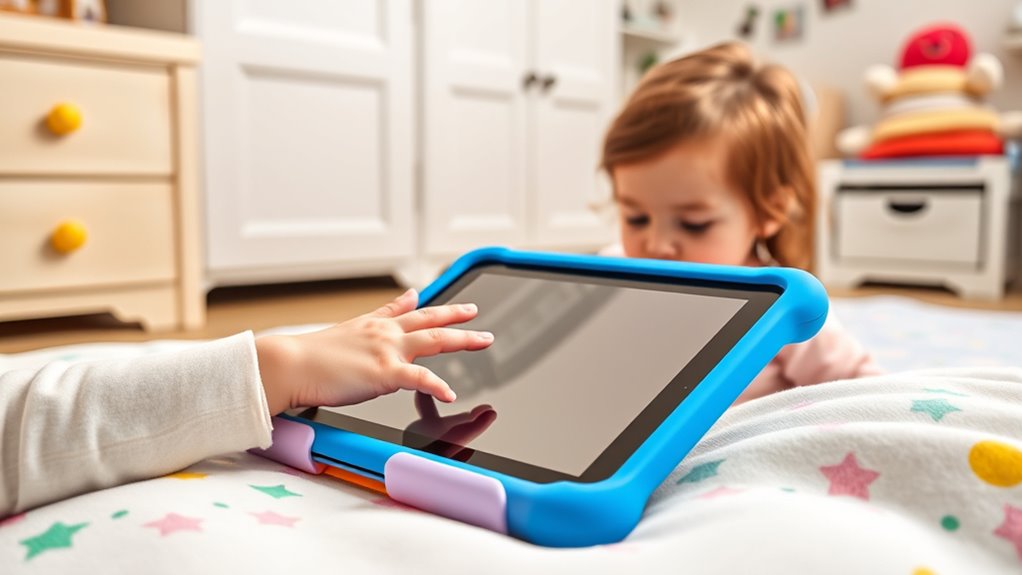
When selecting devices for kids, durability and safety should be your top priorities. Start by checking if the device has undergone durability testing to ensure it can withstand drops, spills, and rough handling. Look for sturdy construction and reinforced edges that can absorb shocks. Material safety is equally important; choose gadgets made from non-toxic, BPA-free, and hypoallergenic materials to protect your child’s health. Avoid devices with small, easily detachable parts that pose choking hazards. Opt for products with certified safety standards to give you peace of mind. Remember, a durable, safe device not only lasts longer but also minimizes risks, making it a smarter choice for your child’s everyday use. Additionally, considering kid-friendly features can enhance safety and usability for young users. Ensuring that devices have shock absorption features can further protect your child’s investment and reduce repair costs. Being aware of regulatory standards can help you select products that comply with safety requirements and provide extra assurance of quality. Incorporating durability testing into your selection process is essential for finding devices that stand up to active children’s needs.

iO CLEAN Screen Cleaner Spray (16oz - 473ml) – Best Large Cleaning Kit
- Versatile Device Compatibility: Works on all electronic screens and devices
- Gentle, Scratch-Free Formula: Removes dust and grime without scratching
- Protective, Anti-Static Coating: Repels dirt and reduces static electricity
As an affiliate, we earn on qualifying purchases.
Setting Up Parental Controls and Content Restrictions

Ever wondered how to guarantee your child’s digital safety without constantly hovering over their device? Setting up parental controls is your best move. Start by enabling app restrictions to prevent your kid from downloading or opening unapproved apps. Use built-in parental control features on smartphones, tablets, or gaming consoles to block or limit specific functions. Content filtering is also key—activate filters to restrict access to inappropriate websites and videos. Many devices and apps allow you to customize these settings easily, giving you control over what your child can see and do online. Regularly review and update these restrictions as your child grows or as new apps and content emerge. This proactive approach helps keep their digital experience safe and age-appropriate.
Creating a Kid-Friendly User Environment

Once you’ve set up parental controls and content restrictions, the next step is creating a user environment that’s safe and engaging for your child. Focus on customizing the user interface to be simple and intuitive, reducing confusion and accidental taps. Incorporate accessibility features like larger icons, voice commands, and screen readers to make devices easier to navigate. To enhance the experience, consider:
- Using colorful, child-friendly themes
- Limiting app options to educational and creative tools
- Adjusting font size for readability
- Setting up one-touch access to favorite apps
These steps ensure your child’s environment is both secure and inviting, encouraging exploration while minimizing risks. A tailored user interface combined with accessible features makes technology more accessible and enjoyable for your little one. Creating calm, clutter-light homes can help reduce overwhelm and make device management easier for busy families, especially when integrating child-friendly tech practices. Additionally, understanding the importance of content restrictions helps in maintaining a safe digital space for your child. Implementing kid-proofing strategies further supports a secure and manageable digital environment, including choosing trusted security features to keep devices protected.
Protecting Devices From Damage and Accidental Spills
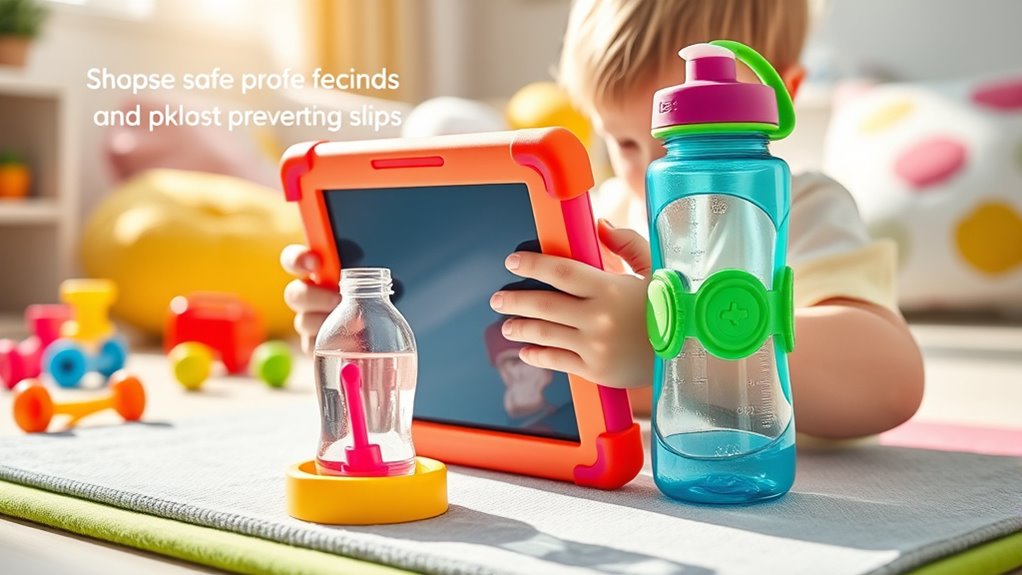
Accidents happen, especially with curious kids around, so taking steps to protect devices from damage and spills is essential. Start by applying screen protectors to prevent scratches and cracks from drops or rough handling. These thin films shield your screens without affecting visibility or touch sensitivity. Additionally, invest in protective cases made from durable materials like silicone or reinforced plastic. Cases add a cushion against accidental drops, bumps, and knocks, keeping your device intact. For extra security, consider waterproof or splash-proof cases if spills are common. Remember, the goal is to create a barrier that minimizes damage while still allowing your child to enjoy the device safely. Regularly inspect and clean these protective accessories to maintain their effectiveness. Incorporating rug-like protective covers can also provide an extra layer of cushioning and help absorb impacts, similar to expert tips for caring for fine rugs. Furthermore, choosing shock-absorbing features in cases can significantly reduce the risk of damage during accidental falls. Additionally, selecting child-friendly device accessories that are designed for durability can help prevent damage from energetic usage. Being aware of natural pool designs can also inspire you to select eco-friendly protective options that are safe and sustainable. To further enhance device safety, consider using safety screen guards that are specifically designed to withstand impacts and prevent shattering.
Teaching Kids Responsible and Safe Technology Use

Teaching kids responsible and safe technology use is essential to help them develop healthy habits and avoid potential dangers. Setting clear boundaries around screen time helps prevent overuse and promotes balance. Encouraging digital literacy ensures they understand how to navigate online spaces securely. You should model good behavior by demonstrating responsible device usage. Additionally, discuss the importance of privacy, respectful communication, and recognizing unreliable sources. Here are some ways to foster safe habits:
Teach kids responsible device use, set boundaries, promote digital literacy, and model good online habits for safe technology use.
- Limit daily screen time to appropriate durations
- Teach kids to verify information before sharing
- Encourage regular breaks during device use
- Discuss online etiquette and privacy protection
Familiarizing children with network infrastructure concepts can help them better understand how their devices connect and operate safely. Developing digital literacy skills is crucial for empowering them to make informed choices online. Understanding support breakfast options can also inspire healthy snack choices during their online activities. For example, teaching them about net worth and other personal finance concepts can promote responsible decision-making in digital spaces. Moreover, introducing them to the idea of affiliate disclosure can help them recognize when content might be sponsored or influenced by third parties, fostering transparency.
Frequently Asked Questions
How Can I Monitor My Child’s Device Usage Remotely?
You can monitor your child’s device usage remotely by setting up parental controls on their devices or apps. These controls let you restrict content, set time limits, and view activity logs. Use dedicated parental control apps or built-in features like Screen Time or Family Link. With remote monitoring, you stay informed about their device activities, ensuring safe and appropriate usage without needing to be physically present.
What Are the Best Apps for Teaching Kids About Online Safety?
Did you know some apps combine parental controls with fun? You should try educational games that teach kids about online safety while allowing you to set boundaries. Apps like “Norton Family” and “Qustodio” offer parental controls, monitor activity, and include engaging safety lessons. These tools help children learn responsible internet habits in a playful way, making online safety both educational and enjoyable for your kids.
How Often Should I Update My Child’s Device Security Settings?
You should update your child’s device security settings at least once a month to guarantee they stay protected. Regular device update schedules help patch security vulnerabilities, and updating parental control settings keeps content appropriate. Check for updates often, especially if new apps or features are added, and adjust parental controls as needed. Staying proactive helps maintain a safe digital environment for your child, reducing risks and enhancing their online experience.
Are There Specific Devices Designed Especially for Young Children?
Think of child-safe devices as gentle guardians designed to keep your little explorer safe. Yes, there are toddler-friendly tablets built like sturdy castles, with soft edges and simplified interfaces that make learning fun and worry-free. These devices are specifically crafted for young children, offering robust parental controls and durable designs. They turn screen time into a safe adventure, giving you peace of mind while your child learns and plays.
How Can I Encourage Responsible Screen Time Habits?
You can encourage responsible screen time habits by setting limits on daily usage and sticking to consistent schedules. Make it a point to encourage offline activities like outdoor play, reading, or family games to balance screen time. Discuss the importance of moderation and help your child develop healthy habits early. By actively managing their gadget use and promoting diverse activities, you foster responsible habits that last.
Conclusion
Now, with all these kid-proof tips, you’d think your gadgets are invincible. But here’s the irony: no matter how many child-proof features you add, your little one’s curiosity might still find a way to surprise you—usually in the form of a spill or a daring tap on the screen. So, while you prepare your devices for chaos, remember that a little patience and a lot of humor are your best defenses.